Why Do People Eat Insects? Plus a Cricket Taste Test!
This post may contain affiliate links.
Did you know that people eat insects? Have you ever wondered why?
Recently, a book arrived at my door called Bug Snacks—a quirky nonfiction read all about edible insects. Fun, right? Until I opened the package and discovered the surprise inside…
Actual cricket snacks.
As in: real, seasoned, crunchy crickets. Ready to eat. And a scorpion lollipop! eeek!
Now, as a vegetarian, I can safely say bug-eating was not on my bucket list. But as a homeschool parent? You better believe I saw this as a teachable moment. Science, nutrition, world cultures, bravery… and maybe a few laughs (or squeals).
I didn’t eat them—but I may have encouraged my kids to take a bite. For education, of course.
In this post, we’ll explore the reasons people eat bugs, the science and sustainability behind it, and how to introduce the concept to kids in a fun, non-gross way. Plus, we’ll share tips for trying bug snacks, ideas for taste-testing activities, and ways to turn it into a memorable learning experience.

Do People Really Eat Insects?
Across the world, more than 2 billion people regularly eat insects as part of their diet. It’s not a gross-out challenge—it’s a normal, sustainable source of protein in many cultures. In fact, bugs like crickets, mealworms, and grasshoppers are full of nutrients like:
-
Protein
-
Iron
-
Vitamin B12
-
Fiber
They’re also considered eco-friendly, requiring far less water and land than traditional livestock. For some, edible insects are the future of food.
What Is Entomophagy?
Entomophagy (say: en-tuh-MAH-fuh-jee) is the scientific word for eating insects. It comes from Greek roots meaning “insect” (entomon) and “to eat” (phagein).
People around the world have eaten bugs for centuries. In fact, insect-eating is common in parts of Asia, Africa, South America, and even parts of Europe. It’s not weird—it’s traditional, practical, and surprisingly nutritious!
Edible Insects in Cultures Around the World

This was one of my favorite parts of the Bug Snacks book—learning where and how insects are eaten around the globe. A few examples:
Mexico – Chapulines (Grasshoppers)
People in Oaxaca and other regions of Mexico have eaten roasted grasshoppers seasoned with chili, garlic, and lime for centuries. These snacks are rich in protein and still sold today in markets and at soccer stadiums as a crunchy treat. Fun Fact: Chapulines are often served in tacos or as a topping for guacamole.
Thailand – A Street Food Staple
In Thailand, deep-fried insects like crickets, silkworms, and water beetles are sold in markets and from street vendors. Insects are prepared with salt, pepper, and Thai seasonings for a crispy snack. Cultural Note: These snacks are not considered gross—they’re just another fun, flavorful option.
China – Ancient Traditions
Insects like scorpions, silkworm pupae, and cicadas have long been part of traditional Chinese medicine and culinary practices in certain regions. They’re believed to offer health benefits and have been consumed both for flavor and function. Bonus Angle: Explore the concept of “food as medicine” in ancient Chinese culture.
Southern Africa – Mopane Worms
Mopane worms (actually caterpillars) are harvested and dried in countries like Zimbabwe and South Africa. They are often rehydrated and cooked in a spicy tomato sauce, offering a significant source of protein in rural diets.
Japan – Inago (Rice Field Grasshoppers)
Inago are traditionally simmered in soy sauce and sugar, creating a salty-sweet snack. Eating these insects was especially important in rural areas where protein was scarce. Fun Fact: Japan has long valued insects not only for food, but for poetry and nature study as well.
Aboriginal Australia – Witchetty Grubs
For thousands of years, Aboriginal Australians have eaten witchetty grubs—a large wood-eating larva rich in fat and protein. It’s a traditional bush food that can be eaten raw or roasted.
Talking about edible bugs with your kids can lead to great conversations about global food traditions, cultural respect, and open-mindedness.
Eating Insects in Ancient Times
-
The Bible: Leviticus 11:22 mentions that locusts, crickets, and grasshoppers were considered clean and acceptable to eat.
-
Ancient Rome & Greece: Aristotle noted that cicadas were a delicacy among Greeks.
-
Aztec & Mayan Cultures: Both civilizations consumed insects like ants, beetles, and grasshoppers as part of their diets, sometimes even trading them.
Why Do People Eat Insects?
Throughout history, people have eaten insects for:
-
Survival – High in nutrients, easy to harvest
-
Seasonal abundance – Especially in agricultural regions
-
Sustainability – Insects require far fewer resources to farm than traditional livestock
Our Brave Insect Taste Test (Ahem… My Kids’ Taste Test)

We opened the package. We stared at the crickets.
The kids were equal parts excited and horrified—but two out of four agreed to try them. The cricket snacks we received were lightly seasoned and looked… well… like crickets. Legs and all.
Their reviews:
-
“It’s crunchy. Like a chip. But with legs.”
-
“Tastes kind of dry and nutty.”
-
“I’m not swallowing it, but I tried it!”
-
“I can’t believe you made me do that.”
Honestly? They were champs. And let’s just say that getting to the center of the lollipop was a little different than a Tootsie pop!
This sparked so many good questions. What else do people eat that we think is weird? What do we eat that others might find strange? Who decides what kind of food is “normal”?
Bug Snack Activity Ideas
Want to turn this into a full mini-lesson or homeschool unit? Try these ideas:
-
Bug Snack Taste Test – Have kids eat insects and rate taste, texture, and bravery level!
-
Compare protein sources – How do crickets compare to beans, meat, or tofu?
-
Map the countries where people eat insects
-
Watch a documentary or short video on sustainable food
-
Make a chart: Bugs You’d Try vs. Bugs You Wouldn’t
Would We Eat Insects Again?
Let’s just say: my pantry is not turning into a bug buffet anytime soon.
But we would try cricket flour baked into cookies or brownies someday (there’s a whole industry of insect-based flours!). It’s less visible, more palatable, and still packs a protein punch. The cricket protein bars are not bad at all!
The Bug Snacks book even comes with a cricket brownie recipe!
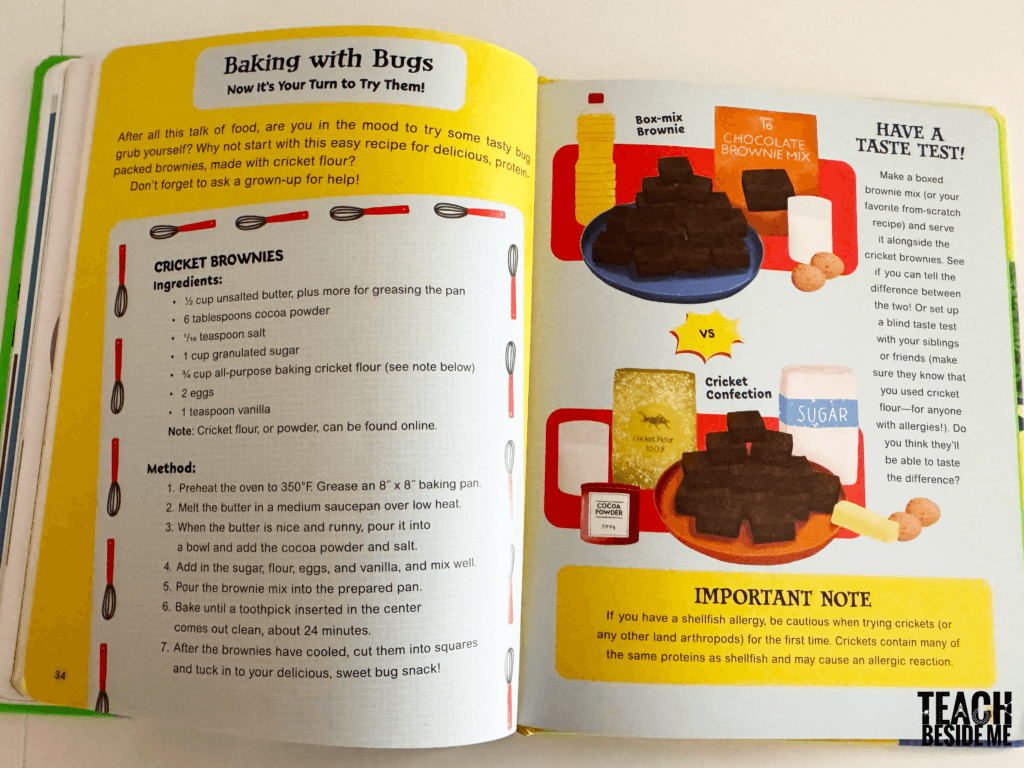
And more importantly, my kids left the experience feeling proud. A little braver. A little more curious.
So… why do people eat insects? The better question might be—why not? They’re full of nutrients, they’re good for the planet, and they give us a chance to explore different cultures and ways of thinking. Whether your kids are brave enough to try one or just curious, this topic is a perfect blend of science, geography, culture, and adventure.
Would YOU eat a bug? Have your kids tried any edible insects? I’d love to hear your thoughts in the comments—especially if you’ve done a bug taste test yourself!
See More Fun Learning Ideas:
Read Around the World: South Korea Unit