Dancing Popcorn + Dancing Cranberries Thanksgiving Science Experiment
This post may contain affiliate links.
Dancing cranberries and popcorn? Believe me! Watch cranberries and popcorn dance in this fun Thanksgiving science experiment!
Using the fizz of carbon dioxide bubbles, these simple experiments show how gas and density make everyday foods move. Try both and compare — which one dances best? Cranberries, popcorn, or maybe even raisins!
This simple dancing cranberries and dancing popcorn experiment teaches important science concepts like density, buoyancy, and gas formation, while keeping things hands-on and seasonal.
It’s quick to set up, totally mess-free and an easy fall STEM activity that’s perfect for a classroom, homeschool, or a Thanksgiving week science day!

What Is the Dancing Popcorn & Cranberries Experiment?
This experiment is like the classic “Dancing Raisins” activity, but with a Thanksgiving twist. Cranberries and popcorn kernels “dance” when bubbles of carbon dioxide attach to their rough surfaces, making them float to the top of a liquid.
When those bubbles pop, the cranberries sink again — creating a rhythmic, mesmerizing up-and-down movement.
It’s science in motion — and it looks beautiful, especially with bright red cranberries against a sparkling liquid.
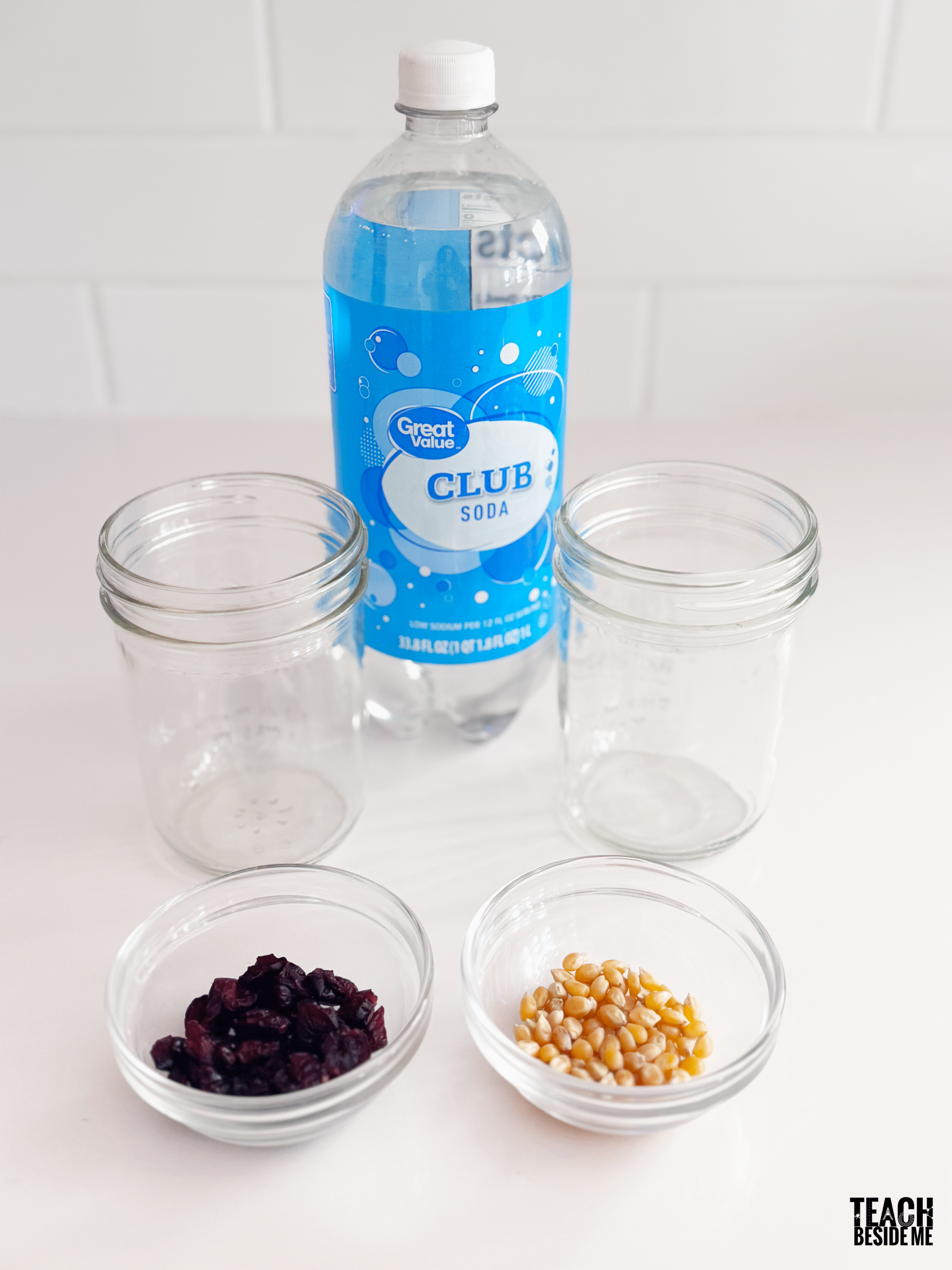
Supplies You’ll Need
-
1 clear jar, vase, or tall glass
-
1–2 cups clear carbonated soda (like Sprite, 7Up, or sparkling water)
-
Dried cranberries (also try raisins for comparison)
-
Un-popped popcorn kernels
How to Do the Dancing Cranberries & Popcorn Experiment:
-
Pour the Soda
Fill two glasses or jars about ¾ full with Sprite, club soda, or another fizzy drink. -
Add the Cranberries and/or Popcorn Kernels
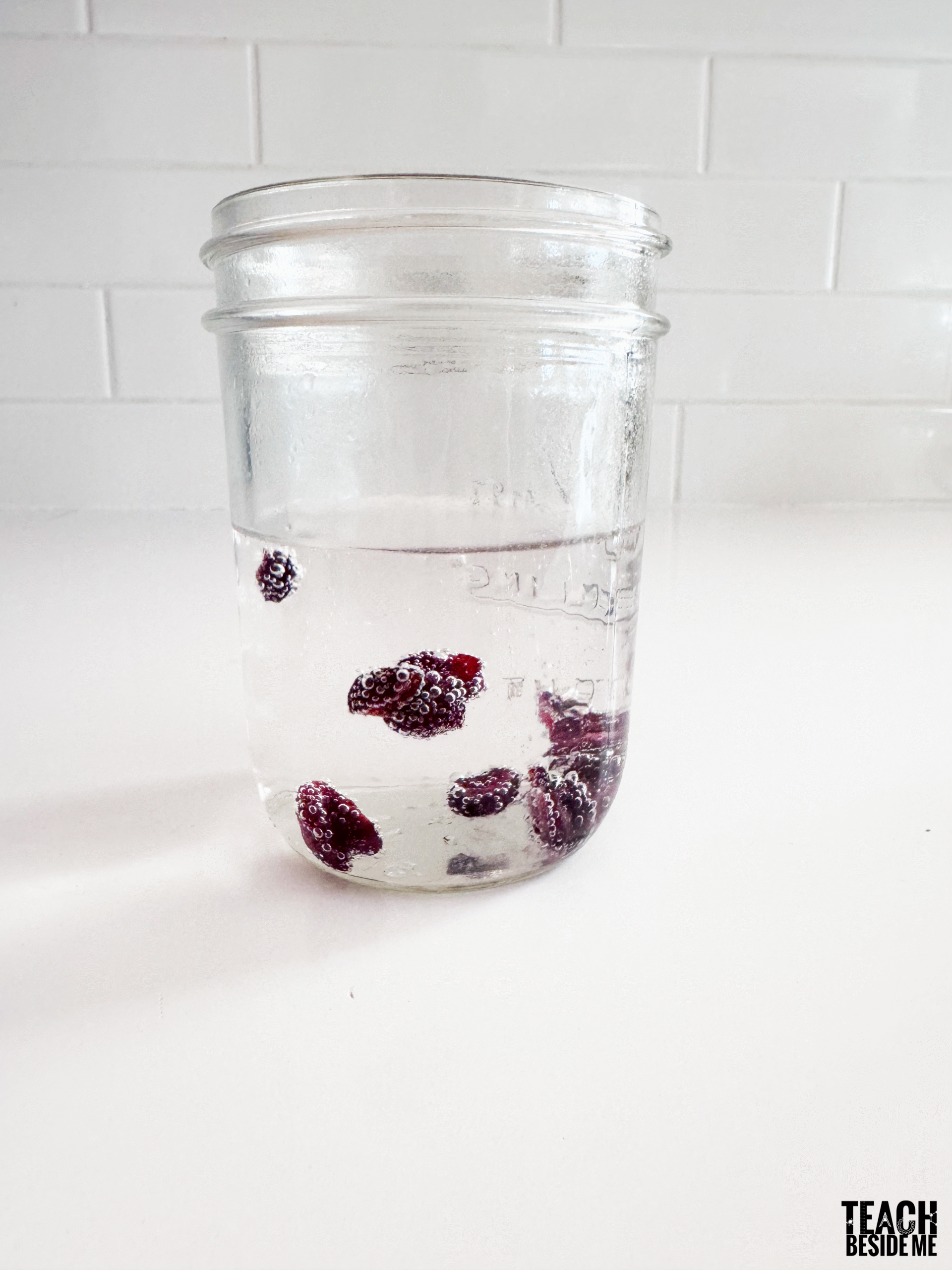
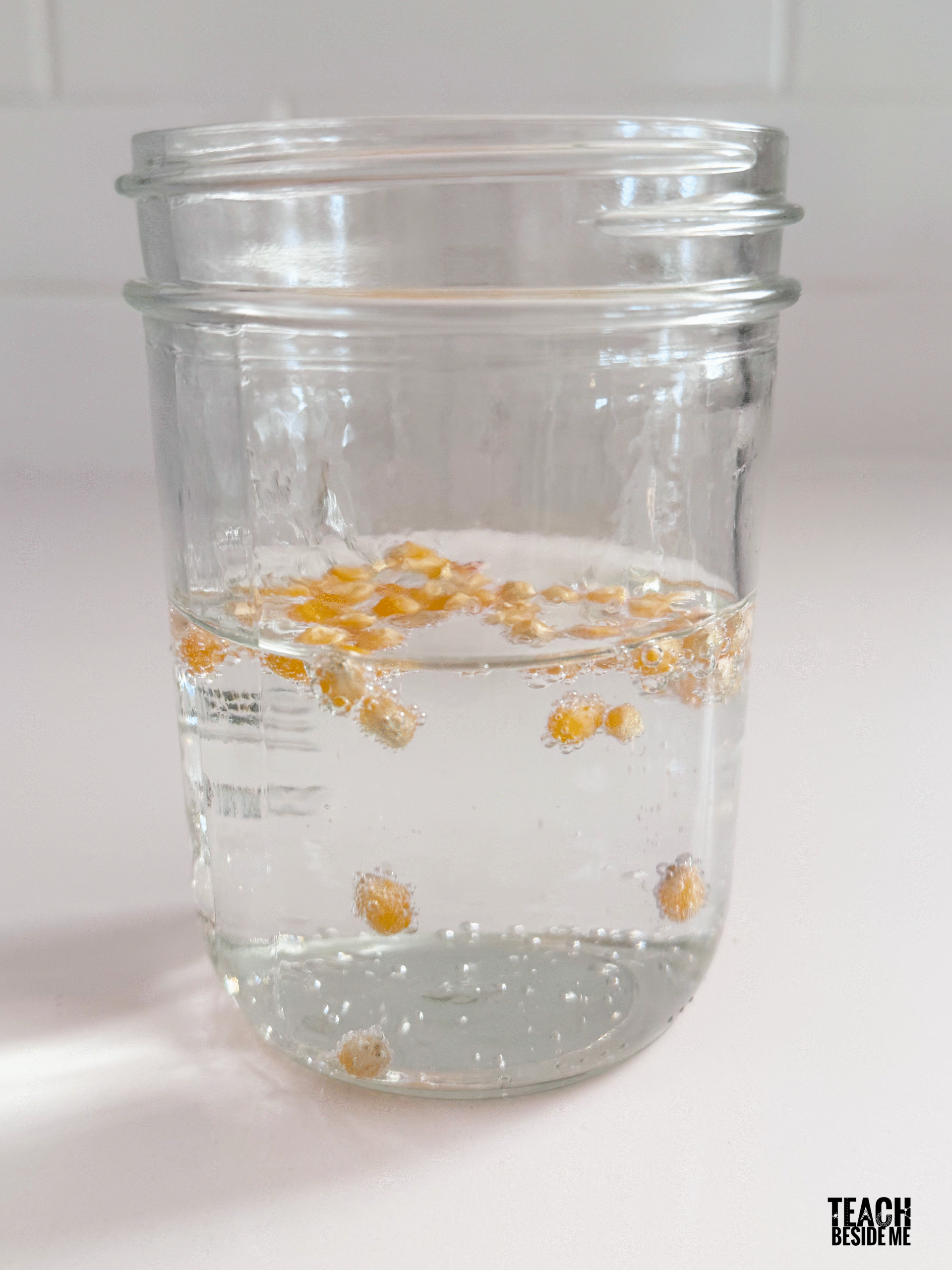
Drop a few dried cranberries & popcorn kernels into the soda and watch as the popcorn kernels and cranberries dance!
-
Watch the Dance!
After a few moments, tiny bubbles will form on the cranberries and popcorn kernels.
As the gasses build up, tiny bubbles will cling to the surfaces, lifting and lowering the pieces as the bubbles form and pop. The cranberries are much more dramatic in their movement than the popcorn. They’ll keep dancing for 10–20 minutes as long as your soda stays bubbly. - Compare the Results
Which food dances more? Which moves faster or higher? Record what you see!
The Science Behind Dancing Cranberries and Popcorn
Both the dancing cranberries and dancing popcorn experiments show how carbon dioxide gas affects density and buoyancy and demonstrates states of matter.
-
Solids, Liquids, and Gases Work Together:
The cranberries and popcorn are solids, the soda is a liquid, and the bubbles are gas (carbon dioxide). This experiment shows how different states of matter interact. -
Density and Buoyancy:
Solids sink in a liquid if they’re denser than the liquid. When bubbles attach to them, the gas lowers their overall density, allowing them to float upward. -
Gas Formation:
The carbon dioxide gas in the soda was trapped under pressure. When you pour the soda, those gas molecules escape and form bubbles that cling to textured surfaces like cranberry skins or popcorn ridges. -
Why They “Dance”:
As the bubbles lift each piece upward, they pop at the surface — the gas escapes, and the solid sinks again. This rising and sinking repeats as long as new bubbles form, making the food “dance.” -
Real-World Connection:
This same principle explains how fish float with air bladders, how submarines adjust their buoyancy, and why bubbles rise in boiling water.
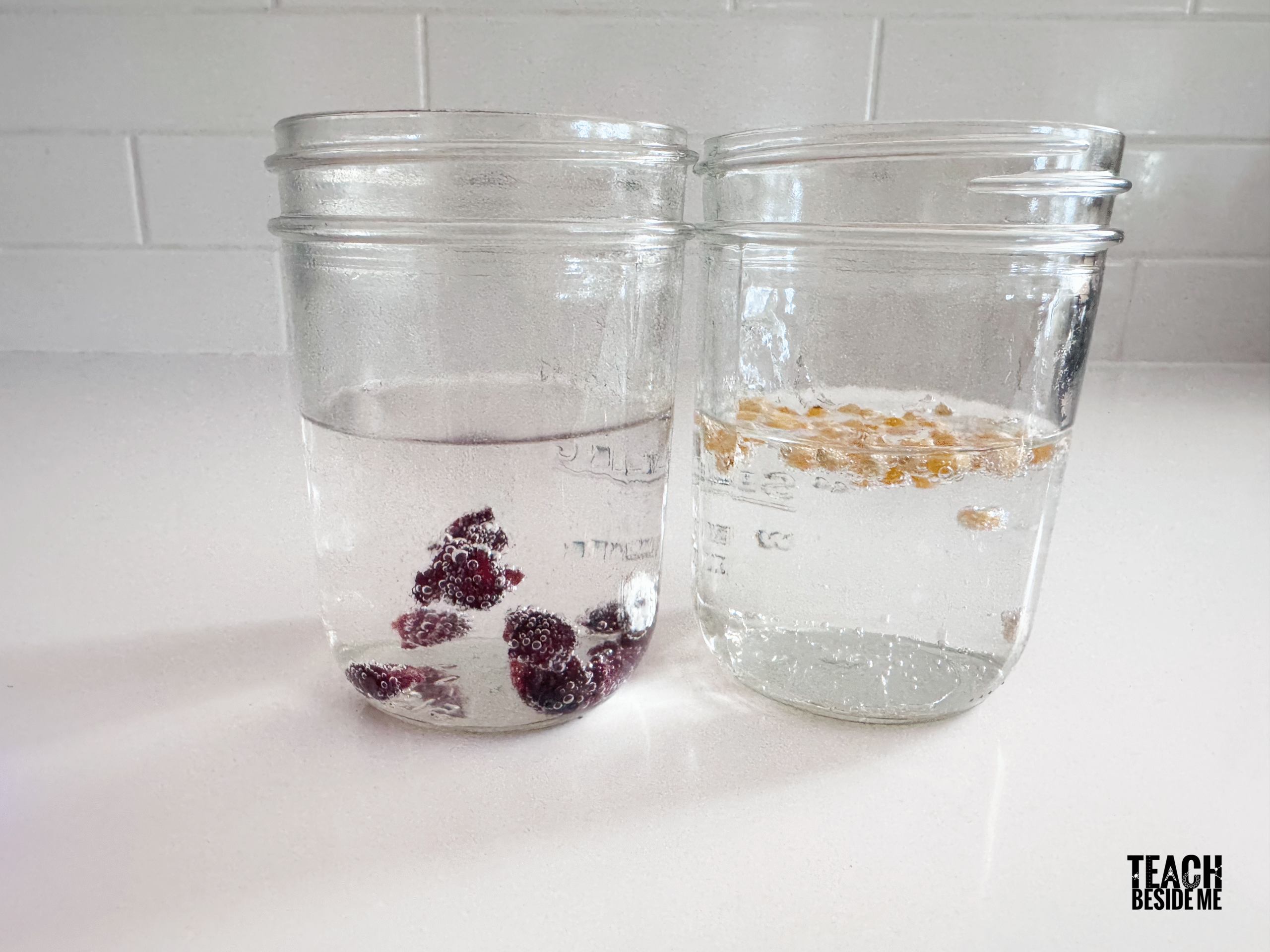
Cranberries are lighter and more textured. They dance smoothly and often longer. Popcorn kernels are heavier and smoother, They rise more slowly, often fewer times, but make great visual contrast.
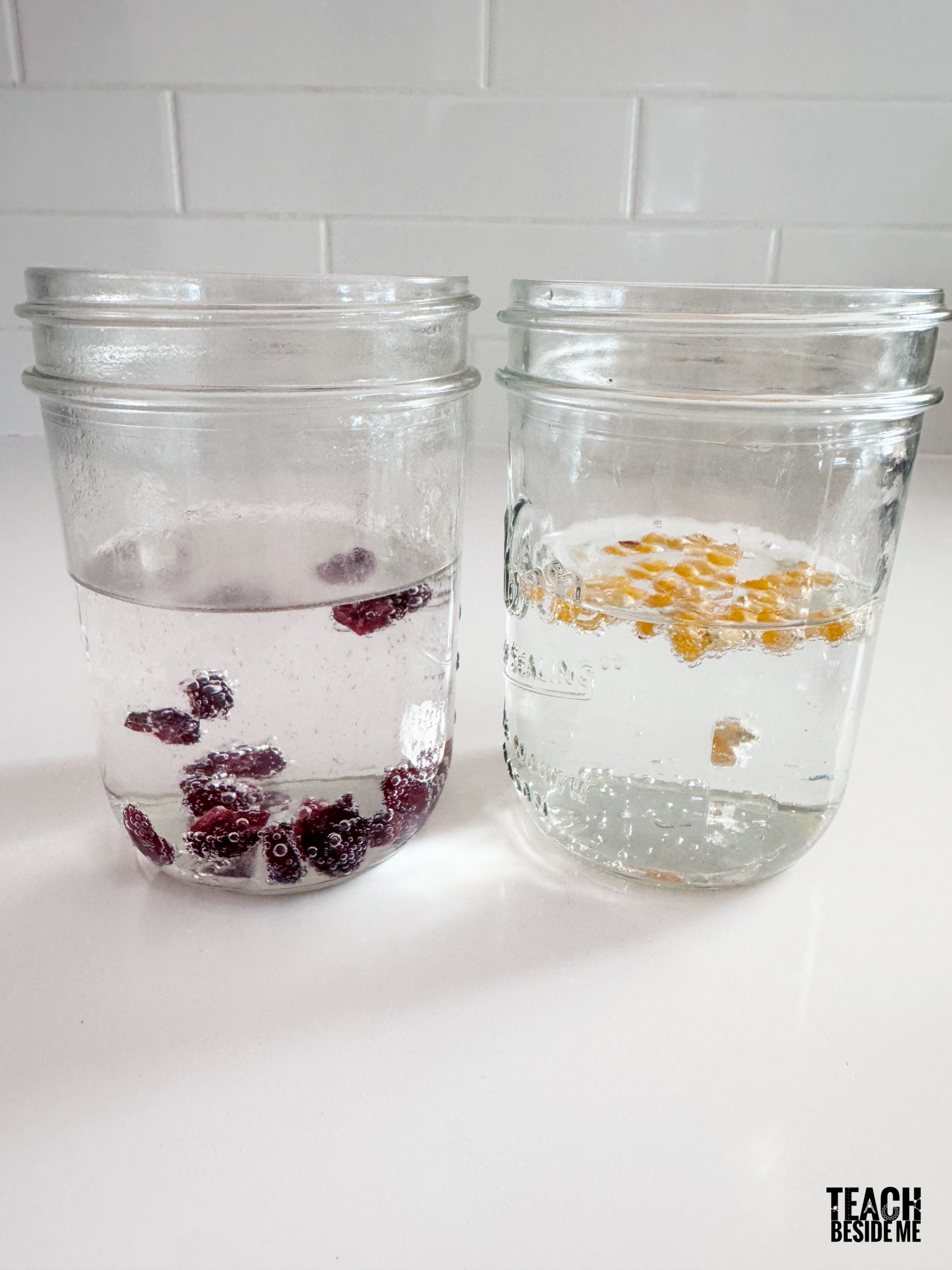
Kids can literally see gas in action — and understand that gas has volume and buoyant force!
Bonus Discussion:
Why do shape and surface area affect how gas bubbles attach?
What happens if you try other foods like raisins or beans?
Thanksgiving & Winter Twist
This experiment makes a perfect addition to a Thanksgiving science day or winter STEM lesson.
-
Cranberries and corn are both traditional Thanksgiving foods, so it’s a natural tie-in.
-
Use this activity to spark a discussion about harvest foods, Thanksgiving traditions, or how gases make things move.
Extend the Learning:
Try the Classic “Dancing Raisins” Experiment
If your kids love the dancing cranberries, try the classic Dancing Raisins Experiment next!
It works the exact same way — the bubbles of carbon dioxide cling to the rough, wrinkled surface of each raisin, lifting it up and then letting it sink again.
Raisins tend to “dance” even longer than cranberries because they’re smaller and lighter. You can use any clear, carbonated drink like Sprite or club soda.
Try both versions side by side and see which one dances best!
More Ways to change it Up:
-
Compare other objects: dried cherries, small candies, or dried beans. → Which dances best? Which sinks fastest?
-
Experiment with liquids: Try different carbonated beverages
-
Time the reaction: How long do the cranberries move before stopping?
-
Record observations: Have kids draw and label the bubbles and cranberries.
Optional Variation: The Baking Soda & Vinegar Version
If you want a stronger fizzing reaction, try this alternative:
-
Mix 1–2 cups of water with 2 tablespoons baking soda.
-
Add a handful of cranberries or popcorn kernels.
-
Pour in ¼ cup vinegar and watch the reaction create bubbles that lift them up and down.
It’s more dramatic (and messier!) and a great way to teach about chemical reactions as well as density.
Cleanup Tips
-
Everything is safe and non-toxic — you can pour the soda down the sink when done.
-
Remind kids not to drink or taste the liquid after the experiment.
-
Use a tray or placemat to catch spills from fizzing.
Both cranberries and popcorn “dance” because of the same science — but their shapes make the results slightly different! This easy experiment combines chemistry, physics, and fall fun in one simple jar.
Try it this Thanksgiving and let kids predict which one will dance best — it’s a joyful, hands-on reminder that science is all around us.
See More Fun Thanksgiving Ideas:
Thanksgiving Science Activities and Experiments
The Best Thanksgiving Jokes for Kids
Thanksgiving Tradition: Five Kernels of Corn
The Gratitude Game: Pick-Up Sticks
If your kids enjoy hands-on science activities like this one, MEL Science is another fun way to continue STEM learning at home. Their science kits include engaging experiments, science concepts, and guided projects that help make chemistry and physics feel exciting and approachable for kids.