Martin Luther King Jr. Lesson Ideas & Activities for Kids
This post may contain affiliate links.

Looking for meaningful Martin Luther King Jr. lesson ideas to use with kids this week?
Martin Luther King Jr. Day is a wonderful opportunity to slow down and talk with children about justice, courage, service, and peaceful change. Dr. King’s life and words offer powerful lessons that are still deeply relevant today, and they can be taught in age-appropriate, thoughtful ways at home or in the classroom.
Who Was Martin Luther King Jr.?
King was a civil rights leader known for his commitment to nonviolent activism in the fight against racial discrimination. He helped lead the civil rights movement from the 1950s until his death in 1968.
His leadership and peaceful protests played a major role in ending segregation laws in the southern United States and advancing civil rights nationwide.
Martin Luther King Jr. Day (often called MLK Day) is a federal holiday in the United States, observed on the third Monday of January each year. His actual birthday was January 15, 1929. The holiday became official in 1983 and is also recognized as a National Day of Service.
Martin Luther King Jr. Activities & Lessons for Kids
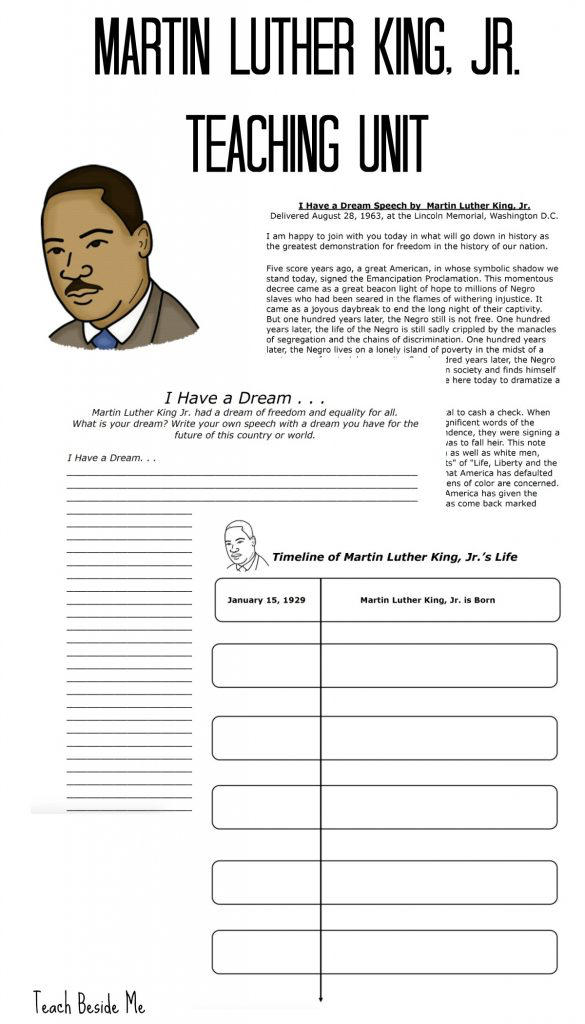
To help families and teachers explore this important day, I created a printable Martin Luther King Jr. teaching unit that works well for mixed ages in homeschool groups, classrooms, or family learning.
This lesson pack includes:
-
The full text of the “I Have a Dream” speech
-
A kid-friendly timeline of Dr. King’s life
-
Printable memorization cards featuring meaningful excerpts
-
A writing prompt inviting kids to write about their own hopes and dreams
Watch the “I Have a Dream” Speech
Sharing part (or all) of Dr. King’s famous speech helps children hear his words in his own voice and better understand why his message mattered — and still matters.
Download My Teaching Unit
This resource can be used in one lesson or spread across several days, depending on the age of your children.

More Meaningful Activities for Kids
Here are additional ideas to deepen learning and reflection:
- Take virtual tour of his house. You can visit it in person in Atlanta, Georgia.
- Learn about and listen to some pop songs that were written in honor of MLK.
- Join in the National Day of Service on this federal holiday. See ways to serve with kids here.
- Discuss their dreams for the future of your community, the country or the world! There is a writing prompt for this in the printable pack.
- Discuss diversity and the importance of treating all people with love and respect no matter how they look, what their skin color, or where they are from.
- Watch a movie about MLK: Our Friend Martin is a kid-friendly cartoon that you can find on YouTube.
- Listen to or learn about songs written in honor of Dr. King
Books for Kids About Martin Luther King Jr.
Reading aloud is one of the best ways to introduce younger children to Dr. King’s life and legacy. These books work well for different age ranges:
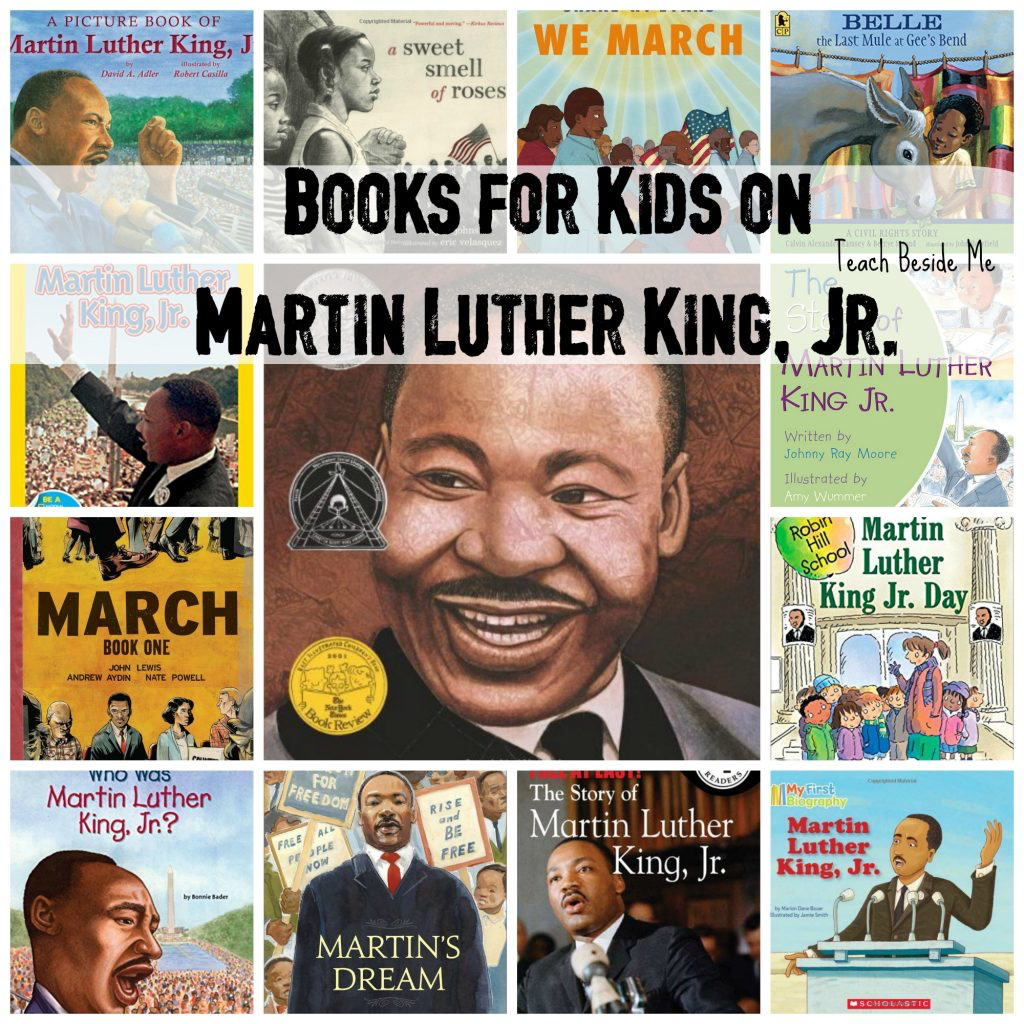
- National Geographic Readers: Martin Luther King, Jr. (ages 5-8)
- Who Was Martin Luther King Jr.? (chapter book ages 8-12)
- A Picture Book of Martin Luther King, Jr. by David Adler (ages 6-9)
- My First Biography: Martin Luther King, Jr. By Marion Dane Bauer (ages 4-8)
- Martin’s Big Words: The Life of Dr. Martin Luther King, Jr. by Doreen Rappaport
- Martin Luther King, Jr. (Time for Kids) (ages 5-10)
- Free at Last: The Story of Martin Luther King, Jr. (DK Readers) (ages 8-12)
- Martin Luther King Jr. Day (ages 4-6)
- The Story of Martin Luther King Jr. by Johnny Rae More (ages 2-4)
- Martin’s Dream by Jane Kurtz (ages 4-6)
- A Sweet Smell of Roses by Angela Johnson (ages 5-8)
- We March by Shane Evans (ages 4-8)
- March by John Lewis (12+)
- Belle, The Last Mule at Gee’s Band by Calvin Alexander Ramsey (ages 5-8)
For younger kids, focus on kindness, fairness, and helping others.
For older kids, include discussions about peaceful protest, courage, and standing up for what is right, even when it’s difficult.
Martin Luther King Jr. Day offers a meaningful opportunity to pause and reflect with children on values like kindness, courage, and service. Whether you choose to read a picture book, listen to his words, or talk about hopes for a better future, even a small conversation can leave a lasting impression. These lessons help children understand that positive change often begins with compassion, respect, and the willingness to stand up for what is right.
See Also:
Learning About Vikings: Hands-On History Ideas for Kids