
DIY Anti-Aging Face Serum: A Natural, Cost-Effective Alternative
This post may contain affiliate links.
If you’re looking for an all-natural, skin-nourishing face serum that rivals high-end products without the hefty price tag, you’re in the right place! I’ve been making my own face serum using simple yet powerful ingredients: castor oil, jojoba oil, frankincense and geranium essential oils. This DIY face serum provides incredible anti-aging and skin-repairing benefits, and best of all, it costs a fraction of what similar products sell for online ($60-$70 per bottle!). Your skin will be radiant and more youthful if you use this!
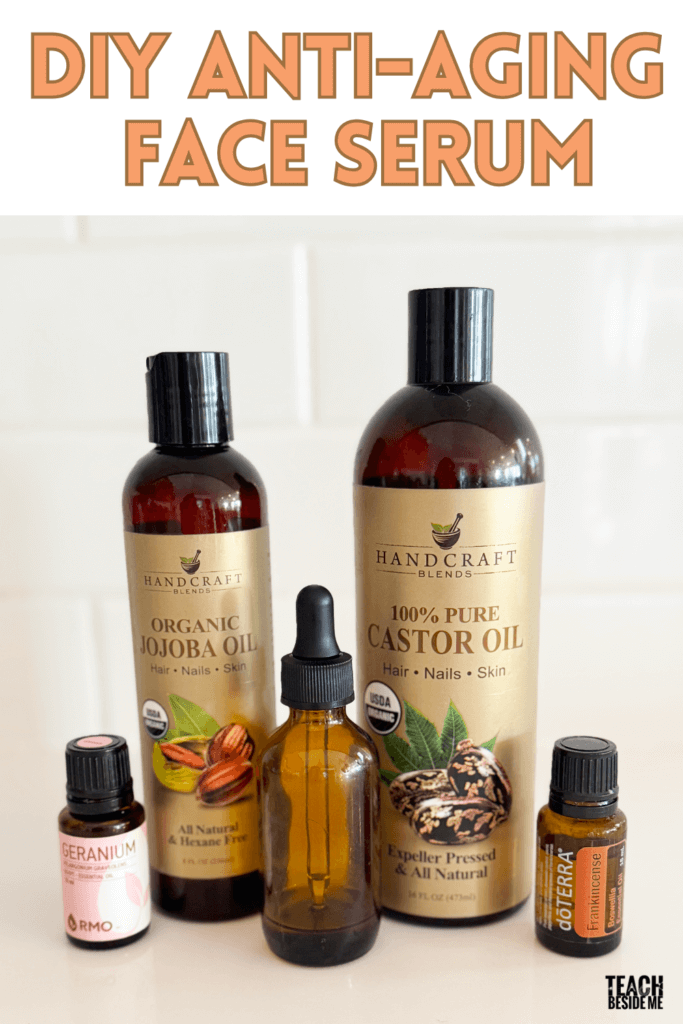
I previously shared my homemade shave butter recipe, which has been a reader favorite. Since that post did so well, I wanted to share another skincare staple that I personally love and use daily.
Why Make Your Own Face Serum?
My sister one time shared a favorite face serum she had been using for a while. I looked it up and saw the ingredients were all things I already had in my home. Plus, it was really pricey! I decided it would be really easy to just make it myself. I have been using this serum for a long time now with great results!
-
Cost Savings: High-quality face serums with similar ingredients can cost upwards of $70. By making your own, you control the quality of the ingredients while spending a fraction of the cost.
-
Pure, Natural Ingredients: Many store-bought facial serums contain fillers, synthetic preservatives, and potential irritants. With a DIY serum, you know exactly what’s in it. It is fragrance-free, cruelty-free, organic, and all natural.
-
Customizable: You can tweak the formula based on your skin’s needs by adjusting oil ratios or adding other skin-friendly essential oils.
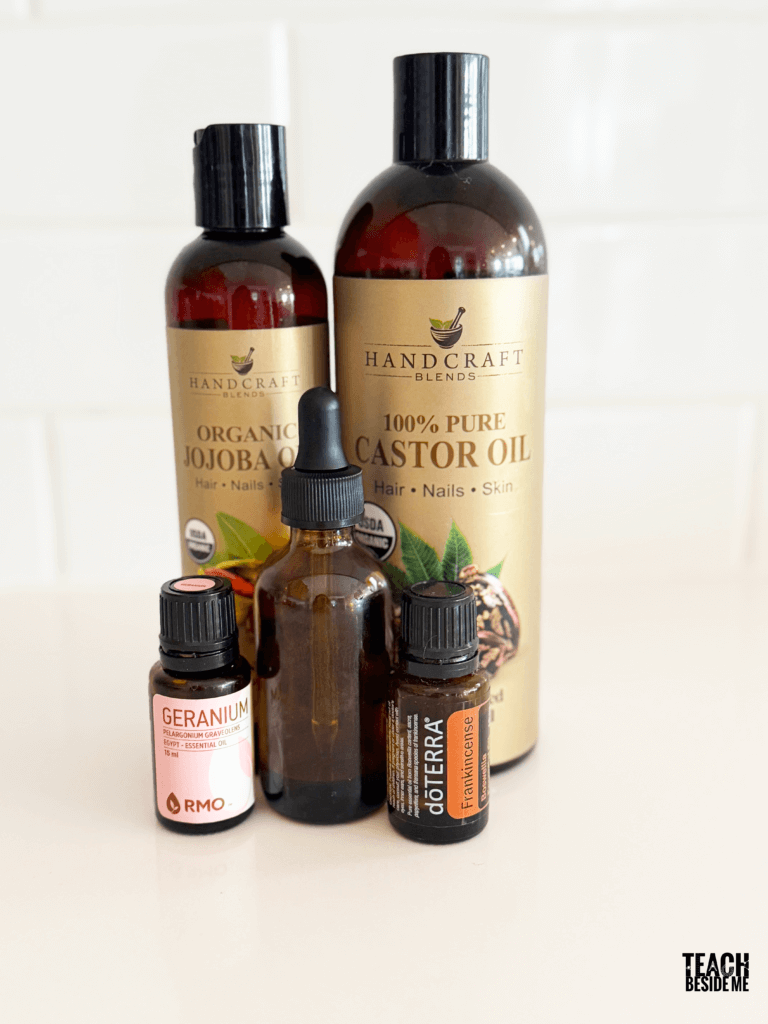
The Power of The Oils in the Face Serum
1. Castor Oil: The Skin-Repairing Powerhouse
Castor oil is rich in ricinoleic acid, a fatty acid known for its anti-inflammatory and antibacterial properties. It helps:
- Hydrate and soothe dry skin
- Reduce puffiness and inflammation
- Promote collagen production for firmer skin
- Heal blemishes, breakouts, and scars
Castor Oil – Nutrient Profile
Castor oil is derived from the castor bean and is rich in:
-
Ricinoleic Acid – A unique fatty acid that provides anti-inflammatory and antimicrobial properties
-
Vitamin E – A powerful antioxidant that helps protect skin from oxidative stress
-
Omega-6 and Omega-9 Fatty Acids – Help restore skin’s natural moisture barrier and improve elasticity
-
Proteins and Minerals – Aid in skin nourishment and support tissue repair
2. Jojoba Oil: The Ultimate Skin Balancer
Jojoba oil is lightweight, non-comedogenic, and closely mimics the skin’s natural sebum.
It helps:
- Helps regulate oil production
- Deeply moisturizes without clogging pores
- Reduces fine lines and wrinkles
- Calms redness and irritation
Jojoba Oil – Nutrient Profile
-
Vitamin E – Fights free radical damage and helps skin repair itself
-
B-complex Vitamins – Help with skin repair and reducing redness or irritation
-
Zinc & Copper – Trace minerals that support skin healing and tone
-
Long-chain fatty acids – Provide lightweight hydration without clogging pores
3. Frankincense Oil: The Ancient Anti-Aging Secret
Known as “liquid gold” for the skin, frankincense essential oil has been used for centuries for its rejuvenating properties. It:
- Reduces the appearance of fine lines and wrinkles
- Boosts skin elasticity
- Promotes cell regeneration
- Evens out skin tone and reduces dark spots
Frankincense Oil – Nutrient Profile
Derived from the resin of Boswellia trees, frankincense is valued for its:
-
Boswellic Acids – Anti-inflammatory compounds that help reduce redness and puffiness
-
Monoterpenes (like alpha-pinene, limonene) – Help tone and rejuvenate skin while promoting healing
-
Sesquiterpenes – Support circulation and skin regeneration
4. Geranium Oil: The Glow Booster
Geranium essential oil is a natural skin balancer and revitalizer. It:
- Helps balance oil production
- Tightens and tones the skin
- Reduces the appearance of pores
- Soothes inflammation and improves overall complexion
Geranium Oil – Nutrient Profile
Extracted from the leaves and stems of the geranium plant, this oil includes:
-
Citronellol & Geraniol – Antibacterial and anti-inflammatory compounds that calm skin
-
Linalool & Menthone – Help tone and tighten the skin
-
Flavonoids – Provide antioxidant protection and help reduce signs of aging
How to Make Your Own DIY Face Serum
Ingredients:
-
1 part castor oil
-
1 part jojoba oil
-
10-15 drops of frankincense essential oil (adjust based on skin sensitivity)
- 5-10 drops geranium essential oil
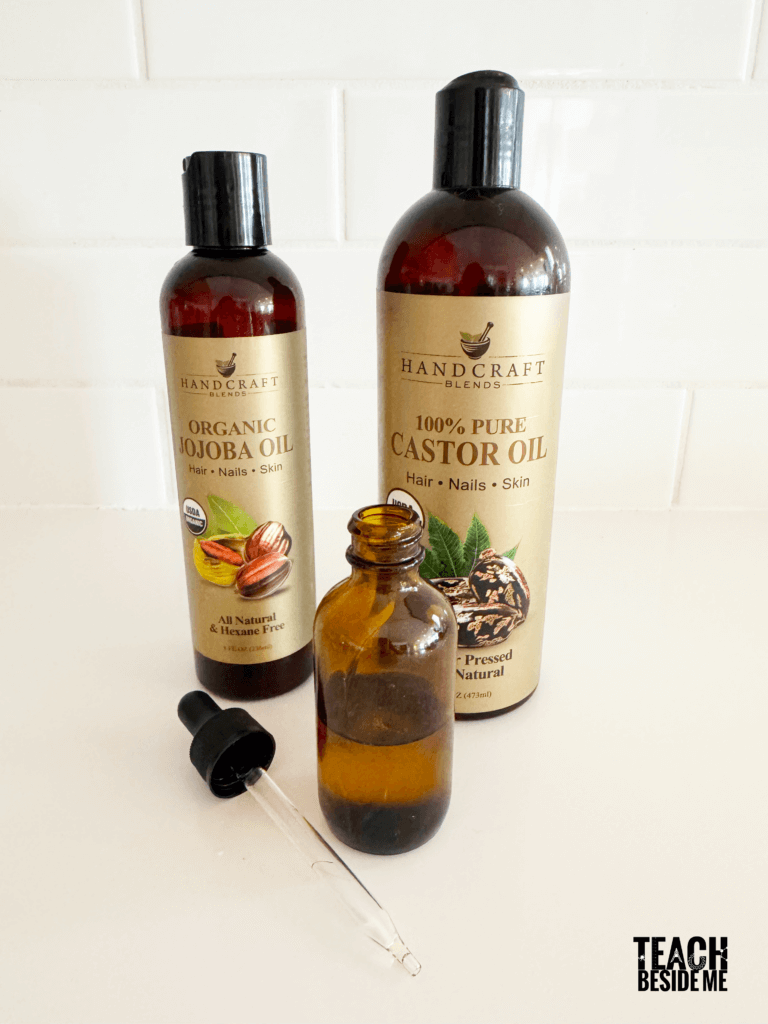
Instructions:
-
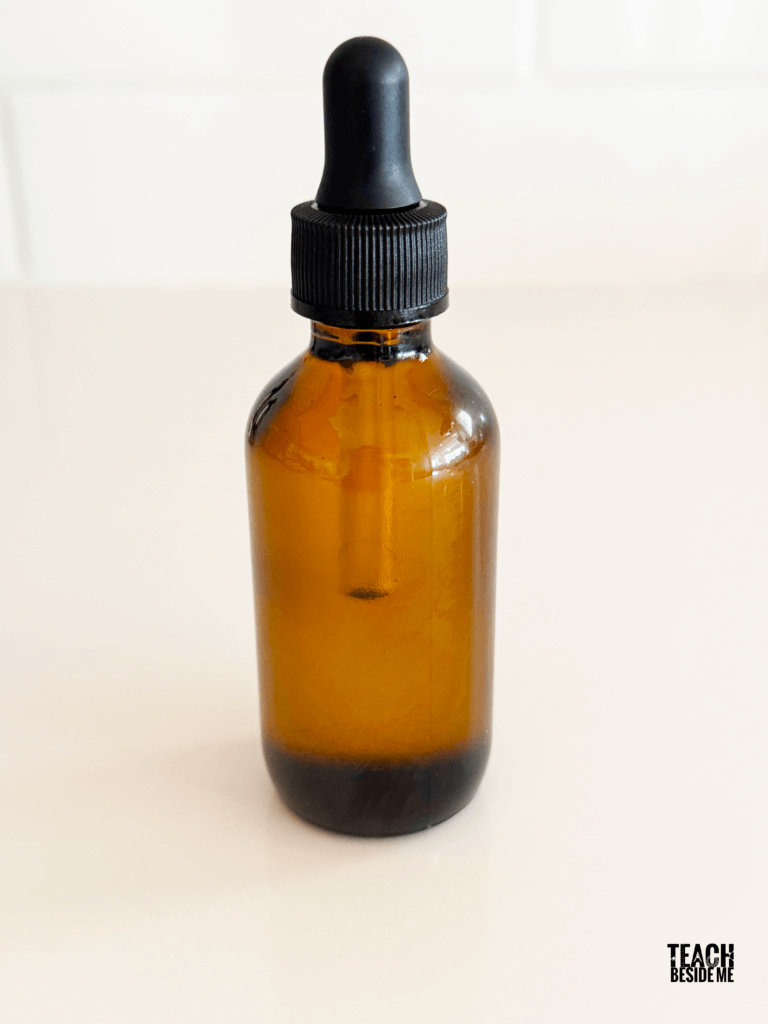
In a small glass dropper bottle, mix equal parts castor oil and jojoba oil.
-
Add 10-15 drops of frankincense essential oil and 5 drops of geranium oil.
-
Shake gently to combine.
-
Apply 4-5 drops to clean skin, massaging gently in an upward motion. Use daily for best results!
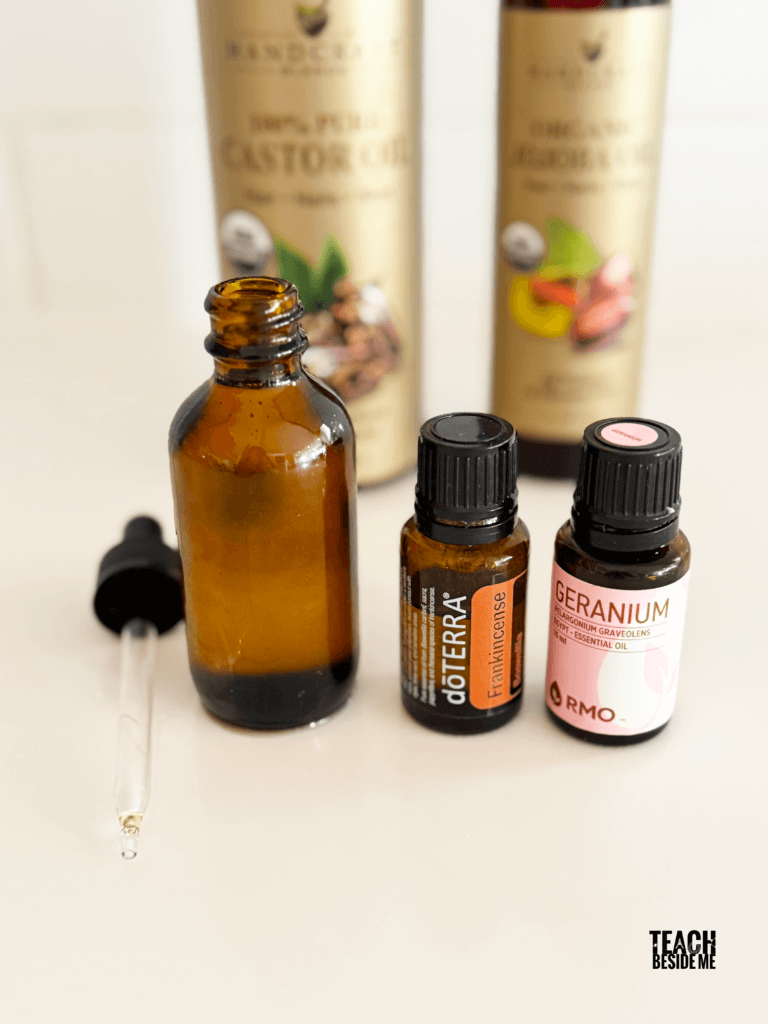
How to Use this Face Serum for Best Results
-
Morning: Apply after cleansing and before sunscreen or makeup.
-
Night: Use as the last step in your skincare routine for deep overnight hydration.
-
Under Makeup? This serum absorbs well but may be too rich for oily skin types. Use a small amount and let it fully absorb before applying foundation.
Alternative Essential Oils for Customization
Want to tweak your serum? Try adding:
-
Lavender Oil: Soothing and calming, great for sensitive skin.
-
Rosehip Oil: Packed with Vitamin C and helps with brightening.
Cost Breakdown: How Much You Save
A similar high-end serum sells for around $60-$70 per bottle, while making your own costs only a few dollars per batch! Here’s a rough estimate:
-
Castor Oil (4 oz): $8-$10
-
Jojoba Oil (4 oz): $12-$15
-
Frankincense Essential Oil (15 ml): $20-$25 (for a high-quality brand)
-
Geranium Essential Oil (10–15 ml): $10–$15
Since you only use small amounts of each essential oil per batch, one bottle of each will last for many refills. That means each batch of serum costs just a few dollars to make, compared to buying a $60+ bottle from a skincare brand.
This homemade face serum is natural, effective, and budget-friendly—a perfect addition to your skincare routine. Plus, it’s simple to make and can be adjusted to fit your skin’s needs.
Face Serum vs. Moisturizer: What’s the Difference?
Many people wonder why they should use a serum instead of (or in addition to) a moisturizer. Here’s a breakdown:
-
Face Serums are lightweight, fast-absorbing, and deeply penetrating. They are packed with concentrated active ingredients (like antioxidants, vitamins, and essential oils) that target specific skin concerns such as fine lines, uneven tone, or acne. Serums hydrate, but they don’t necessarily seal in moisture.
-
Moisturizers are thicker and designed to create a protective barrier on the skin. They lock in hydration and help prevent water loss. They can contain ingredients like butters, humectants, and occlusives to keep skin soft and supple.
Many people use both—a serum first, followed by a moisturizer to lock in the benefits. Since this DIY serum is oil-based, it can also double as a moisturizer, especially for dry or mature skin.
If you love DIY skincare, be sure to check out my homemade shave butter recipe for another skin-loving essential!