
Science Art: Chromatography Coffee Filter Flowers
This post may contain affiliate links.
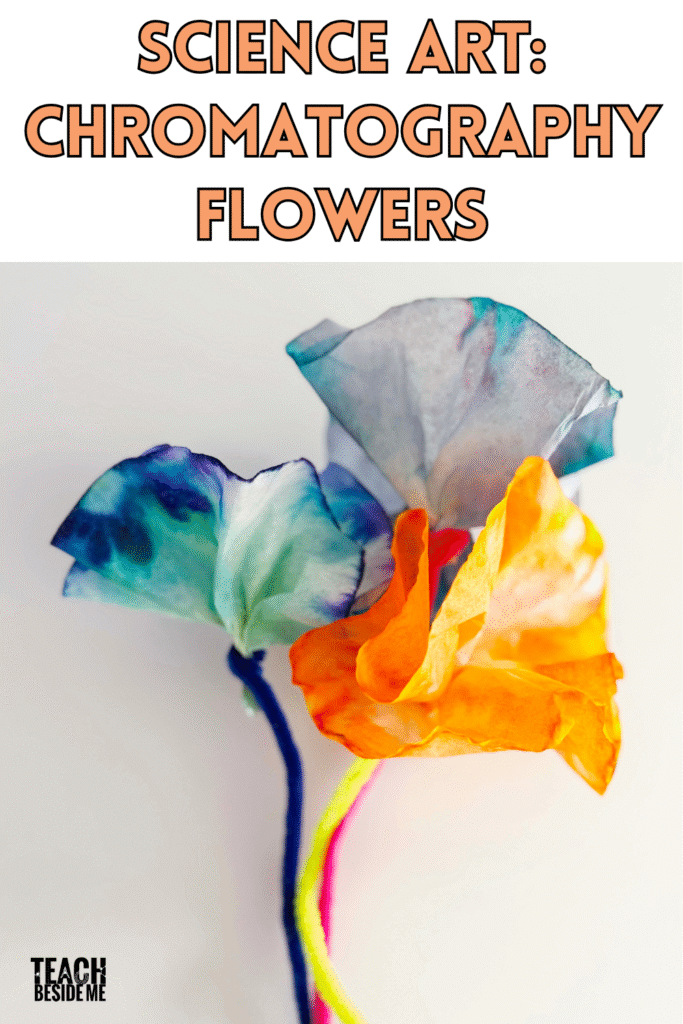
Have you ever wanted a science project that makes kids’ eyes light up and looks beautiful when it’s done? These easy coffee filter flowers are the perfect blend of science and art. My kids and I love this activity because it’s colorful, easy to set up with supplies you already have at home, and it shows kids exactly how plants drink water.
This science art experiment demonstrates something called capillary action—the way water moves through tiny spaces, like the fibers of a paper filter or the tubes inside a plant’s stem. It also explores chromatography, a science method that is used to separate mixtures into their different parts. As your kids watch the colors spread and blend across the paper, they’ll be learning real science concepts!
And the best part? At the end, you’ll have a bouquet of paper flowers that can brighten up your home or classroom.
Supplies You’ll Need
You only need a few simple items for this project:
-
White coffee filters (basket style, not cone)
-
Washable markers (bright colors work best)
-
Clear plastic cups or jars
-
Water (just a little in each cup)
-
Binder clips or clothespins (to hold filters in place)
-
Colored pipe cleaners (for flower stems)
-
Scissors (optional, for shaping petals)
Step 1: Prepare the Filters
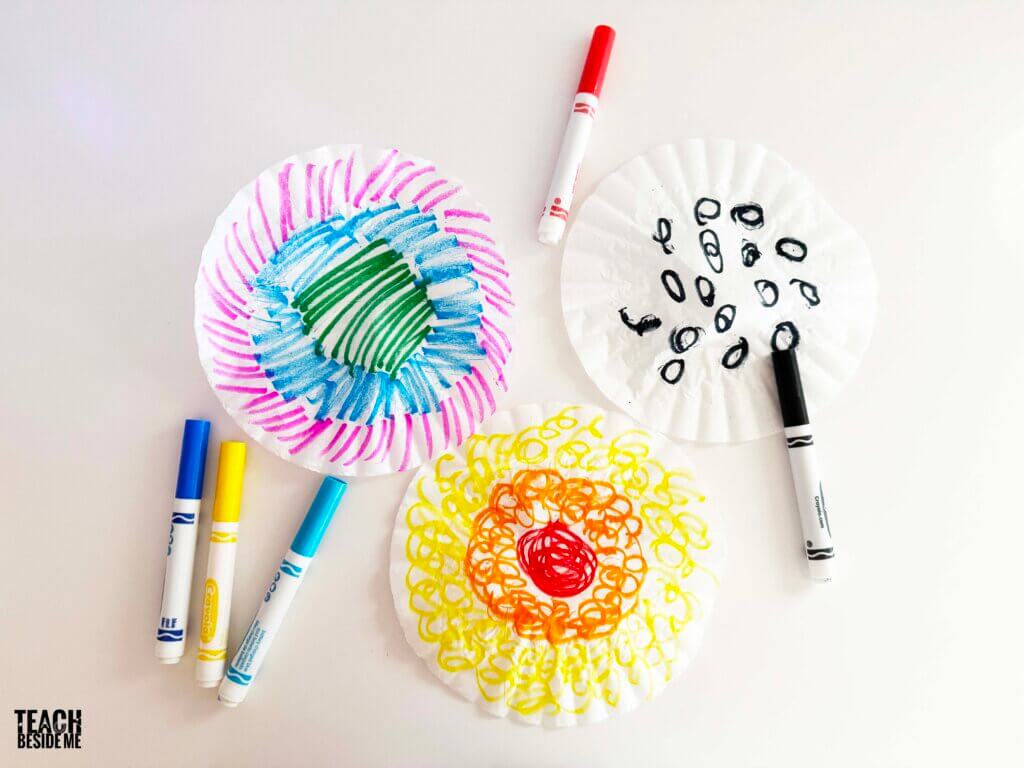
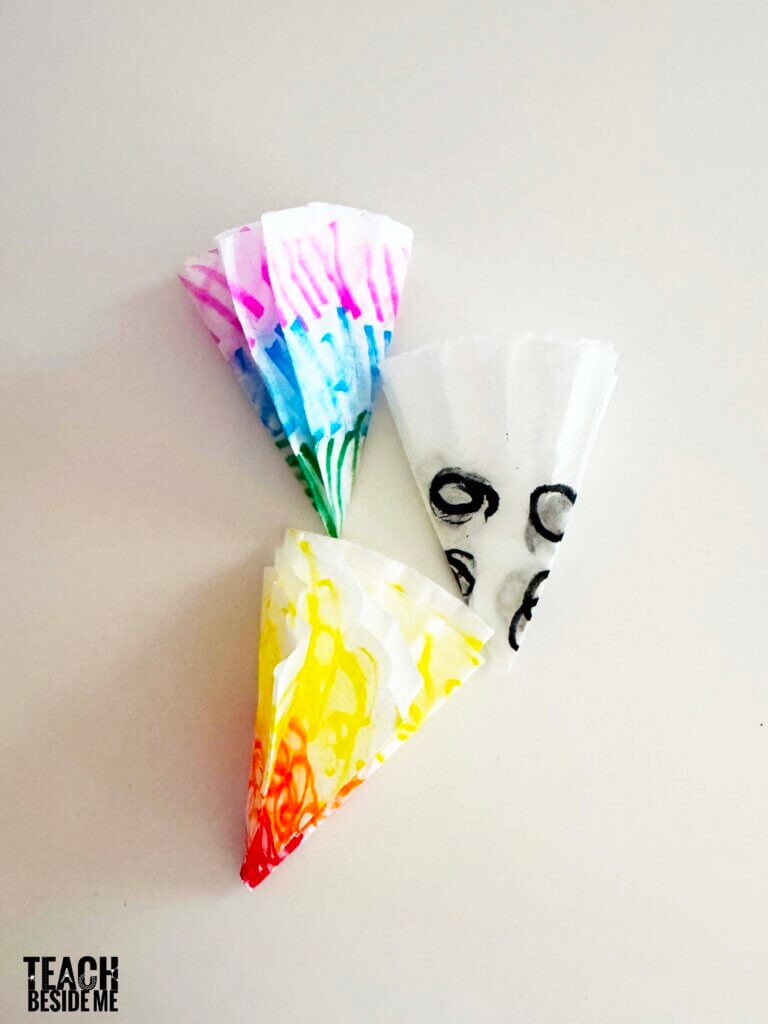
Flatten your coffee filters. Use washable markers to color designs on the filter. Stripes, dots, or rainbow patterns all work beautifully. Fold them in half four times so they are cone shaped.
Step 2: Dip and Watch
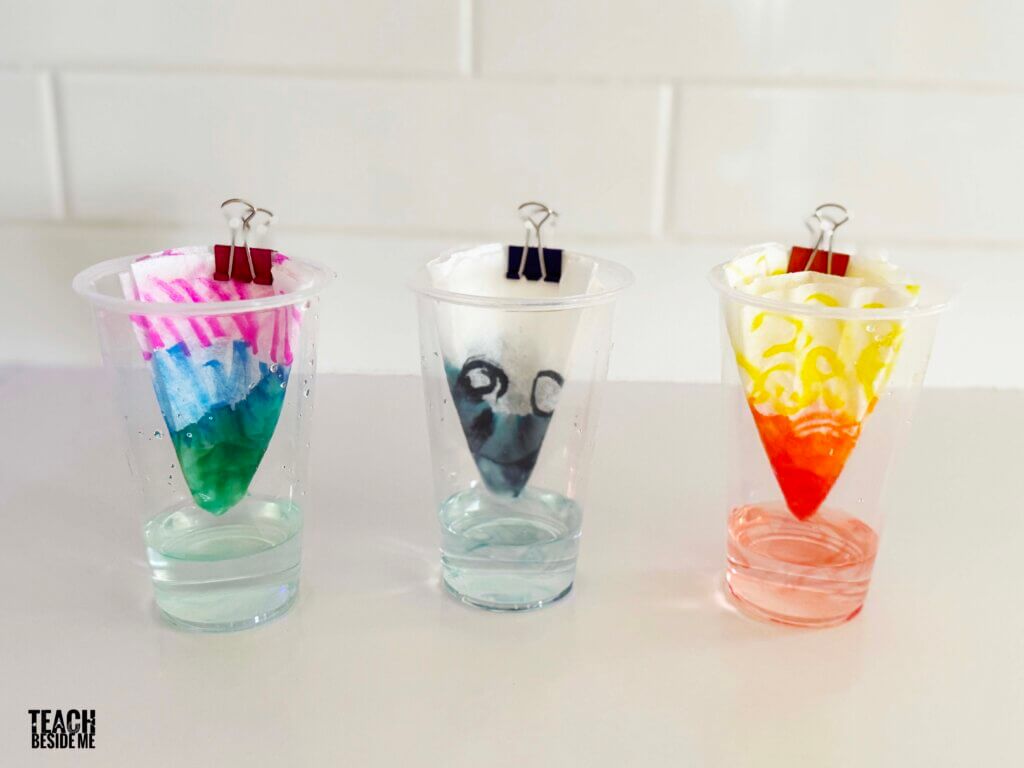
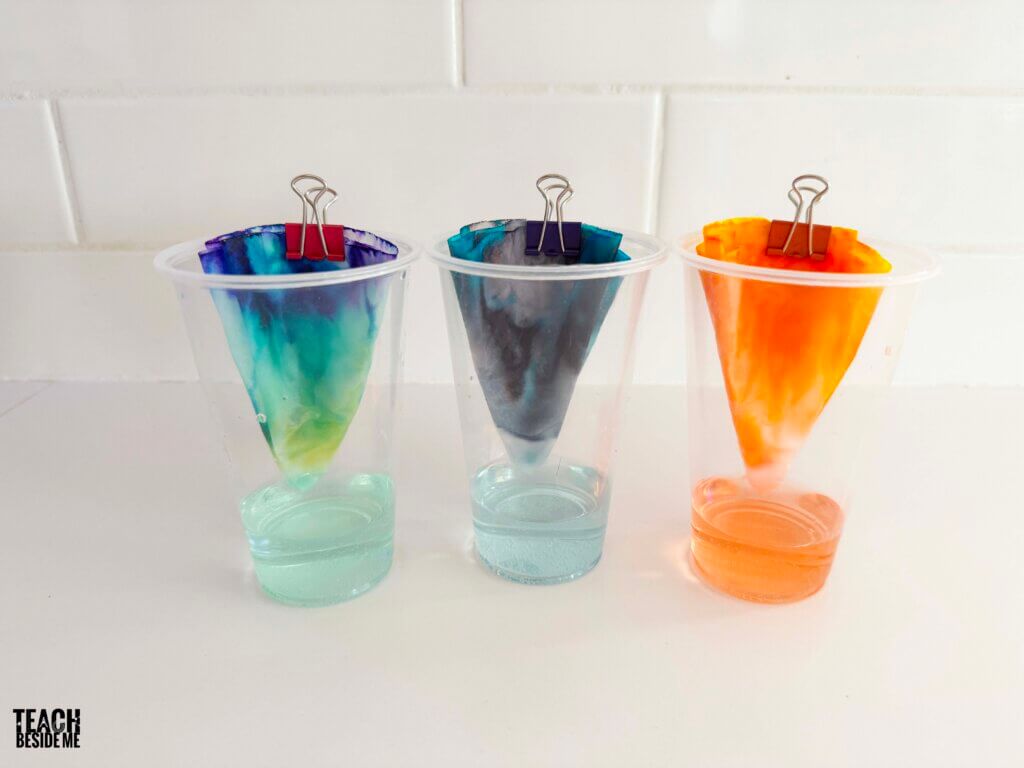
Pour about half an inch of water into a clear cup. Place the pointed tip of the coffee filter into the water. Use a binder clip to balance the filter on the cup so it doesn’t fall in.
Now, the fun part: watch as the water begins to climb the paper fibers and carry the marker ink upward. The colors spread, mix, and blend into new patterns. It’s like watching a rainbow slowly unfold.
Step 3: Turn Them into Flowers
Take them out of the water and lay them out to dry on a plate.
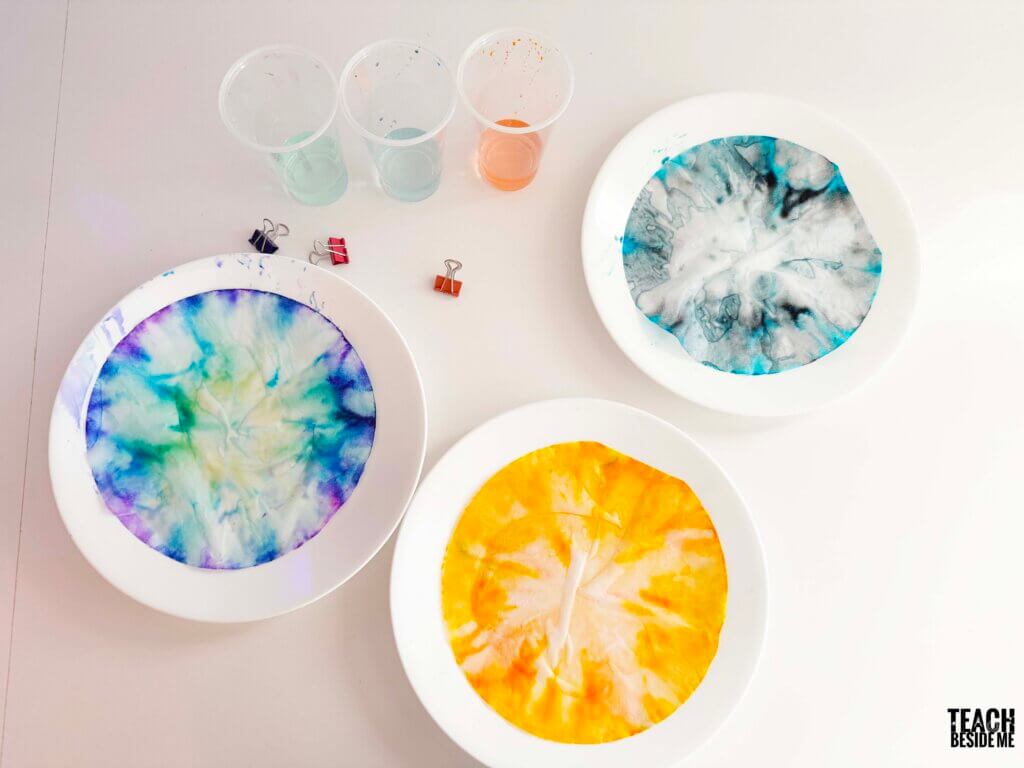
Once the filters are completely dry, fold and scrunch them in the center. You could also cut a rounded top or add ruffles to look more like petals. Twist a colored pipe cleaner around the middle to make a stem.
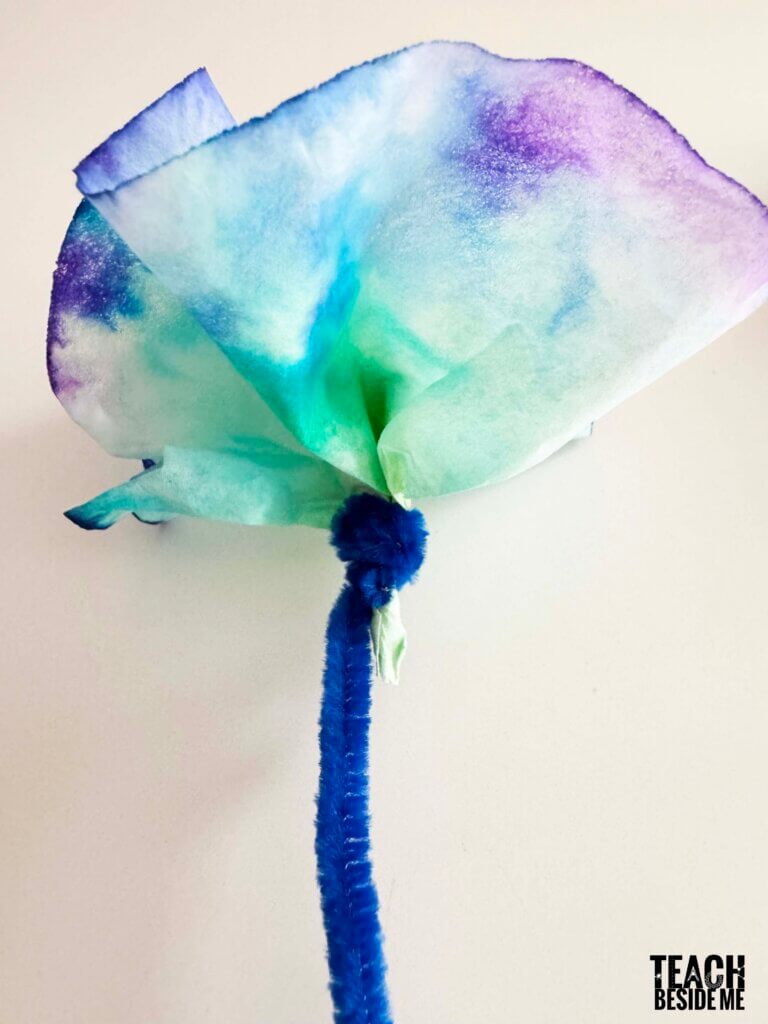
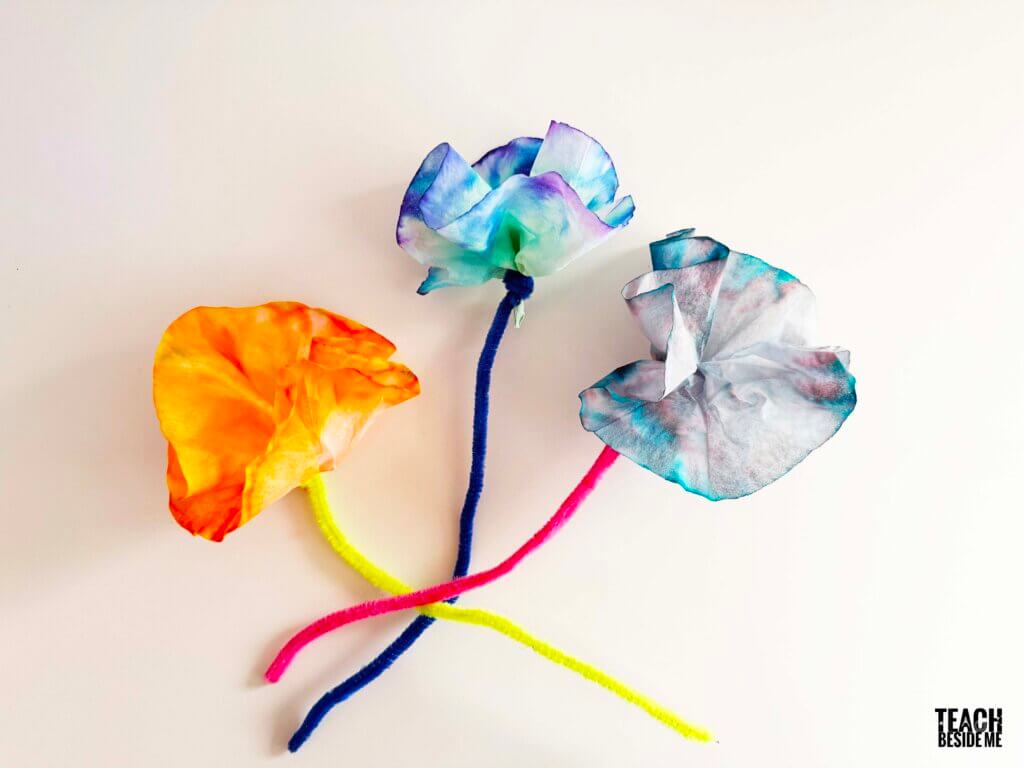
Fluff the edges to create petals. Repeat with several filters until you have a full bouquet of colorful flowers. You can use a stack of filters to make multiple layers in your flowers, too! Put them in a vase and give them as a gift for Mother’s Day or a birthday.
The Science Behind It
So what’s happening here? The secret is something called capillary action.
-
Paper coffee filters are made of cellulose fibers—tiny, straw-like tubes that water can travel through.
-
Water molecules are “sticky.” They cling to each other (cohesion) and to the fibers in the filter (adhesion).
-
Together, these forces pull water upward, even against gravity.
This is the same process happening inside plants. Xylem tubes in stems and leaves carry water from the roots to the rest of the plant. Capillary action alone gives water a boost, but plants also use transpiration—water evaporating from leaves—to help pull more water upward.
Some trees can move water more than 300 feet upward using this process!
Chromatography is also happening. This is used to separate mixtures into their different parts. As the water travels, it pulls the pigments along. Since different pigments move at different speeds, they spread out and separate.
Educational Connections
This simple craft actually connects to real science standards. Kids practice:
-
Observation skills (watching how colors move and change).
-
Making predictions (“Which colors will mix? How far will the water travel?”).
-
Understanding real-world science (how plants drink and how scientists separate mixtures).
Creative Extensions
Want to take this project even further? Try these variations:
-
Warm vs. cool colors: Make one flower with warm colors (reds, oranges, yellows) and another with cool colors (blues, greens, purples). Compare how they blend.
-
Chromatography twist: Try using only a black marker. As the water climbs, you’ll see hidden pigments (greens, blues, and purples) separate out.
- Different art mediums: try it with watercolors or food coloring. Does it still work?
-
Paper test: Use paper towels or tissue paper instead of filters and compare the results. Do the colors spread differently?
-
Holiday crafts: Use red and green for Christmas, pinks for Valentine’s Day, orange and black for Halloween, or pastels for spring.
Why Kids Love It
This activity combines everything kids enjoy:
-
It’s visual: they see the colors move right before their eyes.
-
It’s hands-on: they get to fold, color, dip, and create.
-
It’s creative: no two flowers turn out the same.
Parents love it too, because it’s inexpensive, low-mess, and genuinely educational.
See a Full Chromatography & Capillary Action Science Lesson here:
Try More Science + Art:
The COOLEST Science Art Projects for Kids
Science Art: Spin Art Painting Flower Craft
Rainbow Paper Towel Experiment: Walking Water Science for Kids
Magic Paper Towel Experiment: Hidden Rainbow Science for Kids
Science Art and Drawing Games for Kids– My Book!


