Cranberry & Toothpick STEM Engineering: Build 3D Shapes + Floating Challenge
This post may contain affiliate links.
Looking for a hands-on Thanksgiving or Christmas STEM activity? Cranberry & Toothpick STEM Engineering lets kids build 3D shapes, test stability, explore buoyancy, and create creative floating rafts. It’s a festive twist on classic marshmallow-and-toothpick building—and perfect for holiday learning.

What Is the Cranberry & Toothpick STEM Challenge?
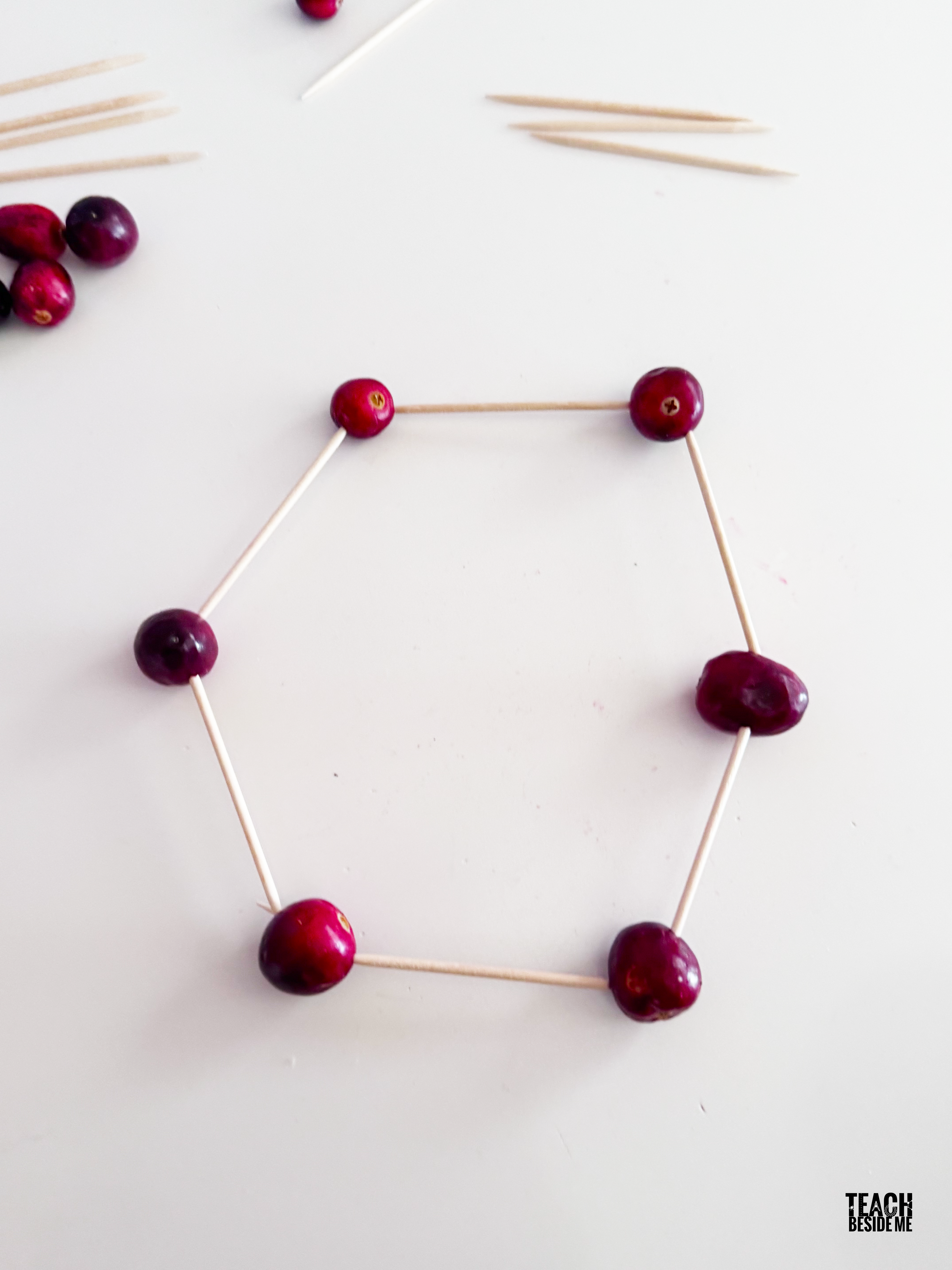
Cranberry & Toothpick Engineering is a simple, playful building activity where kids use fresh cranberries as connectors and toothpicks as beams. The cranberries act like sticky, firm “joints,” making them ideal for building 2D and 3D geometric structures.
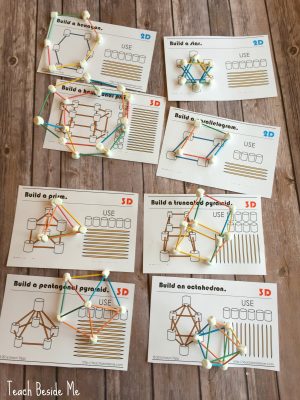
This project is a seasonal variation of my popular Marshmallow & Toothpick Geometry Cards, and you can easily use the same cards for guided builds!
Because cranberries are firmer than marshmallows, kids can create taller, stronger structures—and explore brand-new engineering challenges.

Perfect STEM for Thanksgiving and Christmas!
Cranberries are everywhere during the holidays, making this activity:
-
Festive & seasonal
-
Budget-friendly
-
Perfect for classroom parties, homeschool lessons, or STEM stations
-
A fun way to keep kids engaged while you’re prepping holiday meals
-
A great hands-on addition to winter STEM units
How To Do the Cranberry & Toothpick STEM Activity
Supplies
-
Fresh cranberries
-
A large bowl, sink, or container filled with water
-
Towels for drying hands
-
Optional: My Marshmallow & Toothpick Geometry Cards
How To Build Cranberry & Toothpick Structures
Start with simple 2D shapes. Build squares, rectangles, triangles.

Once they have the hang of it, move into 3D forms.
- Triangular pyramids
- Square pyramids
- Cubes
- Octahedrons
- Towers
- Houses
- Rafts
Encourage playful investigation! My daughter built a tall cranberry & toothpick tower, and a little house, which she loved!
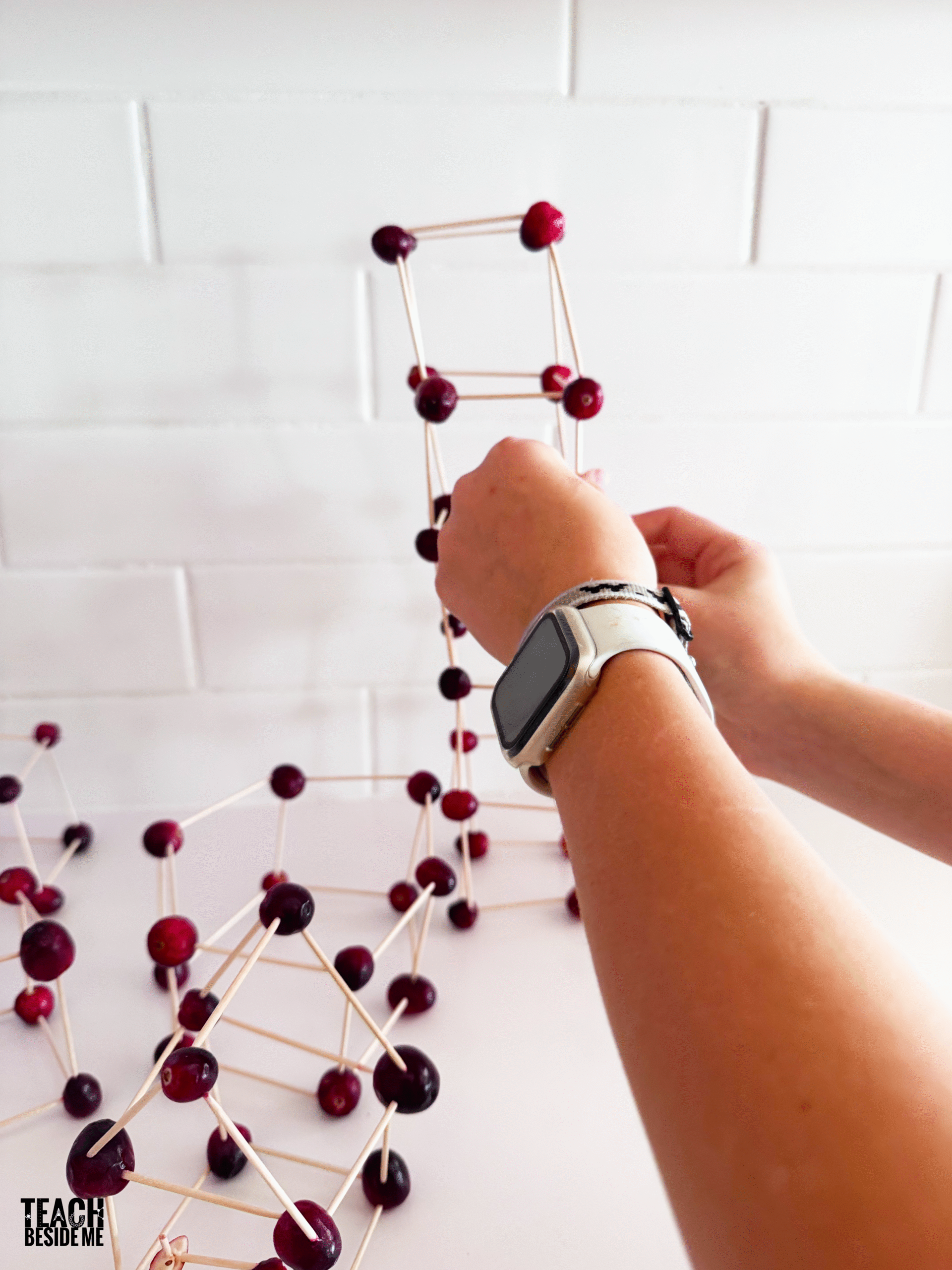
Kids can explore:
- How tall can the structure be before collapsing?
- Does shape matter more than height?
- Can you reinforce weak spots?
Which Shapes Float? A Simple Buoyancy Experiment
This part was fun and fascinating! Have kids guess which shapes you build will float and which will not.
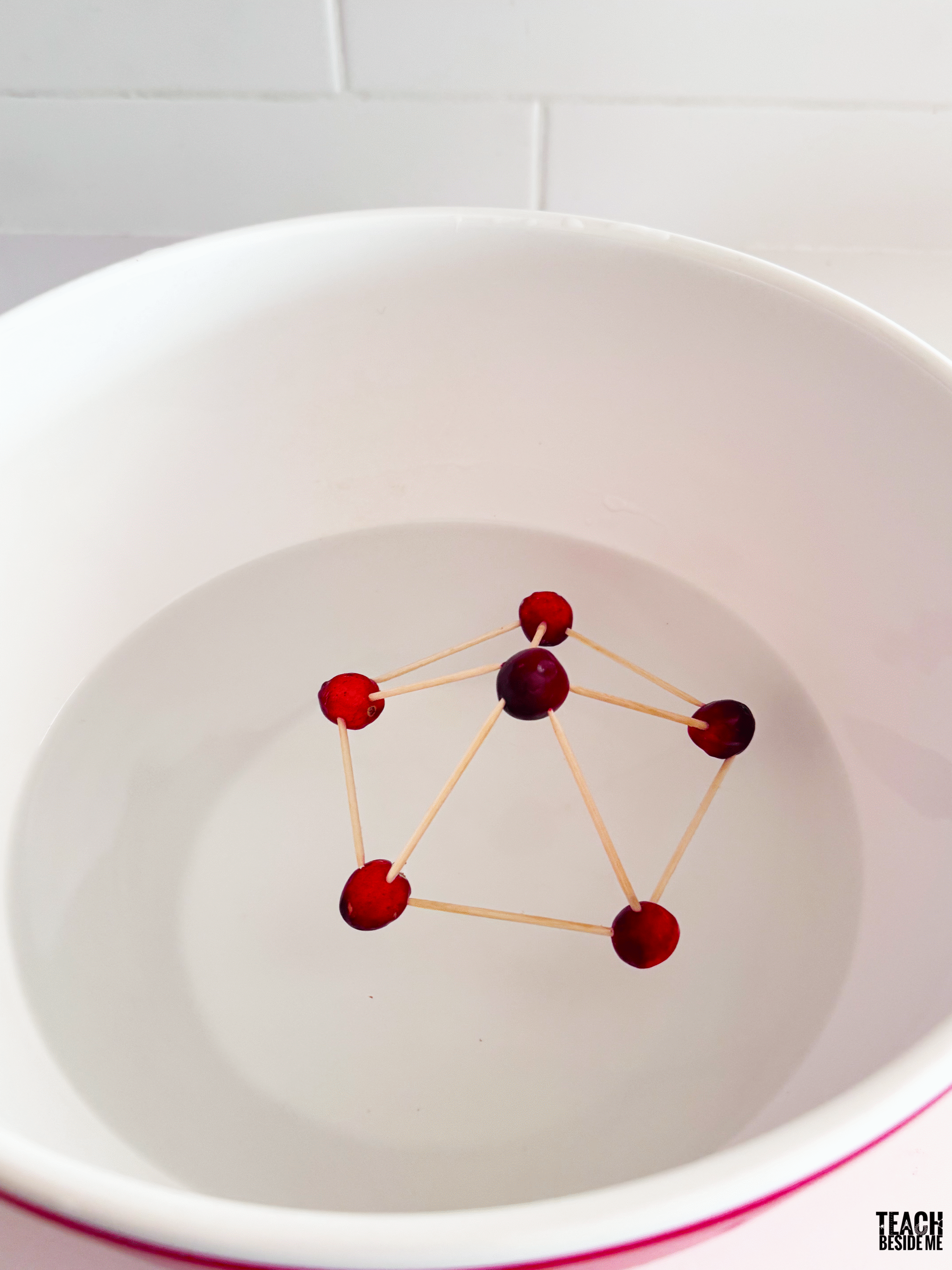
Testing Your Structures
Place each structure onto the surface of the water.
Our Observations
-
Triangular shapes floated.
Their compact, rigid structure distributes weight evenly. -
Square-based shapes sank.
They tend to twist, collapse, or carry more water because they’re less stable.
Why the Difference?
Triangles create inherently stronger, more stable shapes. Squares deform more easily under pressure—especially on water. This is a perfect mini-lesson in geometry + physics.
STEM Concepts Learned from the Cranberry & Toothpick STEM Activity
This activity naturally reinforces:
Engineering
-
Building stability
-
Understanding joints and connectors
-
Testing modifications
-
Strength vs. flexibility
Geometry
-
2D and 3D shapes
-
Corners (vertices) and edges
-
Comparing triangles, squares, pyramids, cubes, prisms, and more
Physics
-
Buoyancy
-
Weight distribution
-
Center of mass
-
Why some shapes float and others don’t
Scientific Method
Kids get hands-on experience with:
-
Asking questions
-
Making predictions
-
Running tests
-
Observing outcomes
-
Iterating designs
Extension: Build Cranberry Rafts!
After seeing which shapes floated, we decided to build little rafts with the cranberries & toothpicks. My daughter used her raft to support shapes that wouldn’t float on their own—a fantastic engineering modification!
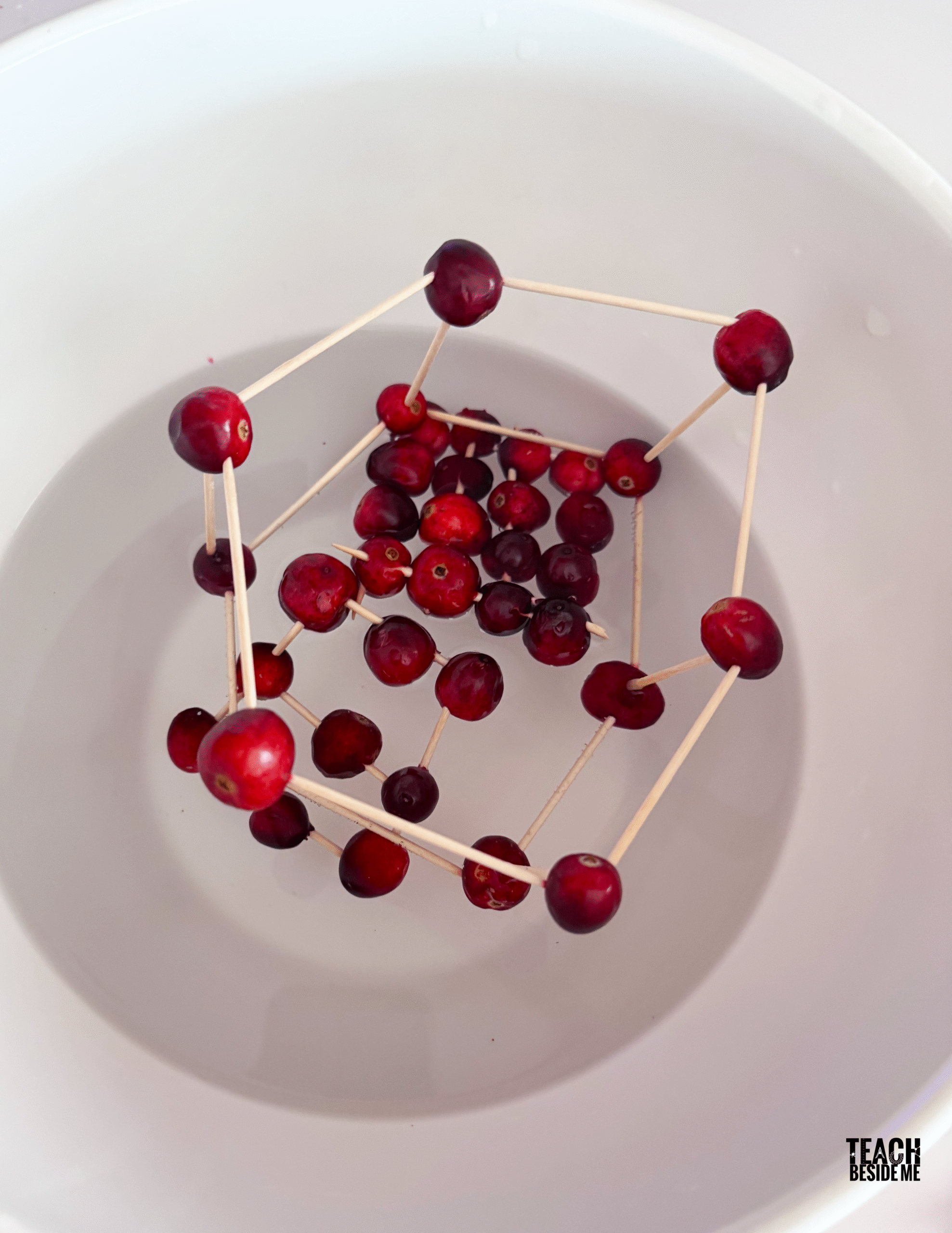
Try These Raft Design Challenges:
-
Build a raft that holds the most weight (coins, cranberries, Legos)
-
Build the smallest raft that still floats
-
Build a raft that can carry one of your 3D shapes
Because cranberries are seasonal, this project feels special, cozy, and festive, making kids more engaged in the STEM process. If you want another fun way to build floating structures, check out my Cranberry & Cinnamon Stick Rafts. They smell amazing and make a beautiful holiday STEM craft.
Frequently Asked Questions
Do cranberries really float?
Yes! Fresh cranberries have natural air pockets that make them buoyant—perfect for water STEM activities.
Can this be a classroom activity?
Absolutely. It works for:
-
STEM bins
-
Maker spaces
-
Holiday parties
-
Centers
-
Early finishers
How long do cranberries last for STEM projects?
Several days in the fridge. They maintain firmness longer than marshmallows, so they’re great for extended engineering.
Related Activities to Try Next
Cranberry and toothpick engineering is a wonderful way to bring STEM learning into the holiday season. With just a handful of simple materials, kids can investigate geometry, engineering design, and buoyancy through building, testing, and playful experimentation. The floating shape challenge sparks great conversations about why triangles are so strong, while the raft-building invites creative problem-solving.
https://www.youtube.com/watch?v=ipLFsdGDUYY