Edible Ocean Zones Snack Cup for Kids with Printable Diagram
This post may contain affiliate links.
If you’ve ever wanted to bring the ocean to life in a hands-on, edible way—this snack is for you! Our Edible Ocean Zones Snack is the perfect blend of science and creativity. Kids will build their own mini ocean, layer by layer, while learning about the unique zones beneath the sea surface.
Made with all-natural ingredients and artificial dye-free, this is a fantastic companion to our popular Edible Soil Layers Dirt Cup!

What Are the Ocean Zones?
The ocean is divided into different zones based on how deep the sunlight reaches. Each layer of the ocean is home to different kinds of sea creatures and conditions.
From top to bottom, we have:
1. Sunlight Zone (Epipelagic Zone)
-
The top layer of the ocean where sunlight shines through.
-
Warm water and lots of marine life like dolphins, sea turtles, and colorful fish
- Since the Sunlight Zone is the only place in the ocean where plants and algae can grow — just like plants on land, they need sunlight to make their own food through photosynthesis.
- The continental shelf is the underwater extension of a continent, forming the floor of the Sunlight Zone.
2. Twilight Zone (Mesopelagic Zone)
-
Dimmer light and cooler water
-
Home to creatures like squid and lanternfish
-
Many animals glow (bioluminescence) to survive
3. Midnight Zone (Bathypelagic Zone)
-
Completely dark — no sunlight at all
-
Cold temperatures and crushing pressure
-
Mysterious creatures like anglerfish and giant squid live here
- Fun Fact: Sperm whales dive deep into the Midnight Zone to hunt for giant squid — but they must return to the surface to breathe!
4. Abyss (Abyssopelagic Zone)
-
Freezing cold, near 36°F (2°C)
-
Very few creatures survive
-
Deep-sea jellyfish, basket stars, and strange sea cucumbers roam these depths
5. Trenches (Hadalpelagic Zone)
- The very deepest parts of the ocean, found in underwater canyons
- Extreme pressure and near total darkness
- Scientists are still discovering new life like snailfish and amphipods
- The Mariana Trench is located in the Hadalpelagic Zone, also known as the Trenches Zone — the deepest known part of the ocean.
Our ocean layers snack highlights each of these zones with tasty foods!
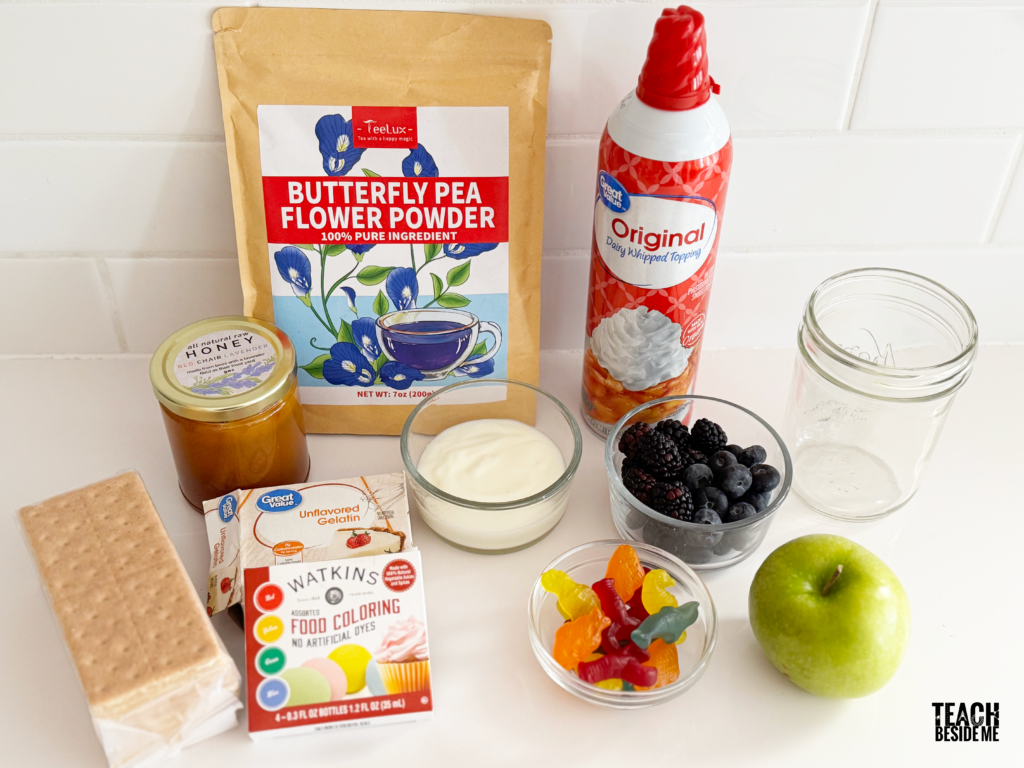
Ingredients for the Ocean Zones Snack:
-
1 batch of blue gelatin (see dye-free recipe below)
- Butterfly pea flower powder or blue spirulina
- Honey
- Plain gelatin
-
1/2 Cup plain or vanilla yogurt
- Natural blue food coloring
-
Graham cracker crumbs (for the ocean floor)
-
Whipped cream
-
Green apple peel or fresh mint leaves (to look like seaweed)
-
Blueberries or blackberries
-
Optional: Trader Joe’s gummy fish or other ocean gummies
- Jar or glass for build the snack
Natural Blue Gelatin Recipe
Ingredients:
-
1 cup water (divided)
-
1 tsp butterfly pea flower powder, blue spirulina, or other natural blue food dye
-
1 tbsp unflavored gelatin powder
-
1–2 tbsp maple syrup or honey (optional)
Instructions:
-
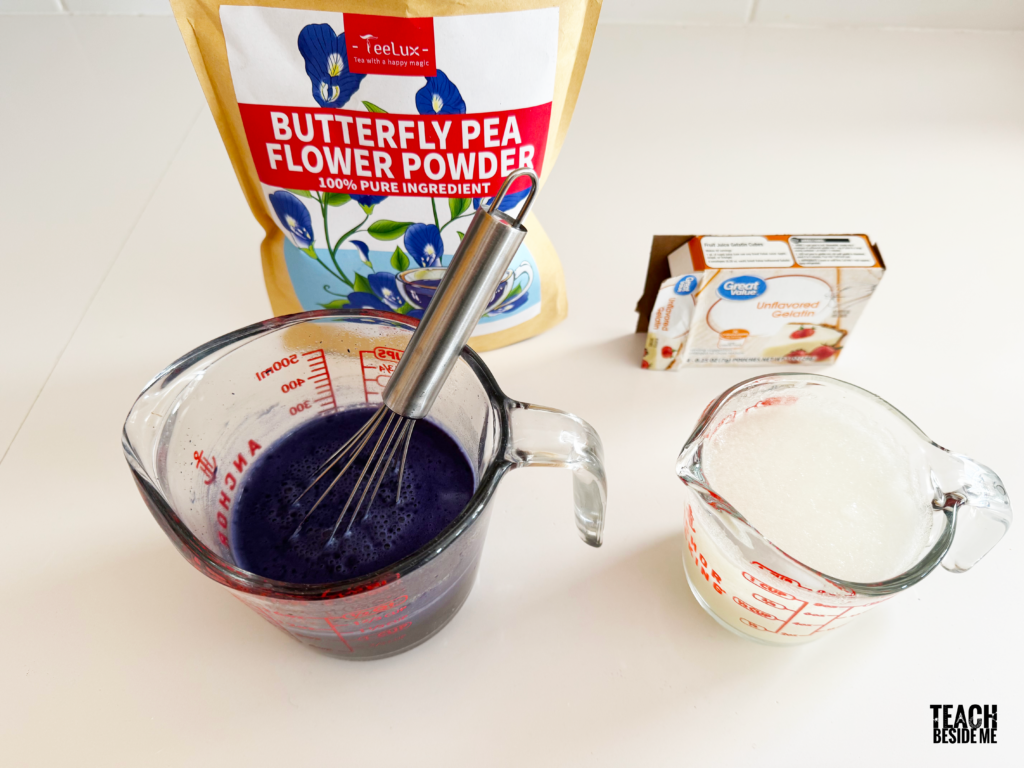
In ½ cup hot water, stir in butterfly pea flower powder until dissolved.
-
In the other ½ cup of cold water, sprinkle in the gelatin and let bloom 5 minutes.
-
Add the blue liquid to the bloomed gelatin and warm gently in a saucepan, stirring until dissolved (don’t boil).
-
Sweeten if desired and pour into small clear cups or jars. Chill until set.
Tip: You can also use steeped butterfly pea flower tea or substitute spirulina powder for a different hue.
How to Assemble Your Ocean Zones Snack
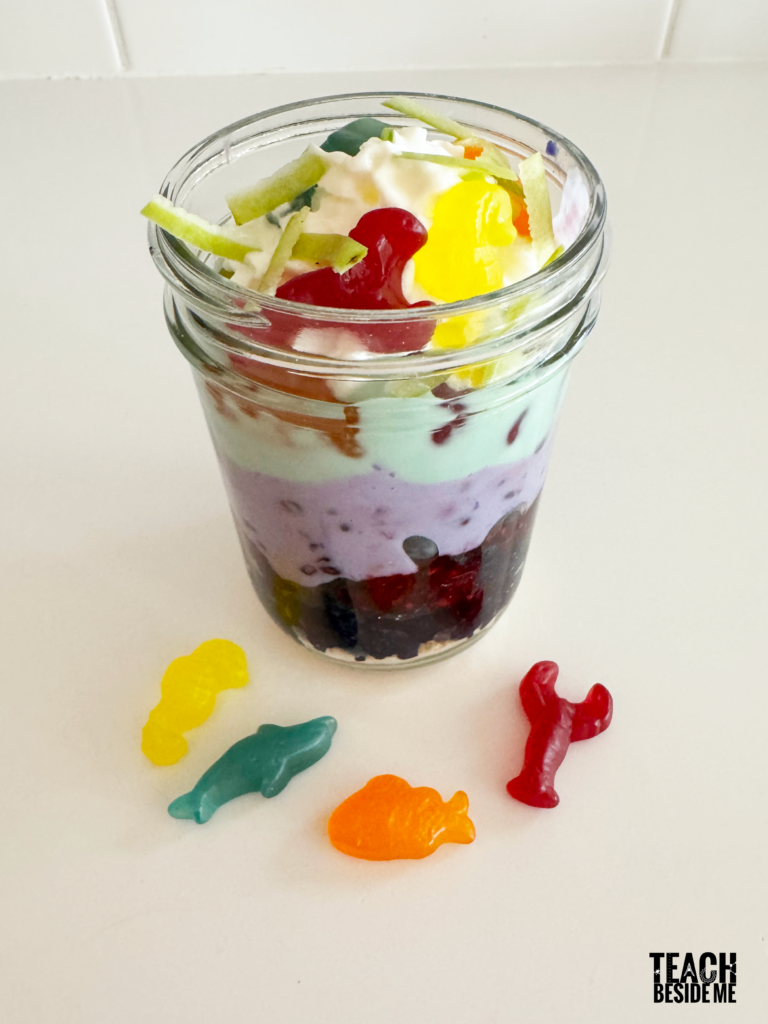
1. Ocean Floor (Trenches and Abyss Zones)
-
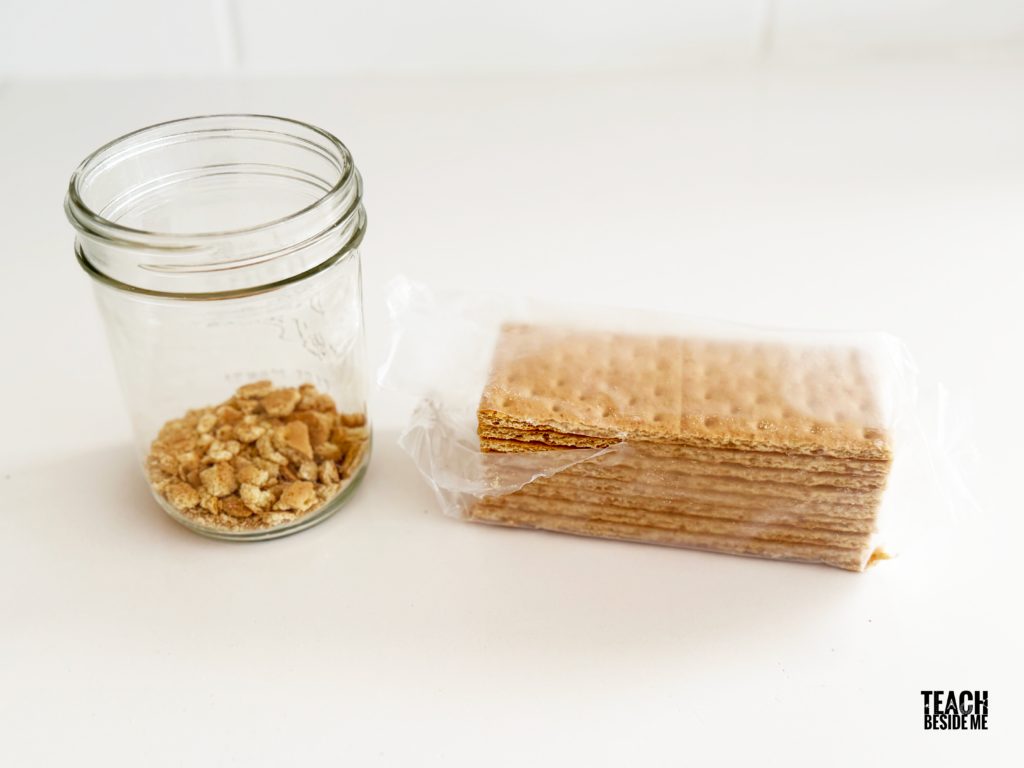
Add a layer of graham cracker crumbs at the bottom of your cup to represent the sandy, deep ocean floor.
2. Midnight Zone (Bathypelagic)
Spoon in your dark butterfly pea gelatin to represent the cold, pitch-black midnight zone.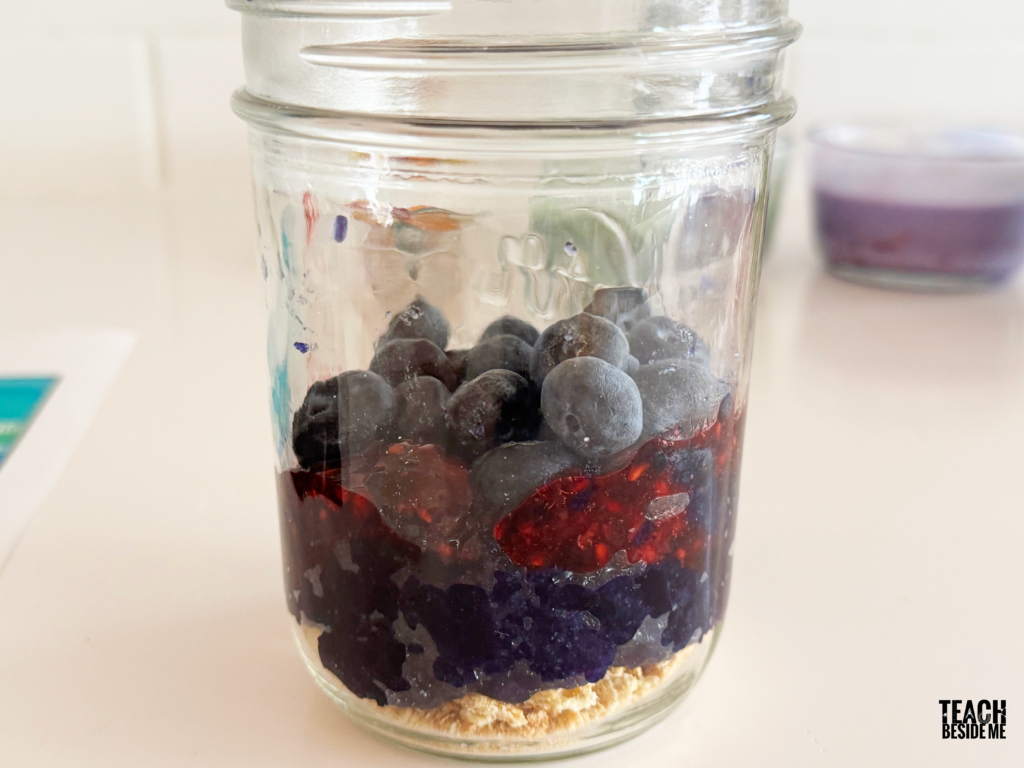
3. Twilight and Sunlight Zones
-
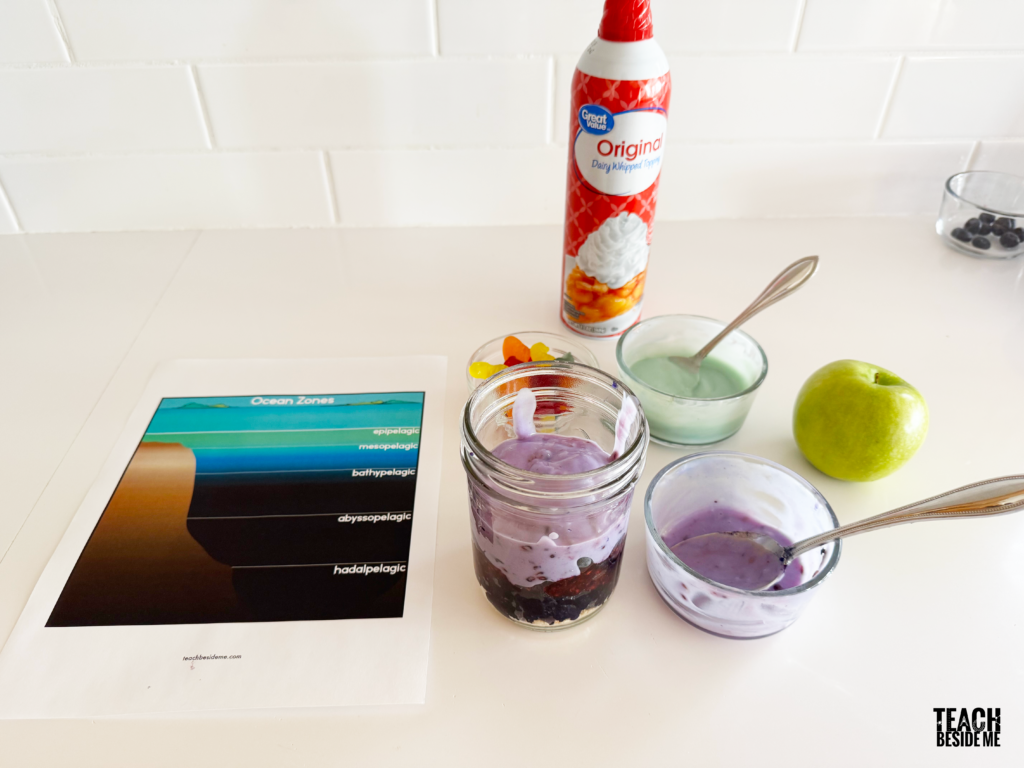
Layer vanilla yogurt mixed with berries above the gelatin to represent the slightly lighter twilight and sunlight zones. I tried to make this into a dark blue, but it ended up a bit purple.
- Next use slightly tinted yogurt for a twilight-to-sunlight gradient effect. I used natural blue food dye and al little bit of green spirulina to give a more light blue, aqua look.
4. Ocean Surface
Top with a fluffy layer of whipped cream to symbolize the frothy ocean surface.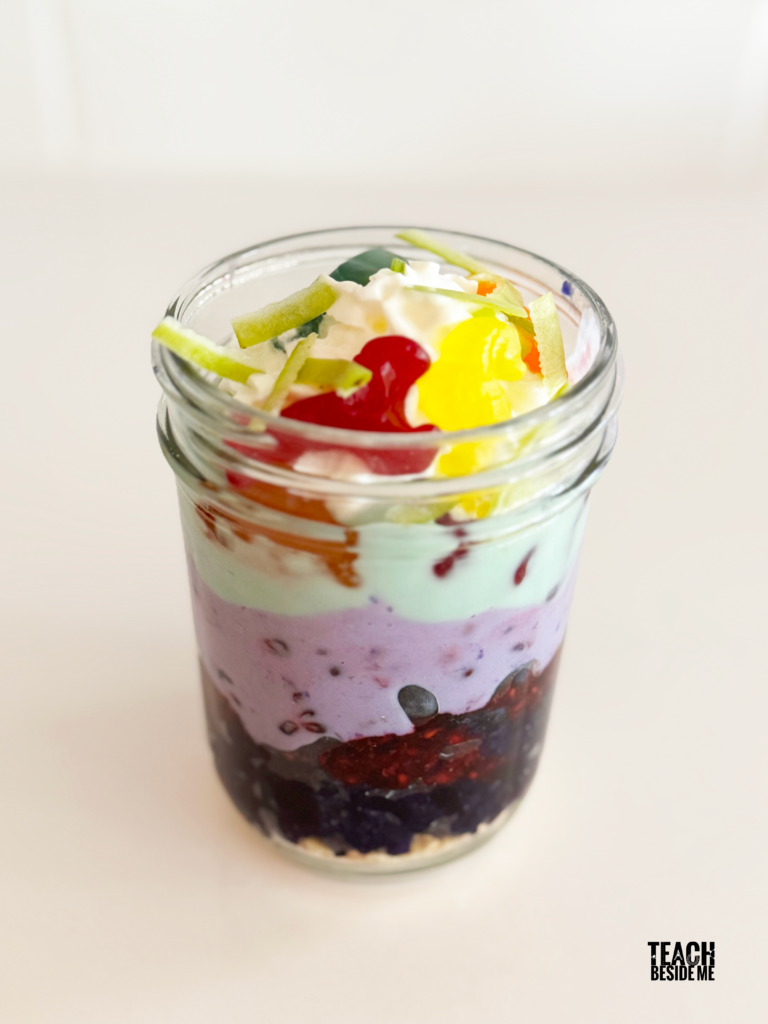
5. Decorate!
-
-
Add green apple peels or mint leaves as floating seaweed.
-
Scatter blueberries or blackberries for “ocean bubbles.”
-
Drop in gummy fish swimming near the surface!
-
Printable Ocean Zones Diagram:
As kids build their snack, talk about what lives in each zone using this printable Ocean Zones Diagram.
-
Dolphins, coral, and fish in the sunlight zone
-
Squid and lanternfish in the twilight
-
Bioluminescent creatures in the midnight zone!
You could even label each zone right on the cup.
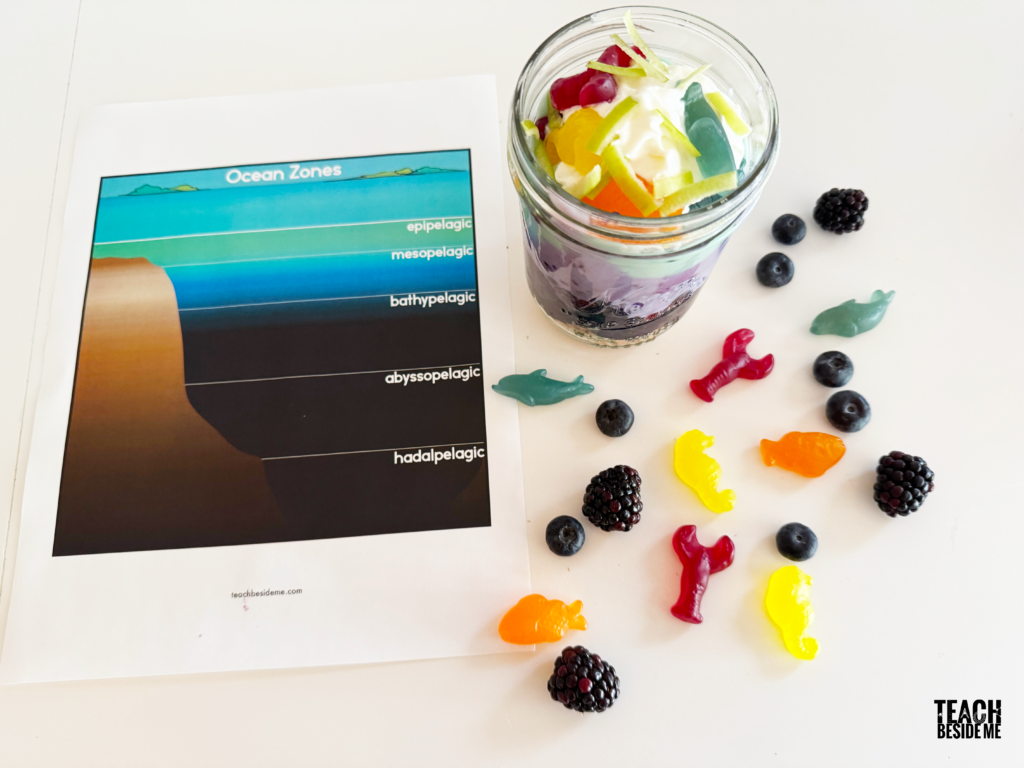
Download the Printable Ocean Zones Diagram Now!
This download includes the ocean zones diagram in full color and black and white versions with labels. It also includes fill in the blank zones as well as the zones with ocean animals included to show what lives in the different ocean zones.
Book Pairing Ideas:
-
Wish for a Fish: All About Sea Creatures (Cat in the Hat Learning Library)
-
- Journey to the Midnight Zone by Shari Last
STEM Tie-In
This snack is more than tasty — it’s a visual and tactile model of the ocean’s vertical structure. It helps kids grasp abstract scientific concepts through a multisensory activity they won’t forget.
How Did Scientists Discover the Ocean Zones?
Scientists discovered the ocean zones by exploring the changes in light, temperature, pressure, and life as they went deeper and deeper below the surface. Over time, they noticed that:
1. Light Disappears With Depth
-
Early divers, submarines, and other submersibles noticed that sunlight only reaches so far into the ocean.
-
Beyond a certain depth, everything goes dark — leading scientists to define the Sunlight, Twilight, and Midnight Zones based on light availability.
2. Temperature & Pressure Change
-
Using thermometers and pressure sensors, scientists found that water gets colder and pressure increases as you go deeper.
-
This helped define different layers of the ocean environment, each with its own conditions.
3. Different Creatures Live at Different Depths
-
Early ocean explorers (and later remote submersibles and cameras) saw that different animals live at different depths.
-
Coral and algae live near the surface, while strange creatures like anglerfish and giant squid live in the deep sea.
-
The deeper they went, the fewer and weirder the creatures became.
4. Sonar Mapping & Deep-Sea Exploration
-
In the 20th century, scientists began using sonar (sound waves) to map the bottom of the ocean floor.
-
They discovered continental shelves, slopes, trenches, and underwater mountains, helping define where zones like the Abyss and Hadal Trench begin.
Famous Explorations
-
The HMS Challenger Expedition (1872–1876) was one of the first major scientific journeys to study the deep ocean. They measured depths, temperatures, and marine life.
-
In 1960, Jacques Piccard and Don Walsh descended into the Mariana Trench in a submersible called the Trieste, reaching the Hadal Zone for the first time.
Pair this ocean zones snack with your Edible Earth Soil Layers dirt cup to show the land and sea structure of Earth — perfect for Earth science units, ocean weeks, or summer camp themes!
Whether you’re hosting a marine biology lesson or just want a unique summer snack, this Edible Ocean Zones Snack is full of fun and learning. Naturally blue, kid-friendly, and science-backed — it’s an ocean exploration you can eat!
See More Edible Science:
Edible Earth Soil Layers Dirt Cups