Edible Plant Cell Model Veggie Pizza
This post may contain affiliate links.
Learning about plant cells gets a lot more interesting when you can eat your science project!
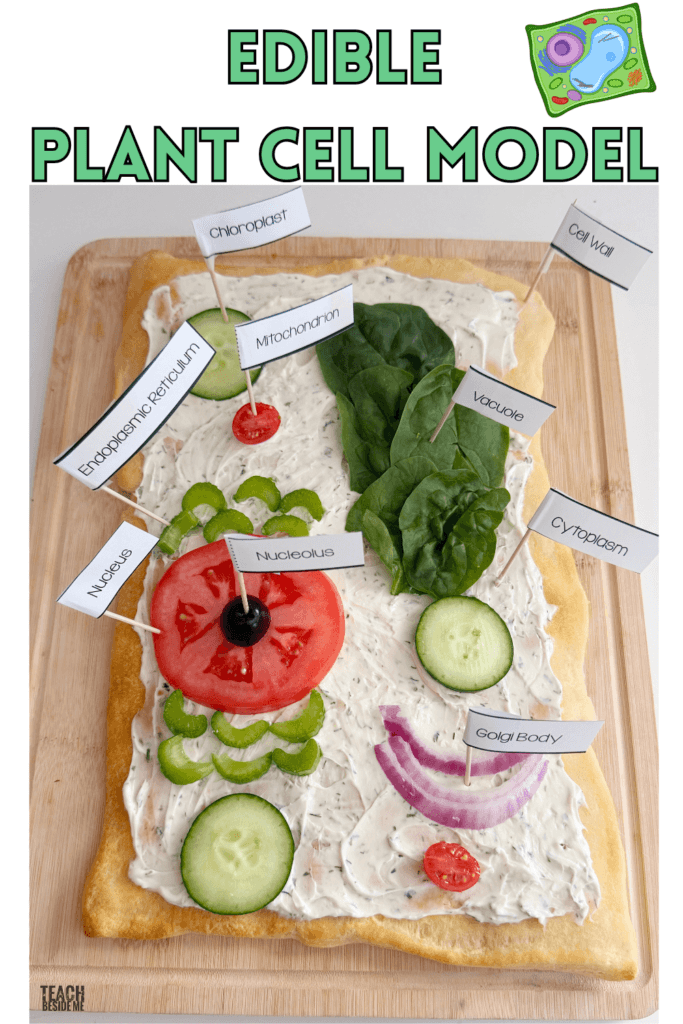
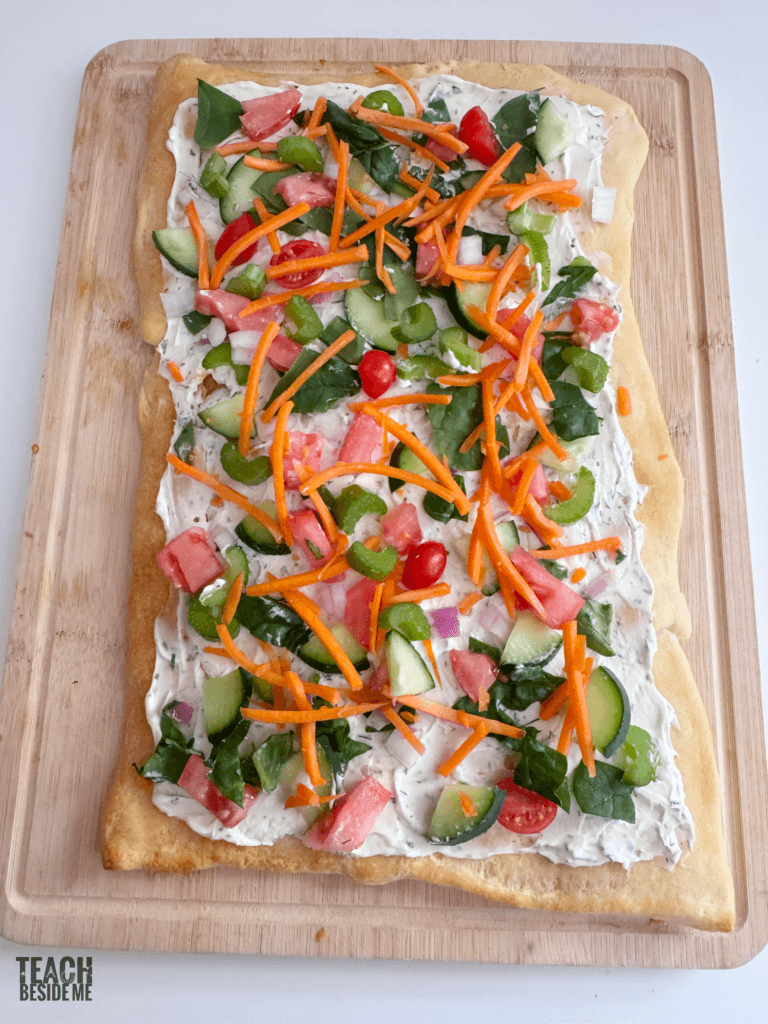
This edible plant cell model is made from a veggie pizza with crescent roll dough, a creamy spread, and colorful fresh vegetables representing the different parts of a plant cell. It’s a fun hands-on biology project for kids and a great companion to my edible animal cell model made from a cantaloupe.
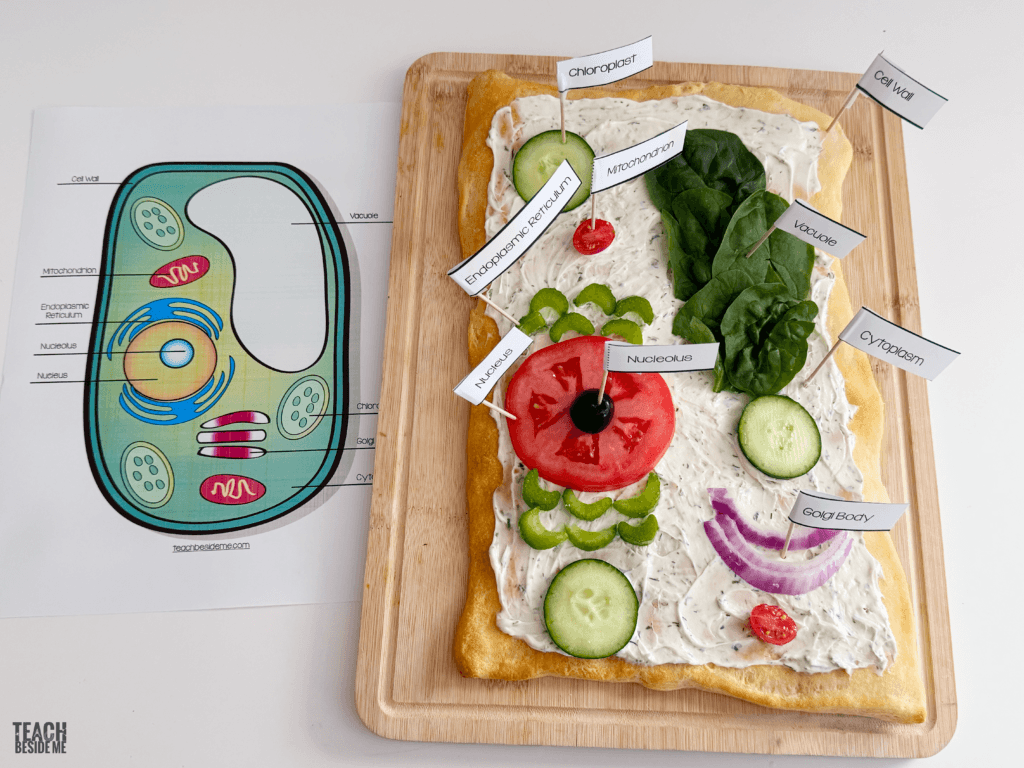
We used my Plant & Animal Cell Diagram Printables as a guide while building our model. After assembling the cell, we added printed labels to toothpicks so we could identify each of the organelles.
And yes—you can eat the whole thing when you’re finished!
Why Make an Edible Plant Cell Model?
Plant cells contain several structures that can be difficult to understand when kids only see them illustrated on a worksheet or in a textbook.
Building a three-dimensional model helps students visualize where the organelles are located and how the different parts fit together.
It also makes it easier to compare plant and animal cells. Plant cells contain some structures that animal cells don’t, including a cell wall and chloroplasts, and plant cells typically have a large central vacuole.
The rectangular shape of this veggie pizza also works especially well because plant cells generally have a more rigid, box-like appearance due to their cell walls.
Supplies for the Veggie Pizza Plant Cell
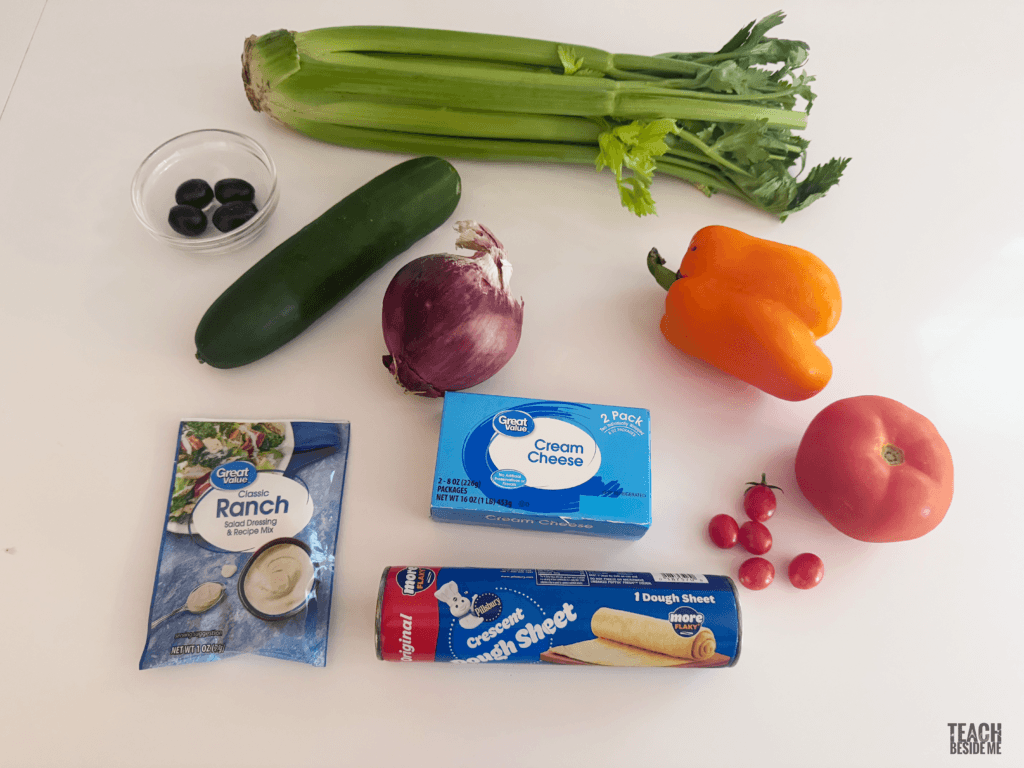
To make the edible plant cell, you’ll need:
- Crescent roll dough
- Cream cheese or your favorite savory cream-cheese spread
- Ranch seasoning
- Assorted fresh vegetables
- Cutting board
- Knife
- Baking sheet
- Toothpicks
- Printed organelle labels
- Plant Cell Diagram Printable for reference
Choose vegetables with a variety of colors, shapes and textures. Part of the fun is deciding which food looks most like each organelle!
Plant Cell Parts to Include
Our model represents the same major plant-cell structures included in my printable:
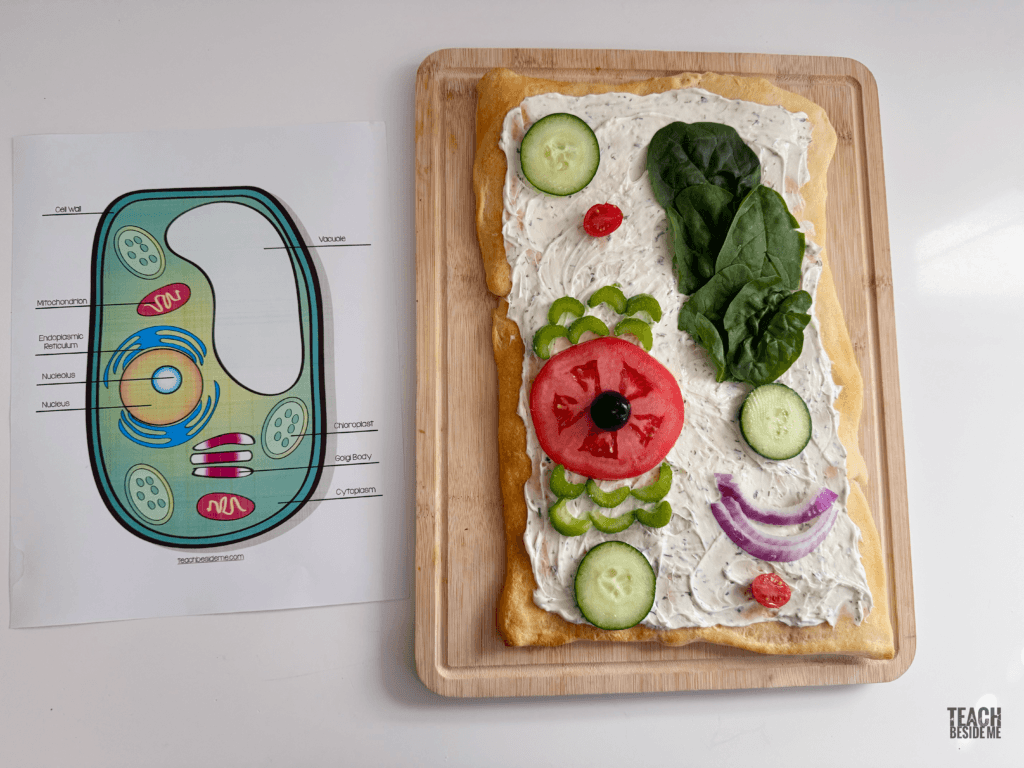
| Plant Cell Part | Food Representation |
|---|---|
| Cell Wall | Outer edge of crescent-roll crust |
| Cytoplasm | Cream-cheese layer |
| Nucleus | Large tomato slice |
| Nucleolus | Halved olive |
| Central Vacuole | Spinach leaves |
| Chloroplasts | Cucumber slices |
| Mitochondria | Cherry tomato halves |
| Endoplasmic Reticulum | Celery or pepper slices |
| Golgi Body | Red onion slices |
How to Make an Edible Plant Cell
Start by pressing the crescent-roll dough into a rectangular shape on a baking sheet. Pinch the seams together so that you have one solid piece of dough. They also have full sheet ones now that I used for this.
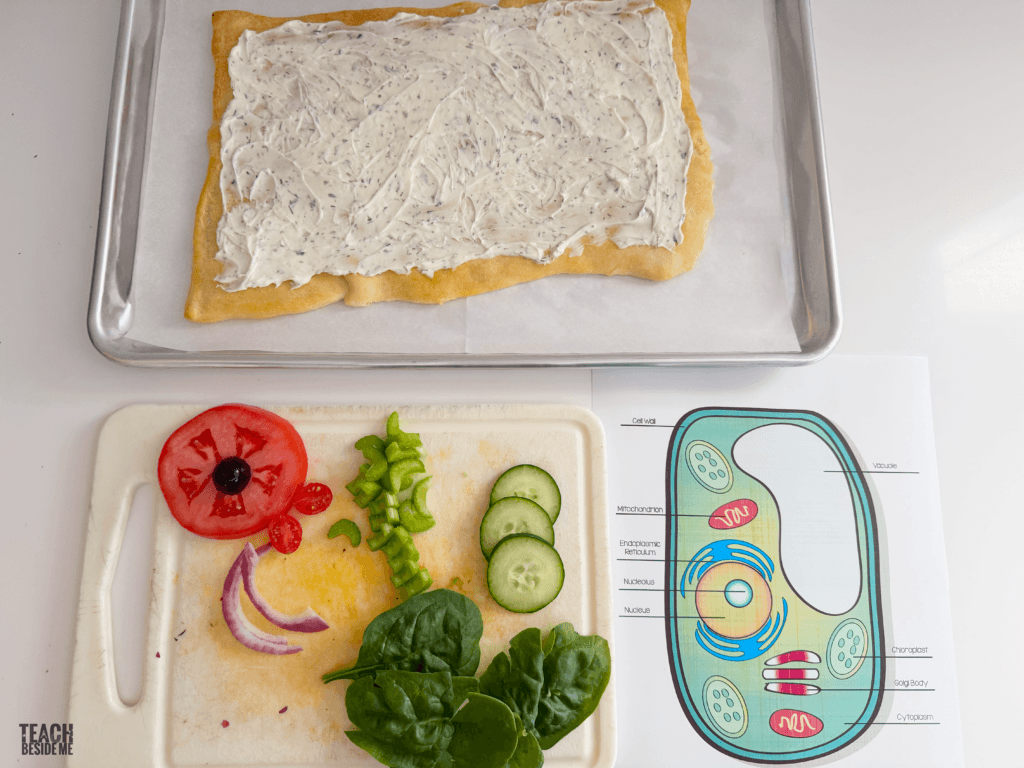
Bake according to the package directions and allow it to cool completely.
The rectangular crust becomes the basic shape of the plant cell, and the firm outer edge represents the cell wall.
Mix 4 oz of cream cheese with 1 teaspoon of a Ranch seasoning packet. Season more to taste if desired. I added an extra dash of dill & parsley to mine.
Once the crust is cool, spread a layer of cream cheese over the top. This cream cheese layer becomes the cytoplasm, the gel-like material that fills the inside of the cell and surrounds its organelles.
Now comes the fun part!
Use your plant cell diagram as a reference and arrange the different vegetables on top of the pizza to represent the organelles.
Try to think about more than color. Look at the shape, size and location of each organelle when choosing and arranging your foods.
Label Your Plant Cell Model
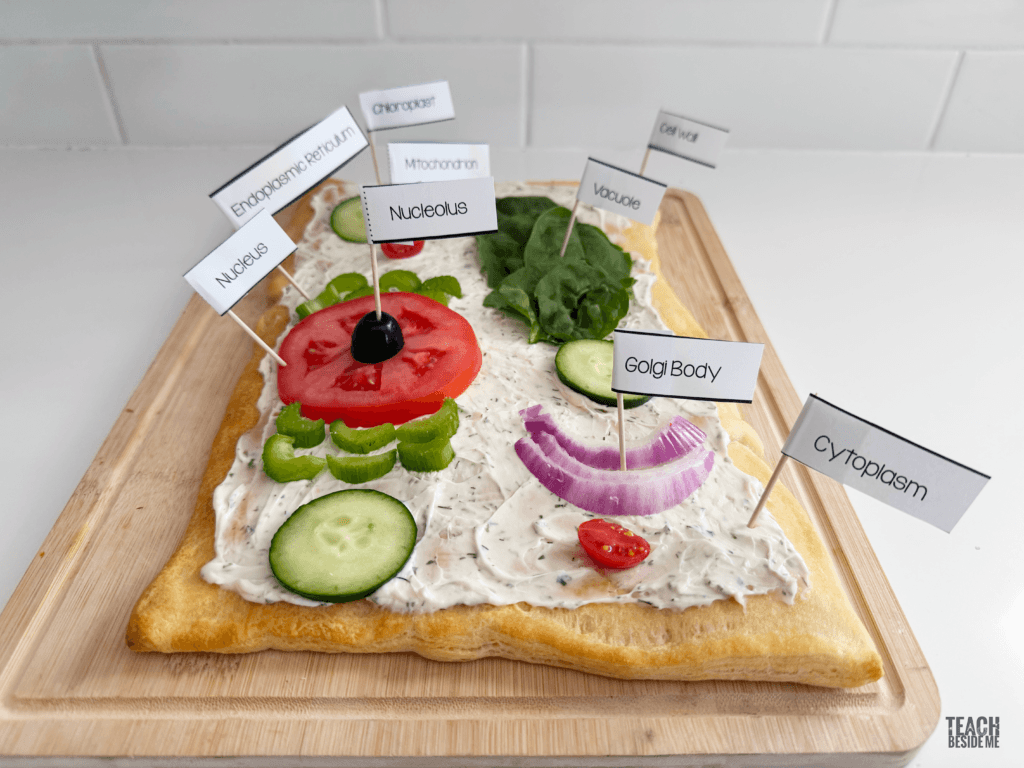
Once you’ve finished arranging the vegetables, turn your pizza into a labeled plant-cell diagram.
Print the names of the organelles (also included in my printable pack), cut them apart, and attach each label to a toothpick with tape. Insert the toothpicks beside the corresponding foods.
Have kids identify each part before adding the label.
For an additional challenge, let students build their cells without looking at the completed diagram first. Give them the organelle names and see how much of the cell they can construct from memory.
What Do the Parts of a Plant Cell Do?
As you build your model, talk about the function of each structure.
Cell Wall: The rigid outer layer that provides structure, protection and support to the plant cell.
Cell Membrane: A thin layer just inside the cell wall that controls what enters and leaves the cell.
Cytoplasm: The gel-like substance filling the cell where the organelles are suspended and many cellular processes occur.
Nucleus: Contains the cell’s DNA and helps direct cellular activities.
Nucleolus: Located inside the nucleus and involved in making ribosomes.
Central Vacuole: A large fluid-filled compartment that stores water and other materials. It also helps maintain pressure that keeps plant cells firm.
Chloroplasts: Contain chlorophyll and are the site of photosynthesis, where light energy is used to make sugars.
Mitochondria: Help release usable energy from food through cellular respiration.
Endoplasmic Reticulum: A network of membranes involved in making and transporting proteins and lipids.
Golgi Body: Modifies, sorts and packages proteins and other materials for transport within or outside the cell.
Plant Cells vs. Animal Cells
After making this model, compare it with an animal cell.
Both plant and animal cells contain a nucleus, mitochondria, cytoplasm, cell membrane, endoplasmic reticulum and Golgi apparatus.
But there are some important differences.
Plant cells have a cell wall outside the cell membrane. They also contain chloroplasts, which allow plants to perform photosynthesis, and typically have one large central vacuole.
Animal cells do not have a cell wall or chloroplasts, and their vacuoles are generally much smaller.
For a fun side-by-side lesson, make this veggie plant cell and then try my Edible Animal Cell Model Made From a Cantaloupe.
Use a Plant Cell Diagram as Your Guide
Before you start building your edible model, it helps to have a good plant-cell diagram nearby.
My Interactive Plant & Animal Cell Diagram Printable Pack includes labeled and blank diagrams in both color and black and white, vocabulary foldables, and cut-and-build versions of both plant and animal cells.

Use the labeled plant-cell diagram as your blueprint while building the veggie pizza. Then use the blank diagram afterward to see how many organelles your kids can remember.
Get the Plant & Animal Cell Diagram Printables in my shop.

This turns one edible science project into a more complete hands-on biology lesson without requiring a pile of worksheets.
Once we were finished labeling, we chopped up the veggies smaller to distribute them more evenly and ate our tasty veggie pizza!
More Hands-On Cell Activities
Once you’ve made the plant cell, try the companion cantaloupe animal cell model. It uses foods to represent the nucleus, nucleolus, mitochondria, ER, Golgi apparatus, ribosomes and other structures inside an animal cell.
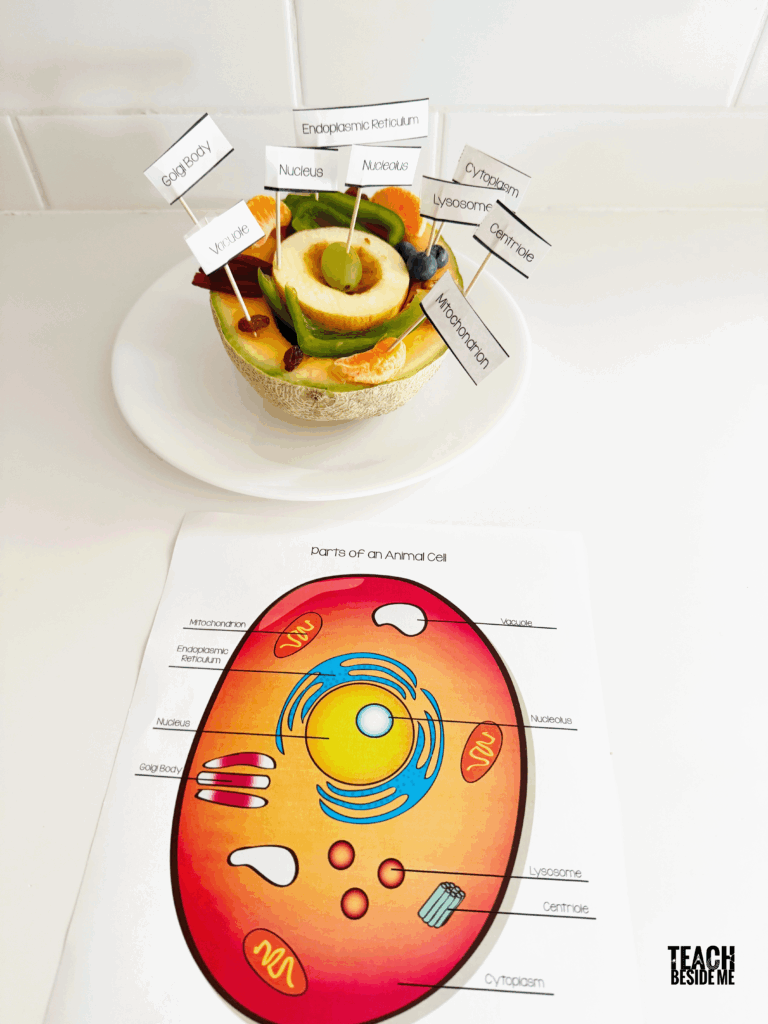
Making both models is an especially fun way to compare the structures found in plant and animal cells.
And when the lesson is over? Eat your science experiment!
Check out more even Edible Education Projects: 100+ Edible Education Projects