What Dissolves in Water? Easy Dissolving Science Experiment for Kids
This post may contain affiliate links.

Have you ever wondered what dissolves in water and what doesn’t? This simple dissolving science experiment is a fun way for kids to explore how different substances react when mixed with water.
In this activity, kids can test common household ingredients, make predictions, and learn about solutions, solutes, and solvents through hands-on learning.
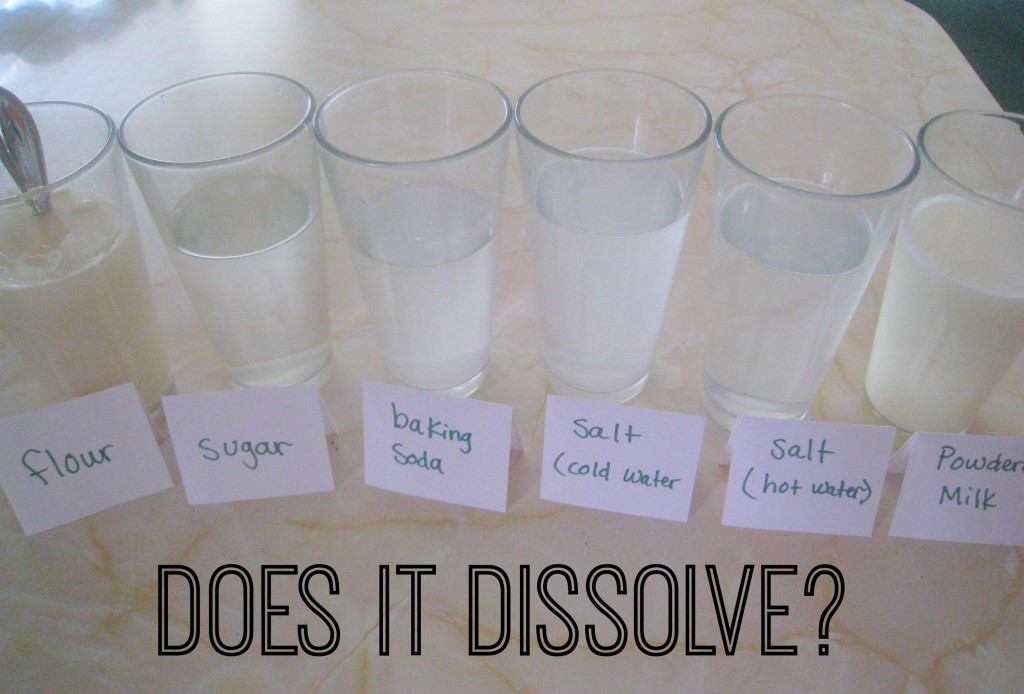
What Dissolves in Water?
Many substances dissolve in water, including salt, sugar, baking soda, and powdered drink mixes. These substances are called soluble. Other materials like oil and flour do not fully dissolve and are considered insoluble.
Dissolving Science Experiment for Kids
This easy experiment helps kids discover which materials dissolve in water.
Supplies
- Water (hot and cold)
- Clear cups or glasses
- Spoons
- Test substances:
- Sugar
- Salt
- Baking soda
- Flour
- Powdered milk
- Oil (for contrast)
How to Do the Dissolving Experiment
- Fill each glass with the same amount of water (about 1 cup or 200 ml of water).
- Use both hot and cold water to compare results
- Add 1 tablespoon of each substance to separate cups
- Stir each mixture and observe what happens
- Record which substances dissolve and which do not
Make Predictions (Scientific Method)
Before starting, ask kids:
- Which substances will dissolve?
- Which will not?
- Will hot water make a difference?
You use my Scientific Method Printable Set to help you out! It has a great investigating science sheet to help you with the process of any experiment!

Variables to Test in This Experiment
You can change different variables in this experiment to see how they affect dissolving:
- Temperature of the water (cold vs warm water)
- Amount of water used
- Type of substance
- Amount of substance added
For example, try using warm water and cold water to see which one helps substances dissolve faster.
Try This Extension
Add a drop of food coloring to your water to better observe how substances spread and mix.
You can also measure your water using a specific amount, like 100 ml of water, to keep your experiment consistent.
Things That Dissolve in Water
Here are some common substances that dissolve in water:
- Salt
- Sugar
- Baking soda
- Powdered drink mix
- Honey
- Vinegar
Things That Do NOT Dissolve in Water
- Oil
- Flour (forms a suspension)
- Sand
- Pepper
Does Temperature Affect Dissolving?
Hot water often helps substances dissolve faster because heat increases the movement of molecules, allowing them to break apart more easily.
The Science Behind Dissolving
When something dissolves in water, it forms a solution.
- The substance being dissolved is called the solute
- The liquid (like water) is called the solvent
Water is made up of tiny particles called water molecules. These molecules are constantly moving and interacting with other substances.
When a substance like salt or sugar is added to water, the water molecules pull apart the solid into smaller pieces until they are evenly spread throughout the liquid.
What is a Saturated Solution?
When no more of a substance can dissolve in water, the solution is called saturated. Any extra material will settle at the bottom.
FAQ
What materials dissolve in water?
Materials like salt, sugar, and baking soda dissolve in water because their particles can break apart and mix evenly with water molecules.
What does not dissolve in water?
Substances like oil and sand do not dissolve because they do not interact with water in the same way.
Why does hot water dissolve things faster?
Hot water molecules move faster, which helps break apart other substances more quickly.
Try more fun science experiments from my site:
Rainbow Sugar Density Experiment




What a fun activity, dissolving is always very popular in our house. i love your ‘scientific calculations’.
Thanks for joining in with Challenge and Discover.
it so nice to us grade 7 class