
Blooming Paper Flowers Experiment – A Spring STEM Activity
This post may contain affiliate links.
These blooming paper flowers actually open right before your eyes! This simple paper flower science experiment is a beautiful way to combine art, water science, and STEM learning. Kids love watching their colorful flowers magically unfold in water — and the science behind it is fascinating.
This activity is especially great for Spring and Summer, but it works any time of year when you need an easy and low-mess science activity.

How to Do the Blooming Paper Flowers Experiment
You’ll Need:
-
Markers or crayons
-
Scissors
-
A shallow container of water (a bowl, dish, or bin)
-
[Optional] My free printable flower template
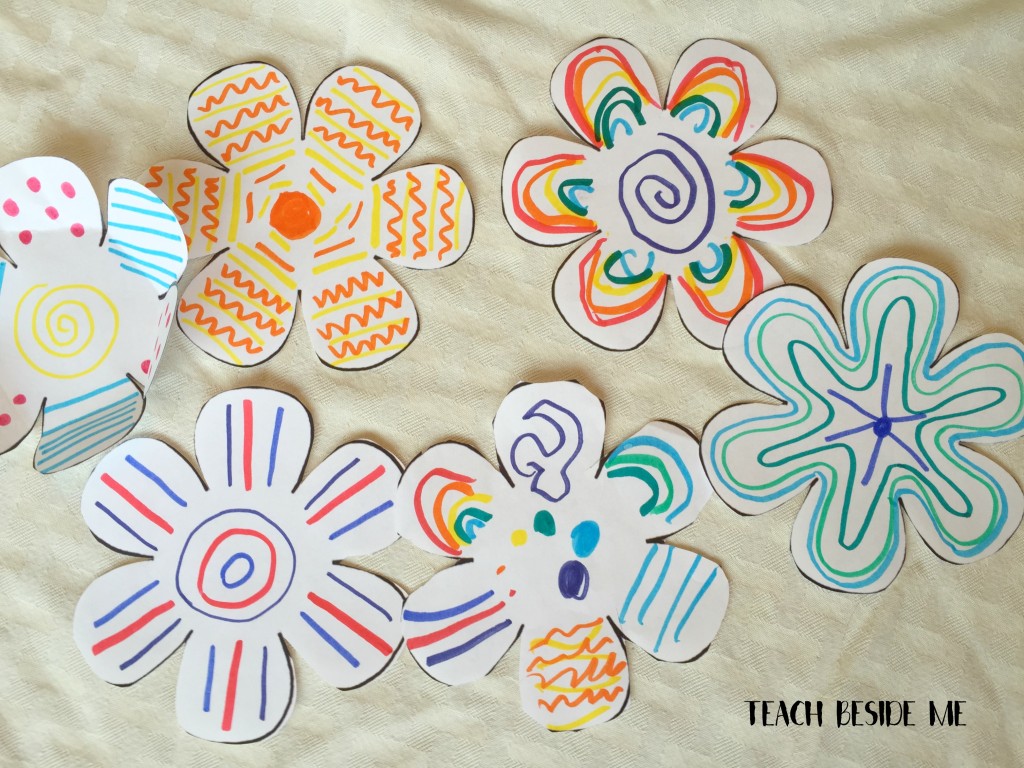
Instructions:
Cut out flower shapes
Use the printable template or draw your own flowers with 4–6 petals. Keep them palm-sized or smaller so they fit in the water container.
Decorate your flowers
Color them with markers to make them vibrant. Kids love seeing the colors pop and swirl as the flowers open!

Fold the petals inward
Gently fold each petal into the center of the flower. Avoid making sharp creases—loose folds work best so the paper can still absorb water easily.
Float the flower in water
Place the folded flower gently on the surface of the water and watch as it blooms open! The petals will slowly unfold in just a few seconds.
Try a few variations
- Add a tiny shape or word in the center for a hidden surprise.
- Use different shapes—can stars bloom too?
- Time how long it takes different paper types to open.

Why Do Paper Flowers Bloom in Water?
This experiment is a simple example of capillary action and paper absorption.
Paper is made of tiny plant fibers. These fibers have spaces between them, and when the paper touches water, the liquid is pulled into those spaces through a process called capillary action.
As the water is absorbed, the paper fibers swell and expand. Since you’ve folded the petals inward, the expansion causes the folds to slowly unfold—making the flower look like it’s blooming!
This also ties into potential and kinetic energy: the flower is folded and holds potential energy, and the water activates that energy into motion.
Real flower petals and leaves also respond to water and environmental conditions, which helps plants survive and grow.
Educational Extensions
Want to turn this blooming paper flowers activity into a full lesson?
-
Younger kids: Practice colors, counting petals, and shapes.
-
Older kids: Predict how different paper types (cardstock, newspaper, tissue) affect the blooming speed.
-
Add math: Measure bloom time and chart results.
-
Tie it to nature: Learn how real flowers respond to water and light in Spring!
- Encourage kids to become engineers and scientists by designing their own flower shapes and testing which designs bloom the fastest.
When to Use this Activity:
This project is perfect for:
-
Spring or Summer science activities
-
Earth Day or garden-themed learning
-
Homeschool STEM lessons
-
Indoor rainy day fun
-
Art + science STEAM projects
Want to Extend the Learning?
This activity also works wonderfully with my free printable STEM Lab Sheet, where kids can:
- make predictions
- compare paper types
- record bloom times
- draw observations
- think like scientists
Grab the STEM Lab Sheet here!
Try More Fun STEM Projects:
Paper flower science is the kind of experiment kids will want to repeat again and again. It’s quick, easy, and delivers a real wow factor. Whether you’re teaching preschool or upper elementary, this blooming paper flower experiment is a perfect way to celebrate science, Spring, and the joy of hands-on learning.
Part of the Backyard Summer Science Camp
This activity is also included in my Backyard Summer Science Camp — a collection of hands-on STEM projects, outdoor science activities, and printable learning pages designed to make summer learning fun and easy.
Perfect for:
- homeschool families
- summer enrichment
- camps
- classrooms
- bored kids on hot afternoons
If your kids love hands-on science, be sure to check it out!




I have a little girl who will love this one, thank you!
I have to do this with my grandson!
I used this activity with a water unit we were doing in our homeschool. It was so awesome my kids absolutely loved it.
YEah! I am so glad to hear that! Thanks so much for the comment.
I used to make these with my children decades ago. Nice to see it again. It was in a kid’s science experiment book.