
The Ultimate Egg Drop Challenge: Classic STEM Idea!
This post may contain affiliate links.
The Egg Drop Challenge is a classic STEM activity that encourages creativity, engineering, and physics in an exciting hands-on experiment. In this challenge, participants design a contraption to protect a raw egg from breaking when dropped from a significant height. This activity is perfect for science classrooms, homeschool projects, STEM competitions, and even team-building exercises.
This project has been around for ages. I remember doing this challenge in middle school when I was a kid. I’ve also used this activity a few times while teaching in homeschool co-op classes. It is so much fun to design and create something! It’s always a huge hit!
In this post, I’ll cover the science behind the egg drop challenge, important physics concepts, materials to use, step-by-step instructions, and different ways to build your egg protection device. Whether you’re a teacher, parent, or student, this guide will help you understand the physics of impact, experiment with designs, and improve your engineering skills.
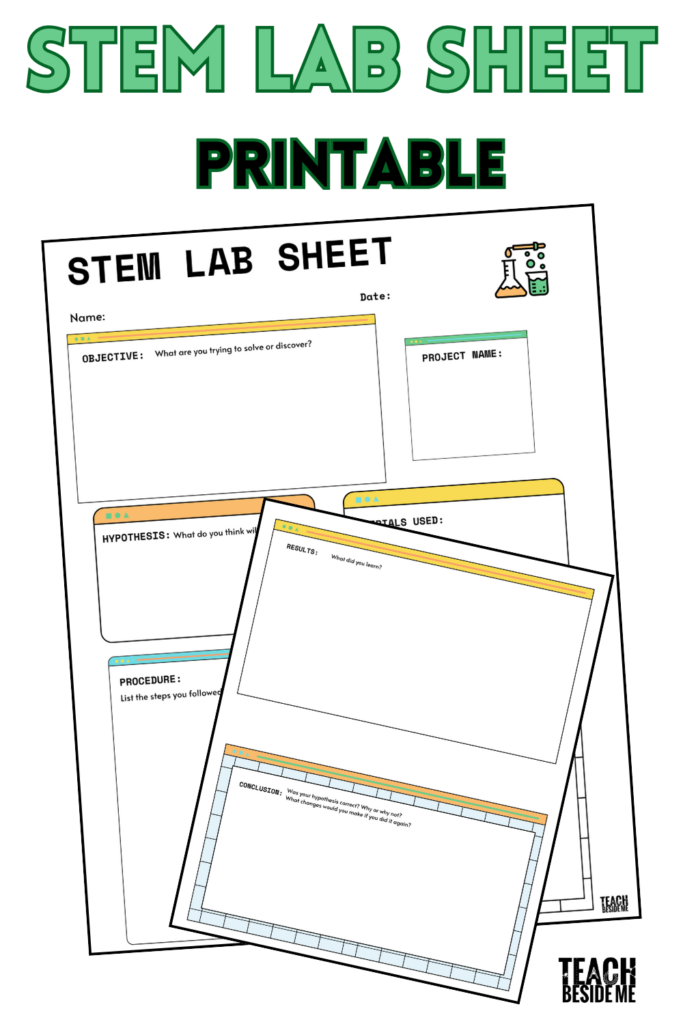
I also have a free STEM Lab sheet for you to download & use for this project.

The Science Behind the Egg Drop Challenge
Physics Principles at Play
The Egg Drop Experiment is a fantastic way to explore physics concepts such as:
-
Gravity – The force pulling the egg toward the ground.
-
Momentum – The product of the egg’s mass and velocity upon impact.
-
Impulse – The change in momentum due to an applied force over time.
-
Force Distribution – Spreading out the force over a larger area reduces impact.
-
Energy Absorption – Soft materials like foam and sponges absorb energy to protect the egg.
-
Air Resistance – Adding parachutes or padding can slow down the fall.
-
Acceleration – The egg accelerates due to gravity. The faster the egg falls, the greater the force of the impact unless slowed by air resistance.
By understanding these principles, students can design a protective structure that either absorbs impact or slows down the egg’s fall.
Best Materials for Egg Drop Challenge Designs
Choosing the right materials is crucial for success. Giving a materials list to your students will give them some guidance for their egg drop project. You’ll also want designs that contain the mess.

Here are some of the best materials for designing an egg protection device:
Cushioning Materials (to absorb impact):
-
Cotton balls
-
Sponges
-
Packing peanuts
-
Shredded paper
-
Foam padding
Structural Support Materials (to create stability):
-
Cardboard
-
Plastic cups
-
Egg cartons
-
Aluminum foil
- Cardboard tubes
Slowing the Fall (Air Resistance):
-
Coffee filters
-
Parachutes (plastic bags, napkins, or fabric)
-
Paper cones
-
Umbrella-like structures
Adhesives & Fasteners:
-
Tape (duct tape, masking tape, or clear tape)
-
Rubber bands
-
Glue or hot glue
-
String or yarn
-
Zip ties
Egg Drop Challenge Design Ideas
1. Parachute Design
Best for: Reducing speed and controlling descent
-
Attach a plastic bag, coffee filter, or fabric parachute to a small container holding the egg.
-
The increased air resistance slows the egg’s descent, reducing impact force.
-
Try different parachute sizes to test their effectiveness.
2. Cradle or Nest Design
Best for: Shock absorption and egg security
-
Use cotton balls, packing peanuts, sponges, or bubble wrap to surround the egg inside a small box, container, or cup.
-
Secure the egg in the center, so it doesn’t move during the fall.
-
Try different cushioning thicknesses to optimize protection.
3. Strut-and-Frame Design
Best for: Distributing impact force evenly
-
Build a cube or pyramid frame using popsicle sticks or straws.
-
Suspend the egg in the center using rubber bands or strings.
-
This disperses impact energy throughout the frame instead of concentrating it on the egg.
4. Air Pocket Design
Best for: Protecting the egg by surrounding it with air
-
Place the egg in a plastic cup or cardboard box with lots of air-filled balloons.
-
The balloons absorb the shock, keeping the egg safe.
Instructions for the Egg Drop Challenge
Step 1: Gather Materials
Choose materials from the lists above, or get creative and come up with your own ideas. Decide on a design strategy. Use my STEM Lab Sheet for this challenge!
Step 2: Build Your Egg Protection Device
-
Use soft materials around the egg to absorb shock.
-
Consider adding a parachute or other air resistance feature to slow the fall.
-
Use strong but lightweight materials to support the structure.
Step 3: Predict the Outcome
Encourage students to write a hypothesis on whether their design will protect the egg and why.
Step 4: Perform the Drop Test
-
Choose a safe drop height (second story, ladder, or balcony).
-
Drop the egg protection device and observe the results.
-
Repeat the test with different heights or modifications.
Step 5: Analyze the Results
-
Did the egg survive? Why or why not?
-
What worked well, and what could be improved?
-
Discuss real-world applications, such as airbags, packaging, and spacecraft landings.
Variations for the Egg Drop Challenge
To make the experiment more exciting, try these variations:
-
Higher Drop Challenge – Increase the height to see if the design holds up.
-
Limited Materials Challenge – Only allow a few specific materials.
-
Time Constraint Challenge – Give students just 15 minutes to design their device.
-
Weight Restriction Challenge – The lightest successful design wins.
-
Team Competition – Teams compete to create the most effective design.
Real-World Connections
The Egg Drop Challenge mirrors real-world engineering challenges like:
-
-
Car Airbags & Crash Testing – Protecting passengers during collisions.
-
Spacecraft Landings – NASA engineers design airbag systems to land rovers safely.
-
Product Packaging – Companies use cushioning to protect fragile goods during shipping.
-
The Egg Drop Challenge is an exciting way to teach students about physics, engineering, and problem-solving while having fun. By experimenting with different materials and designs, students learn how to absorb impact, distribute force, and reduce momentum—key principles used in real-world engineering.
Encourage creativity, test multiple designs, and analyze results to make this STEM activity both educational and engaging. Whether in a classroom, homeschool, or science fair setting, the Egg Drop Challenge is a must-try experiment that combines learning with hands-on exploration!
Have you tried the Egg Drop Challenge? Share your results and best designs in the comments below!
See More STEM Challenge Ideas:
Three Little Pigs STEM Project for Kids
Building Electric Circuits: STEM Challenge Cards
School Supply STEM Challenge Cards
If your kids enjoy hands-on science activities like this one, MEL Science is another fun way to continue STEM learning at home. Their science kits include engaging experiments, science concepts, and guided projects that help make chemistry and physics feel exciting and approachable for kids.