
How to Make Leaf Crowns – A Simple Autumn Nature Craft for Kids
This post may contain affiliate links.
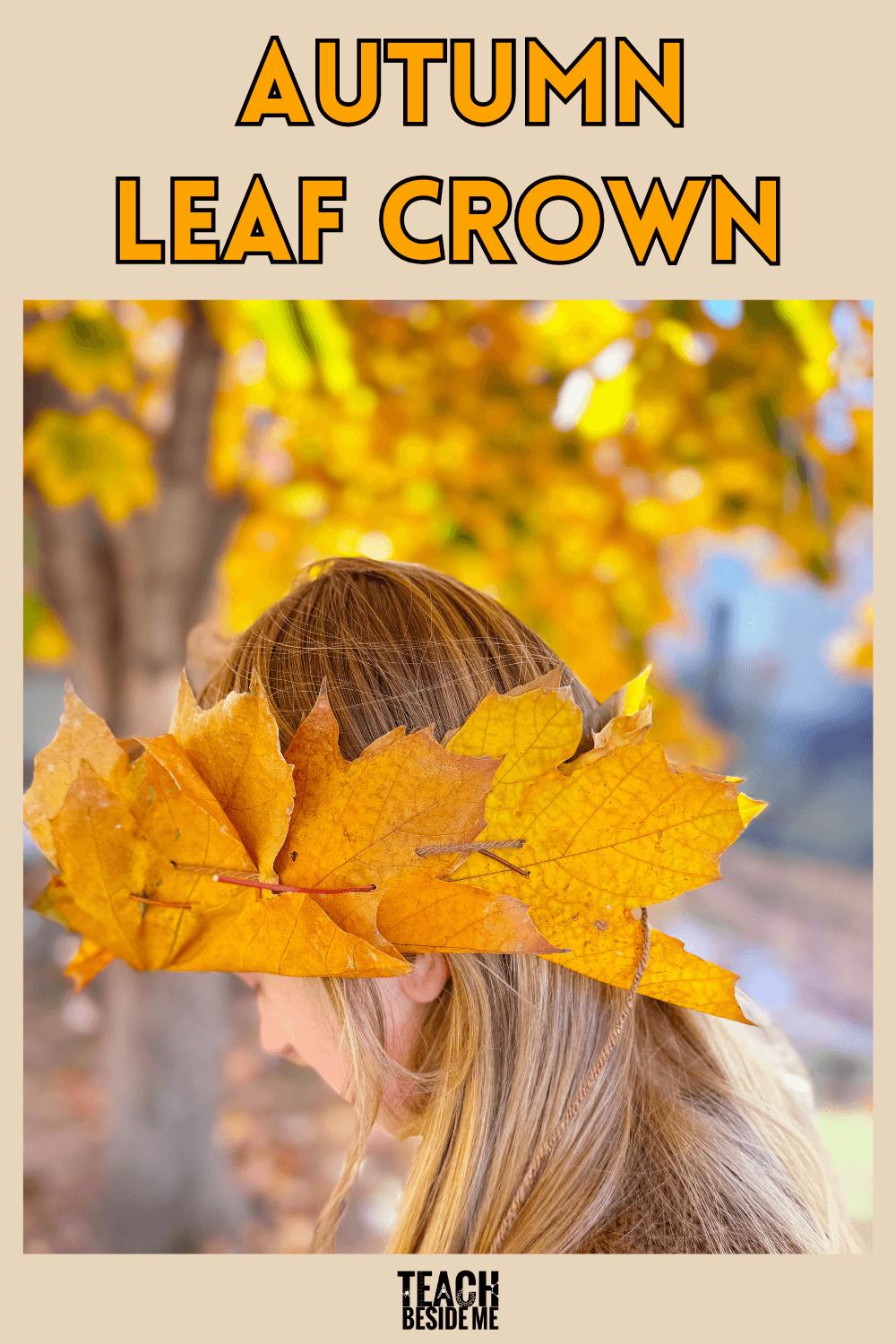
One of the most magical parts of fall is seeing the world turn gold, red, and orange — and what better way to celebrate it than by wearing a little piece of Autumn? This easy Autumn Leaf Crown is a beautiful hands-on way to connect with nature using only freshly fallen leaves.
It’s a lovely project to enjoy outside on a crisp day, combining fine motor skills, observation, and creativity — plus, it uses materials you can find right in your own backyard.
What You’ll Need
-
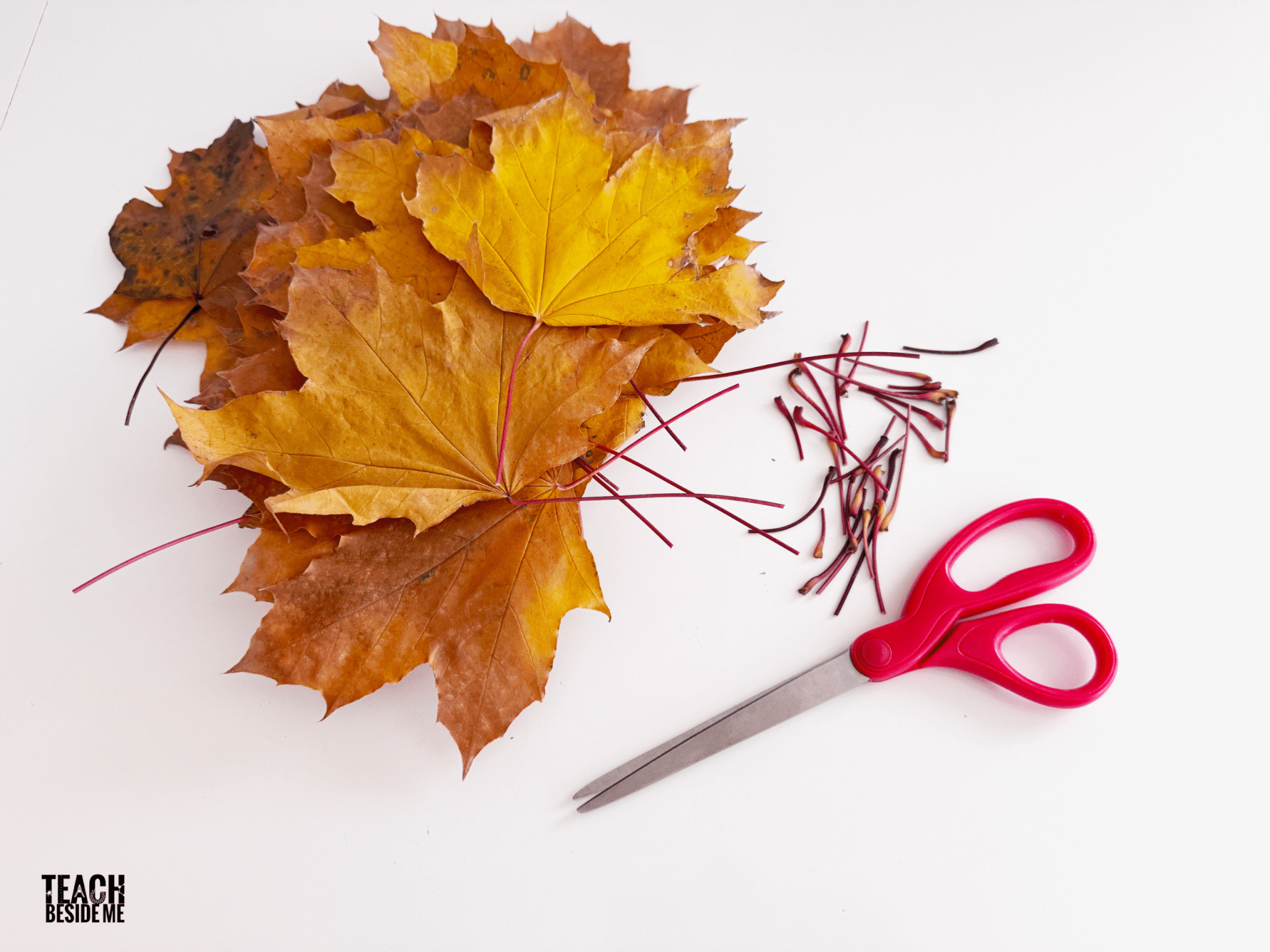
15–20 freshly fallen leaves (maple, oak, or other large, flexible types)
-
Scissors
- Large yarn needle

Tip: Choose leaves that are still soft and flexible — brittle ones will crack when folded.
How to Make Autumn Leaf Crowns
-
Prepare the Leaves
Collect about 15–20 leaves, depending on their size and the size of the head you’re making the crown for. Look for colorful leaves that are still pliable.
Cut off the thick end at the base of each leaf, but leave the stems as long as possible — you’ll use them to weave the crown together. -
Start the First Leaf
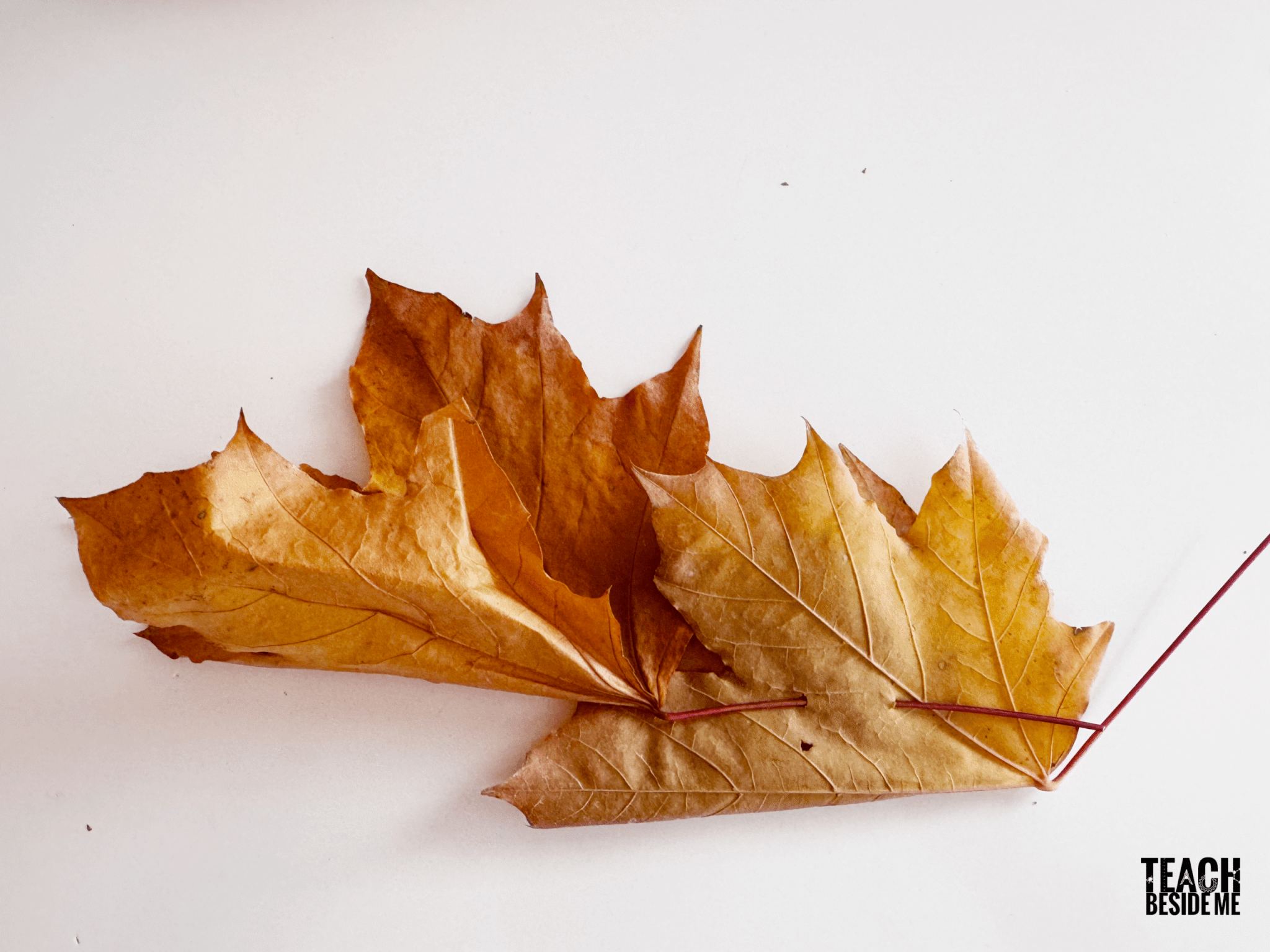
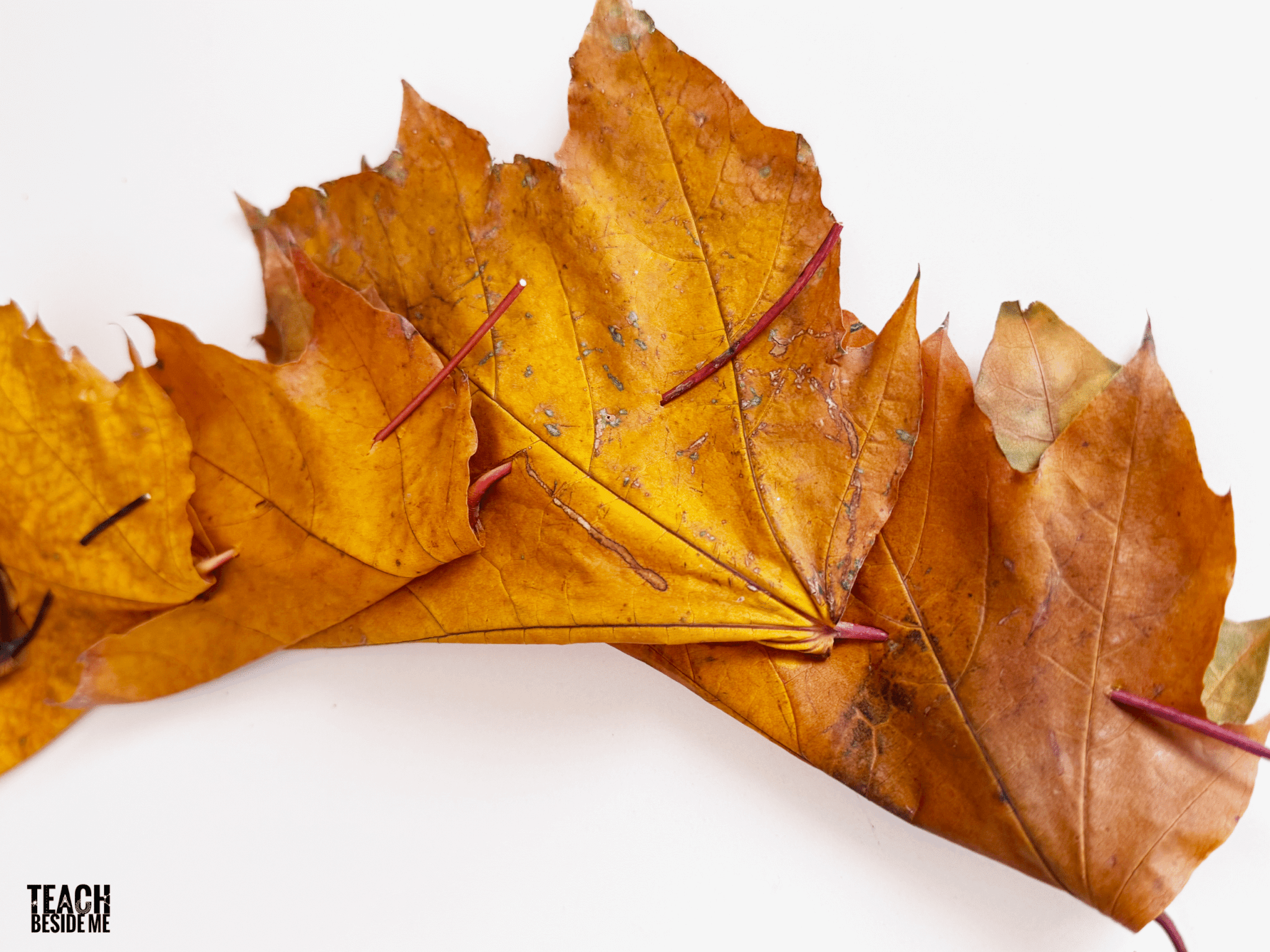
Take your first leaf and fold it gently in half along the stem. This will be the base of your crown. -
Add the Next Leaf
Take the second leaf and poke its stem through both layers of the folded leaf. Then wrap the second leaf around the first one, securing it in place. -
Continue Weaving
Keep going in the same way — poking each new leaf’s stem through the previous folded leaf and wrapping it around. You’ll start to see your leafy crown take shape as you go! -
Connect the Ends
Once your leaf crown is long enough to fit around your head, connect the last leaf to the first by tucking and wrapping the stems together.
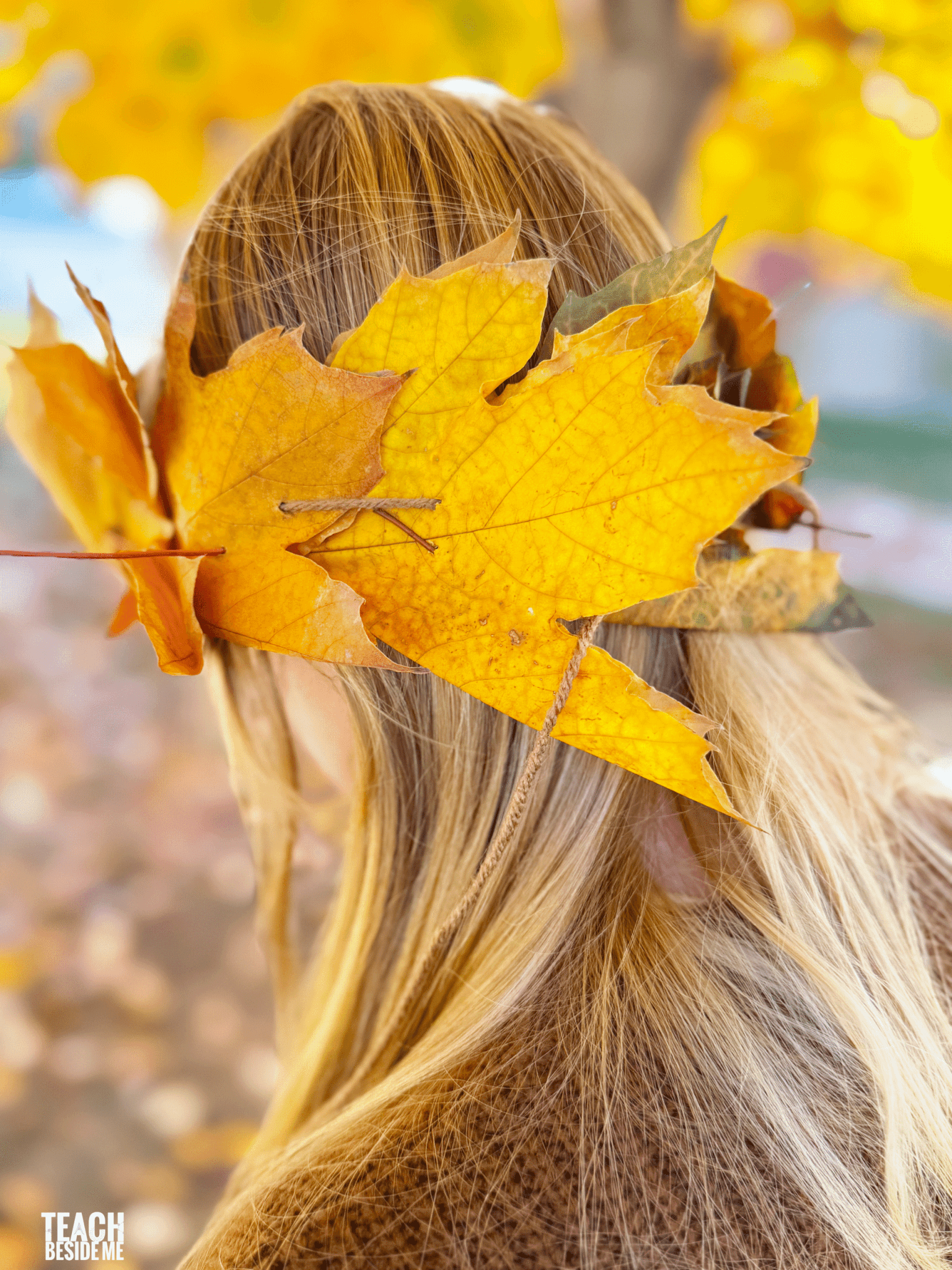
It will stay together without string, but it is delicate. We like to sew through it with some yarn to secure it better. I used a large needle and sewed through the leaves leaving the ends to tie around the head.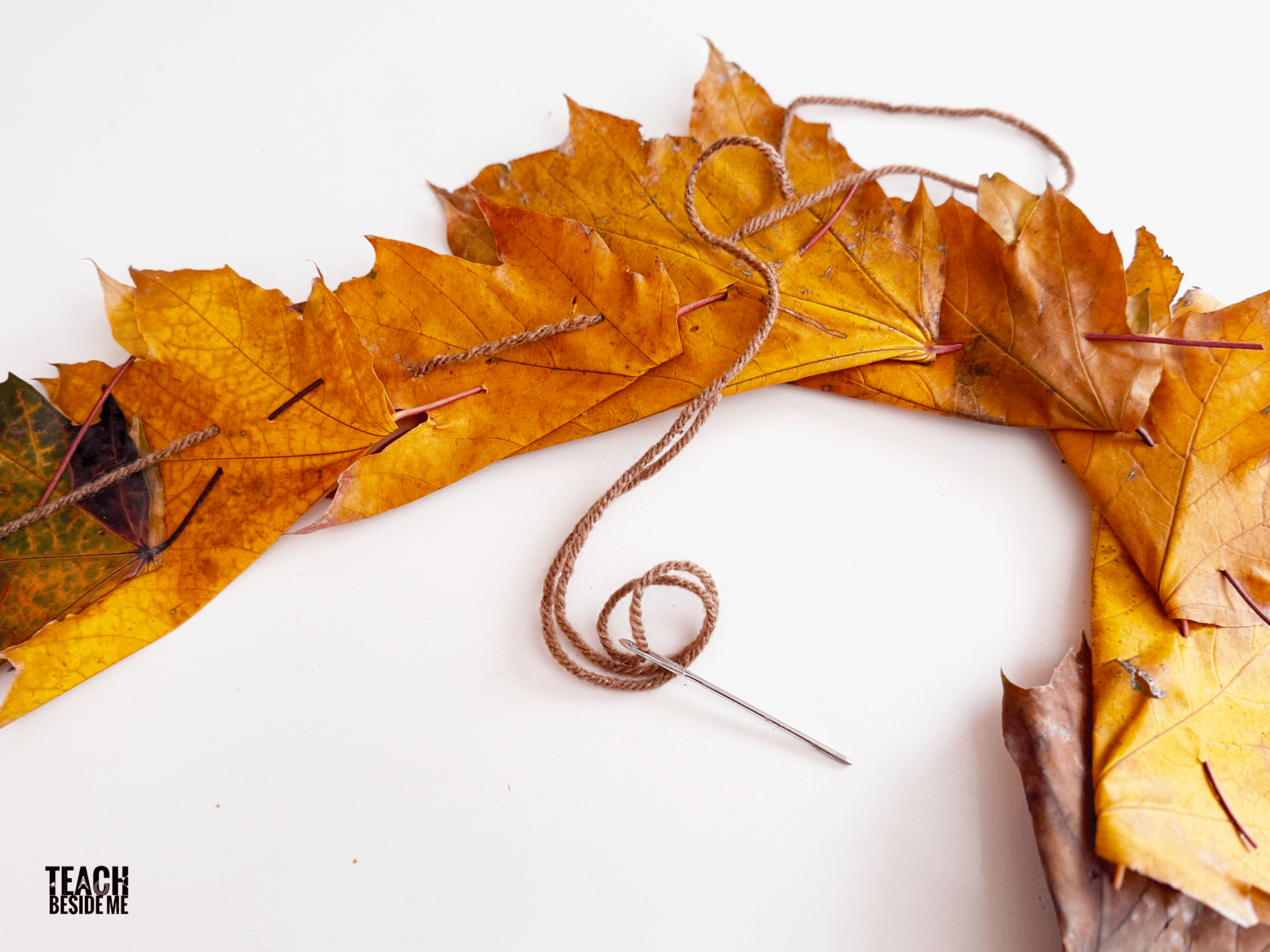
-
Wear and Enjoy!
Try on your leaf crown, adjust for comfort, and take a walk through your autumn kingdom!

The Science of Autumn Leaves
Fall leaves aren’t just beautiful — they’re full of science!
As days grow shorter and temperatures drop, trees stop producing chlorophyll (the green pigment that helps them make food from sunlight). When chlorophyll fades, hidden pigments like carotenoids (yellow and orange) and anthocyanins (reds and purples) become visible — revealing all the warm colors of fall.
If you want to explore this further, try my Leaf Chromatography Experiment. It shows how to separate and see the different pigments inside a leaf using rubbing alcohol and filter paper — a fun way to connect art, chemistry, and nature!
Why Some Leaves Bend and Others Crack
When a leaf is fresh, it’s full of water inside its cells, which makes it flexible and strong. As it dries, that water evaporates, the cell walls stiffen, and the leaf becomes brittle. That’s why soft, freshly fallen leaves work best for weaving these leaf crowns.
You can even make this a mini science observation:
-
Compare a fresh leaf and a dry one under a magnifying glass.
-
Notice how the color, texture, and flexibility change as moisture leaves the cells.
The Benefits of Learning in Nature
Learning in nature does more than teach science — it helps kids slow down, observe, and feel connected to the world around them. When children step outside to explore, collect, and create, they’re engaging every sense and developing a deeper understanding of how things grow, change, and interact.
Here’s why nature learning matters:
-
Hands-On Discovery: Kids learn best through experience. Touching, building, and observing nature builds curiosity and helps ideas “stick.”
-
Mind and Mood Boost: Time outdoors reduces stress, improves focus, and encourages creativity — it’s like a natural reset for the brain.
-
Connection and Care: When kids learn to notice beauty in small things — a leaf’s veins, the smell of earth, the changing light — they grow a sense of appreciation for the natural world.
-
Interdisciplinary Learning: Nature ties together art, science, and observation. One simple walk can spark lessons in biology, geometry, and storytelling.
-
Family and Community Bonding: Creating outdoors builds shared memories — collecting leaves, making leaf crowns, and marveling together.
Learning outside reminds us that education doesn’t have to happen behind a desk. It can happen under a tree, with wind in your hair.

Learning Connections
Connect this project to other learning activities and lessons. Here are some more ways to learn with leaves:
-
Nature Study: Learn about leaf parts, veins, and why trees shed them each fall.
-
STEM: Explore plant biology, photosynthesis, and pigment changes.
-
Art & Design: Create patterns with symmetry and color variation.
-
Mindfulness: Enjoy time outdoors noticing textures, colors, and sounds of nature.
This Autumn Leaf Crown is more than a fall craft project — it’s a way to slow down and connect with the world outside. Gathering leaves, feeling their textures, and turning them into something beautiful helps kids appreciate the small details of nature.
So head outside, collect a handful of color, and make something magical with what’s already at your feet.
Try More Nature Themed Activities:
The Seeds We Eat- Nature Science
How to Make an Autumn Leaf Snow Globe
Nature Hunt~ Leaf Matching Game
Nature Study Notebooking Journal