Rainbow Tapioca Pearl Sensory Play: Safe Alternative to Water Beads
This post may contain affiliate links.

Have you ever tried tapioca pearl sensory play? If your kids love water beads but you’ve been worried about safety, this is the perfect alternative! This colorful, squishy activity has become a favorite in our house—and it’s completely taste-safe.
Today, I’m sharing how to set up this easy sensory bin, along with the science behind tapioca pearls, the benefits of sensory play, and a few fun learning extensions you can try.
Why Try Tapioca Pearls for Sensory Play?
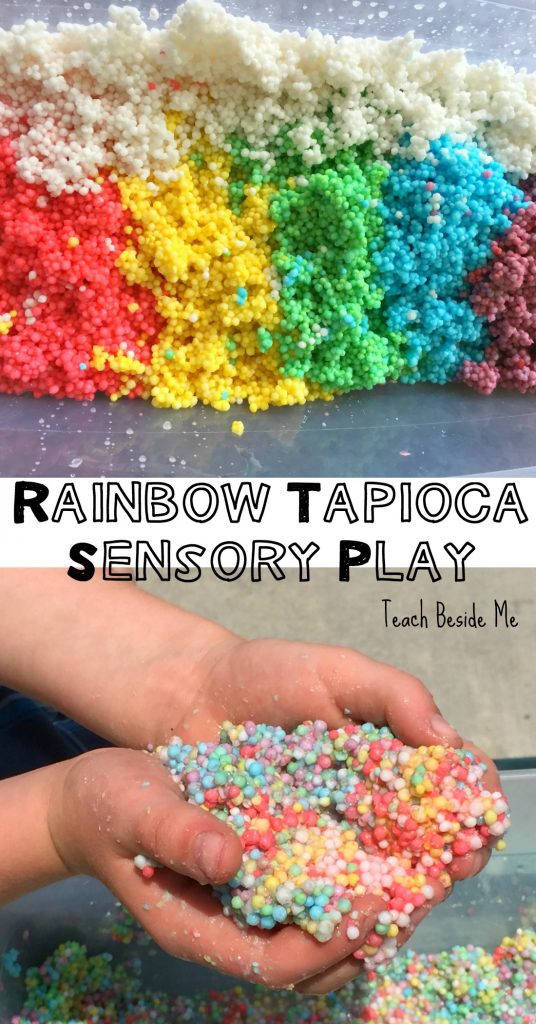
Tapioca pearls are made from the starch of the cassava root and are often used in cooking—think tapioca pudding or boba tea! When soaked in water, they expand and take on a soft, squishy texture that’s irresistible for little hands.
Unlike water beads, tapioca pearls are edible (though not particularly tasty), making them a safer option for toddlers and younger kids who are still in the “taste test” stage of life. Many people call them edible water beads!
The Benefits of Sensory Play
Sensory play isn’t just fun—it’s also incredibly beneficial for child development. Activities like this help kids:
-
Strengthen fine motor skills
-
Practice hand-eye coordination
-
Explore scientific concepts like absorption and color mixing
-
Develop language through descriptive play
-
Build tolerance for different textures (great for sensory-sensitive kids)
This DIY activity also invites imaginative and social play, especially when shared with siblings or friends!
How to Make The Tapioca Water Beads Sensory Bin
You’ll Need:
-
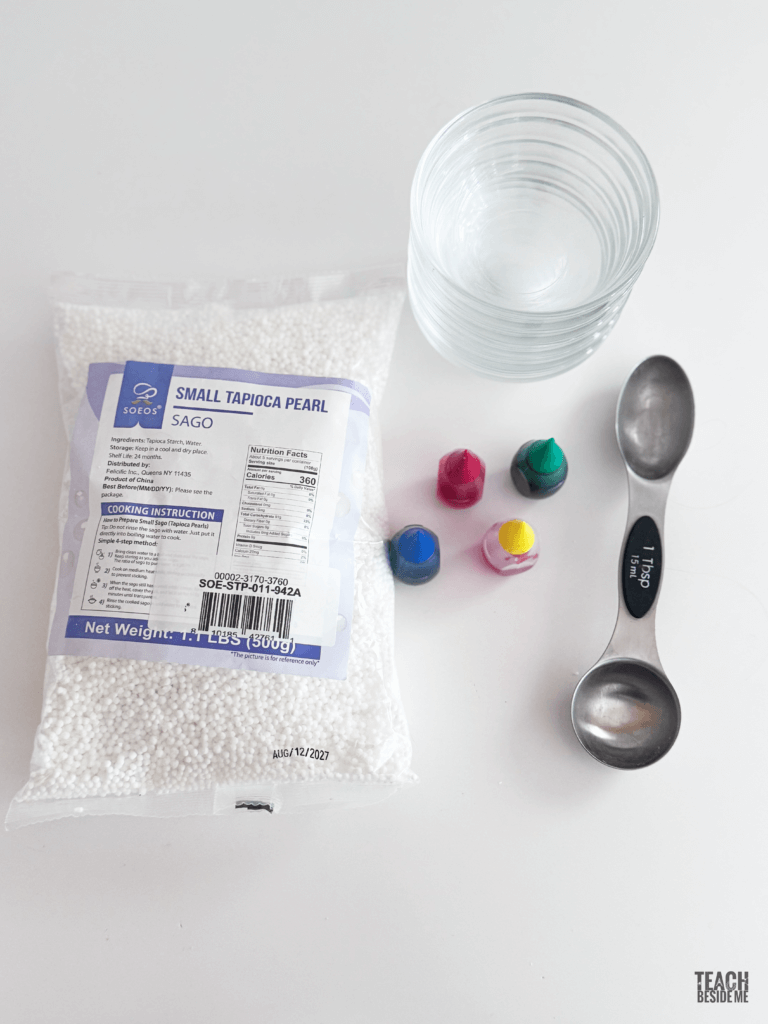
Tapioca pearls (small or large, just not the ground kind)
-
Small bowls
-
Water
-
A large plastic bin, tub or tray for play
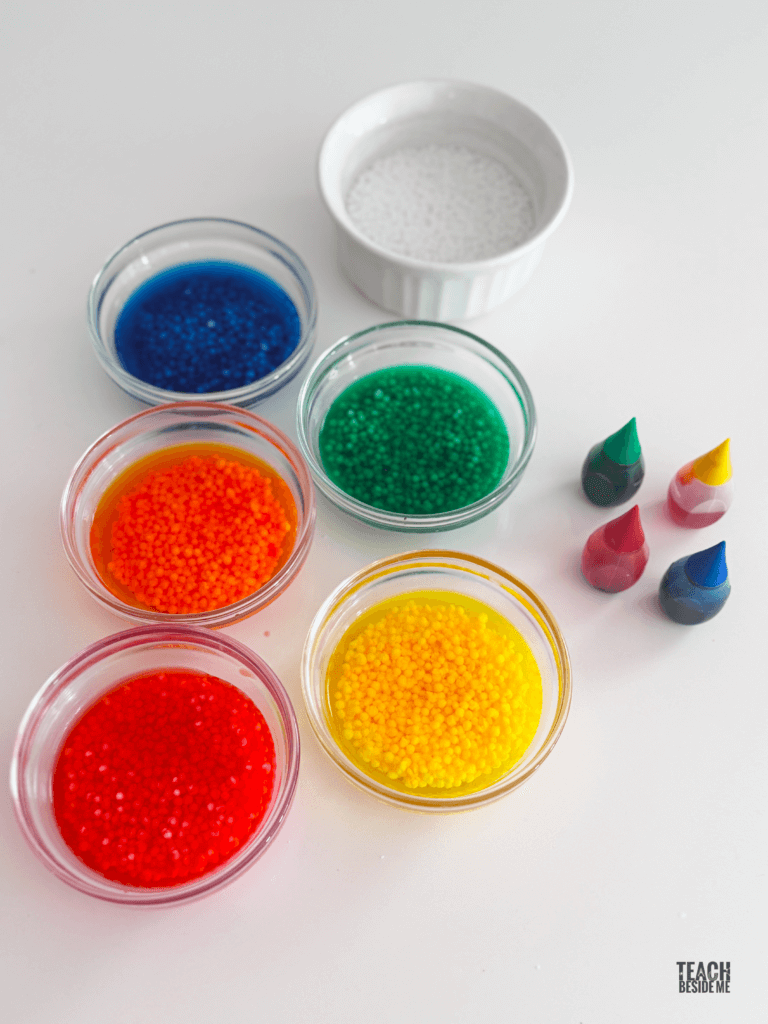
Instructions:
-
Color the Pearls: Add 1–2 tablespoons of dry tapioca pearls to each bowl. Pour in cold water to cover them, and mix in a few drops of food coloring per bowl. Let them sit for about 30 minutes. You do NOT need to cook tapioca pearls for this!
-
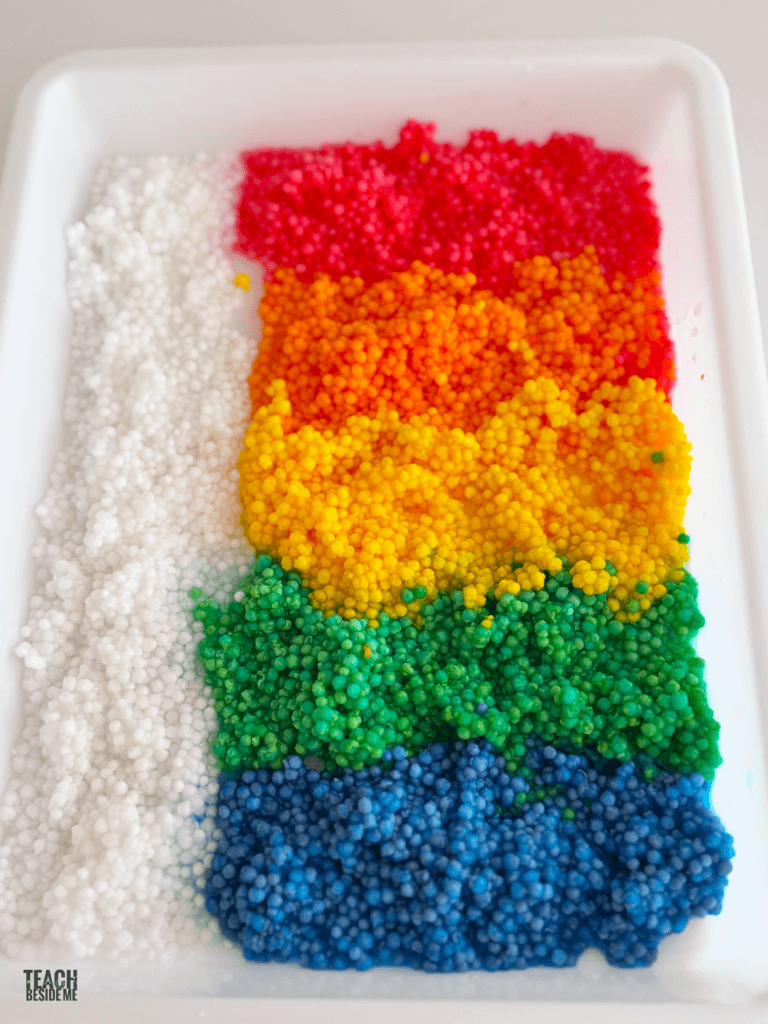
Watch the Magic Happen: As the tapioca pearls soak, they absorb both water and color, transforming into beautiful, squishy spheres. The result is a rainbow of sensory goodness!

-
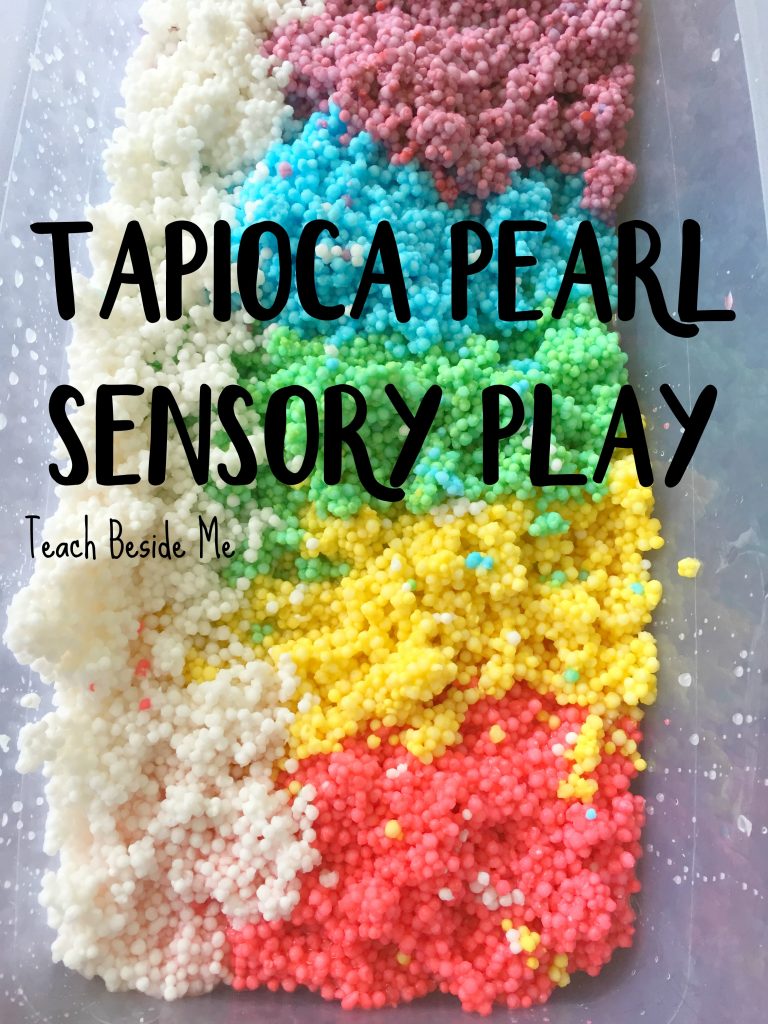
Set Up the Sensory Bin: Once the pearls are fully soaked, drain off excess water, and pour them all into a plastic bin for easy play. You can add scoops, spoons, funnels, an ice cube tray, small toys, or cups to extend the fun. My kids had a blast with them!
The Science Behind Tapioca Pearls
Tapioca pearls absorb water through a process called osmosis, where water moves into the starch granules, causing them to swell. The heat (or soak time) softens the outer structure, resulting in a squishy, jelly-like texture that’s perfect for tactile play.
Adding food coloring to the water introduces a simple diffusion experiment, where kids can see how the color spreads and soaks into the pearls.
Learning Extensions
-
Math: Count pearls by color or estimate quantities using small containers.
-
Color Mixing: Let kids combine different colors of pearls to explore how colors change when mixed.
-
Sorting & Categorizing: Sort by size, color, or texture.
-
Imaginative Play: Add small animal figures or themed toys and turn it into a small-world play bin.

Cleanup & Storage
This messy play is best used for just one day of play, but you can refrigerate them for a second round. Be sure to dispose of them in the trash, not the sink, as they can clog pipes.

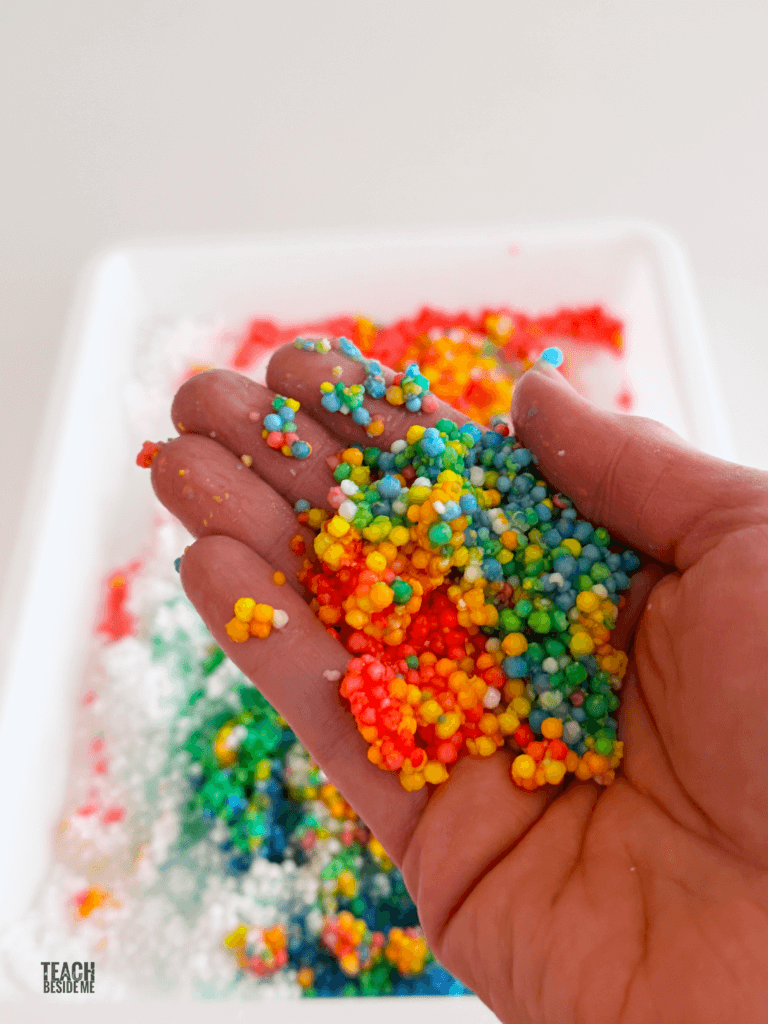
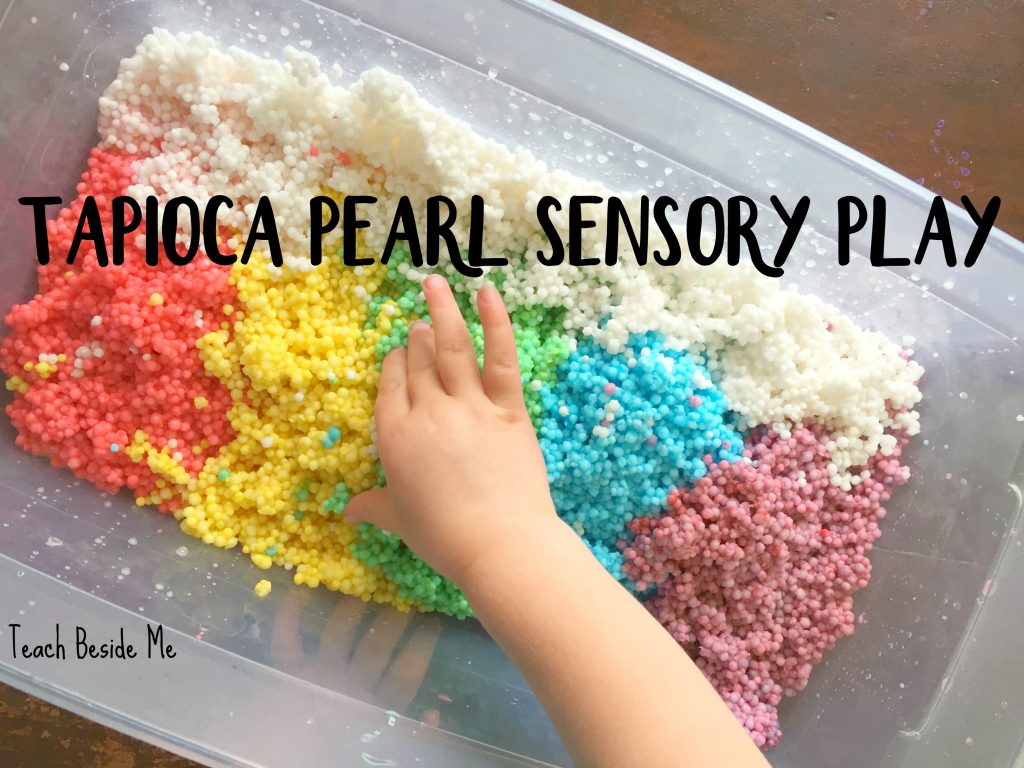
This is how they look after being mixed and played with for a while. Still pretty cool!
My little ones absolutely loved this tapioca pearl sensory bin. The look on their faces when they first touched the pearls—half excited, half unsure—was priceless. But they quickly dug in and didn’t want to stop. We’ll definitely be doing this again soon!
If you’re looking for a colorful, safe, and budget-friendly sensory activity, I highly recommend giving this one a try. Bonus points if you do it outside in the sunshine—it makes the colors even more vibrant!
More Sensory Activities You Might Like:
Rainbow Play Dough Color Mixing: Color Wheel + Sensory Play
Bird Seed and Pine Cone Sensory Bottle
5 Sound Wave Experiments for Kids



They look pretty sticky. I’m going to try adding oil after soaking to see if they are more slippery like waterbeads.
How long do they last?
Hi! Can you store and reuse these after play? If so, how? Thank you!
No, this is a one-time thing.
how did they work after adding the oil