Magnet Pendulum Experiment – A Mesmerizing STEM Activity for Kids
This post may contain affiliate links.
Magnets are one of those science toys that never get old—and when you combine them with motion? Magic happens! This Magnet Pendulum experiment is a seriously fun STEM project that combines physics, engineering, and hands-on exploration. It’s perfect for curious kids, homeschoolers, classrooms, and even adults who love a good science surprise.

How to Make a Magnet Pendulum
This magnet pendulum project is simple to set up using materials you likely already have at home or can easily grab online. Here’s how to build your own magnet pendulum:
Supplies:
-
1 magnet wand (or strong bar magnet)
-
Wooden dowel or broomstick
-
Yarn or string
-
Tape (optional for extra stability)
-
Two chairs
-
Poster board or smooth surface
Instructions:
-
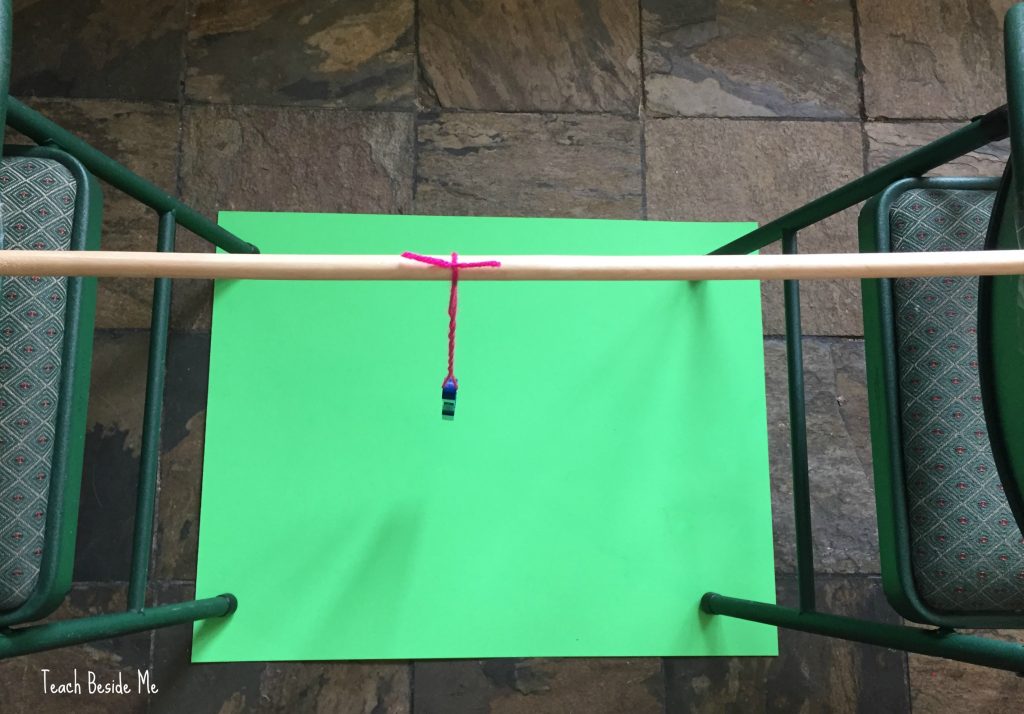
Tie a piece of yarn to the magnet wand, creating a pendulum string.
-
Suspend the dowel between two chairs, and tie the other end of the yarn to the center of the dowel so the magnet hangs freely.
-
Place a poster board underneath the pendulum for a smooth surface—this helps with consistent swinging.
-
Arrange small magnets on the board in different patterns (circles, squares, lines, etc.).

What to Do and Observe
Now for the fun part! Gently swing the magnet wand and watch what happens.
-
Try arranging magnets in different shapes beneath the pendulum.
-
Flip the polarity of the magnets to see how that changes the motion.
-
Challenge your kids to make predictions: Which direction will it go? What shape will influence it the most?
-
Observe how long it moves—sometimes it spins for what seems like forever! (Hint: it might not actually go on forever, but it sure feels like it.)
This is a great opportunity to talk about magnetic fields, force, motion, energy, and polarity—all while having fun.
.

Why The Magnet Pendulum Is a Great STEM Project
This magnet pendulum experiment blends:
-
Science (magnetism, motion, energy)
-
Technology (observing how forces interact)
-
Engineering (building the pendulum setup)
-
Math (pattern predictions, symmetry, and movement)
It’s perfect for homeschool science, classroom demonstrations, science fair ideas, or rainy-day exploration.
Watch It in Action!
I made a video so you can see exactly how the pendulum moves—twisting, swinging, and reacting to the magnetic field below. It’s mesmerizing!
Extend the Learning
Looking for ways to go deeper?
-
Try using magnets of different sizes and strengths.
-
Add a stopwatch and measure how long the pendulum moves.
-
Record your predictions and outcomes in a science journal.
-
Compare how the pendulum moves on different surfaces (wood floor, carpet, poster board).
What Is a Pendulum?
A pendulum is a simple machine that swings back and forth, usually from a fixed point. You’ve probably seen a pendulum in action if you’ve ever looked at a grandfather clock!
A basic pendulum has three parts:
-
A fixed point (where it’s attached—like the dowel in our experiment)
-
A string or rod (in our case, yarn)
-
A weight at the end (our magnet wand!)
When you pull the weight to one side and let it go, gravity pulls it down, and it swings back and forth. That back-and-forth movement is called oscillation.
Why Pendulums Are Cool (and Useful!)
Pendulums are more than just fun to watch—they’ve been used in all kinds of inventions for hundreds of years, including:
-
Clocks
-
Seismometers (for measuring earthquakes)
-
Amusement park rides
-
Scientific tools to measure time and motion
Pendulums show us how gravity and energy work together. When the pendulum is pulled to the side, it has potential energy. As it swings, that potential energy turns into kinetic energy (energy of motion).
What Makes the Magnet Pendulum Special?
In a regular pendulum, the swinging is smooth and predictable. But when you add magnets underneath—whoa! Now you’re introducing magnetic forces, which can attract or repel the swinging pendulum depending on the polarity.
This makes the movement less predictable and way more fun to experiment with. The magnet pendulum can spin, twist, speed up, or slow down—it’s like adding a hidden force field to the science!
How Have You Experimented with Magnets?
We’d love to hear! Have you tried any other magnetic activities lately? Drop a comment or tag us in your creations.
Love STEAM Projects Like This?
If you’re always on the lookout for more hands-on activities that make learning actually fun, check out our book:
STEAM Kids

Check out this MEGA list of over 200 STEM Projects for Kids!