Lessons From Folktales Around the World
This post may contain affiliate links.
Folktales are more than just stories—they’re timeless tools for teaching life lessons, understanding different cultures, and sparking meaningful family conversations. In this post, we’re diving into the lessons from folktales around the world, sharing how you can use them in your homeschool or classroom to teach morals, geography, and global traditions.

What Are Folktales?
Folktales are traditional stories that were passed down orally through generations. They often include cultural values, moral lessons, and universal themes such as honesty, kindness, cleverness, or humility.
You’ll find strikingly similar stories across different countries—proof of how human experience and wisdom transcend borders.
Books We Used for Our Folk Tale Study
We focused on two wonderful collections that offer short, engaging stories from a wide range of cultures:
-
Usborne Stories from Around the World by Heather Amery
-
Wisdom Tales by Heather Forest
Each story is just a page or two long—perfect for short lessons or read-aloud time. My kids loved them and frequently begged for just one more tale. That’s always the sign of a good book!
What Kids Can Learn from Folktales
-
Moral reasoning and critical thinking: What is the story trying to teach us? Was the character right or wrong?
-
Cultural literacy: Where did the story originate? What does it reveal about the people who told it?
-
Geography and global awareness: Each folktale is a window into another place in the world.
We created a simple but powerful activity to reinforce these lessons:
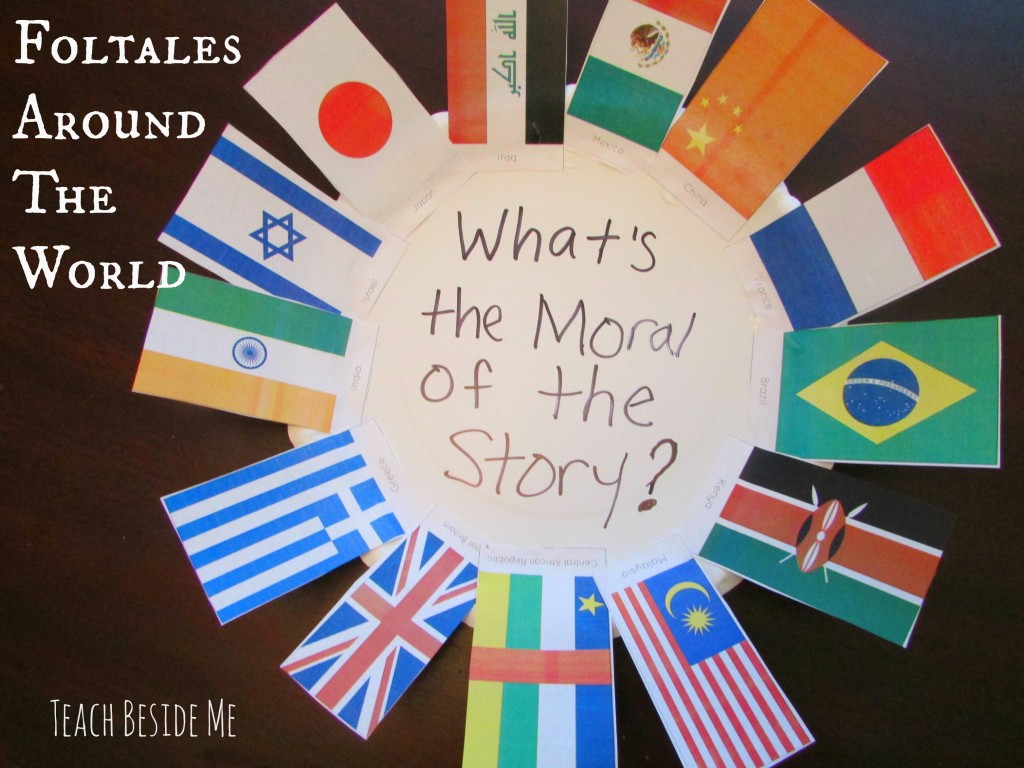
Craft: “What’s the Moral of the Story?” Folk Tale Plate
Supplies:
-
Paper plates
-
Printed world flags (or draw them!)
-
Markers or crayons
-
Glue or tape
Instructions:
-
In the center of the plate, write “What’s the Moral of This Story?”
-
As you read folktales, find the country of origin.
-
Add that country’s flag to the outer rim of the plate.
-
Below each flag or on the back, write a short summary of the folktale’s moral.
This was a great hands-on way to connect stories with global geography and values. Kids learned where each tale came from and what it aimed to teach.
Folktale Extensions & Activity Ideas
-
Act It Out: Have your children act out folktales and challenge siblings or parents to guess the moral or country of origin.
-
Creative Writing Prompt: Invite kids to write their own folktales with a clear moral. Where does it take place? What is the problem and resolution?
-
Map Connections: After each tale, locate the country on a world map and talk briefly about that region.
-
Compare & Contrast: Read two similar tales from different cultures (like Cinderella variations) and compare how the stories differ.
Why Folk Tales Matter in Teaching
Folk tales allow you to blend literature, ethics, geography, and social studies all in one simple format. They’re great for sparking deep discussions, introducing new cultures, and building empathy.
Whether you read them once a week or build a full unit study, folktales are a fantastic storytelling tool that never loses relevance.
Mor Geography & World Culture Content:
Read Around the World: China Unit
United States Geography Lesson
Read Around the World: Brazil Unit



I love folktales! I also love how so much curriculum can be built on folktales.
Thanks so much for sharing!
Wishing you a lovely day.
xoxo
They are a great way to explore cultures for sure! So fun!
I liked Cinderella, but the “Disney” version, not the original Russian, which is different.
I love that you explored a variety of folktales from around the world. So fun!
It is always so much fun looking at different ideas from around the world- I know my son seems fascinated by some of the ideas especially in European tales.
I love that you were able to explore folktales from around the world and that your kids were begging for more! I think having kids write their own folktale is a great idea.
Thank you for helping to bring a spoonful of reading fun to the Poppins Book Nook this month!