
8 Popsicle Stick Math Games for Kids
This post may contain affiliate links.
Looking for a fun, inexpensive way to practice math facts? These popsicle stick math games are a great way to turn a few simple craft supplies into hands-on learning activities!
With one set of numbered jumbo popsicle sticks, you can play a variety of math games that help kids practice addition, subtraction, multiplication, number recognition, and more.
I love finding creative ways to practice math without relying on worksheets. These games are especially fun because once you’ve made the number sticks, you can use them over and over again in different ways.
We made several sets of numbered sticks and discovered that there are so many ways to play with them!
Whether you’re looking for addition games for elementary students or simple number activities for younger children, these DIY math sticks are a versatile addition to your homeschool or classroom.

How to Make Popsicle Stick Math Games
You only need a few basic supplies to create your own set of math sticks.
Supplies
- Jumbo popsicle sticks (craft sticks)
- Permanent markers in different colors
- A container or bag for storing the sticks
Depending on how many children will be playing and which games you want to try, you’ll need approximately 50–100 jumbo craft sticks.
I made four sets numbered from 0 to 10, using a different colored marker for each set. On each stick, I wrote the number word in the middle and the numeral on both ends. For example, a stick with the number 7 has the word seven written in the center and the numeral 7 on each end. This makes the sticks useful for more than just math facts. Children also get practice recognizing numerals and reading number words.
Using different marker colors makes it easier to identify the sets and adds a little variety. You can also create sticks with larger numbers for older children who are ready for more challenging math problems.
Once your sticks are ready, you’re all set to play!

1. Number Order and Number Recognition
Best for preschool and kindergarten.
For younger children, start with a simple number recognition activity.
Give your child a set of numbered popsicle sticks and challenge them to arrange the numbers in order from smallest to largest.
You can also mix up the sticks and ask children to find specific numbers.
Try these variations:
- Put the numbers in reverse order.
- Find the number that comes before or after another number.
- Sort the sticks into odd and even numbers.
- Match number words to numerals.
- Create additional sticks to practice counting beyond 10.
This is an easy way to introduce the sticks before moving on to more challenging games.

2. Draw and Add: Popsicle Stick Addition Game
Best for kindergarten through second grade
This is one of the simplest ways to use your numbered sticks for addition practice!
Place the sticks in a pile with the numbers facing down. Each player draws two sticks and adds the numbers together.
For example, if a child draws 6 and 8: 6 + 8 = 14
Players can record their answers or simply say them aloud.
To turn it into a game, have everyone draw two sticks and compare their sums. The player with the highest sum earns a point! For a greater challenge, have children draw three sticks and add all three numbers together.
You can also use this same activity for subtraction, multiplication, or division, depending on the child’s skill level.
3. Craft Stick Math War
Best for first grade and up, with easier variations for younger children.
If your kids enjoy playing War with cards, they’ll love this version using numbered craft sticks.
Divide the sticks evenly between two players. Each player places their pile face down. Both players reveal one stick at the same time. The player with the higher number wins both sticks! If the numbers match, have each player draw another stick to break the tie.
Continue playing until one player has collected all the sticks, or set a time limit and count who has the most when time is up.
Addition War Variation
Instead of drawing one stick, each player draws two. Players add their numbers together, and the player with the higher sum wins the round.
For example:
Player 1: 4 + 9 = 13
Player 2: 7 + 8 = 15
Player 2 wins the round!
You can also play Subtraction War or Multiplication War.
For subtraction, have children subtract the smaller number from the larger number to avoid negative answers unless they’re ready for that challenge.

4. Twenty-One: An Addition Strategy Game
Best for first through fourth grade.
This is one of my favorite addition games with popsicle sticks because it combines mental math with decision-making.
Give each player a pile of numbered sticks turned face down. Players take turns drawing sticks and adding the numbers together. The goal is to get as close to 21 as possible without going over.
After each draw, the player must decide whether to keep drawing or stop. If their total goes over 21, they score zero for that round. If they stop at 21 or below, their score is the total they reached.
For example, a player might draw:
5 + 8 + 6 = 19
They can stop with 19 points or take a chance and draw another stick. The player who gets closest to 21 without going over wins!
This game is excellent for practicing addition facts, keeping a running total, and thinking strategically.
5. Pick It: A Math Stick Strategy Game
Best for second grade and up.
This game is a fun combination of addition, strategy, and a little luck.
Each player begins by drawing five sticks from a face-down pile. Players take turns choosing a new stick from the center pile or taking one from another player’s hand. After choosing a stick, they must discard one so they always have five. Continue until everyone has completed five turns. Then each player adds the numbers on their five sticks. The player with the highest total wins!
This game encourages children to think about number values and how changing one number affects their total.
For younger children, use only smaller numbers or begin with three sticks instead of five.
6. Popsicle Stick Go Fish
Best for kindergarten through second grade.
You can also play a version of Go Fish with your numbered sticks!
Divide the sticks among the players, leaving the remaining sticks face down in the center. Players take turns asking one another for a particular number. For example, a player might ask, “Do you have any sevens?” If the other player has a seven, they hand it over. Otherwise, the player draws from the center pile.
Players collect matching pairs or sets of four, depending on how many copies of each number you made. The player who collects the most matching sets wins.
This is a simple way to practice number recognition while developing memory and turn-taking skills.
7. Make Ten: Addition Pairs Game
Best for kindergarten through second grade.
Here’s another easy addition game to play with your numbered craft sticks!
Spread the sticks out with the numbers showing. Challenge children to find two sticks that add up to 10.
For example:
- 1 + 9 = 10
- 2 + 8 = 10
- 3 + 7 = 10
- 4 + 6 = 10
- 5 + 5 = 10
Have children collect as many pairs as possible.
You can make it competitive by having two players search for pairs at the same time. Or turn it into a cooperative activity where everyone works together to find all the combinations. For older children, change the target number to 15 or 20.
This is a wonderful way to build fluency with number bonds and addition facts.
8. Closest to the Target: Addition Challenge
Best for first through fourth grade.
Choose a target number, such as 15, 20, or 25.
Each player draws three numbered sticks and adds them together. The goal is to get as close to the target number as possible.
For example, if the target is 20:
Player 1 draws 4, 7, and 8.
4 + 7 + 8 = 19
Player 2 draws 3, 5, and 9.
3 + 5 + 9 = 17
Player 1 wins because 19 is closer to 20.
You can decide whether players are allowed to go over the target number or must stay below it.
This activity encourages mental math, estimation, and comparing numbers. For an extra challenge, let children exchange one stick before calculating their final total.
How to Adapt Popsicle Stick Math Games for Different Ages
One of the best things about these DIY math games is how easily they can grow with your children.
Preschool and kindergarten: Focus on number recognition, number order, matching, and simple addition.
First and second grade: Practice addition and subtraction facts, number bonds, and mental math.
Third and fourth grade: Introduce multiplication, division, larger numbers, and multi-step calculations.
Older students: Create additional sets of sticks with two-digit numbers, negative numbers, fractions, or decimals for more advanced practice.
You don’t have to make a completely new game every time your child learns a new math skill. Just change the rules or the numbers you’re using!
Why Hands-On Math Games Help Kids Learn
Math games give children opportunities to practice important skills in an engaging, low-pressure way.
With these popsicle stick games, children aren’t just memorizing facts. They’re also comparing numbers, making decisions, recognizing patterns, and developing mathematical strategies.
The physical sticks make numbers easy to manipulate, which can be especially helpful for younger learners.
I also love that these games encourage interaction. Kids can play with siblings, friends, parents, or classmates while practicing math together.
And because the sticks are reusable, you can pull them out whenever you need a quick math activity.
More Fun Addition and Math Games for Kids
If your children enjoy these popsicle stick math games, here are a few more hands-on activities to try:
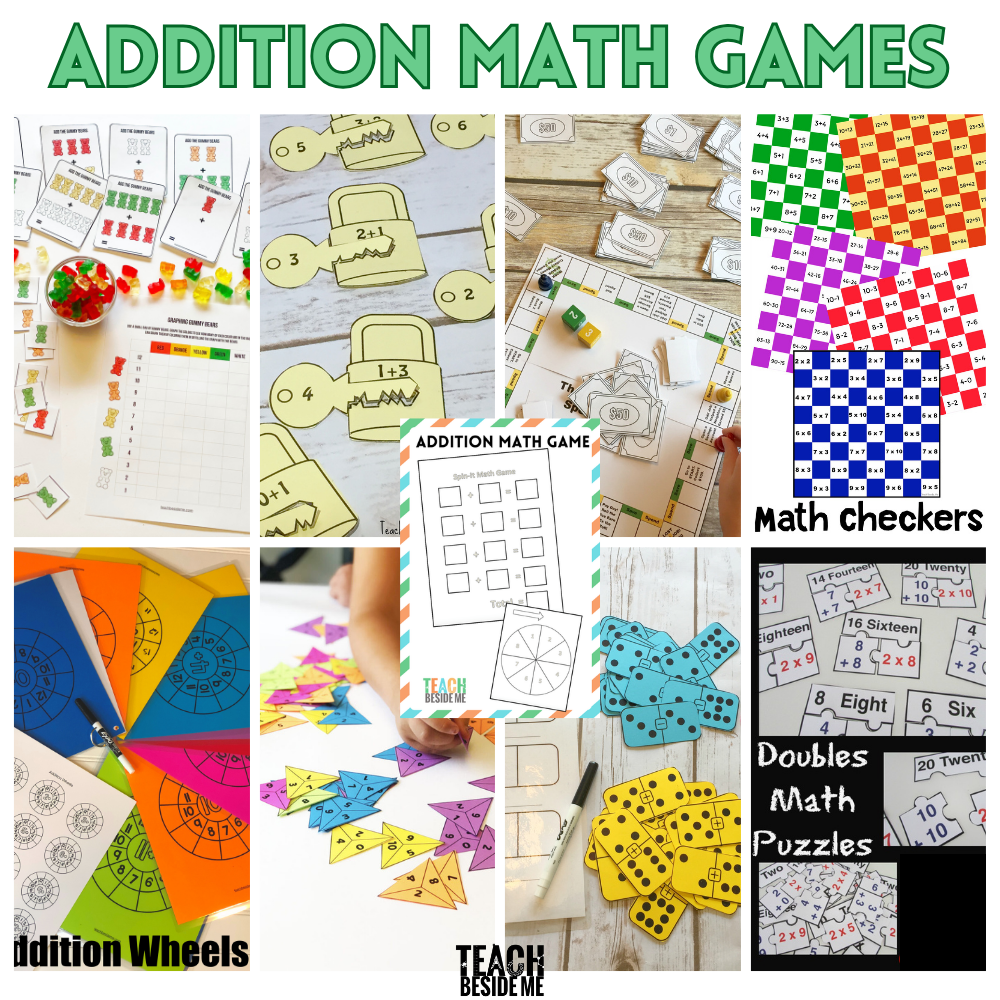
- Math Checkers — Practice addition, subtraction, multiplication, and division while playing checkers.
- The Great Graphing Race — A fun way to explore graphing and data.
- Math Pick-Up Sticks — Another creative way to combine a familiar game with math.
- Peek-a-Boo Math Game — Make math practice playful and interactive.
- Math Grid Game — Practice math through a simple grid game.
You can also explore my collection of addition games for more creative ways to practice addition facts.
These popsicle stick math games are proof that you don’t need expensive supplies or complicated activities to make math fun.
With a few numbered craft sticks and a little imagination, you can create all kinds of learning games that your kids can enjoy again and again!
Have fun playing!




Grandma looking for ideas to enrich a preschooler.
He’s particularly interested in numbers. He has books on organic chemistry for kids that he loves. And anything on wheels.