Kitchen Science: Homemade Hard Candy Lollipops
This post may contain affiliate links.
Have you ever made homemade hard candy with your kids? This kitchen science activity combines chemistry, math, and fun—all with a sweet reward at the end! In this post, we’ll walk you through how to make hard candy lollipops, explain the science behind the process, and suggest educational extensions for learning in the kitchen.
Perfect for homeschoolers, science units, or just a hands-on afternoon treat!
This is a fun kitchen science activity with a tasty reward at the end!

What You’ll Learn in This Activity:
- How sugar transforms at different temperatures
- The science of crystallization
- How to measure, mix, and time your candy-making
- Ways to practice math and science in a real-life kitchen setting
How to Make Homemade Hard Candy Lollipops

Homemade Hard Candy Lollipop Recipe
Ingredients & Supplies:
- 2 c. Sugar
- ⅔ c. Corn syrup
- ⅔ c. Water
- Candy thermometer
- Food Coloring
- ½ tsp. Flavoring/extract of your choice (lemon, mint, vanilla, cherry, strawberry, etc)
- Large pot
- Lollipop Molds or other hard candy molds
- Lollipop sticks
-
Nonstick spray or silicone mat
Instructions:
- Combine sugar, corn syrup, and water in a saucepan. Stir until dissolved.
- Bring to a boil over medium-high heat. Clip the candy thermometer to the side of the pan.
- Boil without stirring until the mixture reaches 300°F (the hard crack stage).
- Brush down sides of the pan with a wet pastry brush to prevent sugar crystals.
- Remove from heat and stir in flavoring and color.
- Carefully pour into molds (or onto a greased baking sheet).
- Immediately insert lollipop sticks and twist to coat.
- Let cool completely for at least 20 minutes before removing.
Tip: For multiple flavors/colors, divide the mixture into separate bowls before pouring.
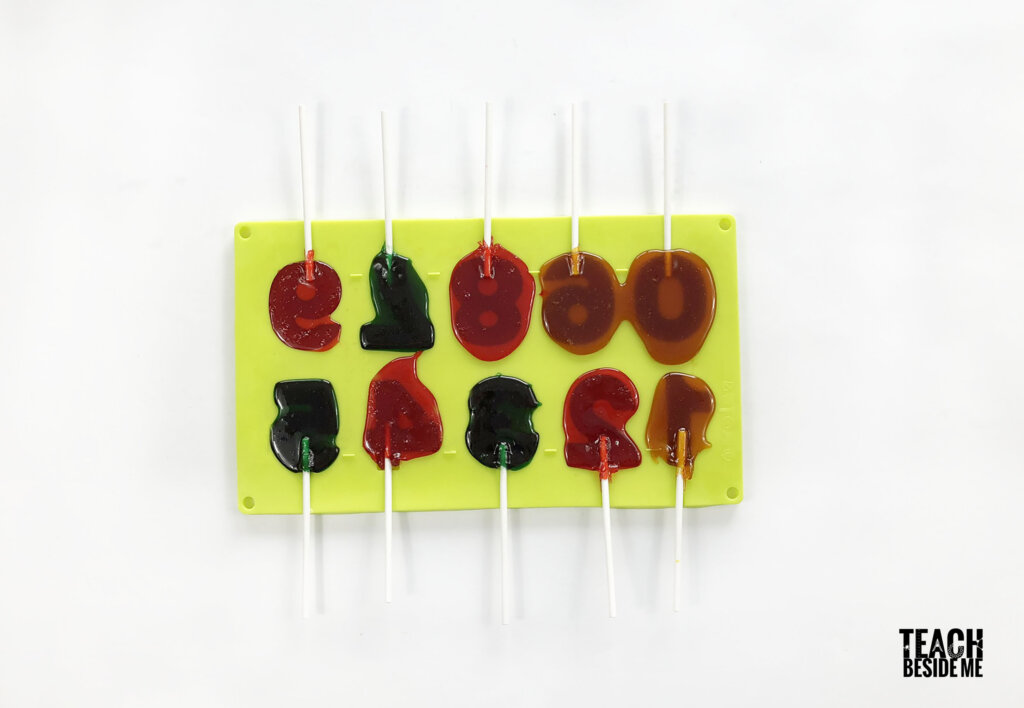
DO NOT TOUCH with bare hands! It is very hot!

The Science Behind Hard Candy
Making hard candy is a delicious lesson in kitchen chemistry! Here’s what’s really happening:
Dissolving Sugar
When sugar is mixed with water and heated, it dissolves and breaks into individual sucrose molecules. Heat allows more sugar to dissolve than cold water normally would—creating a supersaturated solution.
Evaporation & Concentration
As the mixture boils, water evaporates, leaving behind a hot, thick sugar syrup. The longer it boils, the more concentrated the sugar becomes—and this affects the final candy texture.
Temperature Stages
Candy-making is all about temperature! There are six main stages:
- Thread (230–234°F)
- Soft Ball (234–240°F)
- Firm Ball (244–248°F)
- Hard Ball (250–266°F)
- Soft Crack (270–290°F)
- Hard Crack (300–310°F) – perfect for lollipops and glassy candy
You can test the stage by dripping a bit of the mixture into ice water. If it cracks when bent, it’s ready!
Crystallization & Corn Syrup
Too much crystallization causes gritty, grainy candy. Corn syrup helps prevent this by introducing glucose, which breaks up large sugar (sucrose) molecules and stops crystals from forming. This keeps your candy smooth and clear!
Educational Extensions
Math:
- Practice measurement (cups, teaspoons, fractions)
- Double or halve the recipe and adjust ingredients
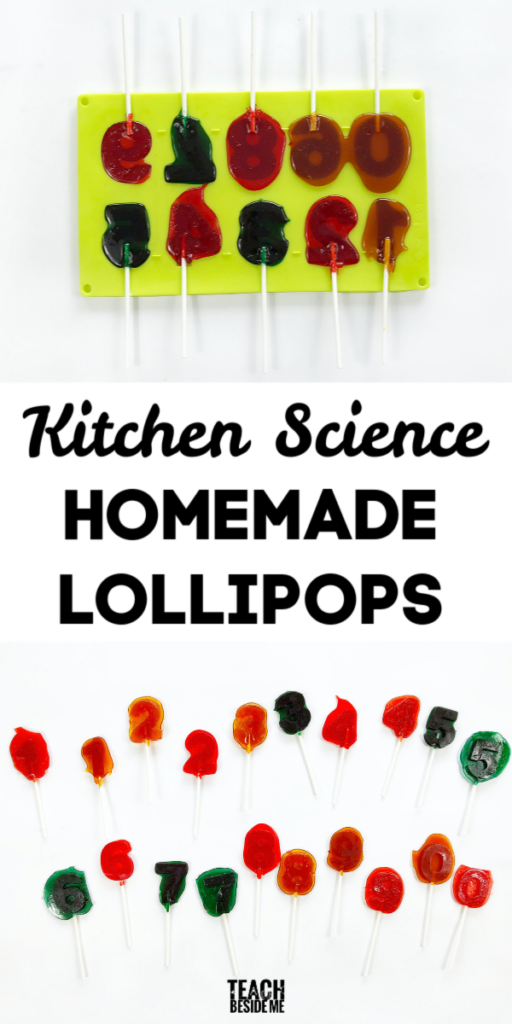
- Use number molds for math games: counting, skip counting, or fact families
Science:
- Compare cooling times between small and large molds
- Test different flavorings or food colorings
- Observe crystal formation under a magnifying glass
Creative Play:
- Create color-themed sets (rainbow lollipops!)
- Package finished candy for gifts with homemade labels
See More Kitchen Science Experiments & Activities:
Making homemade hard candy lollipops is not only tasty—it’s also a hands-on way to bring science to life. Whether you’re studying kitchen chemistry or just want a fun project with a sweet reward, this activity is a perfect mix of learning and fun.