Homemade Orange Bird Feeders: Winter Nature Craft
This post may contain affiliate links.
Winter is a challenging season for birds and wildlife. Food is harder to find, temperatures are cold, and natural resources are limited. This simple homemade orange bird feeder nature craft gives children a meaningful way to care for animals while learning about winter habitats and seasonal needs.
Using just an orange and birdseed, kids can create a feeder that invites birds (and sometimes squirrels) into the yard — and offers a chance to slow down, observe, and connect with nature.

Orange Bird Feeders Are a Great Winter Activity!
This is more than a quick craft. It’s an opportunity to enjoy nature as well!
Children learn about:
-
Animal needs in winter
-
Habitats and food sources
-
Cause and effect
-
Responsibility and care for living things
-
Seasonal changes in nature
It also encourages outdoor time during a season when many kids spend less time outside.
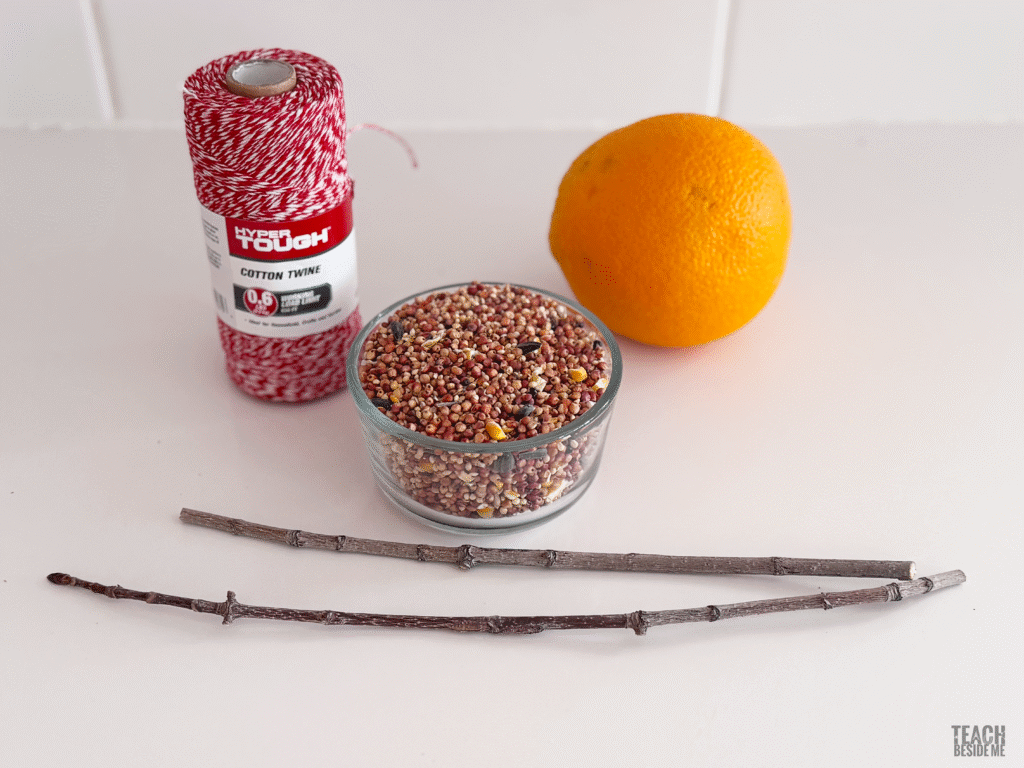
Materials Needed to Make Orange Bird Feeder
-
Oranges
-
Spoon
-
Birdseed (a general wild bird mix works well)
- Sticks or skewers
-
String, twine, or yarn
-
Scissors
Optional:
-
Stick or pencil for poking holes
-
Tray or plate to catch seeds while filling
How to Make a Homemade Orange Bird Feeder
-
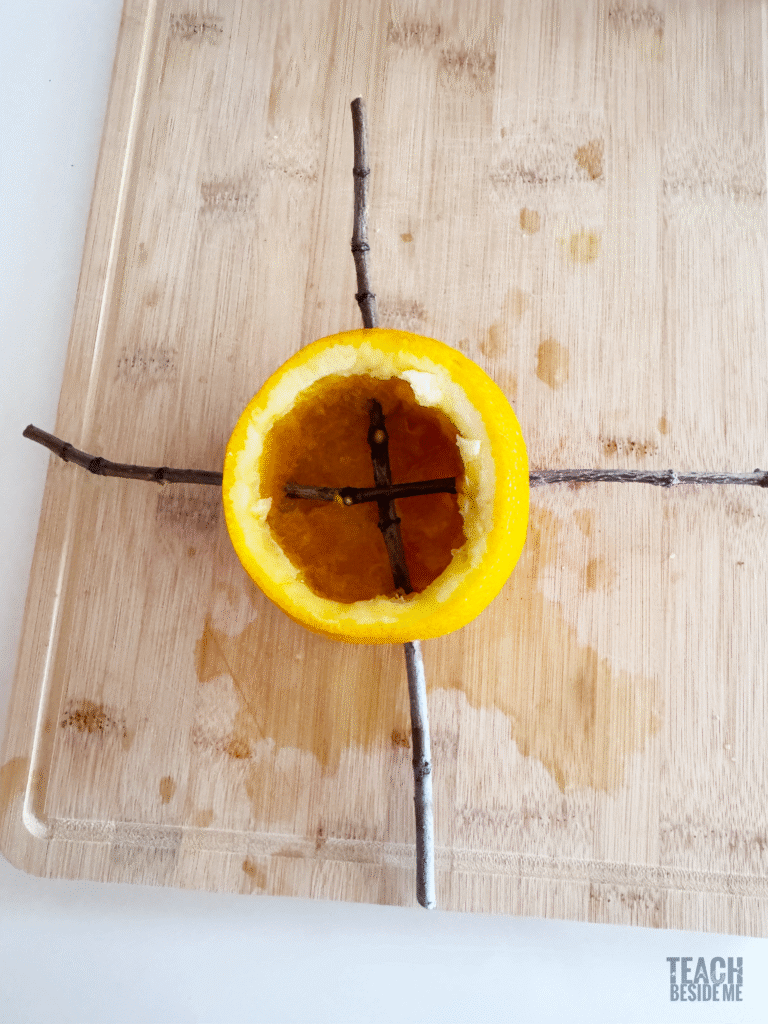
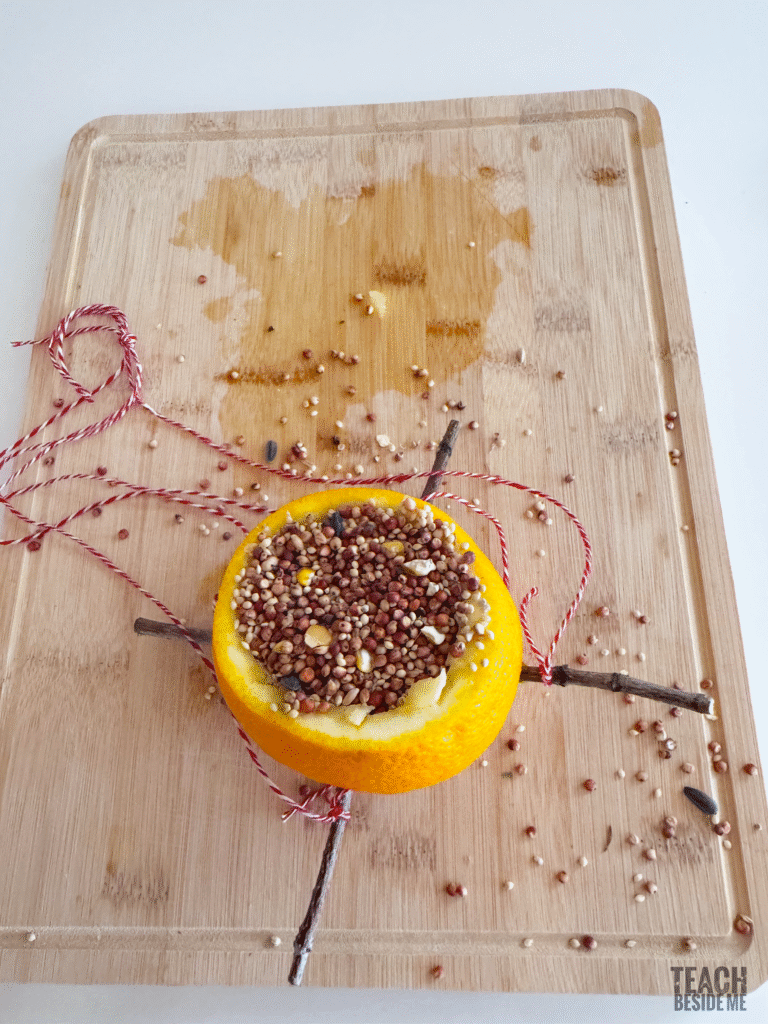
Cut of a small section from the top of an orange.

-
Carefully scoop out the inside, leaving the peel intact. (The fruit can be eaten or saved for another use.)
-
Poke 2 sticks through the lower edges of the orange going all the way through to the other side. They will cross in the center and create perches for the birds.
-
Using four even pieces of string, securely tie the string with knots onto the sticks to create a hanger. Connect each piece of string at the top with one knot.
-
Fill the orange peel with birdseed.
-
Hang the feeder on a tree branch or fence outside.

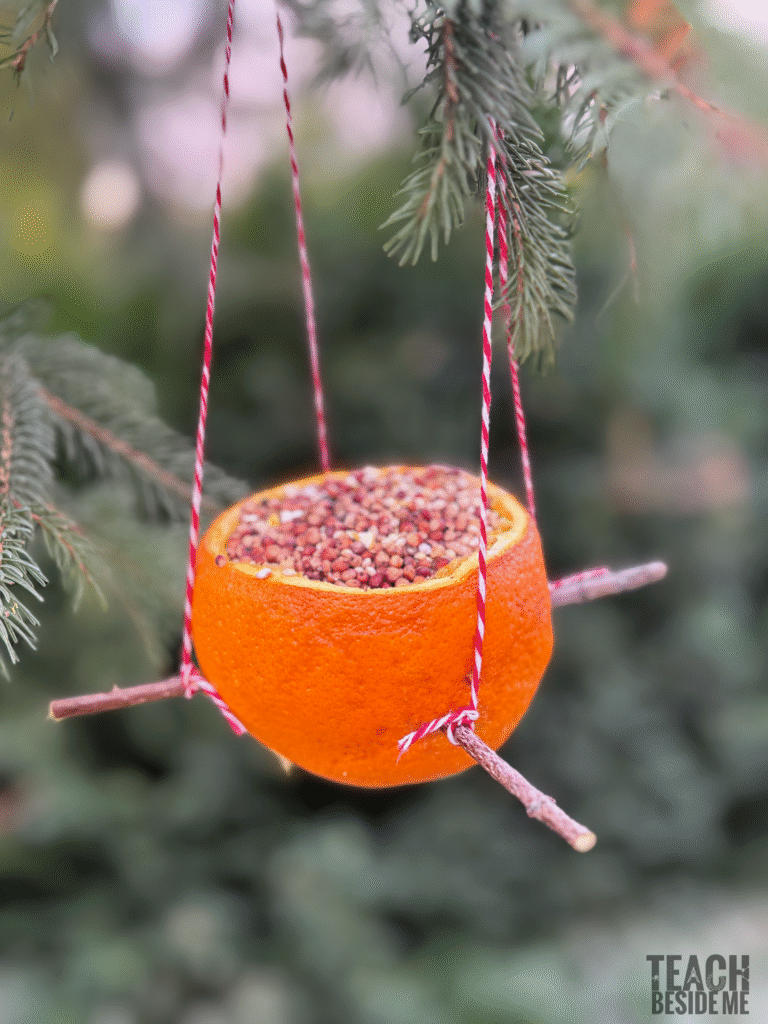
Choose a spot that is visible from a window if possible — this makes observation easy and exciting.
Do Birds and Squirrels Like Oranges?
Yes — many animals are curious about oranges.
-
Birds are often attracted to the seeds inside the feeder rather than the orange itself, but some species may peck at the fruit.
-
Squirrels may investigate and sometimes nibble on both the seeds and the peel.
The orange peel works well as a natural bowl, and as it dries or decomposes, it safely returns to the earth.
This makes the activity both wildlife-friendly and environmentally conscious.
Learning with the Orange Bird Feeder
Encourage children to observe what happens over time.
Questions to explore:
-
Which animals visit first?
-
Do birds come more often in the morning or afternoon?
-
How long does it take for the seeds to disappear?
-
What happens to the orange peel over time?
-
Does snow or freezing weather change how animals interact with the feeder?
You can extend the activity by:
-
Keeping a simple observation journal
-
Drawing the animals that visit
-
Counting visits over several days
-
Comparing different feeder locations
Winter Science Connections
This homemade bird feeder activity naturally supports learning about:
-
Animal survival strategies
-
Seasonal ecosystems
-
Decomposition
-
Human impact on wildlife
It’s an easy way to bring science outdoors during winter months.
Making orange bird feeders is a small way to help wildlife during the cold season. It teaches children that caring for nature doesn’t have to be complicated.
See More Nature Crafts and Activities:
How to Make Leaf Crowns – A Simple Autumn Nature Craft for Kids
Homemade Bird Feeders Without Peanut Butter
How to Make a Homemade Window Bird Feeder
Nature Study Notebooking Journal
Fun Nature Science for Kids: How to Make a Worm Tower
Mix & Match Painted Rock Faces: Creative Nature Craft for Kids