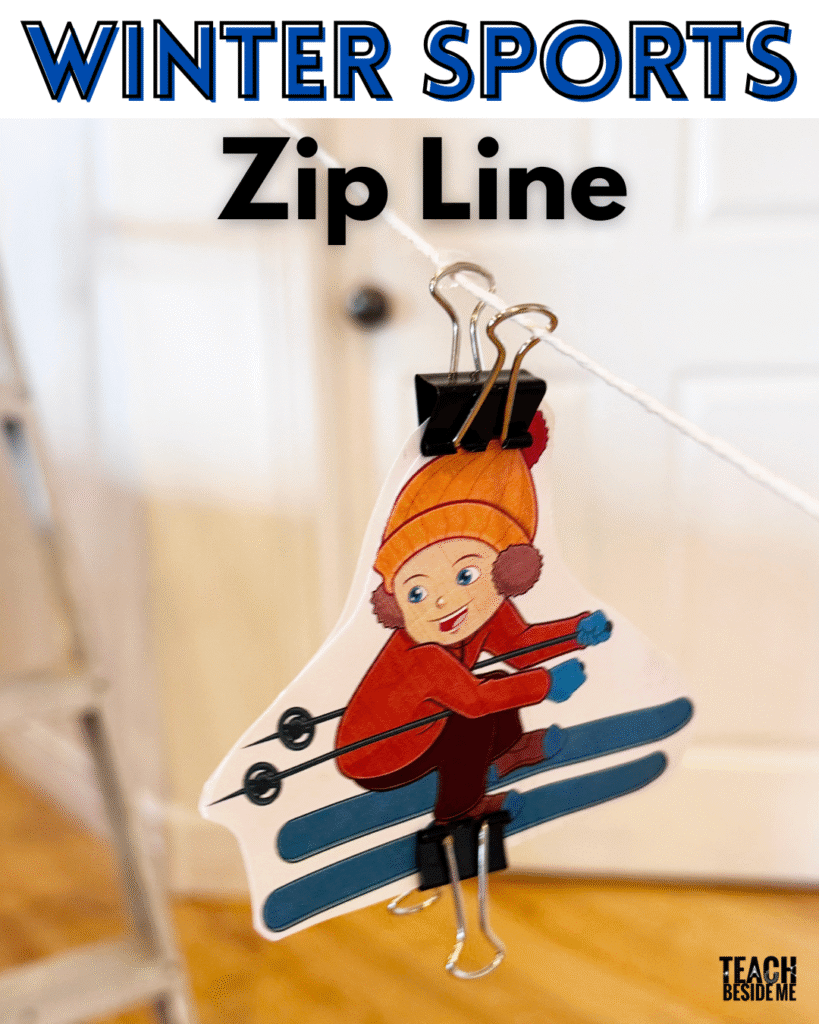
Winter Sports Zip Line for Kids: Simple Machines Inclined Plane Activity
This post may contain affiliate links.
Simple machines are all around us, helping make work easier in everyday life. One of the most common — and easiest to understand — is the inclined plane. In this hands-on activity, kids will explore how an inclined plane works by building a winter sports zip line using simple household supplies.
This low-prep activity is fun, visual, and easy to play with, making it a great introduction to gravity, slope, friction, and motion — all through winter-themed play.
Want more Winter sports? Check out my Paper Plate Ice Skating Magnet Maze!
What Is an Inclined Plane Simple Machine?
An inclined plane is a tilted surface or sloping surface that is set at an angle. Instead of lifting an object straight up, an inclined plane allows it to move up or down gradually, making the work easier than it would be on a horizontal surface.
Common examples of inclined planes include:
-
Ramps
-
Slides
-
Staircases
-
Sloped roads
-
Zip lines and ski runs
In this activity, the string acts as the inclined plane, allowing our winter sports rider to move downhill using gravity.
Simple Machines Activity: Winter Sports Zip Line
This version is intentionally simple so kids can build it quickly and experiment freely.
Supplies
-
Winter sports clipart (skier, snowboarder, bobsledder) Download mine below.
-
String, yarn, or cord- String worked much better than yarn!
-
2 chairs, ladders, or a stair railing and lower anchor point
Download the Zip Line Activity Now!
How to Build the Inclined Plane Zip Line
Step 1: Prepare your winter sports rider
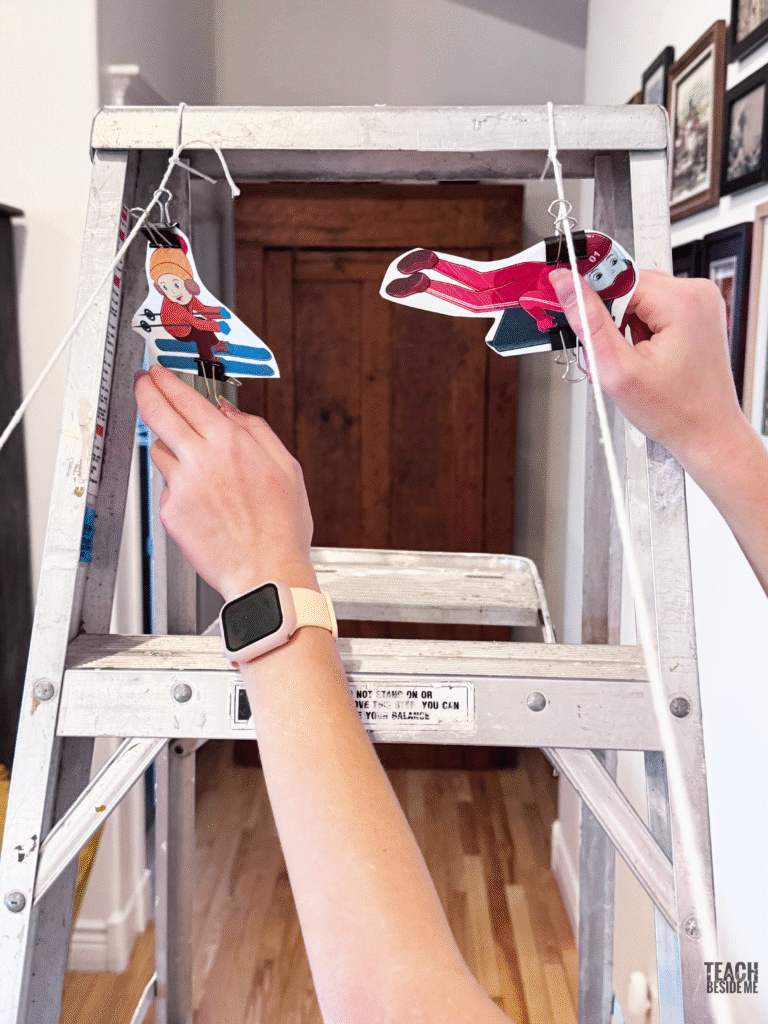
Print or draw the winter sports characters. Cut them out and attach them to binder clips with the loops facing upward.
Step 2: Create the inclined plane
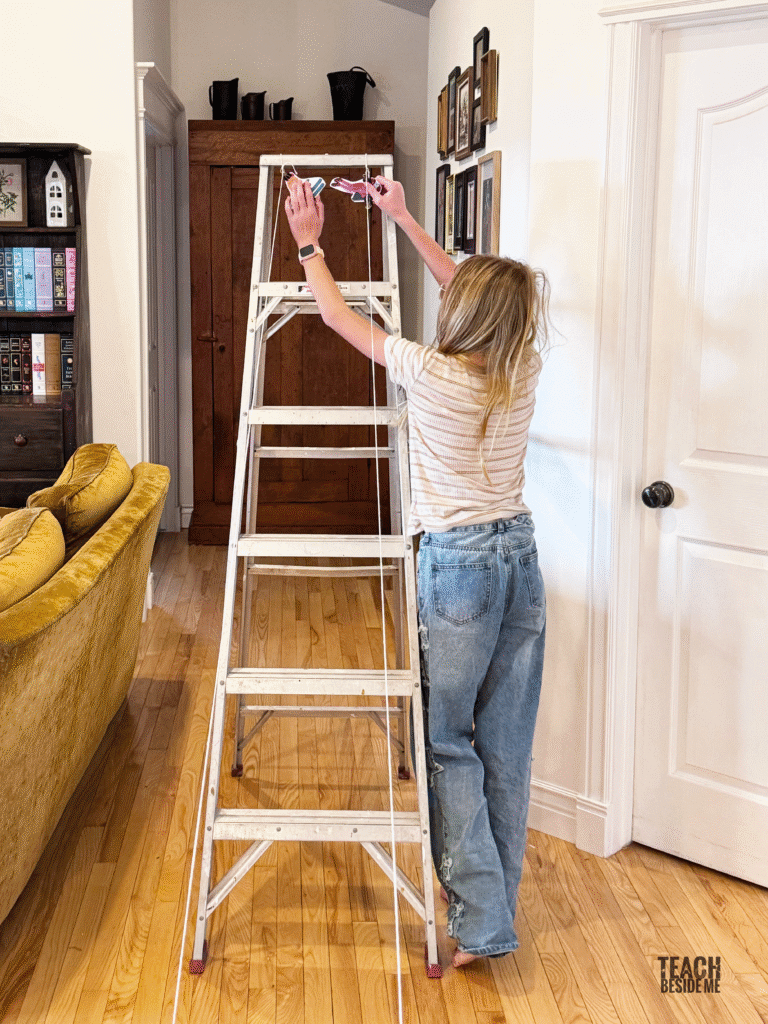
Tie one end of the string to a higher point (a ladder, chair back or stair railing). Tie the other end to a lower point (another chair or banister).
The greater the slope, the faster your rider will move.
Step 3: Add the rider
Hook the binder clip’s metal loops through the string and let go. The rider will slide down the string using gravity. Weight it with another binder clip or paper clip and it will got more quickly.
Slide it back up and try again — kids love repeating this part.
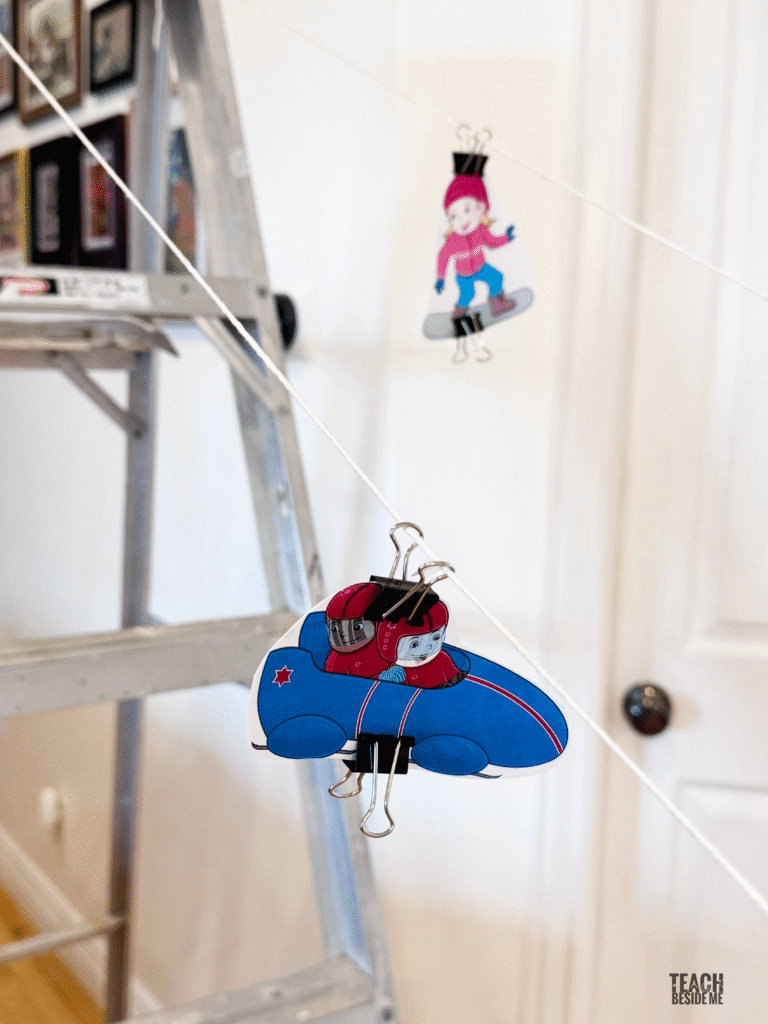
Try Different Winter Sports
Swap out the characters and observe what changes:
-
Skier – narrow design, smooth glide
-
Snowboarder – wider base, more stability
-
Bobsled – heavier and faster
- Skeleton– steeper slope increases speed
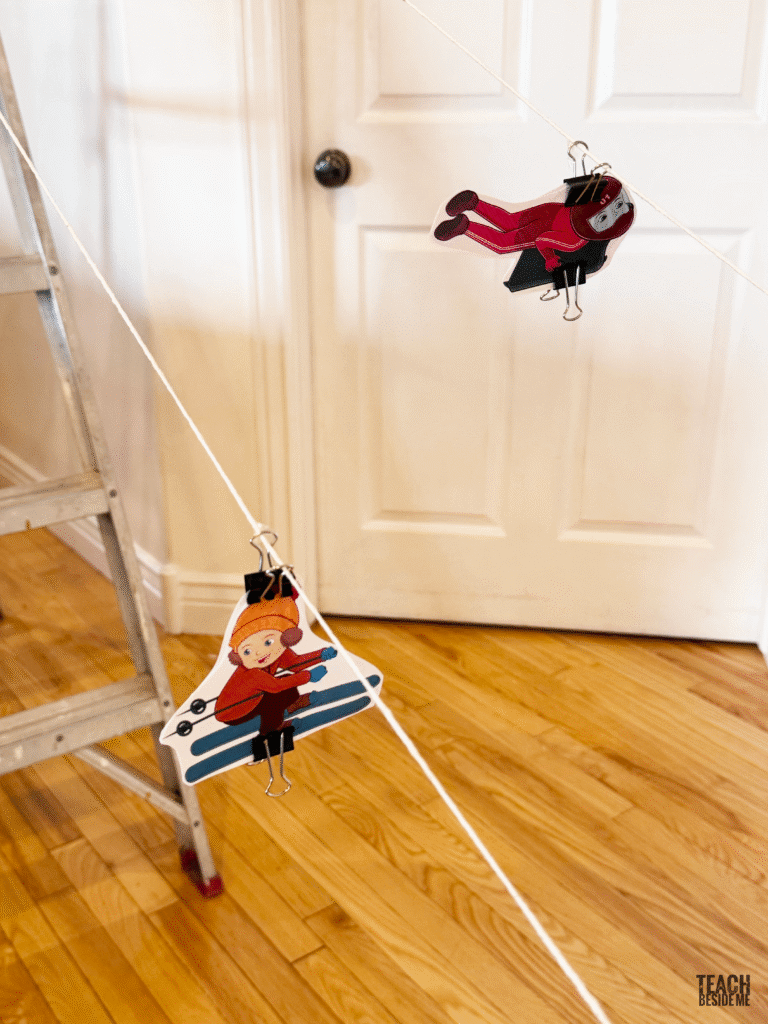
To make this activity even more meaningful, I’ve created a printable Winter Sports Inclined Plane Observation Sheet to guide kids through the experiment. The download includes project instructions, labeled winter sports athletes ready to cut and use, a data table for testing weight and slope changes, and reflection questions that encourage students to think about variables and fair testing. It’s an easy way to turn simple play into real scientific observation — perfect for home or classroom learning.
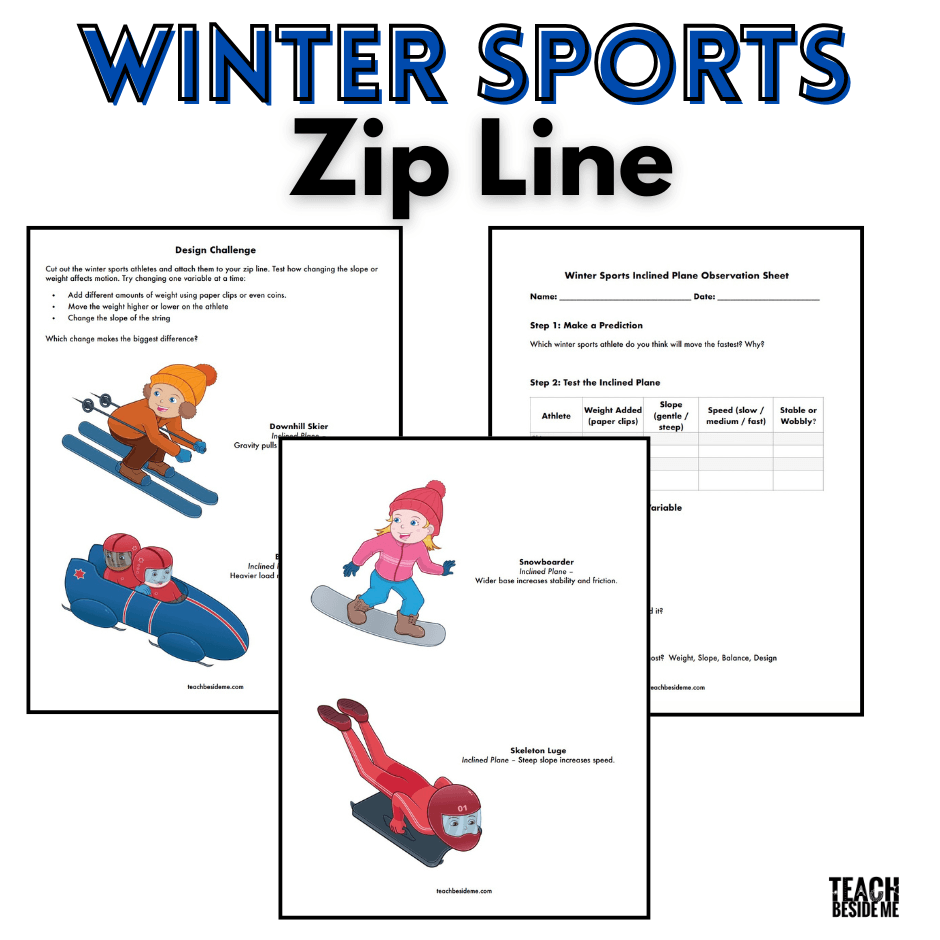
Design Challenge: Test the Variables
All of the winter sports athletes are made from paper, so to see real differences, try changing one variable at a time. Add different amounts of weight using paper clips, move the weight higher or lower on the athlete, or adjust the slope of the string. Observe which changes have the biggest effect on speed and stability, and discuss why.
Ask Kids:
-
Which one goes the fastest?
-
Which one stays the straightest?
-
Does shape or weight matter more?
- Which made the biggest difference in motion?
Science Behind the Inclined Plane Experiment
Inclined Plane
The sloped string acts as an inclined plane, allowing the rider to move downhill gradually instead of falling straight down.
Gravity
The force of gravity pulls the rider down the slope.
Friction
Friction between the string and binder clip affects how smoothly the rider moves.
Slope
A steeper incline increases speed, while a gentle slope slows motion.
Balance
Weight placement helps keep the rider from spinning.
Easy Experiments to Try
-
Change the angle of the string
-
Use different types of string
-
Add weight to the rider
-
Measure time from top to bottom
-
Compare different winter sports designs
- Hang it differently
Have kids make predictions at the beginning of the lesson, before testing.
Optional Extension: Turn It Into a Pulley
If you want to take this activity further, you can turn it into a pulley simple machine.
Attach two binder clips to fixed points (top and bottom), thread the string through the metal loops, and create a loop. When the string moves through the fixed clips, it becomes a pulley system that allows you to pull the rider back up the slope.
This extension shows how real-world systems often combine multiple simple machines working together.
Winter Learning Connection
Winter sports like skiing, snowboarding, bobsledding, and even zip lining all rely on inclined planes. Snow-covered hills and slopes are perfect real-life examples of how this simple machine works.
This activity fits naturally into winter learning, but it also works year-round as part of a simple machines unit.
Why This Winter STEM Activity Works
-
Uses household supplies
-
Easy for kids to build and repeat
-
Encourages hands-on experimentation
-
Introduces real physics concepts
-
Adaptable for different ages
Exploring More Simple Machines
This activity is a great starting point for learning about simple machines. If your kids enjoy this, you can also explore:
-
Story-based pulley with my Rapunzel tower pulley
- LEGO Balloon Powered Car– learn about the wheel
Simple machines often work in combination, just like they do in the real world.