
Kitchen Chemistry: Cake Baking Experiment for Kids
This post may contain affiliate links.

Did you know that baking is a science experiment? Every time you bake, you’re witnessing a chemical reaction in action! This baking experiment explores what happens when key ingredients are left out of a cake, teaching kids about kitchen chemistry in a delicious way.
Let’s dive into this exciting hands-on STEM activity that combines science, cooking, and taste testing!
The Science of Baking: Why Is It Chemistry?
Baking is an example of an endothermic reaction, which means heat causes a chemical change. When you mix ingredients and place them in the oven, they react to form something completely new—a cake! Each ingredient has a specific job in the process, and this experiment will show what happens when we take them away.
This experiment is featured in my Science Art book!
See more ways to combine Science & Art in my latest book: Science Art & Drawing Games for Kids
Baking Experiment: Testing Cake Ingredients
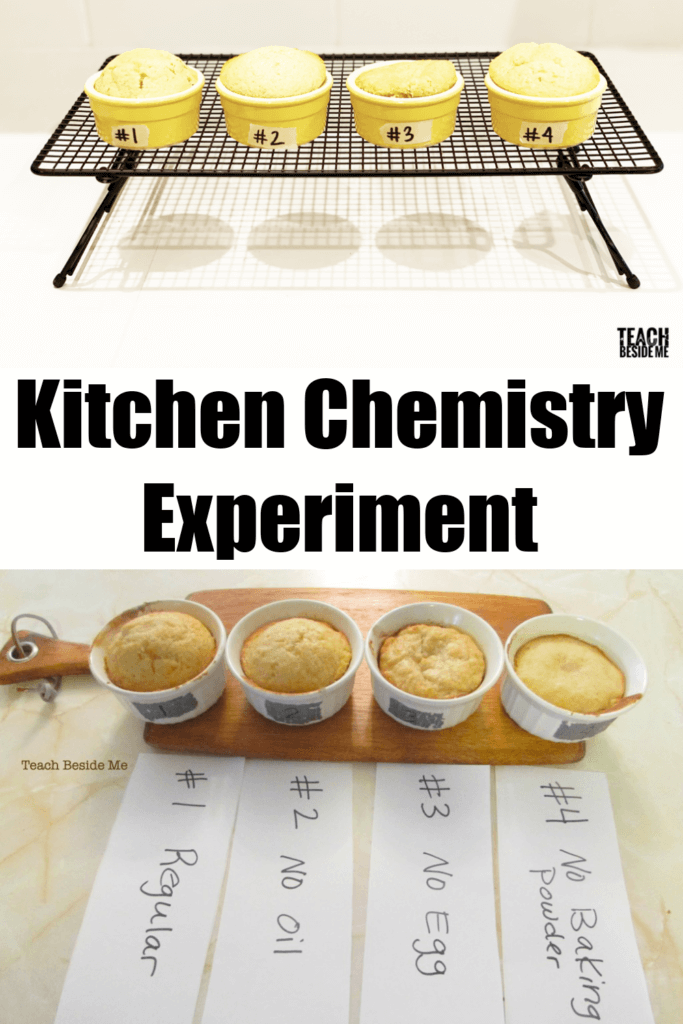
We conducted a cake experiment to observe how different ingredients affect the final product. We baked four mini cakes with the following variables:
- Control Cake – Made with all ingredients.
- No Oil Cake – Left out the oil.
- No Egg Cake – Left out the egg.
- No Baking Powder Cake – Left out the leavening agent.
After baking, we compared their texture, taste, and appearance to learn why each ingredient is essential.
Kitchen Chemistry Cake Recipe
To conduct this experiment, you’ll need to mix this recipe four times, omitting a different ingredient in each version.
Ingredients (per mini cake):
- 6 tablespoons flour
- 3 tablespoons sugar
- 1 pinch of salt
- 2 or 3 pinches of baking powder
- 2 tablespoons milk
- 2 tablespoons cooking oil
- 1/4 teaspoon vanilla extract
- 1/3 of an egg (Beat one egg and divide it into thirds for three cakes)

Instructions:
Preheat oven to 350°F (175°C).
Label four ramekin dishes (#1-4) using tape and a marker.
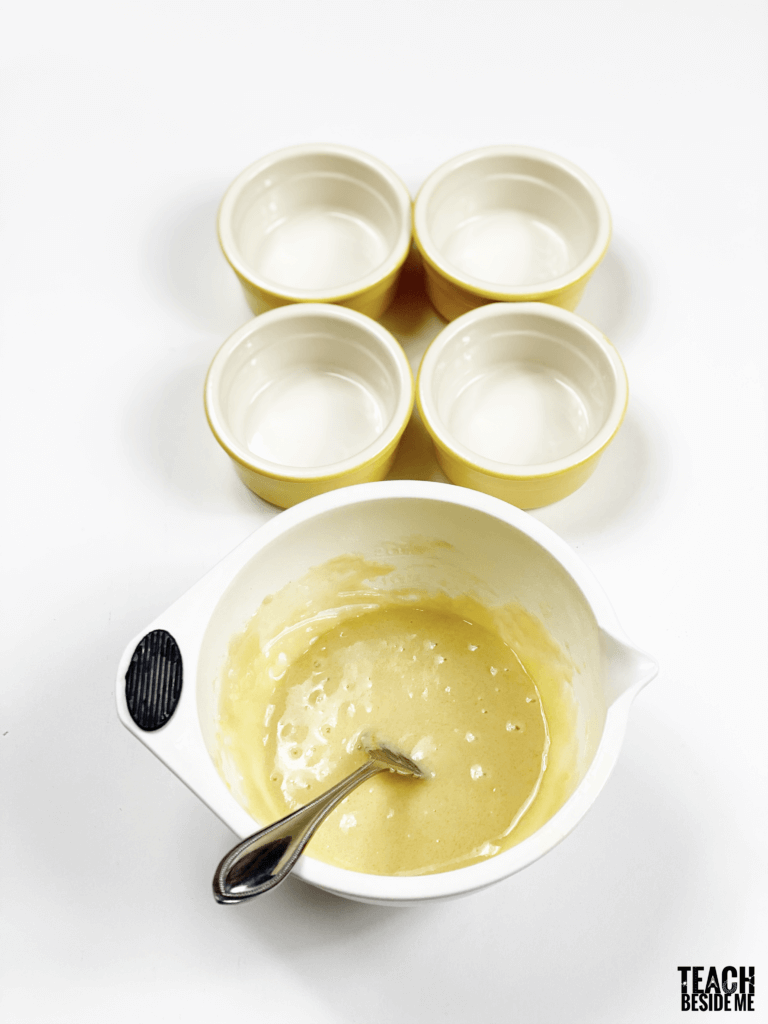
Prepare the batter: Mix dry ingredients first, then add wet ingredients.
Bake for 15-20 minutes until golden brown.
Cool cakes and analyze the results!

Observing the Results
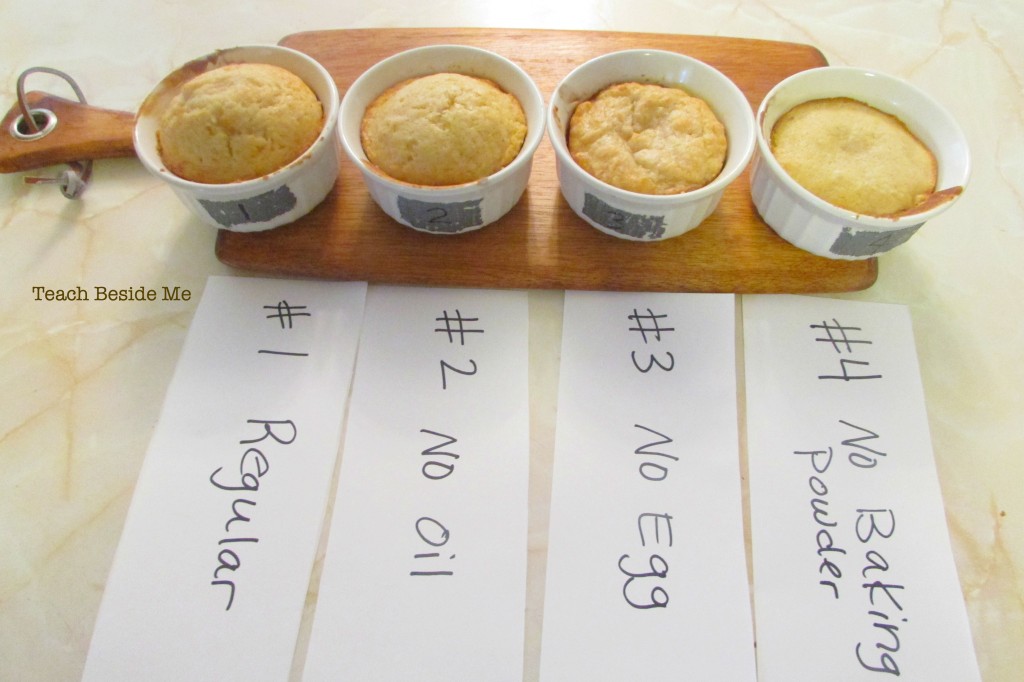
Once cooled, cut each cake in half and compare their size, texture, and structure. Taste-test each one and discuss the differences!
- Cake with no oil – Drier, less tender
- Cake with no egg – Crumbles easily, lacks structure
- Cake with no baking powder – Dense, flat, doesn’t rise
This experiment helps kids understand the function of each ingredient in baking!

Compare the differences.
The Science Behind the Ingredients
Why Do We Use Eggs in Baking?
- Eggs provide structure and stability.
- They help with moisture retention and add richness.
- The proteins in eggs coagulate when heated, giving the cake shape.
What Does Oil Do in a Cake?
- Oil is a fat that keeps the cake moist and tender.
- Without oil, baked goods tend to be dry and crumbly.
How Does Baking Powder Work?
- Baking powder is a leavening agent.
- It releases carbon dioxide gas, creating bubbles that make the cake rise.
- Without it, the cake will be dense and heavy.
This baking experiment is a great way to turn science into a hands-on learning experience. Kids will have fun mixing, baking, and tasting their results, all while learning about kitchen chemistry.
Variations to Try with the Cake Baking Experiment
Want to explore even more baking science? There are so many ways to change this up this simple experiment. Try these fun variations to see how small changes in the mixture can make a big difference!
Ingredient Substitutions & Modifications
- Swap Baking Powder for Baking Soda – Compare how different leavening agents affect the cake’s rise. Or, try vinegar and baking soda together.
- Use Butter Instead of Oil – See how changing the type of fat affects texture and moisture.
- Replace Sugar with Honey or Maple Syrup – Observe how liquid sweeteners change the consistency and flavor.
- Try a Dairy-Free Version – Use almond milk, oat milk, or coconut milk instead of regular milk.
- Use Applesauce Instead of Oil – Test how fruit purees work as a fat substitute.
- Replace Egg with Flax or Chia Egg – Explore plant-based egg alternatives.
Temperature & Baking Environment Tests
- Bake at a Lower Temperature (300°F vs. 350°F) – How does it affect texture and baking time?
- Bake at a Higher Temperature (375°F or 400°F) – What happens to browning and consistency?
- Use Different Pans (Glass vs. Metal vs. Silicone) – Test how heat conduction affects the cake.
- Try Convection vs. Conventional Baking – Does fan-assisted baking make a difference?
Ingredient Quantity Adjustments
- Double the Baking Powder – Does it rise too much or become airy?
- Double the Sugar – How does extra sugar impact texture and caramelization?
- Reduce the Flour by Half – What happens to structure and firmness?
- Add Extra Milk – Does a wetter batter result in a different texture?
- Overmix vs. Undermix the Batter – Observe how gluten development affects the cake.
Fun Science-Themed Variations
- Color-Changing Cake – Use butterfly pea flower tea or red cabbage juice to experiment with pH changes in baking.
- Layered Density Cake – Add ingredients in different layers without mixing to see how they bake differently.
- Yeast vs. Baking Powder Test – Compare how yeast and baking powder create air pockets in the cake.
- Microwave vs. Oven Baking – Test how different heat sources impact texture and doneness.
- Caramelization Experiment – Add a sugar crust on top to observe the Maillard reaction.
Try this experiment with your kids and let us know what you discovered! Don’t forget to pin this for later and share with fellow science lovers!
It’s fun to do science when you get to eat it!
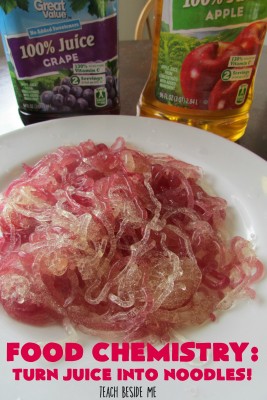
Want More Food Chemistry?
Check out my post on turning juice into gummy noodles!
Try Making homemade butter
Make some tasty homemade rock candy!
I want to try this with cookies next!



I love this idea, what a fun way to spend time in the kitchen together and learn!
An interesting & tangible way to let our children learn about , well really, simply chemistry! I know our kids would love this…but did you guys end up eating all the different ones? I don’t think hubby would love me wasting 😉
Thanks for sharing!
My kids liked all except the one without baking powder. That one had a dense, chewey texture. The other three were gobbled right up. Since the cakes were very tiny, there really was not much waste at all!
im doing this progect for the science fair got any tips
I love, love, love this idea! What a great way to teach science, but also teaching about each persons unique gifts and talents. So many lessons in the kitchen. I, too, enjoy understanding the chemical reactions going on in cooking and baking.
Thanks!! It was lots of fun. Glad you liked it. 🙂
My kids have been having a weekly “restaurant” for their grandparents for the past several months. It’s become a favorite part of our homeschool this year. This experiment would work perfectly! Thank you!
Thanks for this. I am writing a post for National Cake Decorating Day and am linking this page on the post! It’s so good for kids.
My daughter and I tried it. The recipes did not look like the pics at all! They were all too dry to be viable.
This… project I guess you could call it… is awesome! It combined my love of baking and my curiosity about different ingredients! Thank you!
Great experiment, except when I made the recipe it was an almost cookie dough like texture so I added 1 tbl spoon of water to all except the no baking powder one and it worked great!
This looks like something my nephew and I need to do like, yesterday. I feel like I’m missing something, though. Does it say anywhere how to prepare the inside of the ramekins or do you just pour the batter in there with no grease of any kind?
Thanks for this site! I don’t even know where to start but I’m going to have fun figuring it out!
You’ll definitely want to grease them! Have fun!