40 Fall Writing Prompts for Kids & Teens
This post may contain affiliate links.
Fall is such a fun season to bring a little creativity into your writing lessons! Changing leaves, cooler weather, pumpkins, apples, family traditions, and all of the changes happening in nature give kids plenty to write about.
These fall writing prompts for kids and teens include 40 creative writing ideas for students from kindergarten through high school.
I’ve divided the prompts into two age groups—elementary (K–5) and middle school and high school (6–12)—so younger kids can enjoy playful, imaginative topics while older students have prompts that encourage deeper thinking and more developed writing.
Use them for during the fall season homeschool language arts, classroom writing centers, morning work, journal writing, creative writing practice, or simply as a fun way to get reluctant writers putting their ideas on paper.
Why Use Fall Writing Prompts?
One of the hardest parts of writing can simply be deciding what to write about.
A good writing prompt removes that first hurdle while still leaving plenty of room for creativity.
Seasonal writing prompts are especially fun because kids already have experiences and observations they can draw from. They might describe jumping into a pile of leaves, invent a story about a mysterious pumpkin, write about family traditions, or think more deeply about the changes they see happening in nature.
And writing prompts don’t always have to result in a polished essay!
You can use them for a five-minute quick write, a journal entry, an oral storytelling activity, a longer composition, or the beginning of a story that develops over several days.
Fall Writing Prompts for Elementary Students
The elementary prompts in this printable are designed for students in grades K–5, but you can easily adapt them to fit your child’s writing ability.
Younger children can answer a prompt aloud while you write their words, draw a picture and add a sentence, or write just a few words on their own.
Older elementary students can use the same prompts for paragraphs, journal entries, stories, or more detailed compositions.
Here are a few examples:
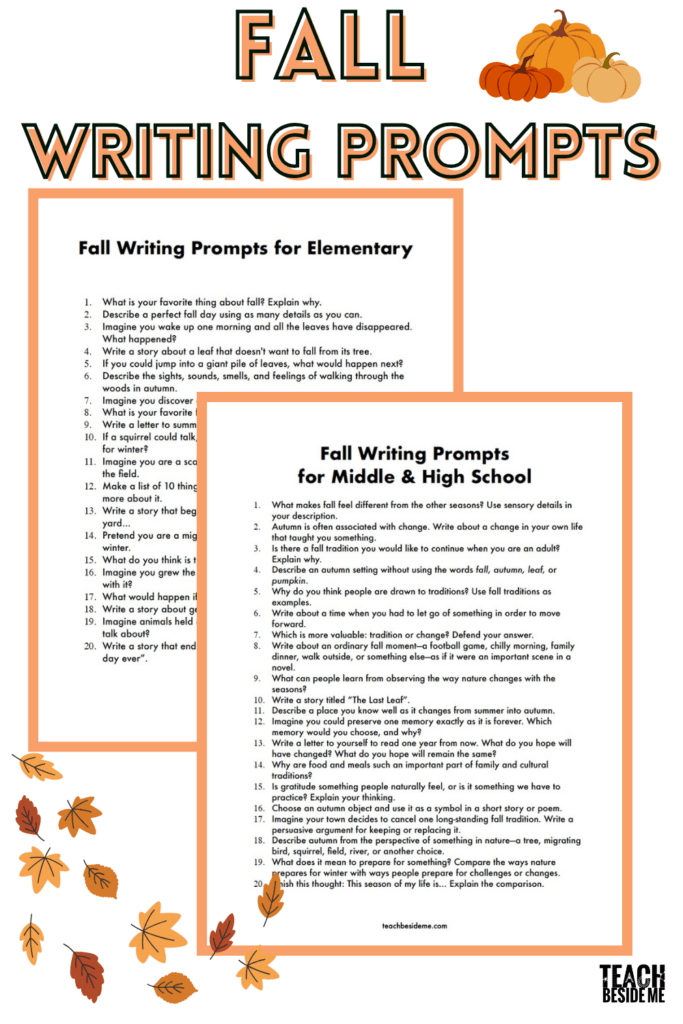
- Imagine you wake up one morning and all the leaves have disappeared. What happened?
- Write a story about a leaf that doesn’t want to fall from its tree.
- Imagine you discover a tiny door inside a pumpkin. Where does it lead?
- If a squirrel could talk, what advice would it give you about preparing for winter?
- Write a story about getting lost in a corn maze.
The complete printable includes 20 elementary fall writing prompts with a mixture of imaginative, narrative, descriptive, opinion, and informational writing ideas.
Fall Writing Prompts for Middle & High School
Older kids deserve better writing prompts than simply being asked to describe their favorite pumpkin. 😉
For the grades 6–12 set, I’ve used autumn themes as a starting point for more thoughtful writing.
Students will explore ideas such as change, traditions, memories, gratitude, symbolism, nature, and preparing for the future, along with creative storytelling.
A few examples include:
- Autumn is often associated with change. Write about a change in your own life that taught you something.
- Describe an autumn setting without using the words fall, autumn, leaf, or pumpkin.
- Which is more valuable: tradition or change? Defend your answer.
- Choose an autumn object and use it as a symbol in a short story or poem.
- What can people learn from observing the way nature changes with the seasons?
The printable contains 20 prompts specifically for middle and high school students, so you can use it throughout the season rather than for just one writing assignment.
Different Types of Writing Practice
I didn’t want this to be a list of 40 nearly identical journal questions. The prompts give kids opportunities to experiment with several kinds of writing, including:
- Creative and narrative writing
- Descriptive writing
- Opinion and persuasive writing
- Personal reflection
- Letter writing
- Informational and procedural writing
- Sensory description
- Story starters
- Symbolism and figurative thinking
You don’t need to formally teach every type of writing each time you use a prompt. Sometimes the best thing you can do is simply give kids an interesting idea and let them write.
Easy Ways to Use the Fall Writing Prompts
There are lots of ways to incorporate these prompts without adding another complicated assignment to your day.
Choose one prompt each week for a Fall Writing Friday. Put several prompts in a jar and let students draw one at random. Use a prompt as morning work or a writing-center activity. Let kids choose between three prompts rather than assigning everyone the same one.
You could also use the prompts as family storytelling questions. Choose one at dinner and let everyone answer aloud. That’s especially fun with the imaginative prompts because adults usually have very different answers from kids!
For reluctant writers, I would keep it low-pressure. A child might draw first, dictate an answer, make a list, or tell the story aloud before writing it down.
The goal is to get ideas flowing.
Take Your Writing Outside
Fall is also a wonderful time to move writing lessons outdoors.
Take notebooks on a nature walk and have kids collect words that describe what they see, hear, smell, and feel. Look closely at leaves, seeds, trees, clouds, and other seasonal changes.
Then come home and use those observations in one of the descriptive or creative writing prompts.
Real experiences give kids something concrete to write about—and often result in much more interesting descriptions!
Get the 40 Fall Writing Prompts
Want the complete collection?
I’ve put together 40 printable fall writing prompts divided into two age levels:
20 Elementary Writing Prompts — Grades K–5
Fun, accessible prompts for stories, descriptions, opinions, imagination, and seasonal writing.
20 Middle & High School Writing Prompts — Grades 6–12
More thoughtful prompts incorporating narrative writing, reflection, persuasion, symbolism, description, and deeper ideas.
Use them all season long for homeschool, classroom writing centers, journals, morning work, creative writing, or language arts lessons.
DOWNLOAD THE FALL WRITING PROMPTS
More Fall Learning Activities
Looking for more ways to bring the season into your lessons?
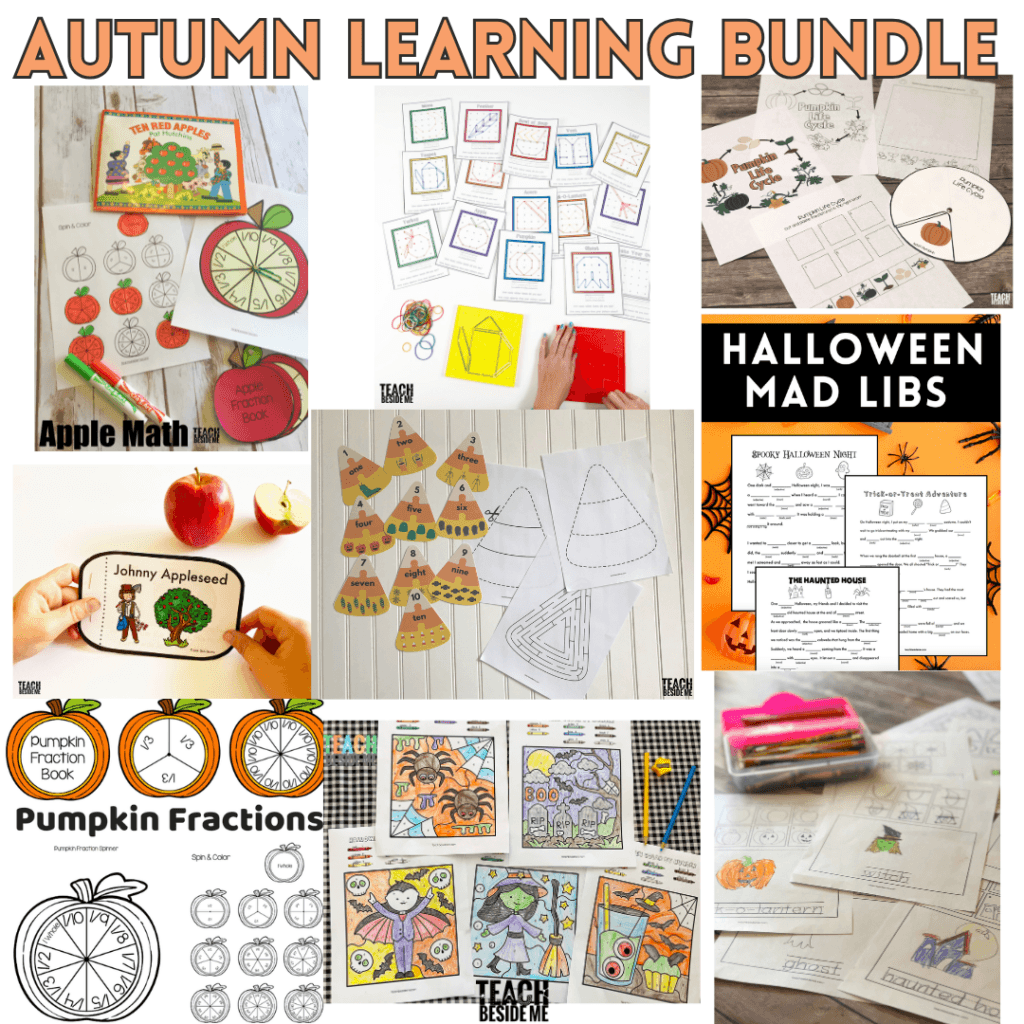
You might also enjoy my fall math, science, nature, literacy, and hands-on learning activities. And if you’re planning an entire season of autumn learning, my Autumn Learning Bundle brings many of my printable fall resources together in one place.
See More Creative Writing Ideas
88 Back to School Writing Prompts for the First Week
Spring Writing Prompts for Kids