Look Alike Animals Activity for Kids + Printable Mini Unit
This post may contain affiliate links.
Have you ever mixed up a seal and a sea lion? Or wondered how to tell the difference between a crocodile and an alligator?
Animals that look alike can be surprisingly tricky to identify! This fun look alike animals activity for kids helps children compare similar animals and learn the important differences between them through games, matching cards, and animal facts.
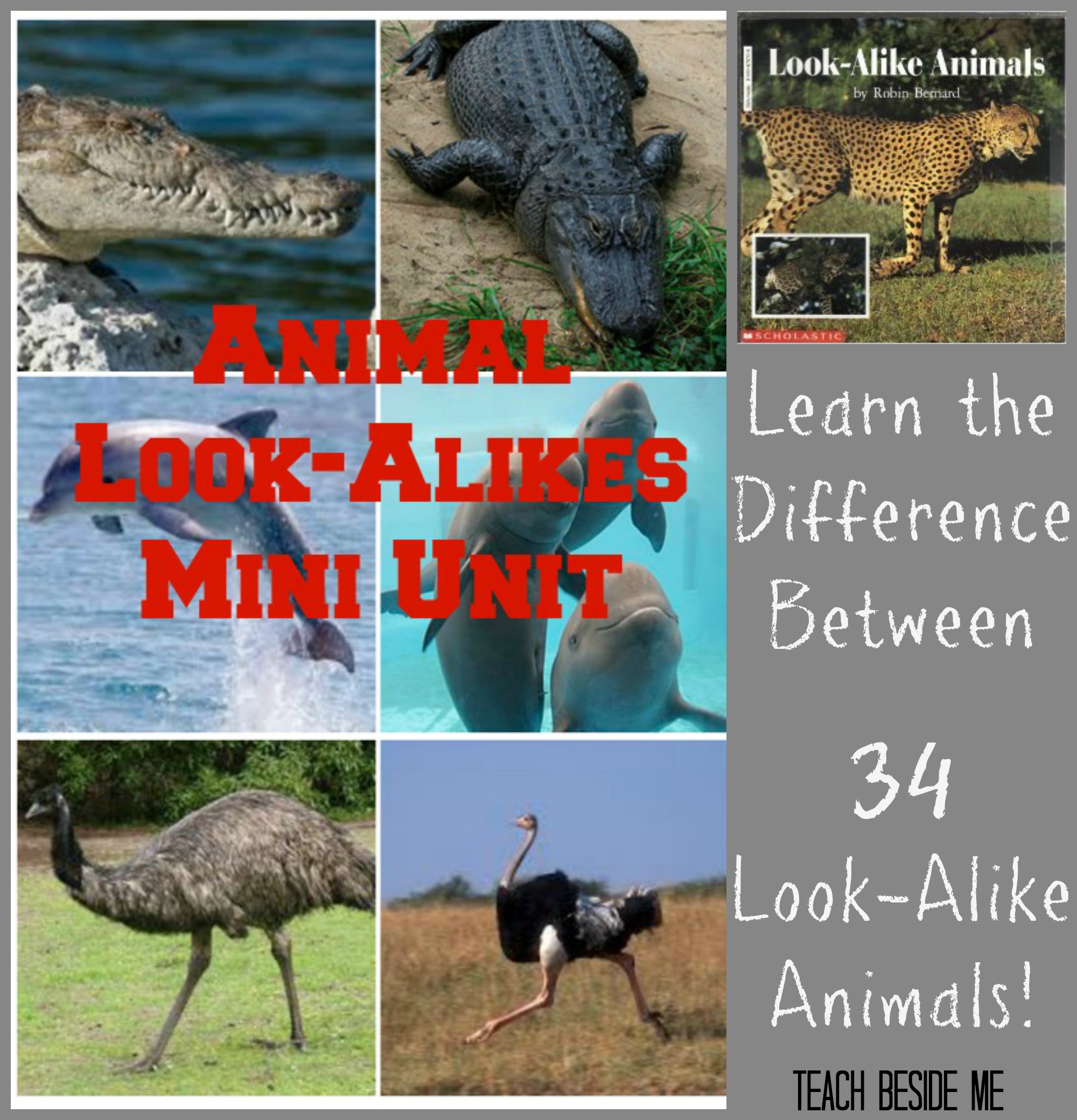
One of our longtime favorite books is Look-Alike Animals by Robin Bernard. My son absolutely loved learning about animals that are commonly confused with one another, and honestly, it helped me too!
Inspired by the book, I created this printable look alike animals mini unit and matching game to make learning even more interactive and memorable.
This activity is perfect for:
- elementary science lessons
- animal studies
- homeschool nature units
- classroom centers
- zoology themes
- animal lovers
- hands-on learning
Why Kids Love Learning About Look Alike Animals
Children are naturally curious about animals, especially when they discover surprising similarities and differences.
Comparing look alike animals helps kids practice:
- observation skills
- critical thinking
- scientific classification
- visual discrimination
- animal identification
- comparing and contrasting
It also encourages children to pay closer attention to important animal features such as:
- wings
- antennae
- snouts
- ears
- tails
- body coverings
- habitats
Learning through comparison helps children remember facts much more effectively.
What Is Included in the Look Alike Animals Mini Unit?
This printable animal mini unit includes:
- animal information pages
- matching picture cards
- animal comparison activities
- look alike animal identification game
Kids can read about each pair of similar animals and then use the printable cards to play a matching game while practicing identification skills.
When players find a matching pair, they must correctly identify the animals and explain the differences between them.
This makes the activity both educational and interactive.
Look Alike Animals Included in the Unit
This animal mini unit covers many fascinating animal pairs and groups that are often confused.
Mammals
- Alpaca & Llama
- Hare & Rabbit
- Dolphin & Porpoise
- Seal & Sea Lion
- Donkey & Mule
- Wolf & Coyote
- Monkey & Ape
- Coypu (Nutria) & Beaver
Reptiles and Amphibians
- Alligators & Crocodiles
- Turtle & Tortoise
- Gecko & Salamanders
- Frog & Toad
Insects
- Butterfly & Moth
- Hornets, Bees & Wasps
- Cricket & Grasshopper
Birds
- Crow & Raven
- Ostrich & Emu
Big Cats
- Cheetah, Leopard & Jaguar
Children are often amazed to discover the unique differences between animals they thought were identical.
Fun Animal Differences Kids Can Learn
Alpaca vs. Llama
Kids learn that llamas are generally larger with longer faces and banana-shaped ears, while alpacas are smaller with fluffy fur and shorter faces.
Seal vs. Sea Lion
Sea lions have visible ear flaps and large front flippers, while seals have smaller flippers and move differently on land.
Crocodiles vs. Alligators
Children learn how to compare:
- snout shape
- teeth visibility
- habitat
- coloring
to identify crocodiles and alligators.
Butterfly vs. Moth
Butterflies and moths may both have wings, but kids discover differences in:
- antennae
- body shape
- activity times
- resting wing positions
Bees, Wasps, and Hornets
Kids can compare:
- body shape
- fuzziness
- coloring
- behavior
while learning about important pollinators and insects.
Why Animal Comparison Activities Are Great for Learning
Animal comparison activities help children develop scientific thinking skills.
Kids practice:
- classification
- observation
- comparing and contrasting
- noticing patterns
- identifying characteristics
These are foundational science skills that support future biology and zoology learning.
Children also strengthen reading comprehension while learning animal facts and descriptions.
How to Use the Printable Animal Matching Game
There are many ways to use this printable look alike animals activity.
Matching Game
Lay the animal cards face down and play memory matching.
When a player finds a pair, they must correctly identify the animals.
Science Centers
Use the cards and animal information sheets in:
- classroom science centers
- homeschool stations
- animal study units
Compare and Contrast Lessons
Have children create:
- Venn diagrams
- animal fact charts
- comparison lists
to further explore similarities and differences.
Independent Learning
Older children can read through the information packet independently and quiz themselves with the matching cards.
Extend the Learning with Books
Books are a wonderful way to expand animal learning.
Our favorite book for this activity is:
Look-Alike Animals by Robin Bernard
Another fun option is:
What’s the Difference? 10 Animal Look-Alikes by Judy Diehl and David Plumb.
Animal comparison books help kids build observation skills while making science feel fun and approachable.
Educational Benefits of Animal Classification Activities
This look alike animals mini unit supports:
- science learning
- visual discrimination
- vocabulary development
- reading comprehension
- observation skills
- critical thinking
- animal classification
Hands-on science activities help children become active learners while building curiosity about the natural world.
Educational Benefits of Animal Classification Activities
This look alike animals mini unit supports:
- science learning
- visual discrimination
- vocabulary development
- reading comprehension
- observation skills
- critical thinking
- animal classification
Hands-on science activities help children become active learners while building curiosity about the natural world.
Download the Look Alike Animals Printable Mini Unit
Ready to help kids learn the differences between fascinating animals that look alike?
This printable mini unit includes:
- animal information pages
- matching cards
- look alike animal activities
- comparison learning games

This printable is available in my shop and is also included in my Membership Site along with many more science and nature learning resources.
More Animal Activities for Kids
If your kids enjoy this look alike animals activity, be sure to check out more fun science and animal learning ideas:
- Animal Life Cycle Activities
- Printable Preschool Animal Activity Pack
- Animals that Hibernate in Winter
- How to Make an Insect Hotel: A Fun Backyard STEM Project
- Explore Animal Habitats: Printable Sorting Mats
Hands-on science activities are one of the best ways to help children build curiosity, observation skills, and a love of learning about the natural world.





What a fun idea! My son is very into animals right now too. He would love it. Thanks for sharing!
Thanks for sharing, Karyn! We love learning about animals and my kids would LOVE these books! The National Geographic book would make a great Christmas gift if I would be so lucky as to win it 😉
How fun! I always confuse some animals despite reading a lot about their differences 🙂 Thanks for sharing your unit with Afterschool!
Looks like a great unit! Some animals really are confusing!
Wow, I know that not all animals are the same, but this is a great activity to help show how they are the same and different. Thank you for the free printable too, it is a great resource 🙂
Nice unit! It has a lot of good information. Very nice! I know my kids will love it!
Just two things: the labels are wrong on the cheetah / leopard, and there are several spelling typos you might consider fixing…
Ha Ha! I told you they look alike! I am working on correcting it right now and am really embarrassed. I will be updating ASAP. Thanks for pointing it out to me. My son is the actual animal expert in our house and he is making sure I get it right this time.