Skittles Experiment: Rainbow Candy Science +Art Activity
This post may contain affiliate links.
This Skittles science experiment is one of the easiest (and most mesmerizing) kitchen science activities you can do with kids. With only candy and warm water, children can explore diffusion, density, and solubility — all while creating a dazzling rainbow worth photographing.
Just after Halloween, I am sure you probably have lots of extra candy lying around! 🙂

What You’ll Need for the Skittles Experiment
-
A white plate or shallow dish
-
Warm water (not boiling)
-
A handful of Skittles
-
Optional: stopwatch, measuring cup, notebook for observations
Tip: A white plate makes the color contrast brighter and easier to photograph or film.
How to Do the Skittles Experiment
-
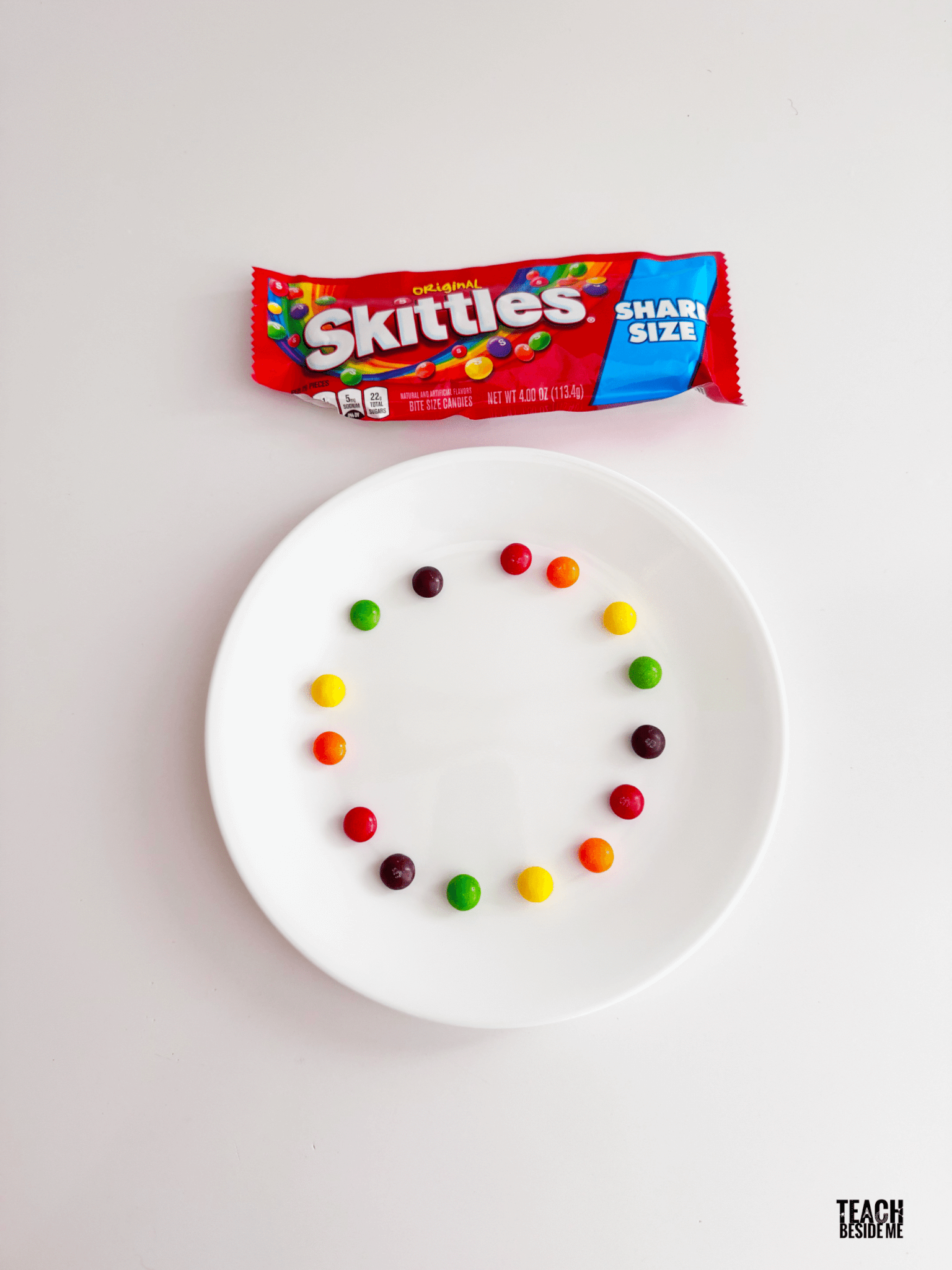
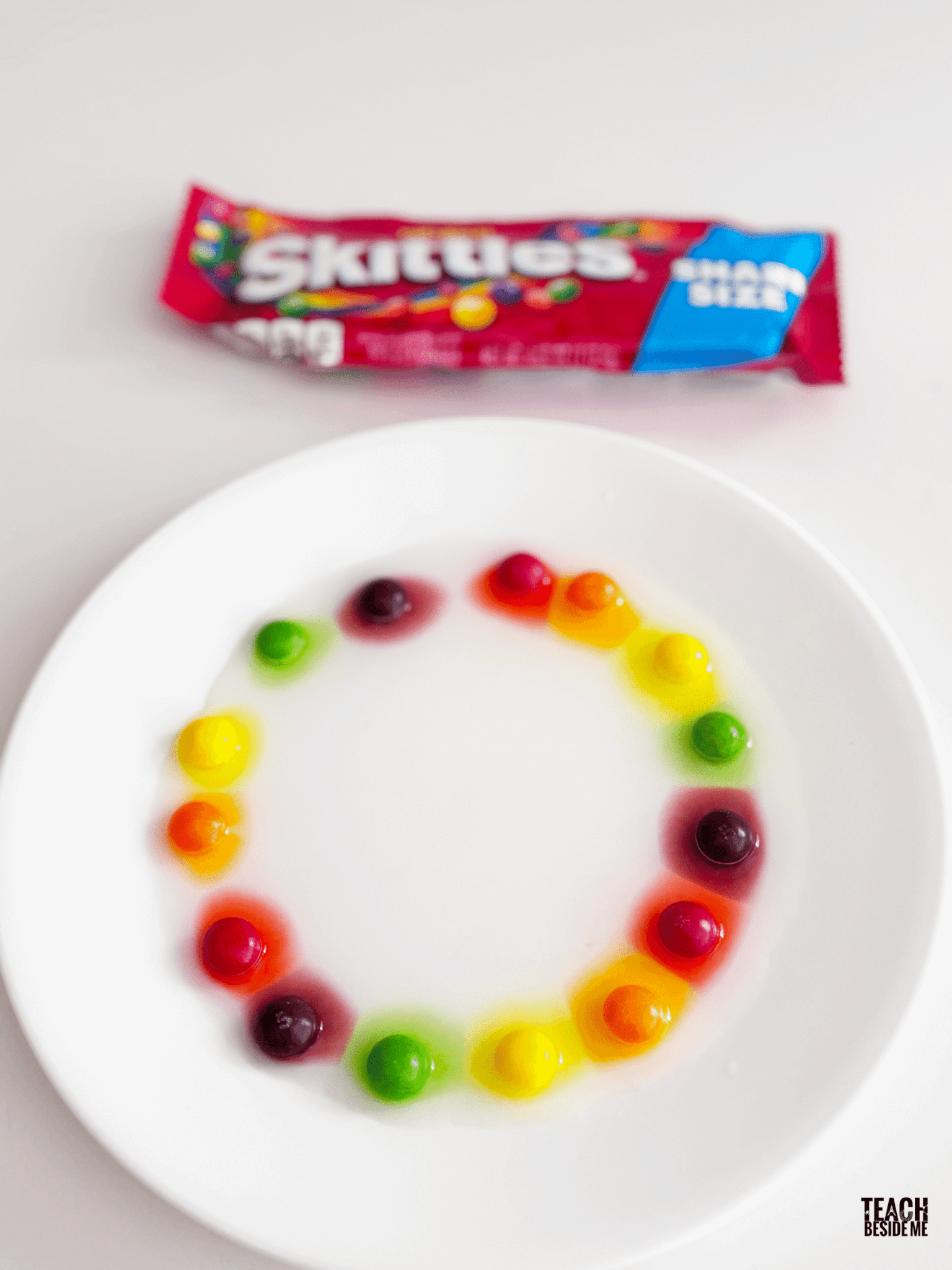
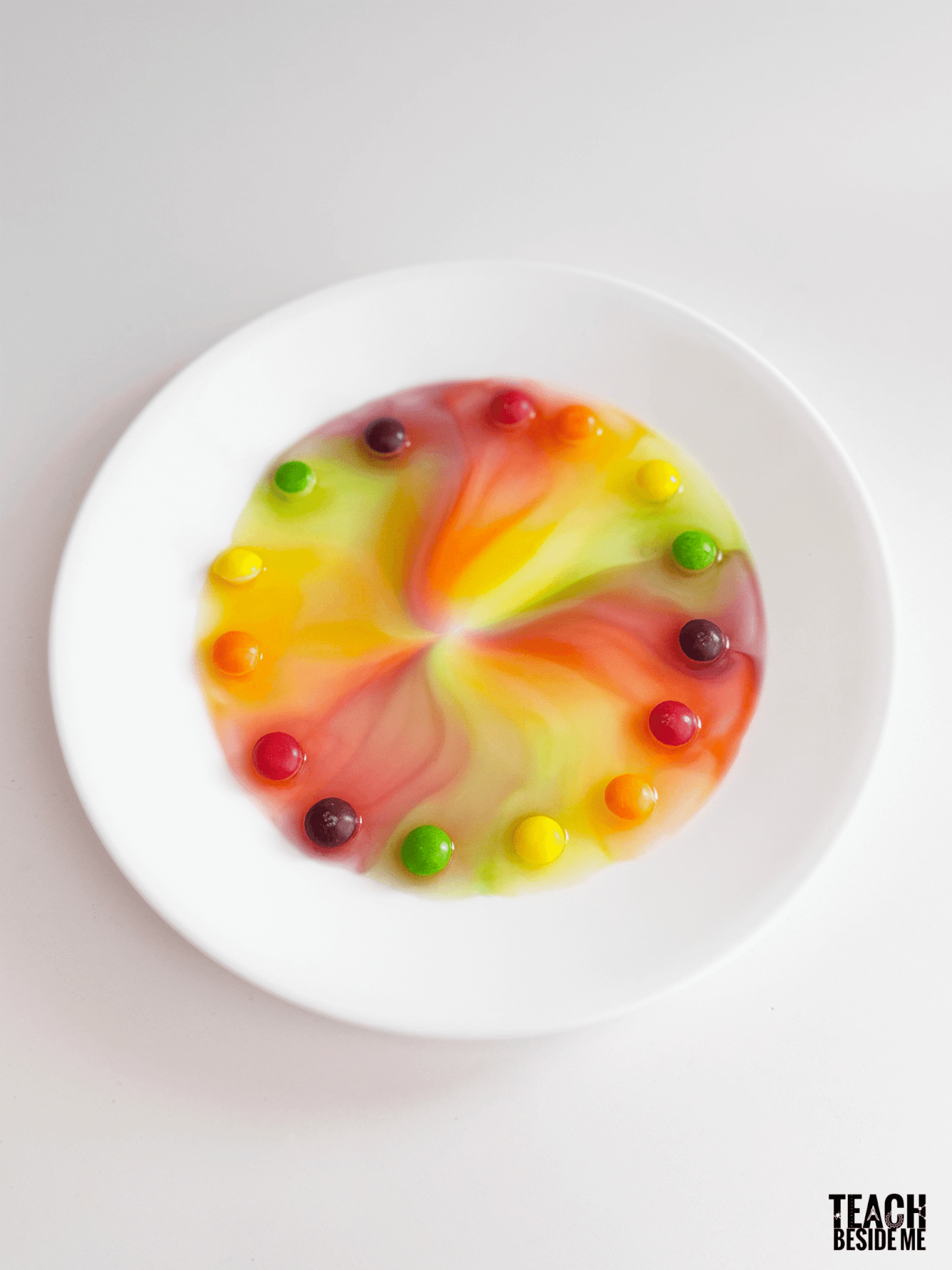
Arrange the Skittles in a circle around the edge of your plate. Try rainbow order or alternating colors for contrast.
-
Slowly pour warm water into the center of the plate until the candies are just covered.

-
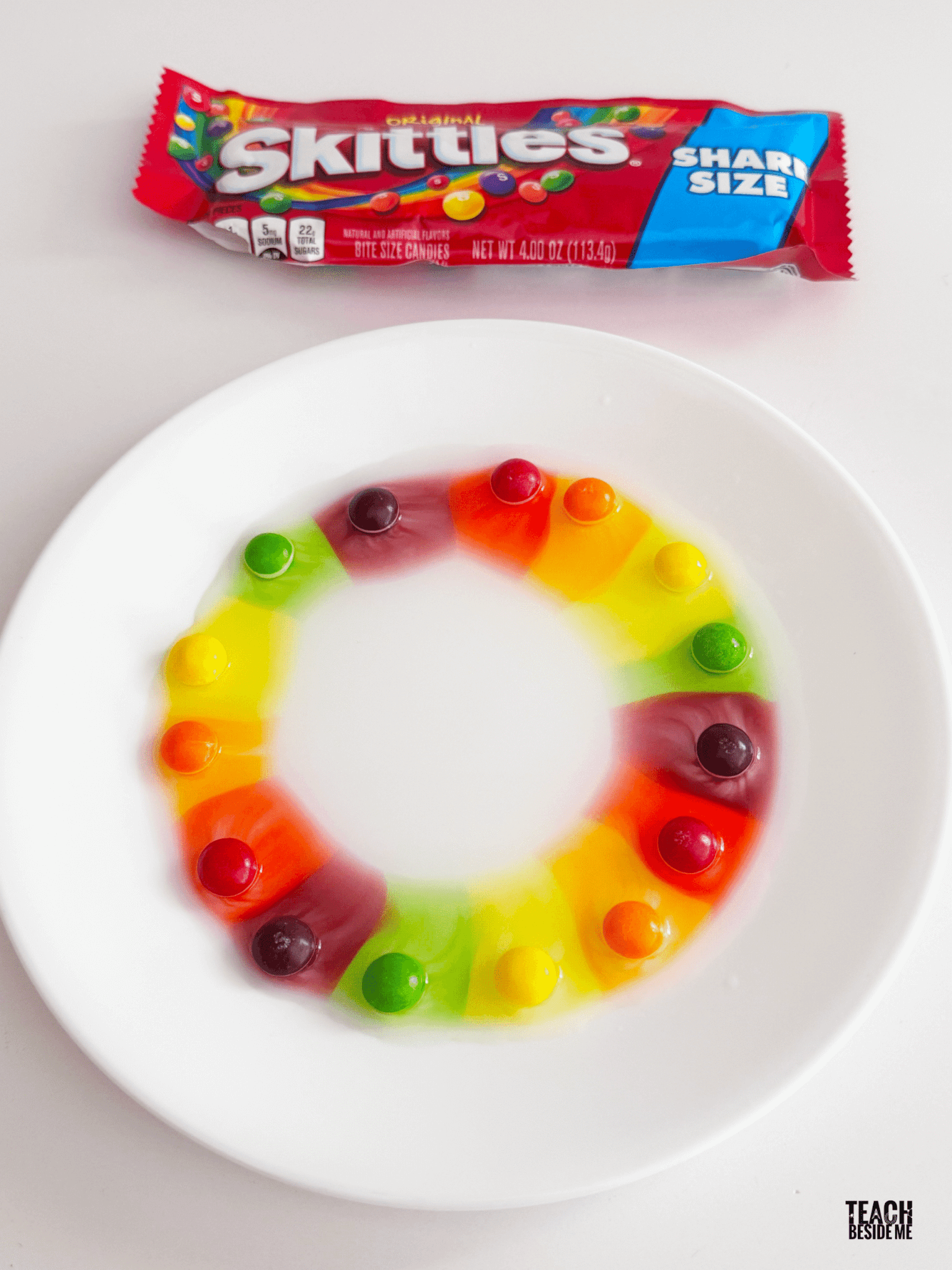
Watch closely! Within seconds, the colored coating begins to dissolve, and the dyes spread toward the middle in beautiful stripes.
-
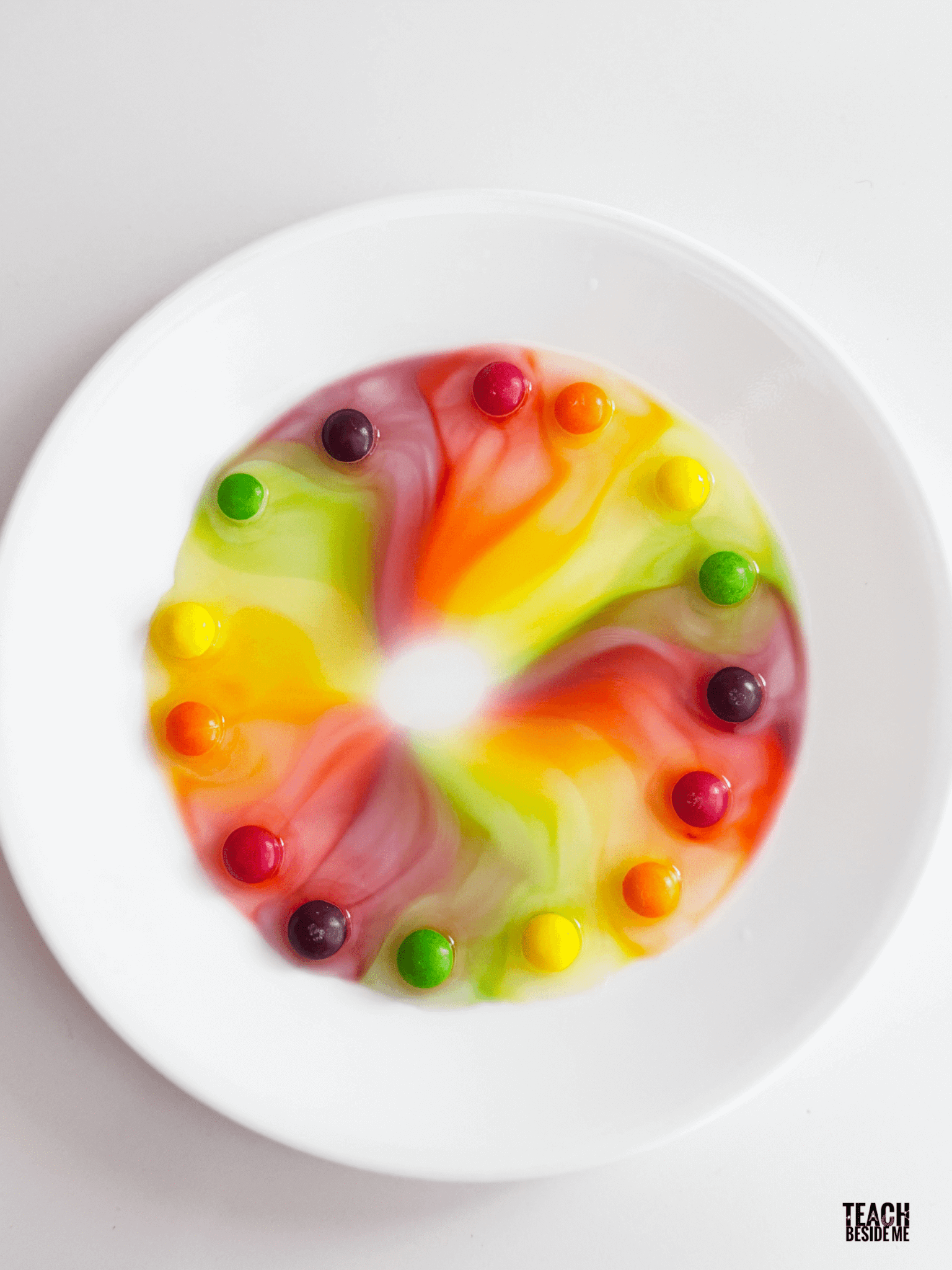
Observe the rainbow: The colors meet but don’t mix immediately, forming crisp lines where they touch. The whole thing happens within 1-3 minutes.
The Science Behind the Skittles Experiment
When you add warm water, the sugar and food coloring on each Skittle dissolve into the surrounding liquid. Warm water molecules move faster than cold ones, so the sugar coating dissolves more quickly.

This process is called diffusion — molecules naturally move from areas of high concentration (near the candy) to low concentration (the plain water). Each color forms a saturated zone of sugary water that’s slightly heavier than plain water. These density layers act as temporary barriers that keep the colors from mixing until they reach equilibrium — when everything is evenly spread out.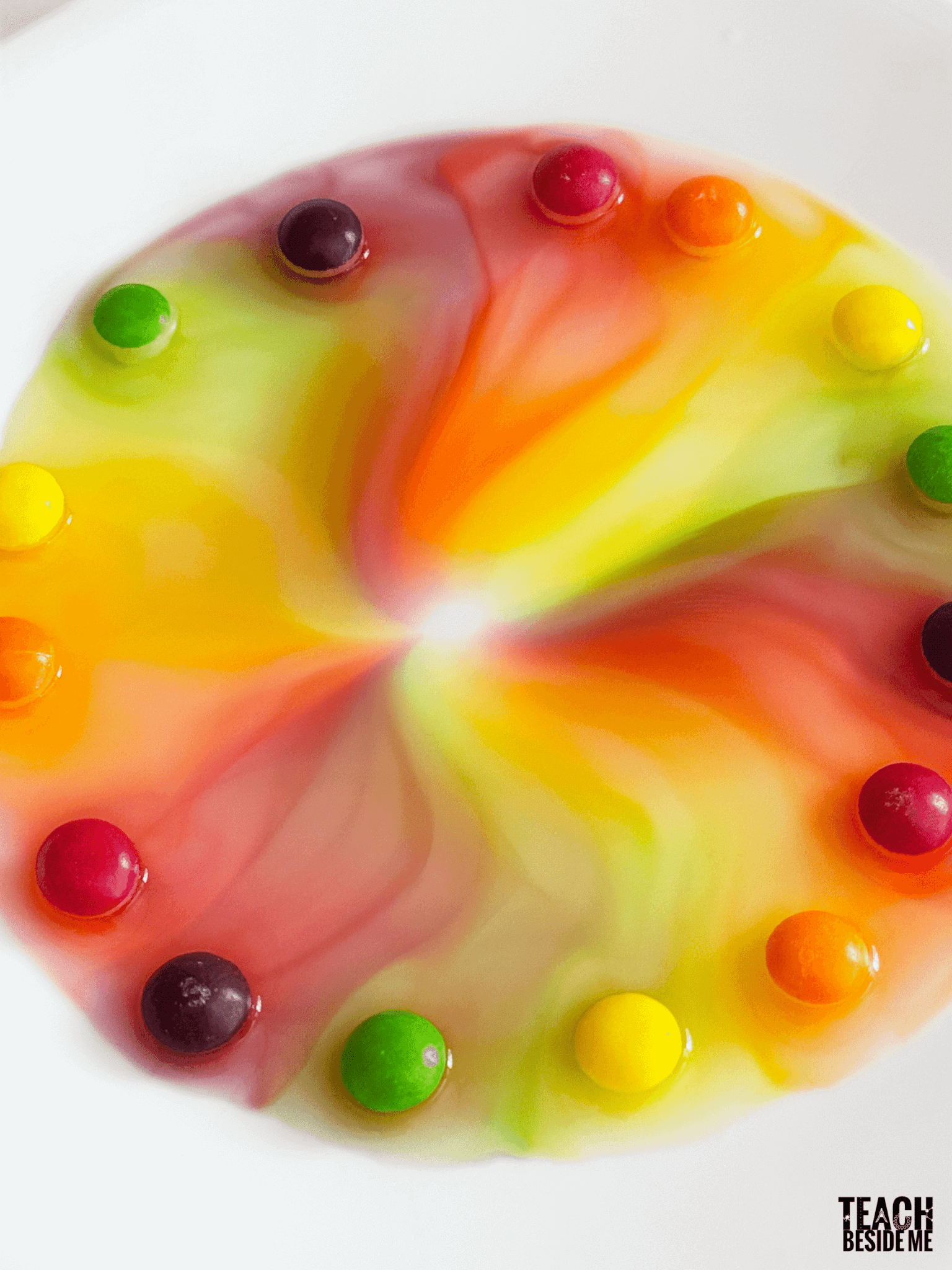
Variables to Test Like a Scientist
Encourage kids to test one variable at a time to see what changes the results. Record predictions and outcomes for each.
| Variable | Examples to Try | What You’ll Learn |
|---|---|---|
| Temperature | cold, warm, or hot water | How heat affects diffusion speed |
| Liquid Type | water, vinegar, milk, soda | Which liquids dissolve sugar fastest |
| Candy Type | Skittles vs. M&Ms or jellybeans | How candy coatings differ |
| Arrangement | rainbow circle, stripes, spiral | How distance affects color movement |
Why Temperature Matters
If you use cold water, the colors move slowly because the molecules have less energy.
With warm or hot water, diffusion happens faster and the rainbow appears almost instantly.
This comparison demonstrates how heat energy speeds up molecular motion — a great tie-in to physical science.
I also love this Skittles Rainbow Density Experiment idea!
Learning Connections
This simple activity builds multiple skills:
-
Scientific observation – noticing color changes and timing
-
Hypothesis testing – predicting what happens under different conditions
-
Measurement and recording – noting how long colors take to meet
-
Vocabulary building – diffusion, solubility, density, equilibrium
-
Cross-curricular links:
-
Art: color theory and mixing
-
Math: measuring temperature, time, and distances
-
Language arts: writing observations or poetry inspired by the colors
-
STEAM Extension: Painting with Skittles
When you’re done watching your Skittles rainbow spread across the plate, don’t toss the candy just yet—turn it into paint!
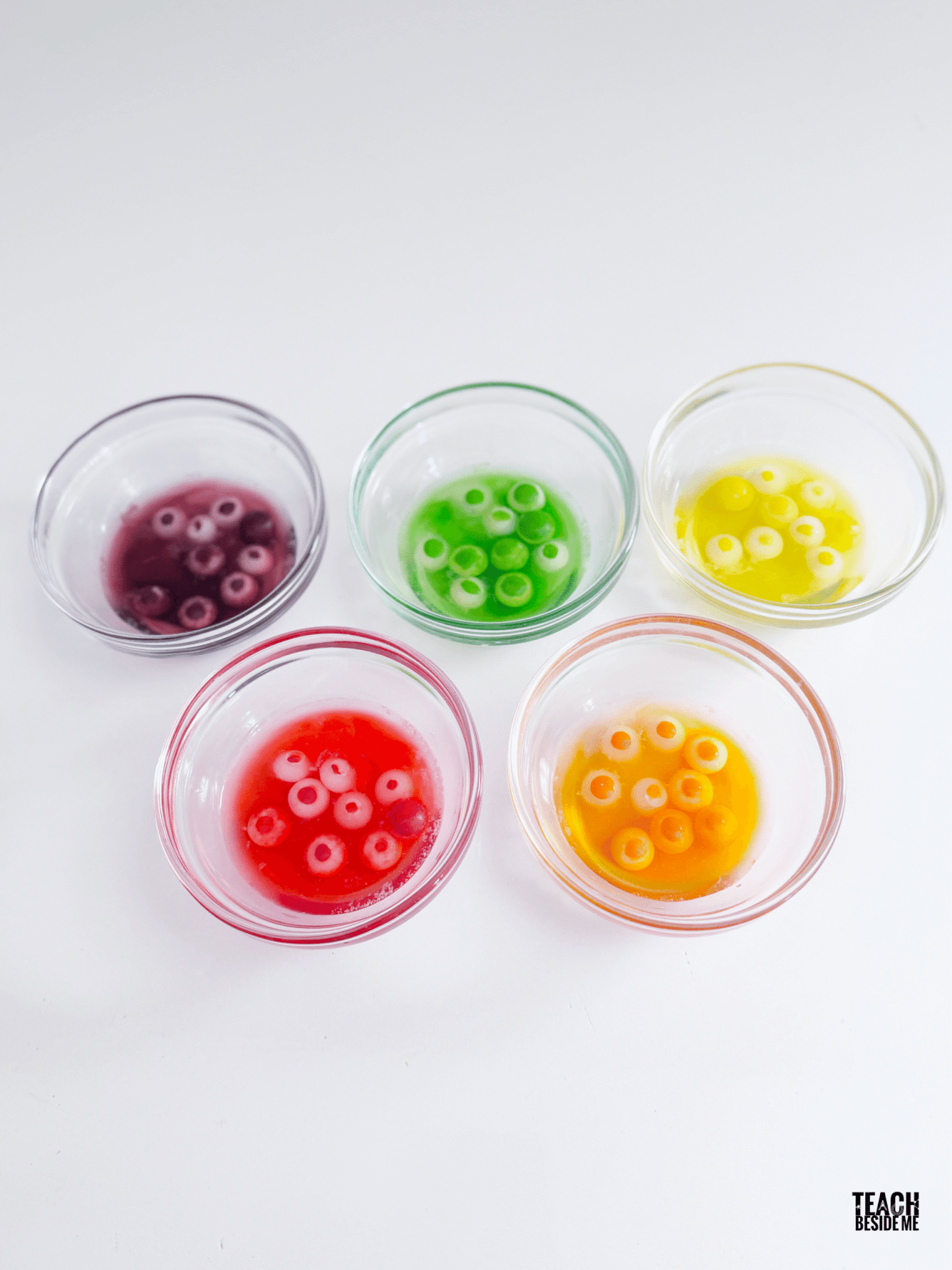
Place a few Skittles in small cups or bowls and add just enough warm water to cover them. Within a minute or two, the color will dissolve, creating bright, candy-colored “paints.” Use cotton swabs or small brushes to paint on paper towels, coffee filters, or watercolor paper.
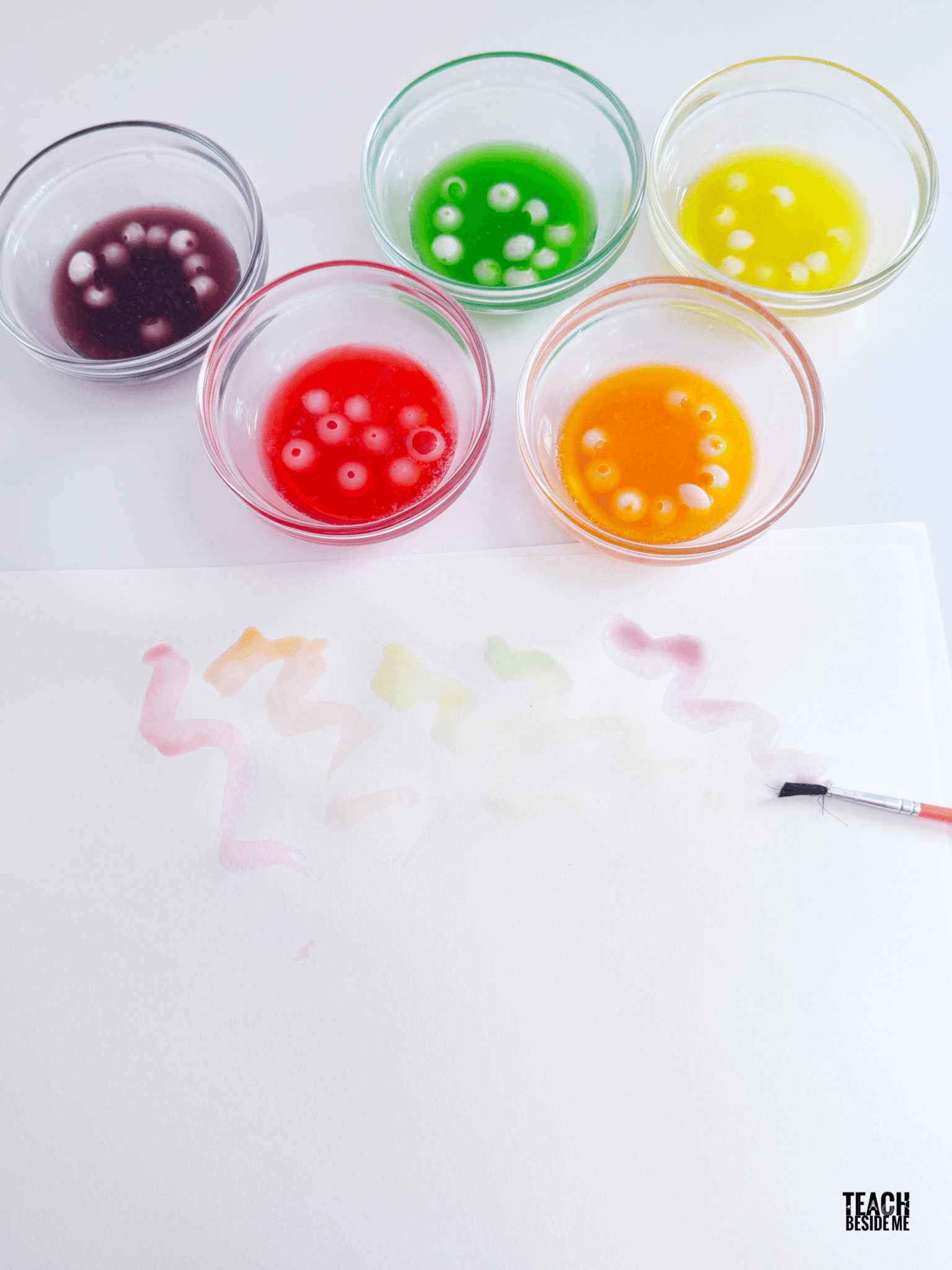
As the colors dry, you’ll notice a glossy, crystalline texture—that’s the sugar left behind after the water evaporates. The results are surprisingly vibrant and make a great tie-in between art and science.
Science connection:
This is a mini lesson in solubility and evaporation. The color and sugar dissolve into the water to form a dye solution. When the water evaporates, the sugar and dye remain, forming a thin, shiny coating—just like minerals forming crystals as water dries in nature.
The Skittles experiment is more than just a pretty rainbow — it’s a mini chemistry lesson about diffusion, density, and solubility that kids can see unfold before their eyes. It’s quick, low-mess, and endlessly adaptable, making it a favorite for homeschool, classroom, and family science days alike.
Frequently Asked Questions
Q: Does this work with M&Ms?
A: Yes, but results vary. The chocolate center clouds the water and colors spread more slowly, so Skittles give the clearest rainbow.
Q: Why don’t the colors mix right away?
A: The sugary water around each candy is denser than the plain water. These dense “boundaries” keep the colors separate until they equalize.
Q: Can I use cold water?
A: Absolutely! It just takes longer — try timing both for a side-by-side comparison.
Q: What happens if I stir it?
A: Stirring breaks the density layers, mixing the colors instantly — a quick way to show how motion affects diffusion.
More Candy Learning Activities You’ll Love:
How to Make Rock Candy Crystals with Kool-Aid
Kitchen Science: Homemade Hard Candy Lollipops
Edible Slime from Starburst Candy
Edible Candy Corn Slime Play Dough
Candy Learning Ideas: Educational Ways to Use Up Halloween Candy
Hershey Fractions Printable Math Cards
Skittles Math Printable Activity Pack – Fun & Tasty Math Practice!