Parts of a Flower Diagram + Flower Dissection (Free Printable)
This post may contain affiliate links.
Learning the parts of a flower is one of the best ways for kids to understand how flowering plants reproduce. In this printable flower science activity, you’ll find a labeled parts of a flower diagram, a blank labeling worksheet, and a simple flower dissection activity that lets students identify each structure in a real flower.
Whether you’re teaching a plant science unit at home or in the classroom, this hands-on lesson makes flower anatomy easy to understand.
Parts of a Flower Diagram
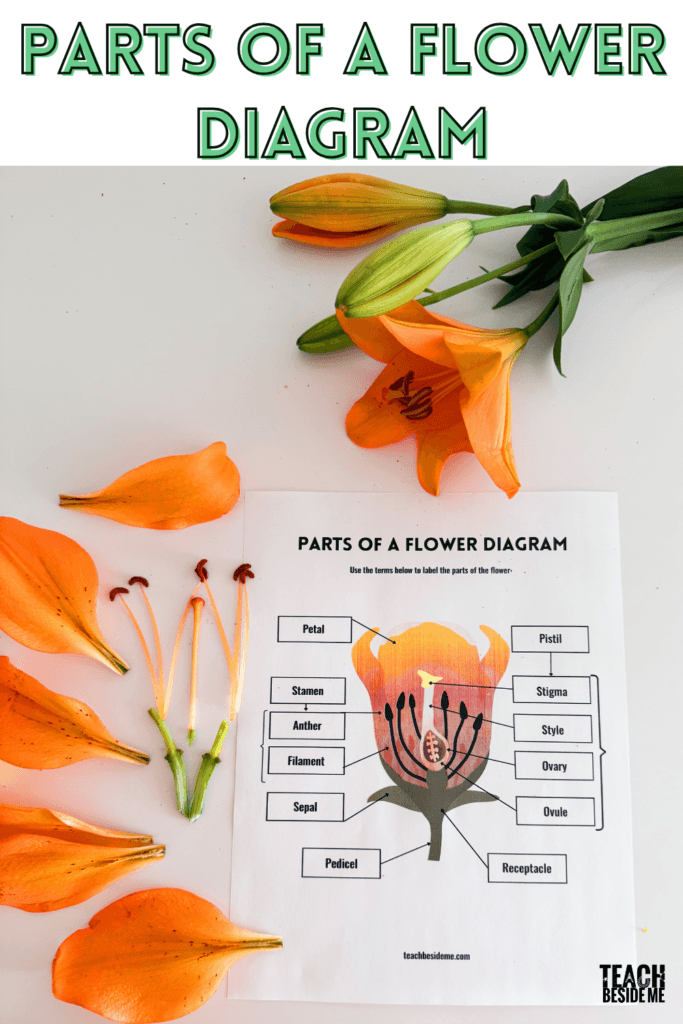
Every flower contains specialized structures that help the plant reproduce. Some parts produce pollen, while others receive pollen and develop seeds after pollination.
The printable diagram labels each of the major flower structures:
- Petal
- Sepal
- Stamen
- Anther
- Filament
- Pistil
- Stigma
- Style
- Ovary
- Ovule
- Receptacle
- Pedicel
Parts of a Flower and Their Functions
Flowers are the reproductive structures of flowering plants. Their job is to produce seeds so new plants can grow. To do this, flowers contain both male and female reproductive parts.
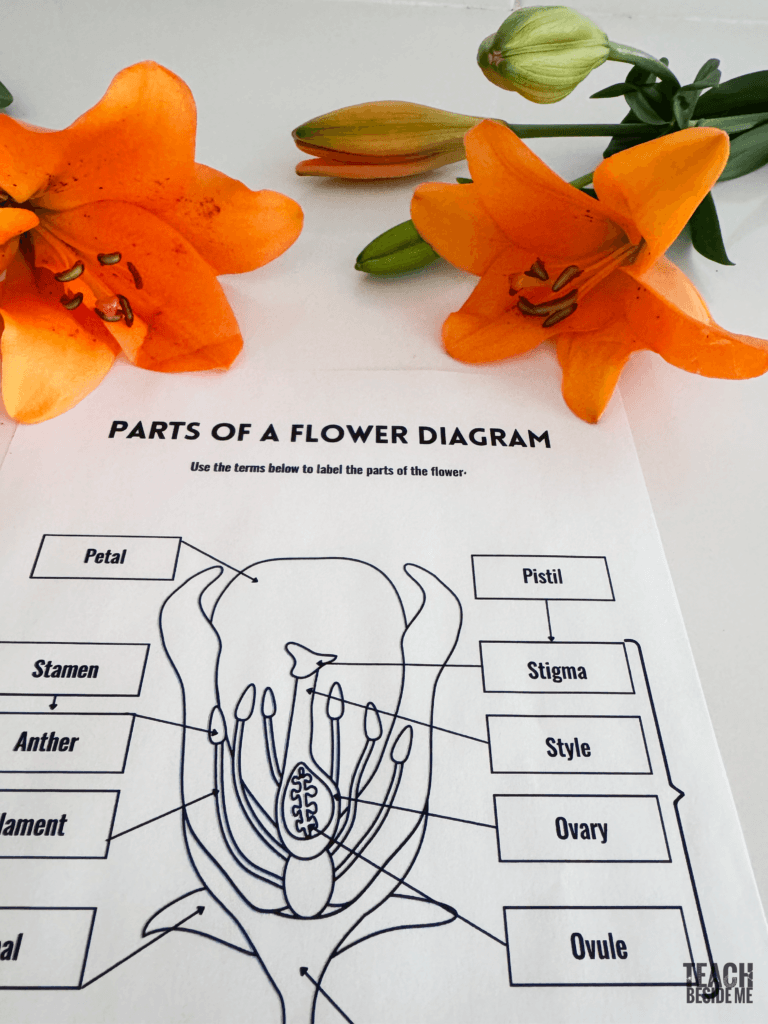
The male part, called the stamen, produces pollen. The female part, called the pistil, receives pollen and contains the ovules, which develop into seeds after fertilization. Together, these structures allow flowering plants to reproduce and create the fruits and seeds we see in nature.
Understanding how these different parts work together helps students make sense of pollination, fertilization, seed formation, and the plant life cycle.
Petals
Petals are the colorful outer parts that attract pollinators such as bees, butterflies, hummingbirds, and other insects. They surround and protect the rest of the flower.
Sepal
Sepals are the green leaf-like structures at the base of the flower. They protect the developing flower bud before it opens.
Stamen (Male REproductive Parts)
The stamen is the male reproductive structure of the flower. It is found at the center of the flower. It is made of two parts:
- Anther– The anther produces pollen, which contains the plant’s male reproductive cells.
- Filament- The filament is the slender stalk that supports the anther and positions it where pollinators can easily brush against it.
Pistil (Female Reproductive Parts)
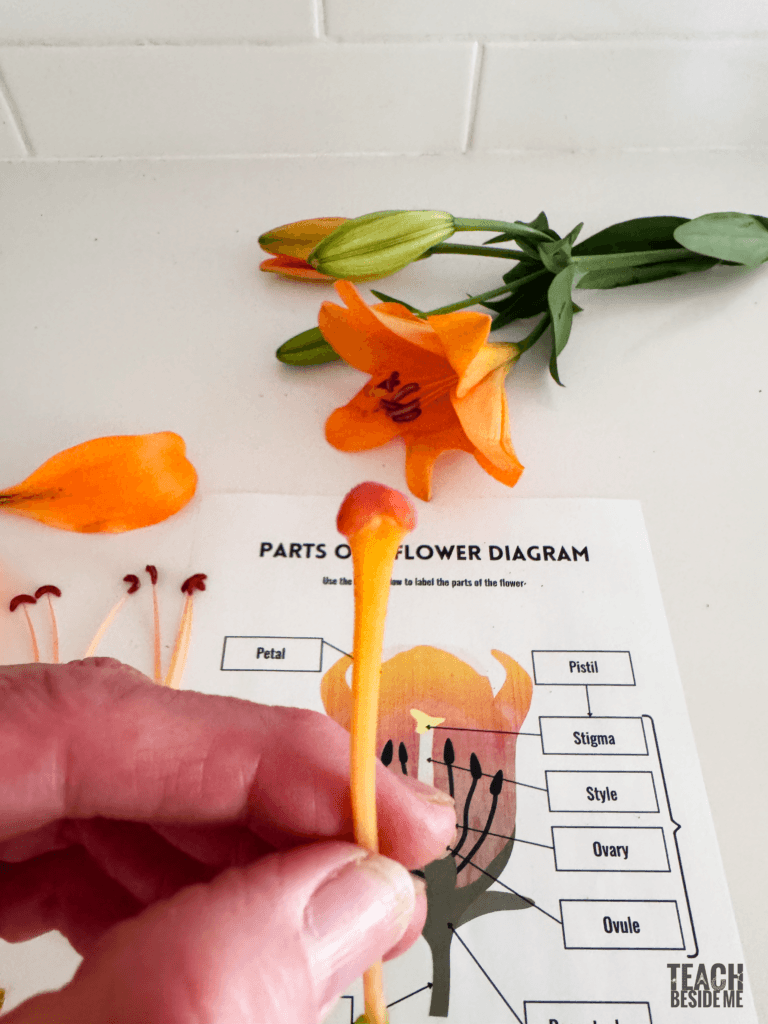
The pistil is the female reproductive structure of the flower. It consists of:
- Stigma- The sticky tip at the top of the pistil where pollen lands.
- Style- The narrow tube connecting the stigma to the ovary. Pollen travels through the style after pollination.
- Ovary- The enlarged base of the pistil that contains the ovules.
- Ovule- Ovules are found inside the ovary. After fertilization, they develop into seeds.
Receptacle
The receptacle is the thickened base that supports all of the flower’s parts.
Pedicel
The pedicel is the flower stalk that connects the flower to the rest of the plant.
Flower Dissection Activity
One of the easiest ways to learn flower anatomy is by carefully taking apart a real flower.
Lilies are excellent flowers for dissection because their parts are large, colorful, and easy to identify.
Supplies
- Fresh lily (or similar large flower)
- Printable diagram- download below
- Tweezers (optional)
- Scissors (optional)
- Magnifying glass (optional)
- A basic dissection kit is great to use here!
How to Dissect a Flower
Step 1
Observe the entire flower before taking it apart. Questions to ask:
- How many petals does it have?
- What colors do you notice?
- Can you find the stamens?
- Where is the pistil?
- Do you notice any pollen?
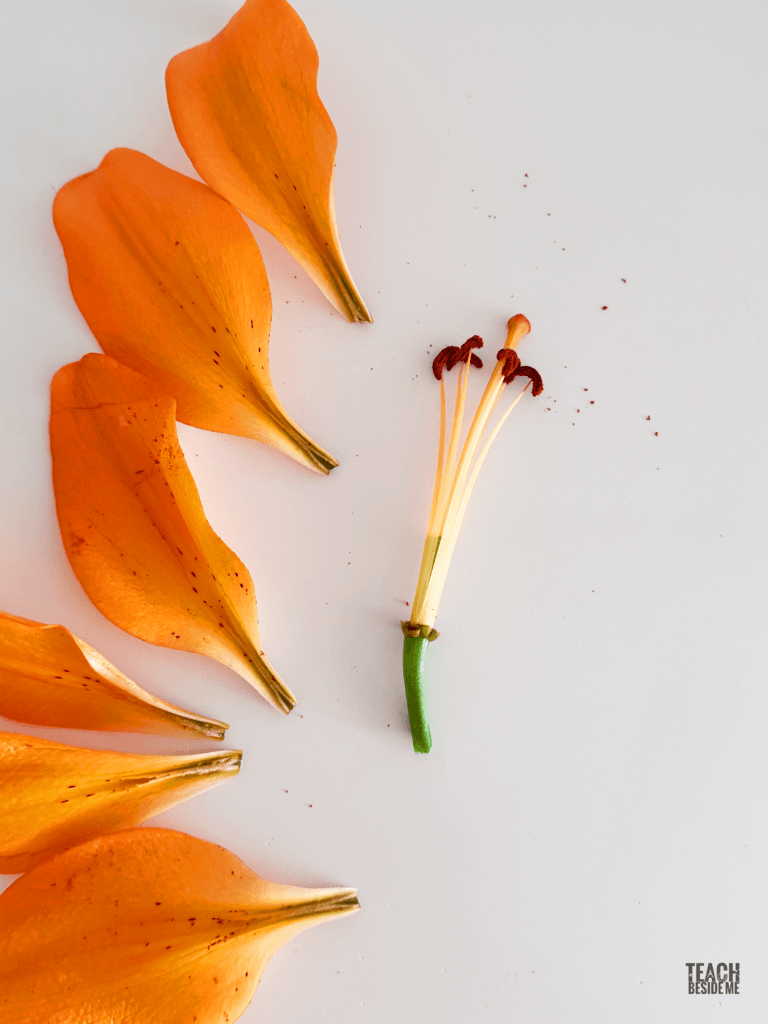
Step 2
Carefully remove each petal. Notice how they surround and protect the reproductive structures.
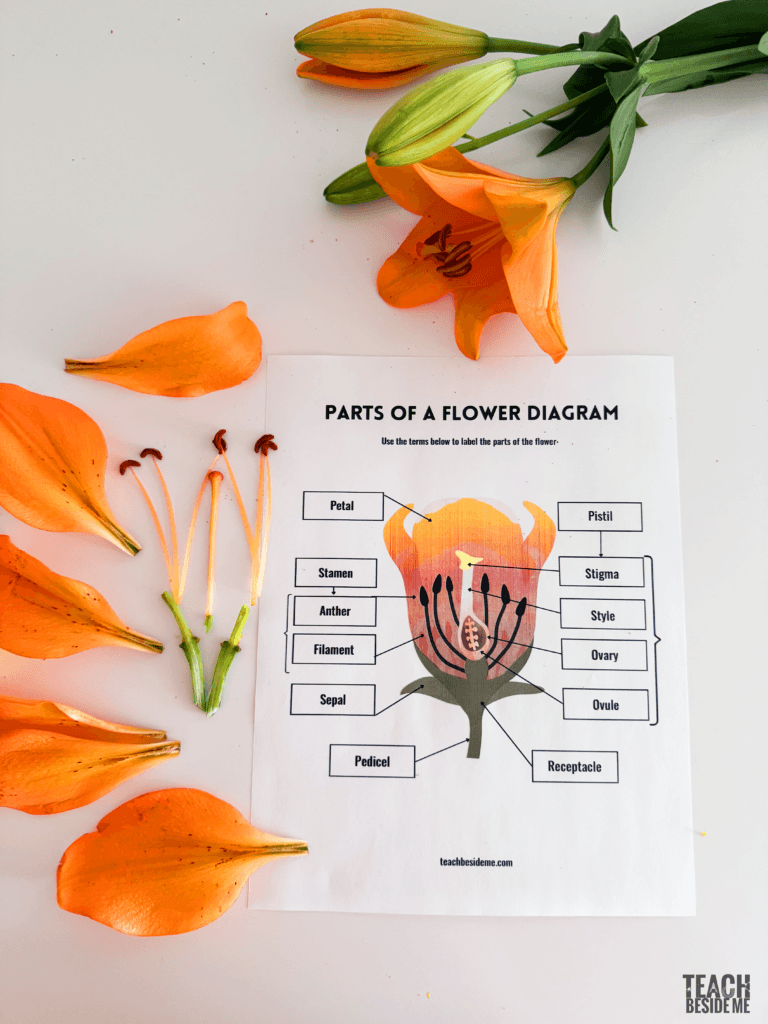
Step 3
Remove the stamens. Each stamen has:
- an anther
- a filament
You may notice orange pollen rubbing off onto your fingers.
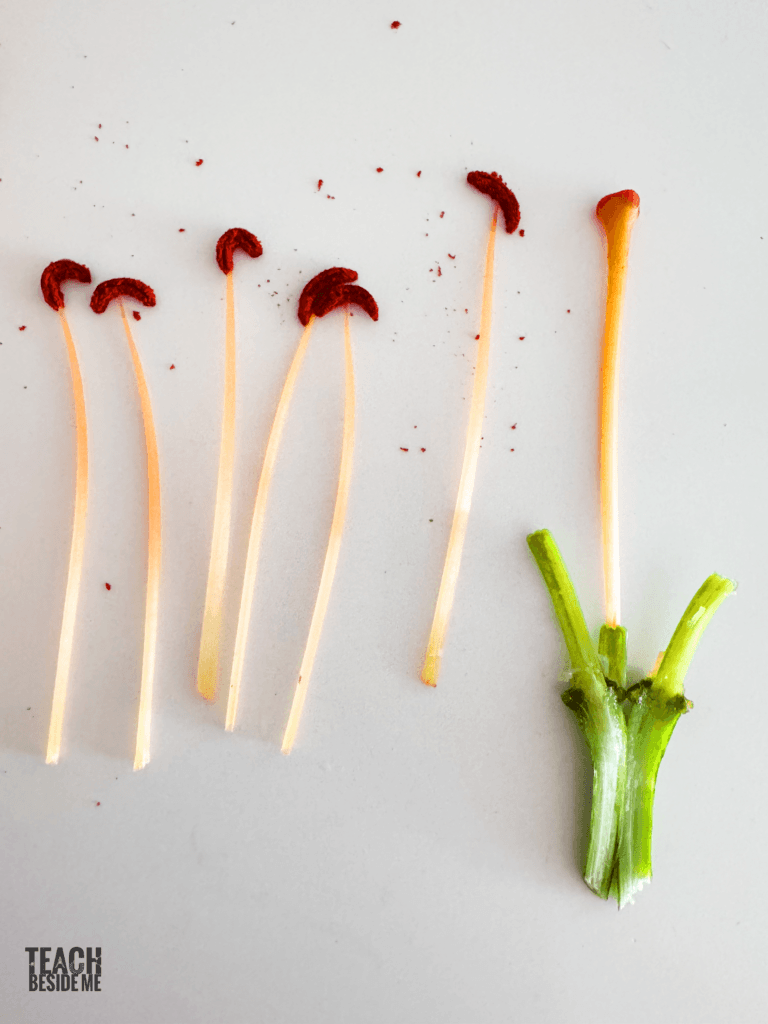
Step 4
Locate the pistil. Unlike the stamens, there is only one pistil.
Identify:
- stigma
- style
- ovary
Step 5
Slice the ovary open. Inside you’ll find tiny ovules that will eventually become seeds after fertilization.
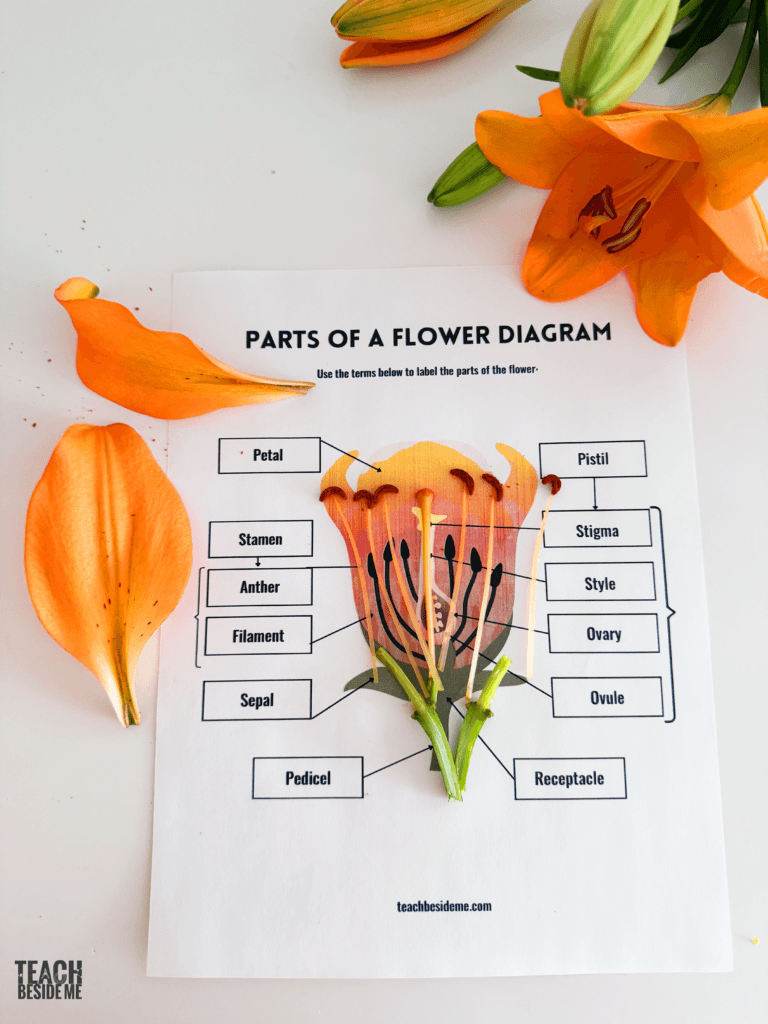
Compare Your Flower to the Diagram
Place your dissected parts next to the printable diagram and see if you can match each structure.
Using a real flower is one of the easiest ways for students to connect textbook diagrams.
How Pollination Happens
Once students know all of the parts, pollination becomes much easier to understand.
When a bee lands on a flower, pollen sticks to its fuzzy body. As the bee visits another flower, some of that pollen rubs off onto the sticky stigma.
The pollen then grows down through the style until it reaches the ovary, where fertilization occurs. The ovules inside the ovary develop into seeds, allowing the plant to reproduce.
Download the Free Parts of a Flower Diagram
Ready to try it yourself?
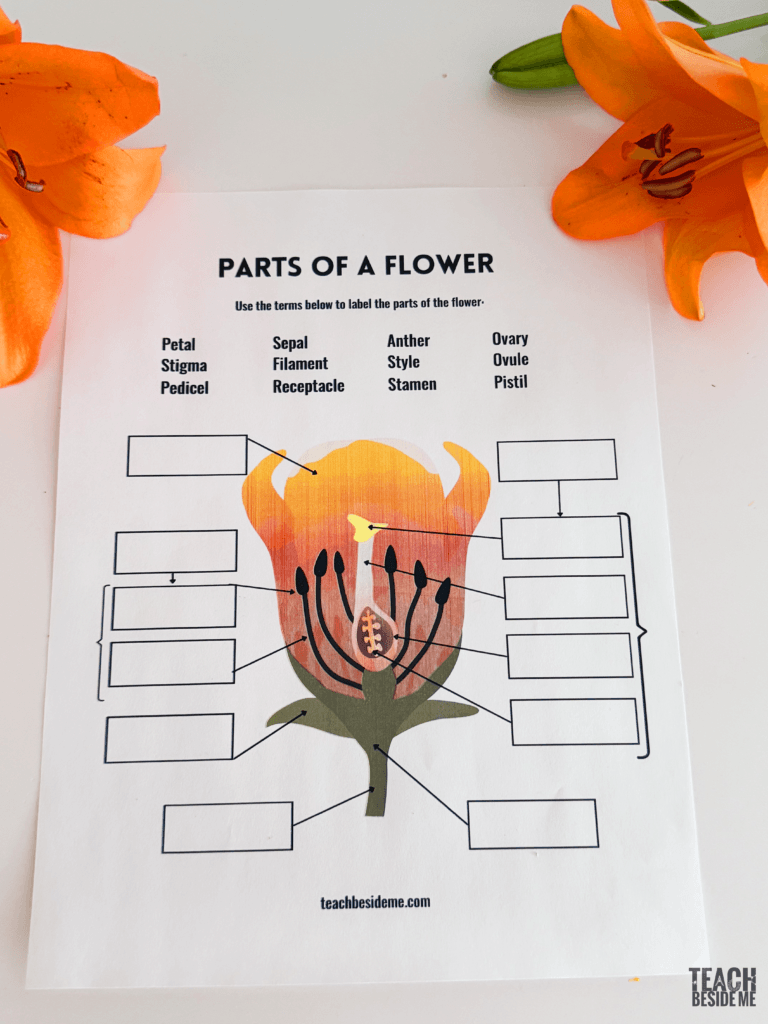
Download the free printable diagram below!
This printable includes:
- Labeled flower diagram in both color or black & white
- Blank labeling worksheet in both color or black & white
Perfect for:
- Plant science units
- Homeschool lessons
- Spring studies
- Nature journals
- Flower dissections
More Plant Science Activities
- Edible Parts of a Plant
- Sunflower Life Cycle Diagram
- Grow a Seed in a Bag
- The Seeds We Eat
- Leaf Transpiration Experiment
- Garden Growth Chart
- Dandelion Life Cycle
- Backyard Nature Adventure for Kids: A Screen-Free Outdoor Adventure Kit