Alka-Seltzer Rockets: Simple Rocket Science Experiment for Kids
This post may contain affiliate links.
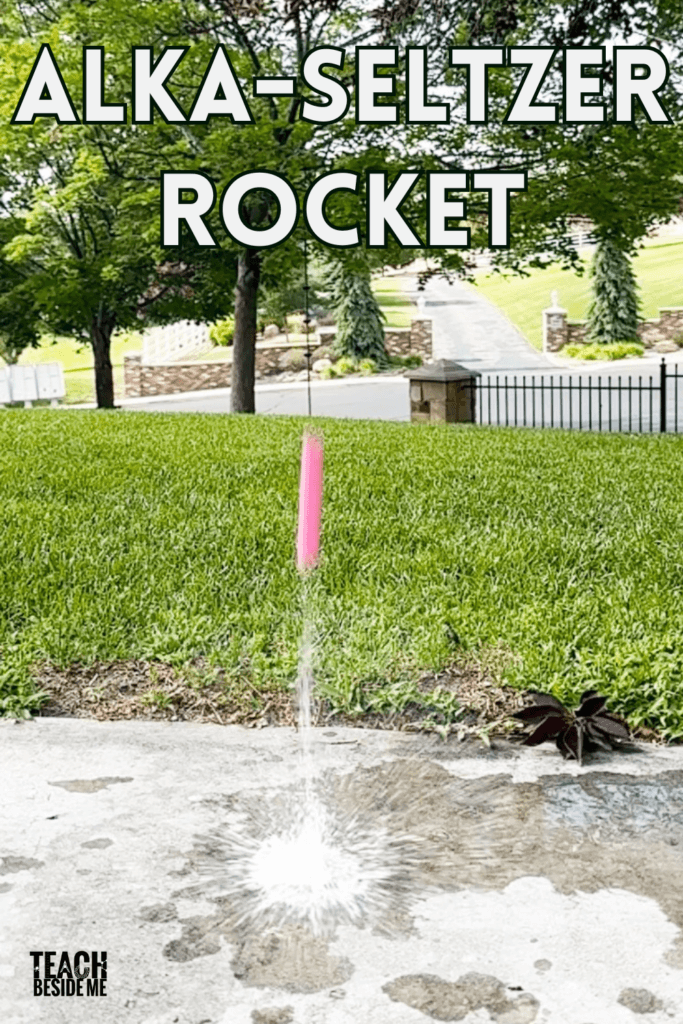
Want to launch a rocket using nothing more than an empty drink tube, water, and an Alka-Seltzer tablet? Try this exciting Alka-Seltzer Rockets experiment!
These colorful mini rockets are one of the easiest (and most exciting!) chemistry experiments for kids. As the tablet reacts with water, carbon dioxide gas builds pressure inside the container until—POP!—the rocket shoots into the air.
This hands-on STEM activity is perfect for summer science, homeschool lessons, classroom demonstrations, or simply having fun outside. Best of all, it uses inexpensive materials you may already have at home.
Why You’ll Love These Alka-Seltzer Rockets
- Easy to set up
- Uses simple household supplies
- Teaches chemistry and Newton’s Laws
- Great for STEM learning
- Perfect for ages 6+
- Encourages prediction and experimentation
Supplies
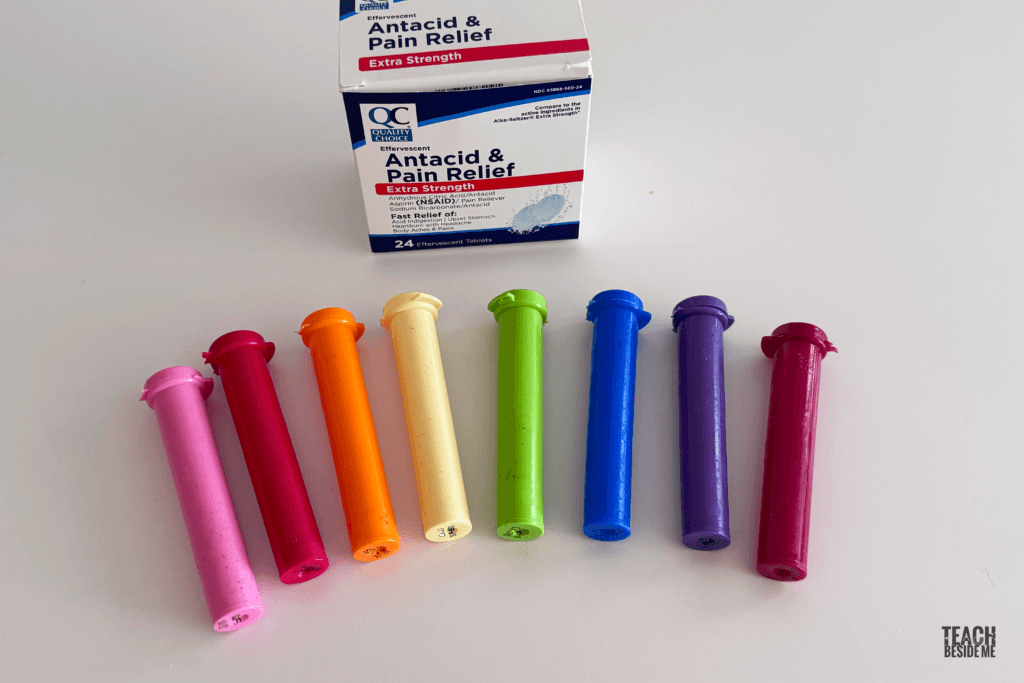
- Empty Zipfizz tubes (or similar plastic drink tubes with snap-on lids) Alternately, you can try plastic film canister rockets.
- Alka-Seltzer tablets, or other effervescent antacid tablets
- Water
- Safety glasses (recommended)
- Outdoor launch area
- Rocket STEM Lab Sheet- Download below!
How to Make Alka-Seltzer Rockets
Step 1
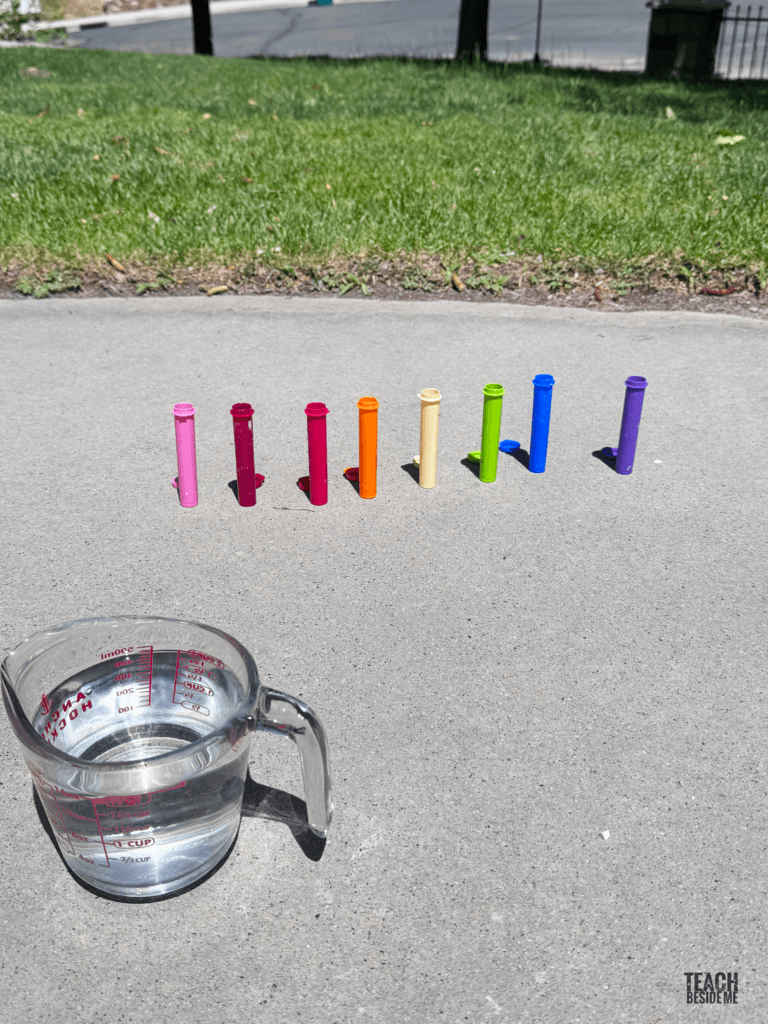
Fill the tube about one-third to one-half full with water.
Step 2
Break an Alka-Seltzer tablet into quarters so they will fit in the tube. We used a half tablet each time, but I definitely recommend you test different amounts!
Step 3
Drop the tablet into the tube.
Step 4
Snap the lid on tightly.
Step 5
Quickly turn the rocket canister upside down so the lid is on the ground and step back.
Within a few seconds…
POP!
Your rocket launches into the air!
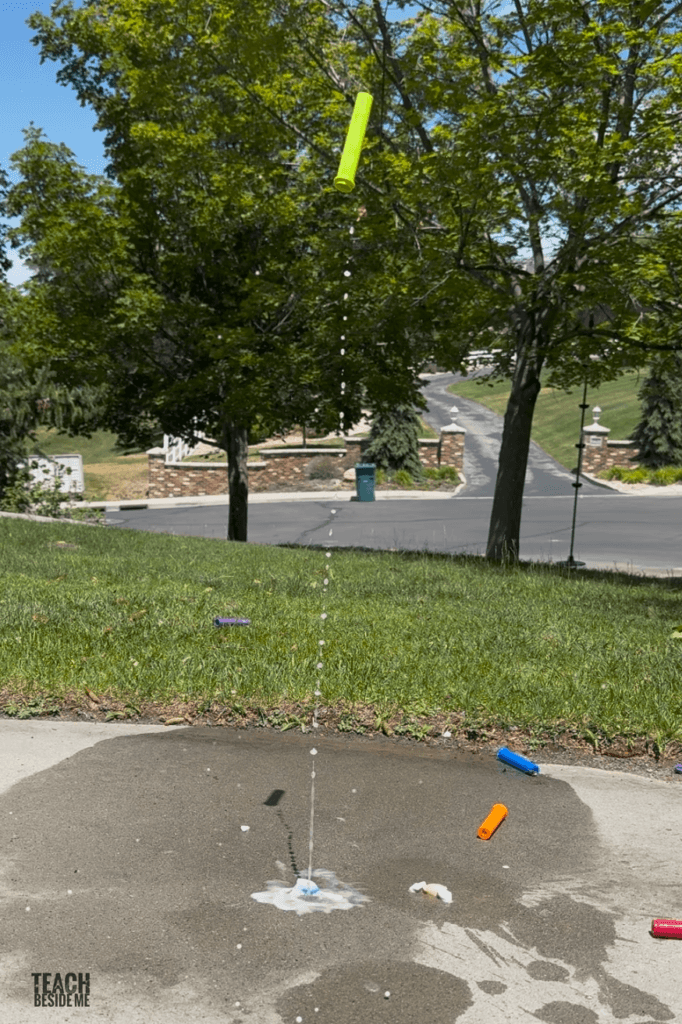
You might have to hunt down the cap. They fly pretty far in the opposite direction sometimes!
How Does an Alka-Seltzer Rocket Work?
When the tablet dissolves in water, it undergoes a chemical reaction and produces carbon dioxide gas.
Because the tube is sealed, the gas has nowhere to escape. Pressure builds inside the rocket until it becomes stronger than the lid holding it closed.
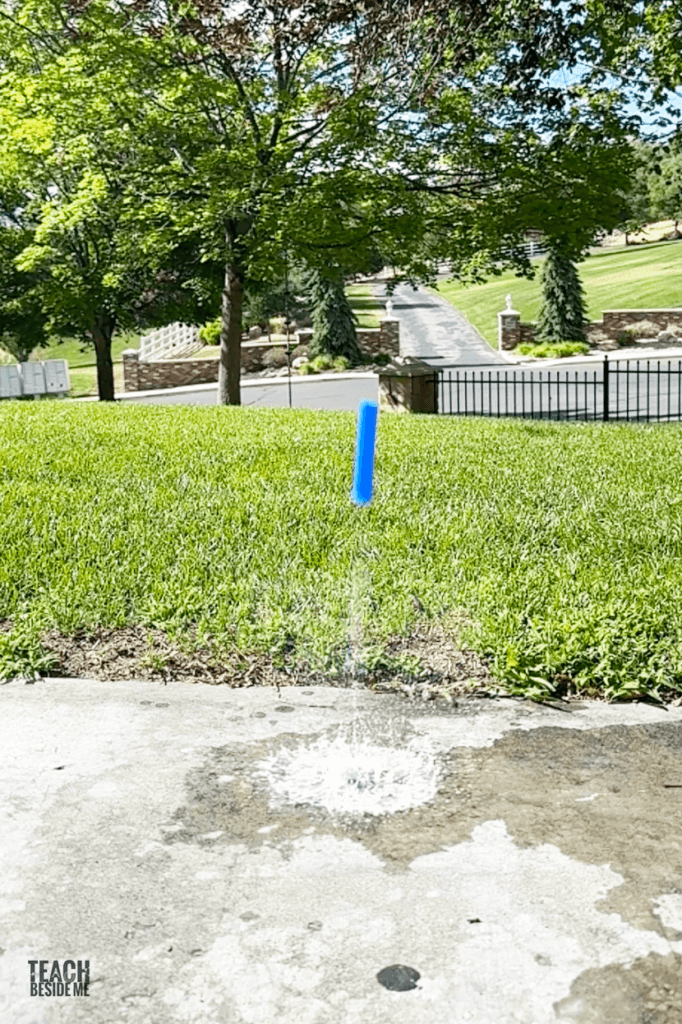
When the pressure buildup is high enough, the lid pops off and the rocket shoots upward.
It’s a fantastic demonstration of how gases can create force.
The Science Behind It
This experiment combines both chemistry and physics.
Chemistry
Alka-Seltzer contains:
- citric acid
- sodium bicarbonate (baking soda)
When water is added, these ingredients react to produce carbon dioxide gas.
Physics
As gas pressure builds inside the tube, the lid suddenly pops free.
The escaping gas pushes downward while the rocket moves upward.
This demonstrates Newton’s Third Law of Motion:
For every action, there is an equal and opposite reaction.
How Do Real Rockets Work?
Although an Alka-Seltzer rocket uses a chemical reaction and real rockets use powerful engines, they both rely on the same scientific principle—thrust.
Instead of Alka-Seltzer, rockets traveling to outer space burn a special rocket fuel. As the fuel burns, it produces extremely hot gases that shoot out of the bottom of the rocket at very high speed. This creates enough thrust to lift the rocket off the ground and carry it through Earth’s atmosphere.
As a rocket climbs higher, it passes through Earth’s atmosphere and eventually reaches the vacuum of space. Even though there is no air in space, rockets can continue moving because they carry both their fuel and the oxygen needed to burn it. The gases leaving the rocket engines continue producing thrust, allowing spacecraft to travel through outer space.
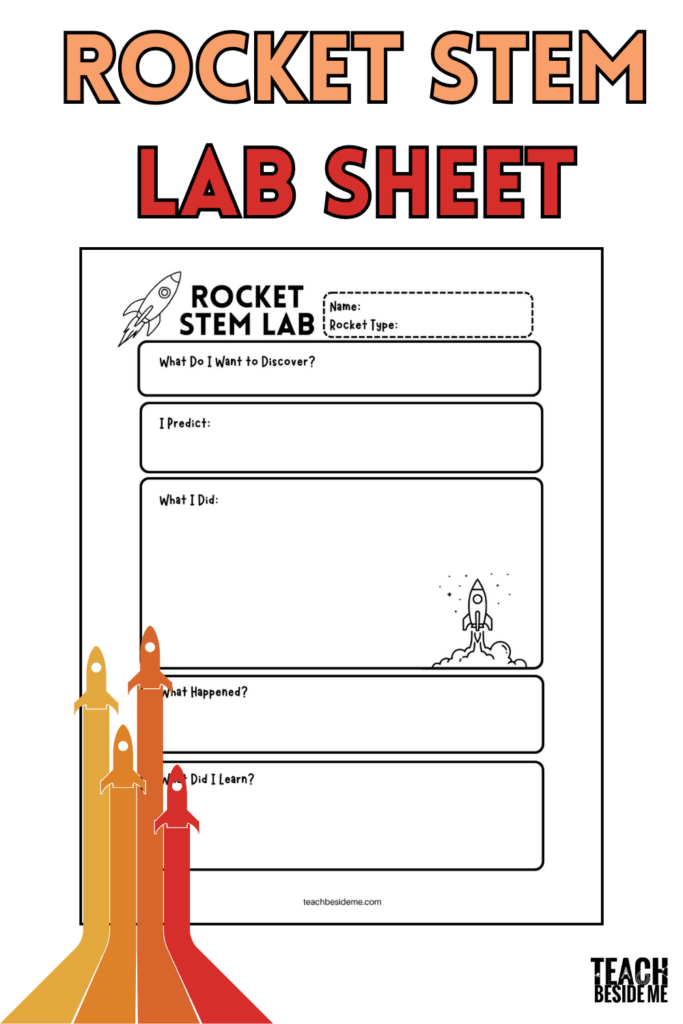
Take your rocket experiment a step further with our free Rocket STEM Lab worksheet!
This printable helps kids think like scientists as they make predictions, record observations, and reflect on their results. Use it again and again with any of our rocket science activities!
STEM Extensions
Try changing just one variable at a time.
Test questions like:
- Does more water make the rocket fly higher?
- Does half a tablet work as well as a whole tablet?
- Which rocket color launched the highest?
- Does a heavier rocket launch differently?
Record your results and compare your findings.
Safety Tips
- Always launch outdoors.
- Everyone should stand several feet away before launch.
- Never point the rocket toward people or animals.
- Wear safety glasses if possible.
- Wait several minutes before approaching a rocket that doesn’t launch right away.
What We Learned
One thing surprised us during testing: these rockets launch very quickly!
We found it worked best to launch one or two rockets at a time instead of trying to prepare a large group all at once. The lids also popped off separately, so we occasionally had to hunt them down before our next launch!
Those little surprises are all part of the fun—and exactly what makes real science experiments exciting.
More Rocket Science Activities
If your kids loved this experiment, be sure to try these next:
- Water Bottle Rockets
- Baking Soda & Vinegar Rockets
- Balloon Rockets
- Straw Rockets
- Film Canister Rockets
- Bathtub Bottle Rocket
Frequently Asked Questions
Why didn’t my rocket launch?
Common causes include:
- The lid wasn’t sealed tightly.
- Too little water was used.
- The tablet had lost its fizz.
- The rocket wasn’t turned over quickly enough.
Can I launch these indoors?
We recommend launching outdoors since the rockets can fly surprisingly high, they are messy, and the lids may pop off in different directions.
Can I reuse the rockets?
Yes! Simply rinse the tubes, replace the tablet and water, and launch again.
https://youtube.com/shorts/1H-mCdJt8eo?si=lkus4VAPIZStYowR
Looking for more ideas? Explore all of my hands-on learning activities for kids.