Sunflower Life Cycle Printable Diagrams
This post may contain affiliate links.
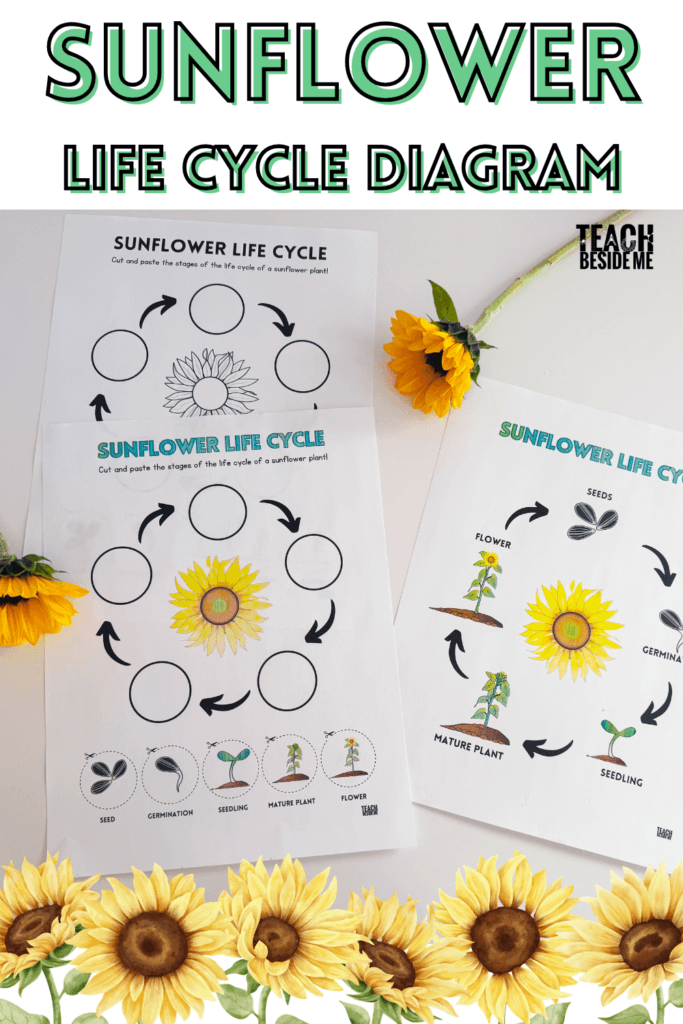
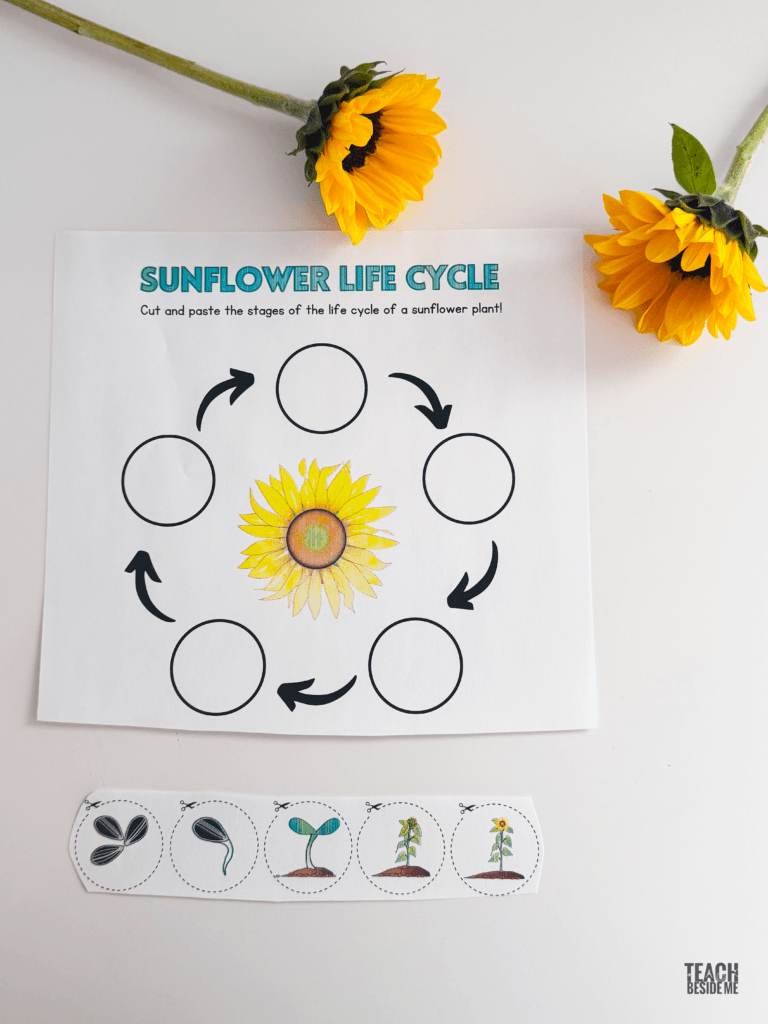
This free Sunflower Life Cycle Printable includes a labeled life cycle diagram and a hands-on cut-and-paste sequencing activity that helps kids understand each stage of a sunflower’s growth.
Sunflowers are one of the most recognizable flowers in the garden, making them a wonderful way to introduce children to plant life cycles. From a tiny seed to a towering flower full of seeds, sunflowers provide an amazing example of how plants grow and reproduce.
Whether you’re studying plants in the classroom, homeschooling, or simply growing sunflowers in your backyard, these printable worksheets make learning engaging and memorable.
The Life Cycle of the Sunflower
Like all flowering plants, sunflowers go through several stages as they grow.
1. Seed
Every sunflower begins as a seed. When planted in warm, moist soil, the seed absorbs water and begins to germinate.
2. Germination
During germination, the seed coat softens and a tiny root begins to grow downward into the soil. Soon after, a small sprout or shoot pushes upward toward the sunlight.
3. Seedling
The seedling develops its first leaves and begins making its own food through photosynthesis. As the roots continue growing, the young plant becomes stronger each day.
4. Mature Plant
The sunflower grows taller and develops a thick stem and large leaves. Some varieties grow just a few feet tall, while giant sunflowers can reach more than 10 feet in height!
5. Flower
Eventually, a large flower head forms and blooms with bright yellow flower petals surrounding hundreds (or even thousands) of tiny flowers in the center. Bees and other pollinators visit these flowers to collect nectar and pollen.
6. Seeds
After pollination, new sunflower seeds begin to develop inside the flower head. When the flower dries, the seeds are ready to be collected, eaten by birds, or planted to begin the life cycle all over again.
Grow a Sunflower Seed in a Bag
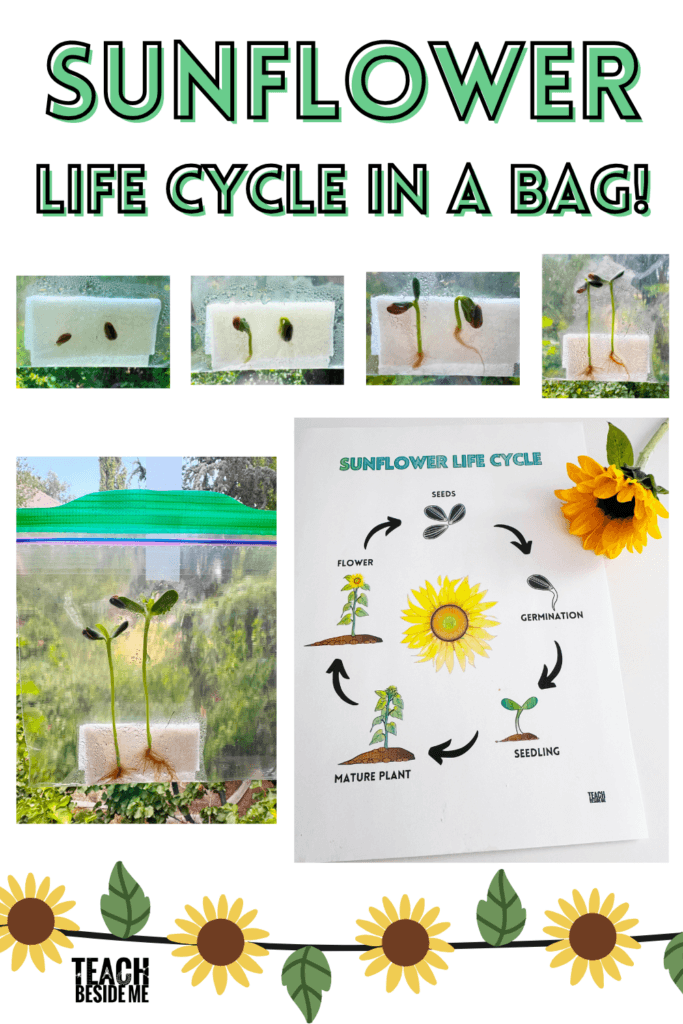
Want to watch the sunflower life cycle happen right before your eyes? One of our favorite hands-on science activities is growing a sunflower seed in a clear plastic bag! This simple experiment lets kids observe germination as the seed sprouts roots and a tiny shoot begins to grow. Since everything happens above ground, children can see each stage of the process that would normally be hidden beneath the soil. It’s a wonderful companion activity to these life cycle printables and a great way to encourage daily observation, drawing, and scientific thinking.
Supplies You’ll Need
- Sunflower seeds
- Zip-top sandwich bag
- Paper towel
- Water
- Tape
- A sunny window
Tip: Set up your sunflower bag today, then check it each day over the next week or two. Watch for the first tiny root, the emerging shoot, and eventually the first leaves. It’s amazing how much children notice when they observe a plant growing day by day!
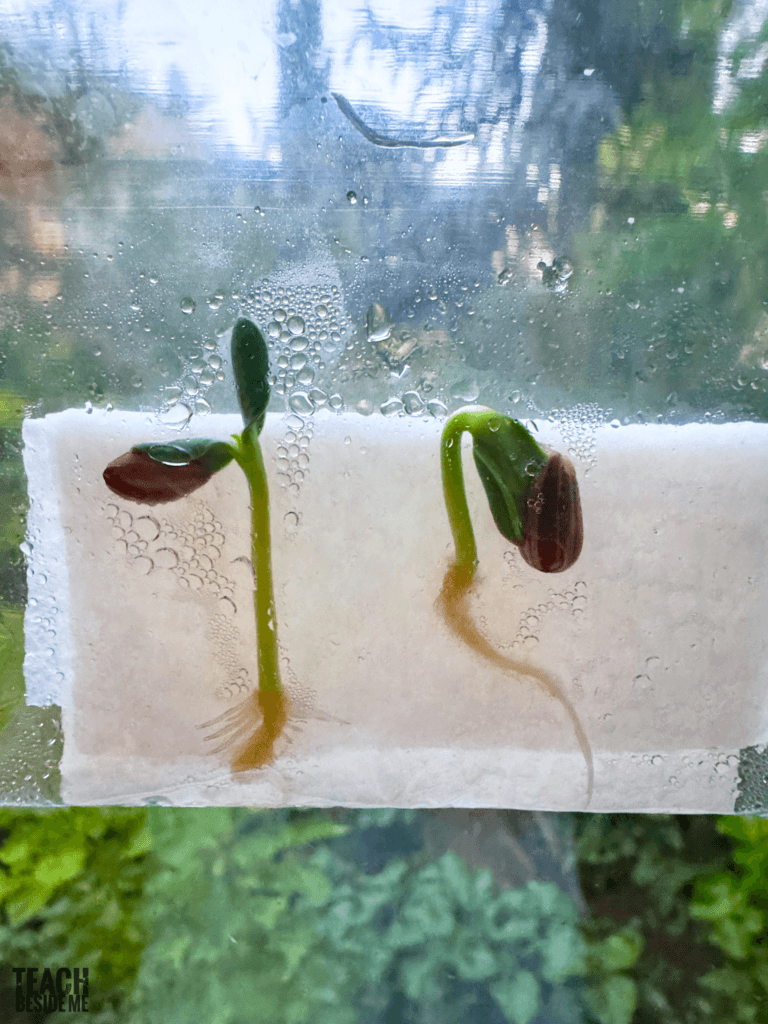
Then, move it to a pot or outside to continue growing it.
Why Teach Plant Life Cycles?
Studying plant life cycles helps children understand that all living things grow and change over time. Sunflowers are especially fun to observe because they grow quickly and become large enough for kids to measure and watch throughout the season.
Learning about life cycles also introduces important science concepts such as:
- Germination
- Roots and stems
- Photosynthesis
- Pollination
- Seed production
- Plant reproduction
Growing a sunflower alongside these worksheets makes the lesson even more meaningful.
What’s Included in the Sunflower Lifecycle Printable?
This free printable includes:
- Labeled Sunflower Life Cycle Diagram
- Cut-and-Paste Life Cycle Sequencing Activity
- Color Version + Black-and-White Version for Coloring
These pages are perfect for:
- Elementary science lessons
- Homeschool plant units
- Nature study
- Spring and summer learning
- Garden themes
- Classroom science centers
Sunflower Fun Facts for Kids
Did you know?
- Some giant sunflowers can grow over 12 feet tall!
- A single sunflower head may contain 1,000–2,000 seeds.
- Young sunflowers slowly turn to face the sun during the day. This movement is called heliotropism.
- Bees love visiting sunflowers because they produce lots of pollen and nectar.
- Birds, squirrels, and many other animals enjoy eating sunflower seeds.
Do Sunflowers Really Follow the Sun?
One of the most fascinating things about sunflowers is that young plants actually follow the sun across the sky each day. This movement is called heliotropism.
During the day, developing sunflower buds slowly turn from east to west as the sun moves overhead. Then, overnight, they rotate back toward the east, ready to greet the morning sun again.
Once the flowers mature and begin producing seeds, they usually stop tracking the sun and settle facing east. Scientists believe this helps the flowers warm up earlier in the morning, making them more attractive to pollinating insects like bees.
Try It!
Plant a few sunflower seeds in a sunny location or watch young seedlings growing in pots. Take a photo or make a quick sketch at the same time each morning and afternoon for several days. Can you see the flower turning toward the sunlight?
Ask your kids:
- Does the flower face the same direction every day?
- When does it move the most?
- Do older flowers behave differently than young plants?
This simple observation turns growing sunflowers into a real science investigation.
Extend the Learning
After completing the printable, try one of these hands-on activities:
- Plant sunflower seeds and keep a growth journal.
- Measure your sunflower each week.
- Label the parts of a real sunflower.
- Watch bees and butterflies visit the flowers.
- Count the petals or estimate how many seeds are in a flower head.
- Learn about the Tulip Life Cycle, too!
Hands-on observations help children connect what they learn on paper with the real world.
Download the Free Sunflower Life Cycle Printable
Ready to learn about the life cycle of a sunflower?
Enter your email below to receive your free printable worksheets featuring a labeled diagram and cut-and-paste sequencing activity.
Build Your Plant Science Unit
Teach plants from seed to flower with these free resources:
- Flower Parts Diagram & Printable
- Potato Life Cycle Printable
- Pea Plant Life Cycle Printable
- Mix & Match Edible Plant Parts
- Plant & Animal Cell Diagrams
- Spring Nature Scavenger Hunt
- Dandelion Life Cycle for Kids -Spring Nature Study


