Recorder Fingering Chart (Free Printable for Beginners)
This post may contain affiliate links.
Want a simple way to learn recorder notes quickly? If you’re learning to play the recorder, a recorder fingering chart is one of the most helpful tools you can use.
This beginner-friendly guide includes:
- A free printable recorder fingering chart
- Easy explanations for reading the chart
- Beginner notes to start playing right away
- Simple songs like Hot Cross Buns
Whether you’re teaching kids, homeschooling, or learning yourself, this chart will help you get started fast.
What is a recorder fingering chart?
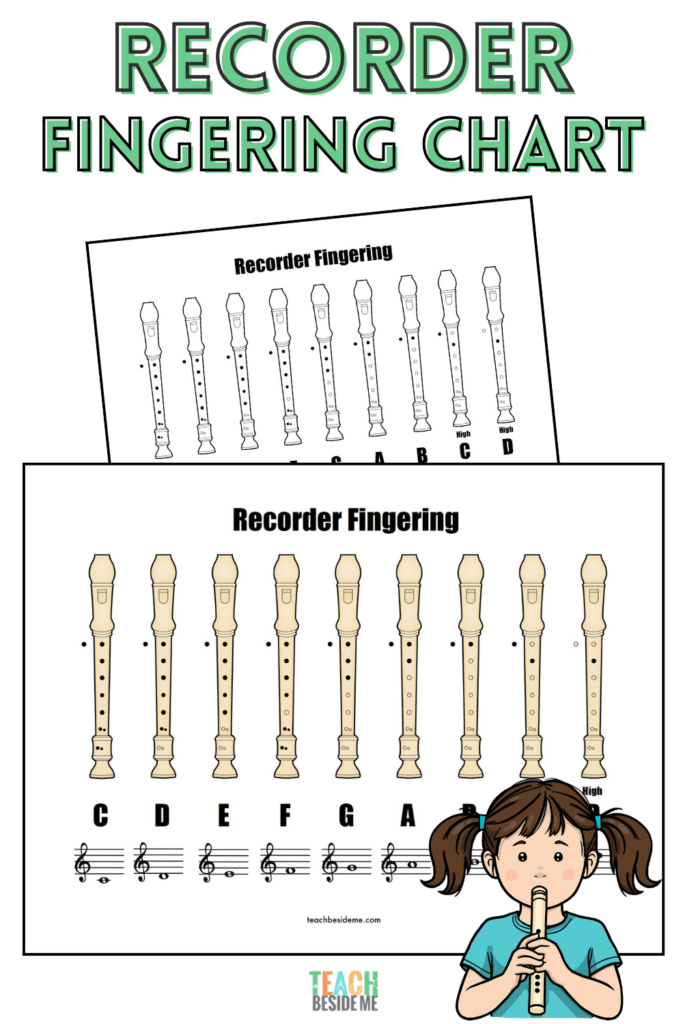
A recorder fingering chart is a visual guide that shows which holes to cover on the recorder to play each note. It uses filled and open circles to represent finger placement.
- Filled circles = cover the hole
- Open circles = leave the hole uncovered
Most beginners use a soprano recorder, which is the standard for music classes.
Recorder Fingering Chart (Printable)
This printable recorder fingering chart includes:
- Clear finger placement diagrams
- Beginner notes labeled with letters
- Easy-to-read layout for kids
Note: This chart uses Baroque (standard) fingering. Some recorders use “German fingering,” which may have slightly different finger positions for certain notes.
How to Read a Recorder Fingering Chart
Understanding the chart is simple once you know what to look for:
- The top circle represents your thumb (on the back)
- The circles below show your fingers on the front
- You must fully cover each hole for a clear sound
Tip: Even a tiny gap can make your recorder squeak!
Beginner Recorder Notes (Start with B, A, G)
The easiest notes to start with are:
B- Thumb + first hole covered
A- Thumb + first + second holes covered
G- Thumb + first + second + third holes covered
These three notes are used in many beginner songs and help build confidence quickly.
Easy Recorder Song for Beginners
Hot Cross Buns (Recorder Notes)
B – A – G
B – A – G
G – G – G – G
A – A – A – A
B – A – G
This simple song helps kids practice:
- Finger movement
- Rhythm
- Note recognition
Common Recorder Mistakes (and How to Fix Them)
If your recorder doesn’t sound quite right, check these:
- Not covering holes completely
- Blowing too hard (use gentle air!)
- Forgetting the thumb hole
- Moving fingers too slowly
Think: soft air like fogging a mirror
Why Learn the Recorder?
The recorder is one of the best beginner instruments because it helps kids:
- Develop fine motor skills
- Learn music fundamentals
- Understand pitch and rhythm
- Build confidence through quick success
Free Recorder Fingering Chart Printable
Your free printable includes:
- Beginner-friendly notes
- Clear fingering diagrams
- Labeled note names for easy learning
Download it now!
Teacher Tip
Laminate your recorder fingering chart or place it in a sheet protector to make it reusable & durable.
Fun Ways to Practice Recorder
Make learning more engaging with these ideas:
- Play a note guessing game
- Roll a dice and play that many notes
- Match note names to finger positions
- Create simple songs using B, A, and G
FAQ: Recorder for Beginners
What type of recorder should I use?
A soprano recorder is best for beginners and most commonly used in schools.
How long does it take to learn recorder?
Many beginners can play simple songs on the first day!
Why does my recorder sound squeaky?
Usually from blowing too hard or not covering holes completely.
More Music Learning Resources
If you’re building music skills, these are great next steps:
- Printable Treble Clef Music Note Flashcards
- Solfège Hand Signs Chart & Printable Cards for Music Learning
- Free Beginner Ukulele Chord Chart Printable
- Printable Guitar Chord Chart for Kids
With a simple recorder fingering chart and just a few notes, beginners can start making music right away. That early success builds confidence—and makes learning music fun!


