Graph Paper Math Game: The Graphing Race
This post may contain affiliate links.
Looking for a fun graph paper game that gets kids excited about math? This hands-on graph paper math game combines graphing, counting, probability, and strategy into one colorful activity kids love!
The Graphing Race is an easy low-prep math game that uses graph paper, dice, and a coin to create a zig-zag race across the page. It is perfect for classrooms, homeschool math lessons, math centers, or rainy day learning fun.
My kids had such a great time with this activity that they even turned their finished game board into graph paper art afterward!

What Is a Graph Paper Game?
A graph paper game is any game played using a grid or graph paper along with pencils, pens, or markers. Many classic paper games use adjacent dots, empty spaces, and diagonal lines to create strategy-based challenges.
See also: How to Play Racetrack Game with a Paper and Pencil
This graph paper math game adds a hands-on learning twist by combining graphing, counting, probability, and movement across the grid.
Why Kids Love This Graph Paper Math Game
This graph paper game is simple enough for younger students but can also be adapted for older kids with more advanced math concepts.
Kids practice:
- Counting and number recognition
- Spatial reasoning
- Directionality
- Visual tracking
- Graph navigation
- Probability concepts
- Fine motor skills
- Logical thinking
Older students can even discuss slope, angles, coordinates, and graphing patterns as they play.
Supplies Needed
- Graph paper or a jumbo roll of graph paper
- Colored markers
- Ruler
- One die
- One coin
We used a giant roll of graph paper for our game, which made it extra exciting, but regular printable graph paper works great too.

How to Play the Graphing Race
Step 1: Choose Marker Colors
Each player chooses a different colored marker, pencil or pen.
Step 2: Pick a Starting Point
Choose a starting square near the center edge of the graph paper.
All players begin from this side of the page and race toward the opposite side.

Step 3: Roll the Die and Flip the Coin
On each turn:
- Roll the die to determine how many spaces to move.
- Flip the coin to determine direction.
Heads
Move diagonally upward.
Tails
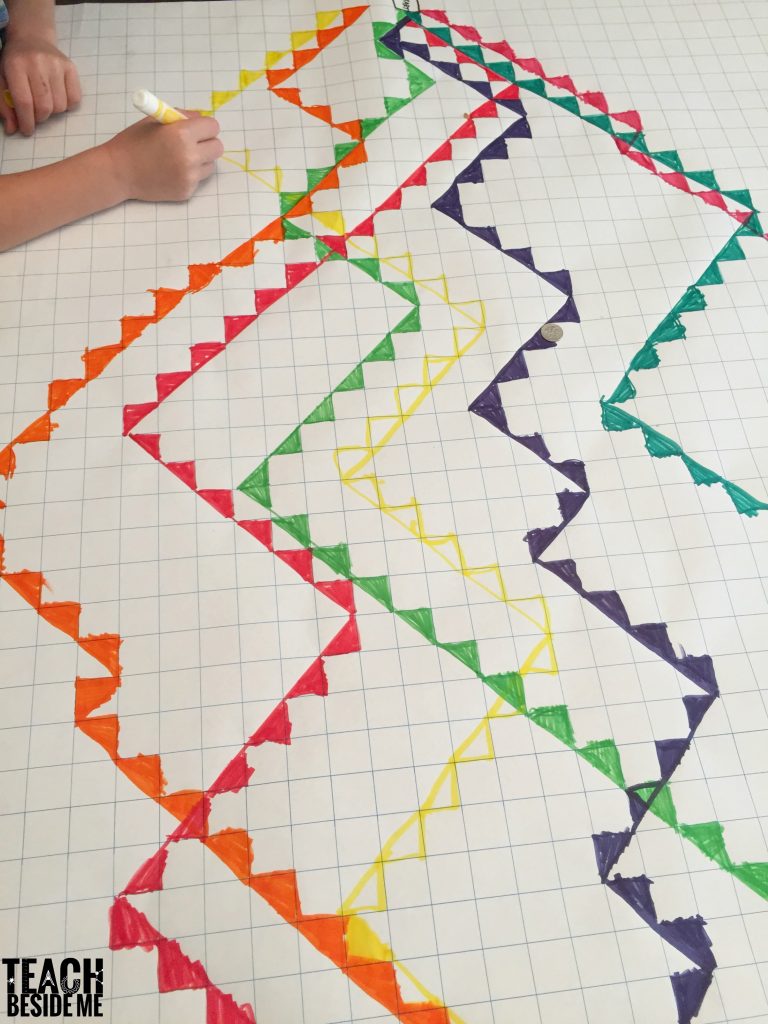
Draw diagonal lines upward across adjacent squares.
Move the number of spaces shown on the die.
Players continue taking turns moving across the graph paper. They must carefully choose how to move through the empty spaces on the grid.
Step 4: Reach the Other Side to Win
The first player to reach the opposite side of the graph paper, beating their opponents, is the winner of the race!
If a player reaches the very top or bottom edge of the paper, they may continue moving straight across until they can move diagonally again.
A ruler is helpful for keeping the graph lines straight and neat.
Why Graph Paper Makes Great Math Games
Graph paper creates an easy visual grid that helps kids count spaces, compare distances, follow diagonals, and recognize patterns. Using pens or pencils to move across the grid also strengthens fine motor skills and visual tracking.
Turn Your Graph Paper Game Into Math Art
After we finished playing, my kids thought the finished graph looked so cool that they wanted to turn it into artwork!
They colored sections of the graph and created bright geometric designs from the intersecting lines. I love activities that naturally combine math and creativity.
This makes a great STEAM activity because it blends:
- Math
- Art
- Strategy
- Problem solving
How to Adapt This Graph Paper Math Game by Age
Kindergarten
- use smaller numbers
- count aloud
- focus on direction words
Elementary
- add coordinates
- graph statistics
Middle School
- discuss slope
- probability
- coordinate planes
Math Extensions for Older Kids
Want to turn this graph paper game into a deeper math lesson? Try these variations!
Coordinate Plane Version
Label the graph with x- and y-axes and have students call out coordinates as they move.
Multiplication Graph Race
Roll two dice and multiply the numbers together to determine movement.
Probability Investigation
Track:
- Number of heads and tails
- Total upward moves
- Total downward moves
- Which direction wins more often
Students can graph their results afterward.
Slope Discussion
Older students can compare:
- Steep lines
- Shallow lines
- Positive slope
- Negative slope
This creates a great visual introduction to graphing concepts.
Why Hands-On Math Games Matter
Hands-on math games help children see math as something active, creative, and enjoyable instead of just worksheets and memorization.
Activities like this graph paper math game encourage kids to:
- Experiment
- Predict outcomes
- Notice patterns
- Build confidence with math concepts
Learning through play often helps math concepts stick much better than repetitive practice alone.
Hands-on math games help children physically see math concepts instead of only solving problems on paper. Using a graph paper game allows kids to visualize movement, count spaces, recognize patterns, and explore directional thinking in a meaningful way.
Ways to Use This Graph Paper Game
- math centers
- rainy day learning
- partner activity
- fast finisher station
- homeschool game day
- family math night
- STEM enrichment
More Graph Paper Games to Try
- Dots and Boxes
- Fun Paper Board Games to Play With a Pen or Pencil
- How to Play Racetrack Game with a Paper and Pencil
- Geometric Math Art with Circles on Graph Paper
More Hands-On Math Activities
If your kids enjoy this graph paper game, be sure to check out these other fun math activities:
- Peekaboo Math Game
- Pick-Up Sticks Math
- Math Dominoes
- Magnetic Clock Building
- Area and Perimeter City
- 60+ Elementary Math Hands-On Teaching Activities
These activities are all designed to make math meaningful, interactive, and fun for kids.