
Claude Monet for Kids: Artist Study & Japanese Bridge Art Project
This post may contain affiliate links.
Claude Monet is one of my favorite artists to introduce to kids. His colorful paintings of gardens, water lilies, changing light, and outdoor scenes make his work especially approachable for young artists.
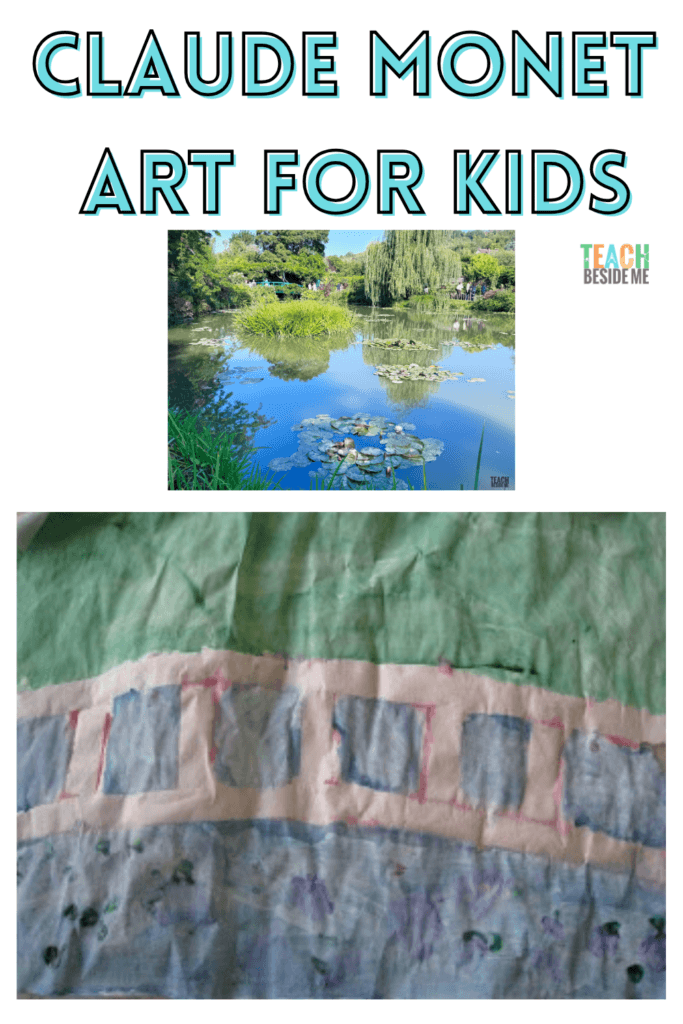
I originally wrote this post years ago after teaching a Claude Monet artist study at our homeschool co-op. We learned about Monet, studied his paintings, and recreated his famous Japanese Footbridge using a simple tape-resist technique.
At the time, I certainly didn’t know that years later I would actually travel to France and stand in Monet’s garden at Giverny myself! A dream come true.
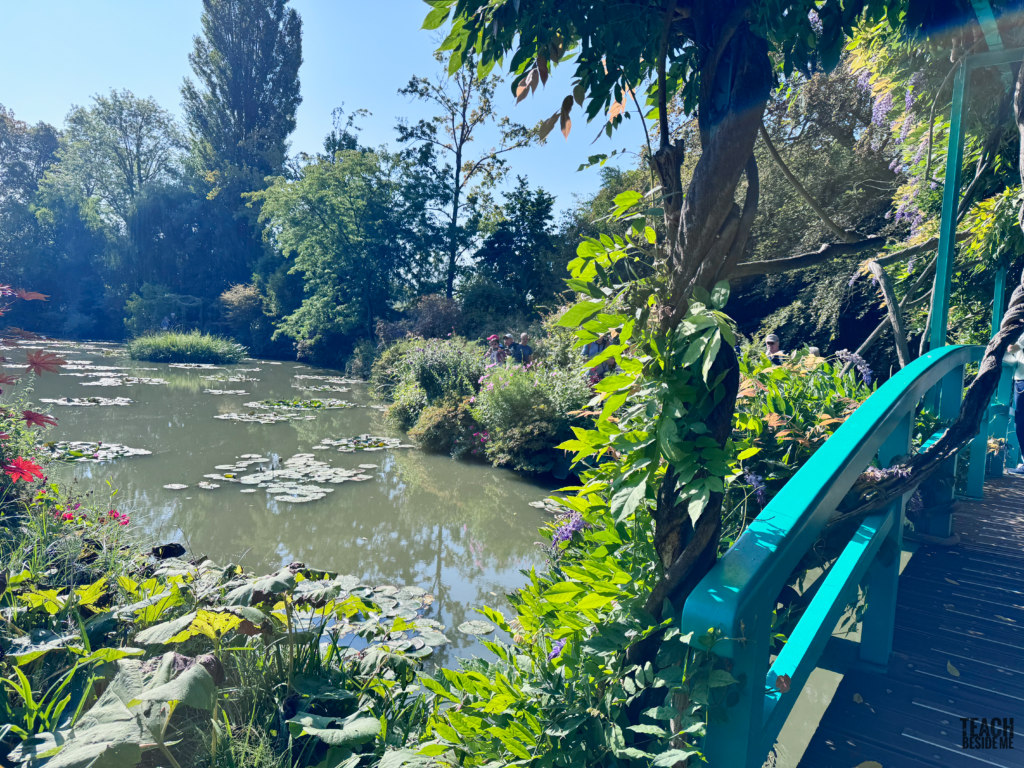
Seeing the water-lily pond and Japanese bridge in person gave me an entirely new appreciation for the paintings we had studied with our kids. So I’m updating this lesson with my own photographs from Giverny, more information about Monet, and some new resources you can use for your own artist study.
Who Was Claude Monet?
Claude Monet was a French artist born in 1840. He became one of the best-known artists of the Impressionist movement.
The Impressionists were interested in capturing an impression of a scene rather than painting every tiny detail perfectly. They experimented with color, visible brushstrokes, light, weather, and the way a scene could look different at different times of day.
Monet especially loved painting outdoors.
He painted landscapes, gardens, rivers, flowers, and scenes from everyday life. He sometimes painted the same subject again and again so he could capture how it changed in different light, seasons, and weather.
Some of his most famous works include his paintings of:
- Water lilies
- His garden at Giverny
- The Japanese footbridge
- Haystacks
- Rouen Cathedral
- The Houses of Parliament in London
This makes Monet a wonderful artist to study with children because you can talk about much more than art history. His paintings invite kids to really look.
- What colors do you see?
- Where does the light seem to come from?
- Can you see individual brushstrokes?
Does the painting look different when you stand close to it than when you step farther away?
Monet and His Garden at Giverny
One of the most recognizable subjects in Monet’s work was his own garden at his home in Giverny, France.
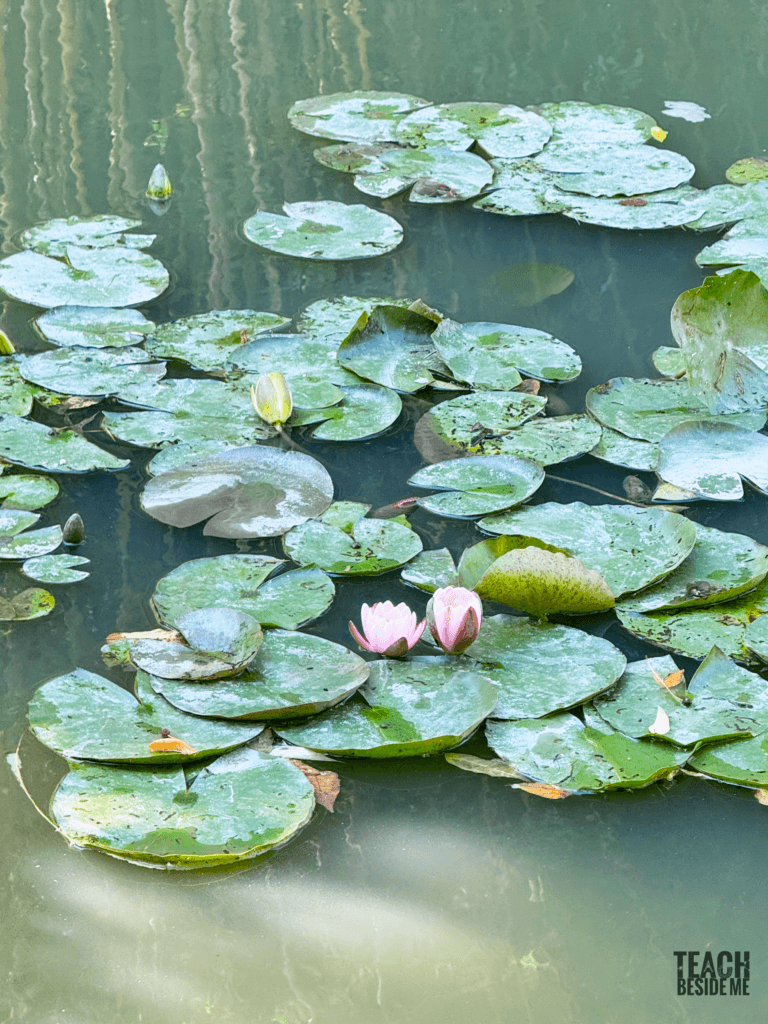
Monet created a water garden there with a pond, water lilies, plants, and a Japanese-style bridge. The garden became the subject of many of his paintings. Rather than painting the garden only once, Monet returned to it again and again.
That’s an interesting idea to explore with kids: An artist doesn’t always need a completely new subject.
You can study the same thing many times and notice something different each time.
Look Closely at Monet’s Japanese Footbridge
Before beginning the art project, spend some time looking at Monet’s paintings of the Japanese footbridge and water-lily pond.
Ask kids what they notice.
- What colors can you find in the water?
- Where are the water lilies?
- Can you find reflections?
- Does Monet outline every object?
- Can you see the brushstrokes?
- What part of the painting catches your eye first?
- How does the painting make you feel?
There aren’t necessarily right or wrong answers here. The goal is to help children slow down and really observe a work of art.
Color Monet’s Japanese Footbridge
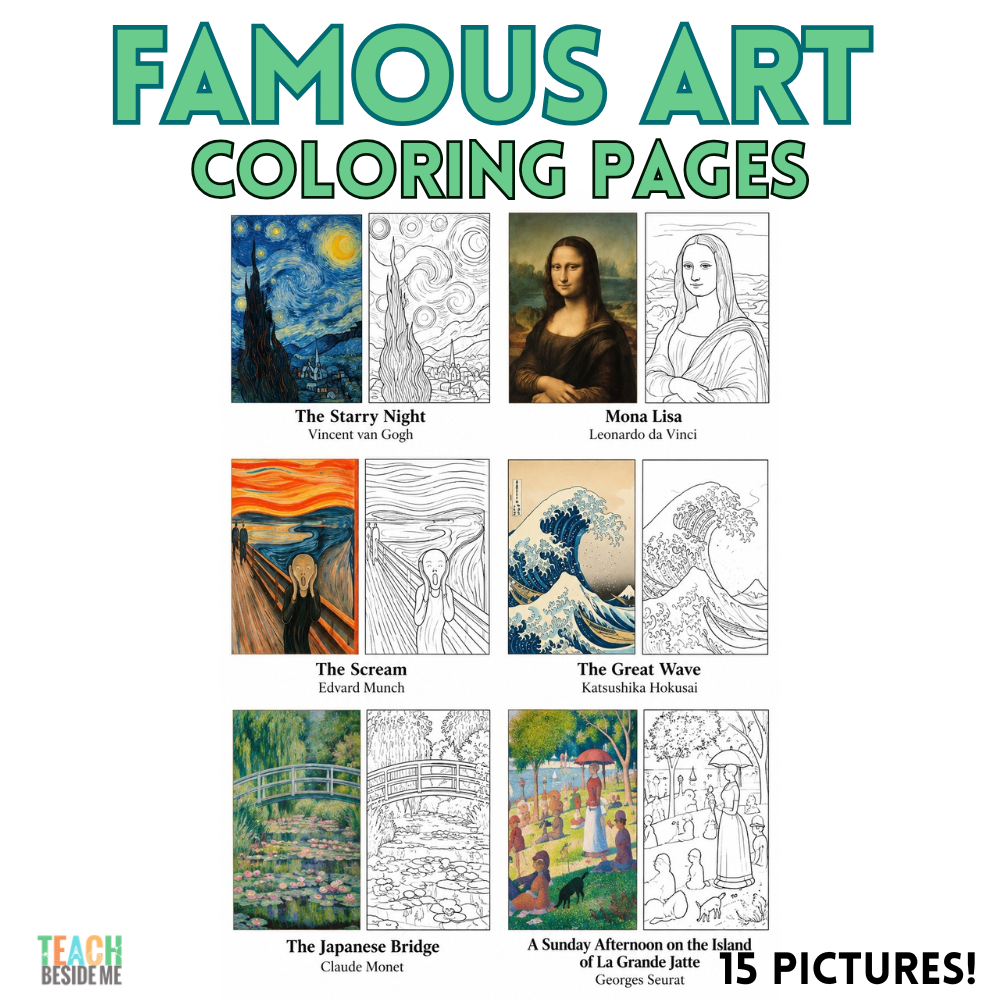
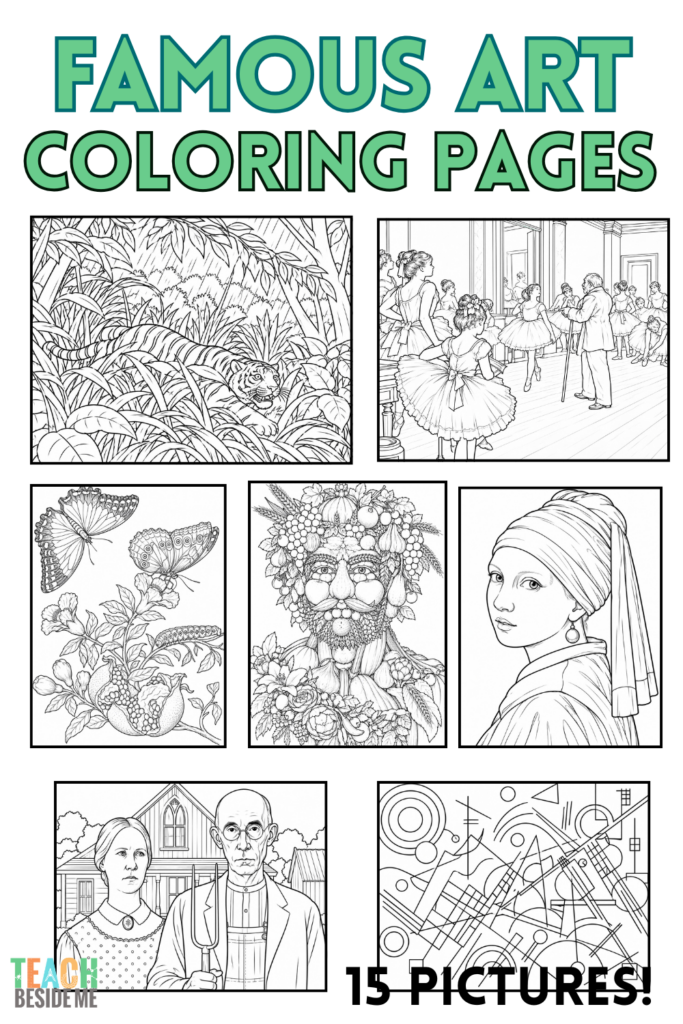
If you’d like another way for kids to study the painting before or after creating their own, I’ve included Monet’s Japanese Footbridge in my printable Famous Art Coloring Pages.
The set includes 15 famous masterpieces for kids to color while learning about well-known works of art.
GET THE FAMOUS ART COLORING PAGES

Claude Monet Japanese Bridge Art Project for Kids
After studying Monet’s work, we created our own paintings inspired by his Japanese footbridge. One of my favorite things about this project is the simple technique we used to create the bridge.
Instead of drawing it, we used masking tape as a resist.
Supplies
You’ll need:
- Heavy white paper or watercolor paper
- Paint
- Paintbrushes
- Masking or painter’s tape
- Water
- Monet’s Japanese Footbridge painting for reference
Step 1: Make the Bridge With Tape
Use masking tape to create the shape of the Japanese bridge across the paper.
The tape doesn’t need to create a perfect copy of Monet’s bridge. We’re making art inspired by Monet, rather than trying to reproduce his painting exactly.
Press the edges of the tape down well so paint doesn’t seep underneath too much.

Step 2: Paint the Garden
Now paint all around the taped bridge. Encourage kids to look at Monet’s painting for inspiration.
Try layering greens, blues, yellows, pinks, and purples to create the feeling of water, reflections, plants, and flowers. Instead of carefully outlining everything, experiment with small brushstrokes and dabs of color.
Try putting different colors beside and over one another.
You can even ask kids:
Can you paint water without using only blue?
Look closely at Monet’s work. How many colors can you find in his water?
Step 3: Add Water Lilies and Reflections
Add small strokes and dabs of color to suggest water lilies floating on the pond. Experiment with reflections, too. What colors from the plants and sky might appear in the water?
This is a great opportunity to talk about how artists paint what they actually observe, rather than simply what they think something “should” look like.

Step 4: Let the Painting Dry
Allow the painting to dry completely before removing the tape.
This is important—you don’t want wet paint spreading into your nice clean bridge!
Step 5: Reveal the Japanese Bridge
Once the painting is dry, carefully peel away the masking tape. The white paper underneath creates the shape of the bridge across your colorful garden.
This was always the exciting part! Kids can leave the bridge white or add a little color and detail afterward if they’d like.

Visiting Monet’s Garden at Giverny
Years after I originally taught this Monet lesson, I had the opportunity to visit Claude Monet’s home and gardens in Giverny, France myself.
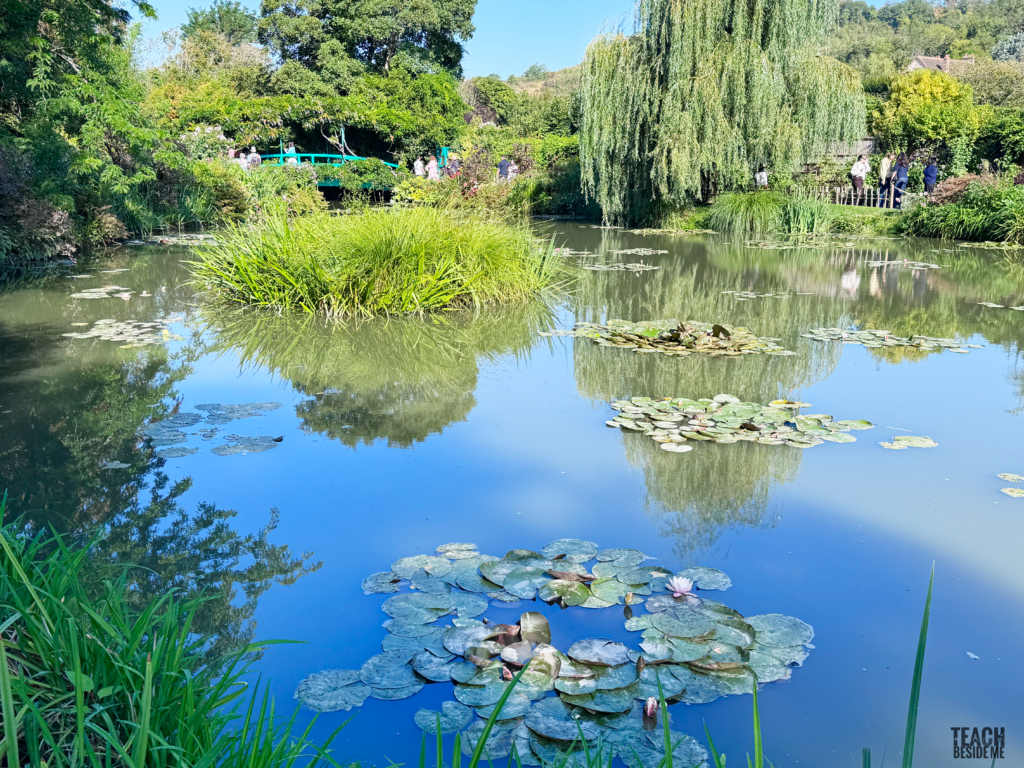
It was incredible to see in person the garden that inspired so many of Monet’s paintings.
The water garden is filled with many of the things children will recognize from his artwork—the pond, water lilies, lush plants, reflections in the water, and, of course, the famous Japanese bridge.
One of the most interesting things about standing there is realizing that Monet wasn’t simply inventing these beautiful scenes. He spent years creating and tending this garden and then studying and painting it again and again.
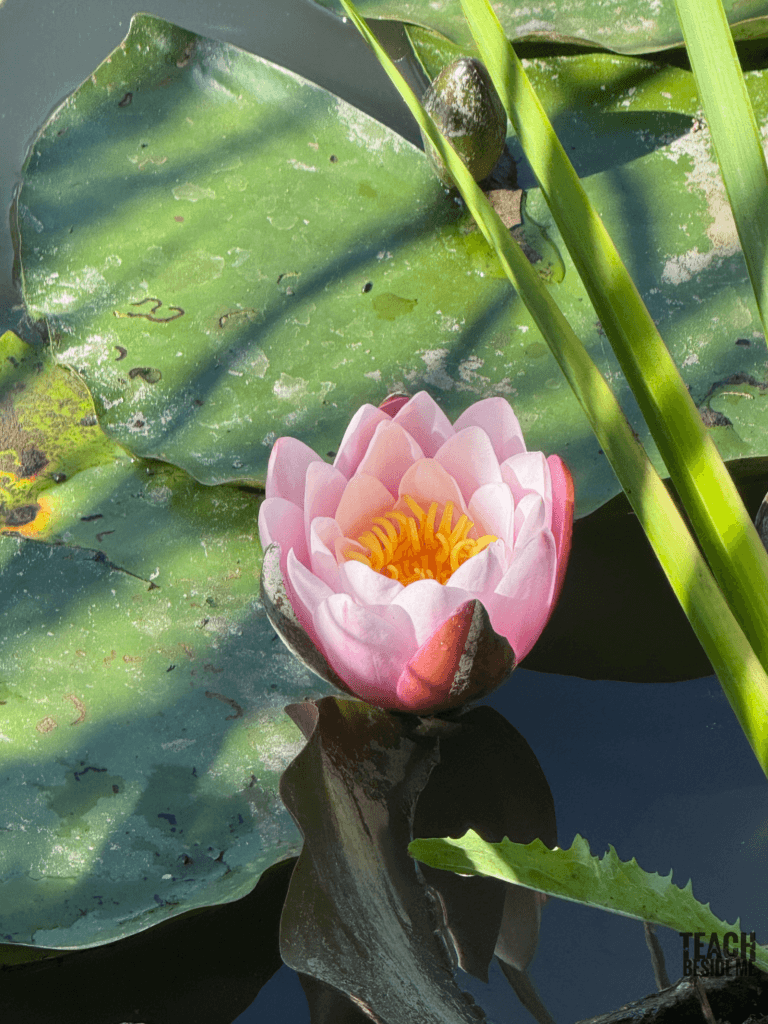
Look at a photograph of the garden beside one of Monet’s paintings. What did Monet include? What did he change? Which colors stand out in the painting compared with the photograph?
This is a wonderful way to help kids understand that artists don’t necessarily paint a scene exactly as a camera records it. Monet was interested in his impression of the scene—its color, light, atmosphere, and reflections.
More Ways to Study Monet With Kids
Don’t stop with one painting! There are lots of simple ways to extend a Monet artist study.
- Paint the Same Scene More Than Once- Choose a tree, garden, house, or landscape and paint it at different times of day. How do the colors and shadows change?
- Paint Water Lilies- Experiment with painting reflections, water, and floating flowers.
- Try Painting Outdoors- Take your art supplies outside and paint something you can actually see.
- Experiment With Brushstrokes- Instead of drawing outlines and filling them in, try building a picture from lots of little strokes and dabs of color.
- Compare Monet Paintings- Look at several paintings of the same subject. What stayed the same? What changed?
Books About Monet for Kids
Books are an easy way to add more art history to an artist study.
A few we’ve enjoyed include:
- Monet from the Getting to Know the World’s Greatest Artists series by Mike Venezia
- Count Monet’s Lilies by Julie Appel and Amy Guglielmo
- Linnea in Monet’s Garden by Christina Björk and Lena Anderson
Linnea in Monet’s Garden is especially fun because it takes children into Monet’s world and his garden at Giverny.
More Famous Art Activities for Kids
Want to keep exploring art with your kids?
Try my Famous Art Coloring Pages, which include 15 well-known masterpieces—including the Japanese Footbridge painting featured in this Monet lesson.
You can also explore more of my artist studies:
- Jackson Pollock Artist Study
- Picasso Art Project
- Paul Cézanne Artist Study
- Paul Klee Art Lesson
- Gustav Klimt Pattern Art
And find even more creative math and art ideas in my Math Art and Drawing Games for Kids book.





I wish you had a pinterest link on your page, I would love to pin this, but can’t figure out how 🙂
The tape can be tricky to pull off, but if you wait until it is completely dry and peel very slowly, it comes off fine.
Did you have any trouble peeling the masking tape off the paper?
We love the book Linnea in Monet’s garden. I hadn’t realized it was made into a movie. I’ll have to check that out.
Thanks for all the great ideas! I have such a hard time figuring out where to start with Art (i’m a scientist at heart).
I love this! I can’t wait to try with my boys.
Thank you for sharing your selection of resources and fun art ideas!