Paul Cézanne Artist Study: Exploring the Father of Modern Art
This post may contain affiliate links.
Studying the great masters is one of our favorite ways to explore art in our homeschool. While we do regular art lessons throughout the year, I try to do a focused artist study about once a month to help my kids learn about influential artists and the styles they introduced. This month, we explored the life and work of Paul Cézanne, often called the “father of modern art.”
Why Study Paul Cézanne?
Paul Cézanne (1839–1906) was a French Post-Impressionist painter whose unique brushwork and use of color laid the groundwork for modern movements like Cubism. He’s best known for his still life paintings—especially those featuring apples, bottles, and vases arranged on tables—as well as his expressive landscapes and portraits. Studying Cézanne gives kids a chance to practice observation, understand color blending and shading, and explore composition.
How We Structure Our Artist Studies
Our artist studies are intentionally simple and repeatable. Here’s how we approach them:
-
Read a few books about the artist
We love using picture books and biographies to make artists come alive. See our recommended titles below! -
Display selected artworks
I print and laminate 4–6 of the artist’s most iconic pieces and display them on our art wall for the month. -
Create art in the artist’s style
We do a simple hands-on project to imitate one aspect of the artist’s work. This helps my kids connect more deeply with the techniques and themes.
That’s it! No pressure, no perfection—just exposure, creativity, and discussion.
Our Paul Cézanne Art Project: Still Life Studies
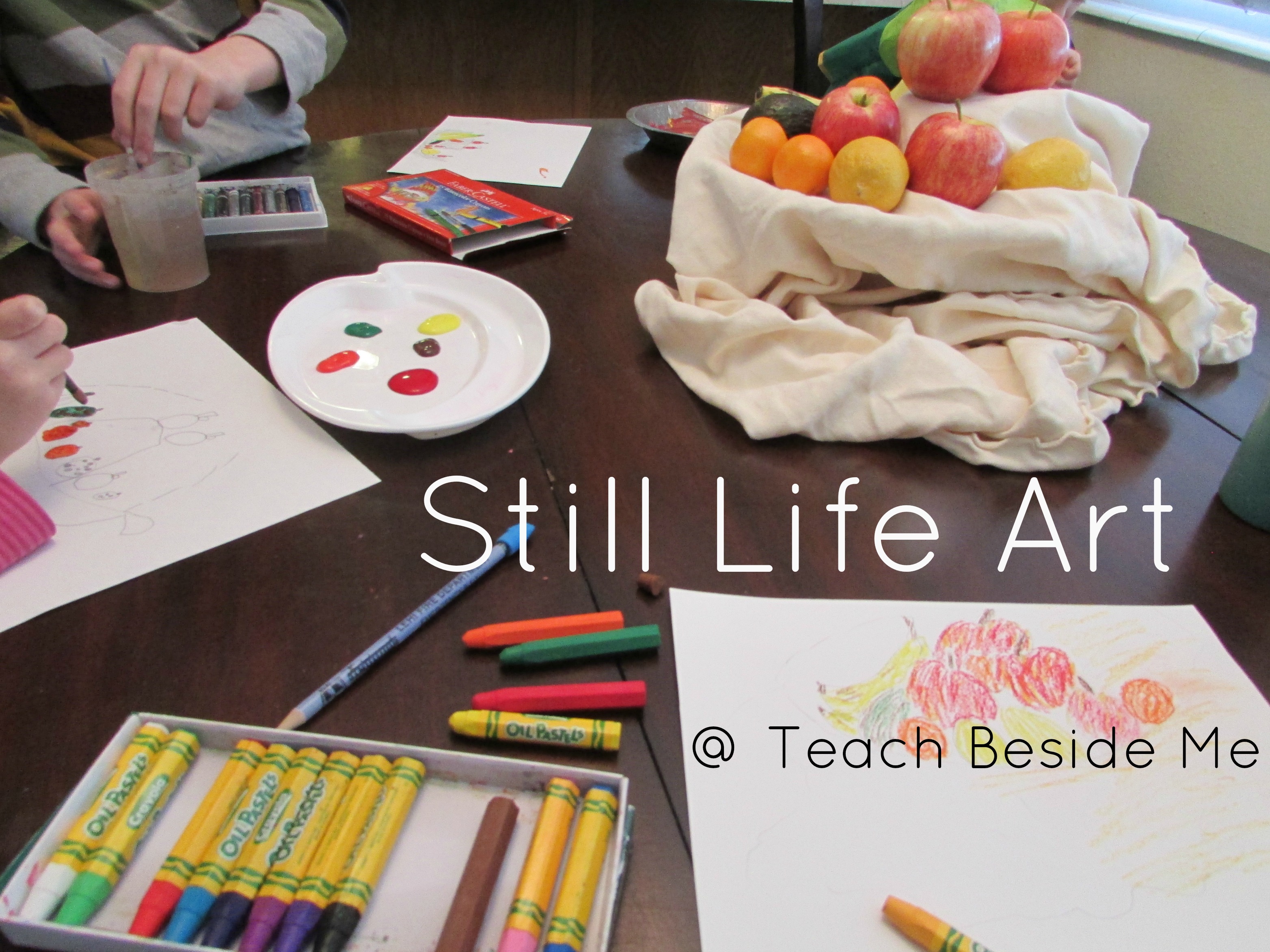
After reading our books about Cézanne, we created our own still life drawings inspired by his famous fruit compositions.
Here’s how we did it:
-
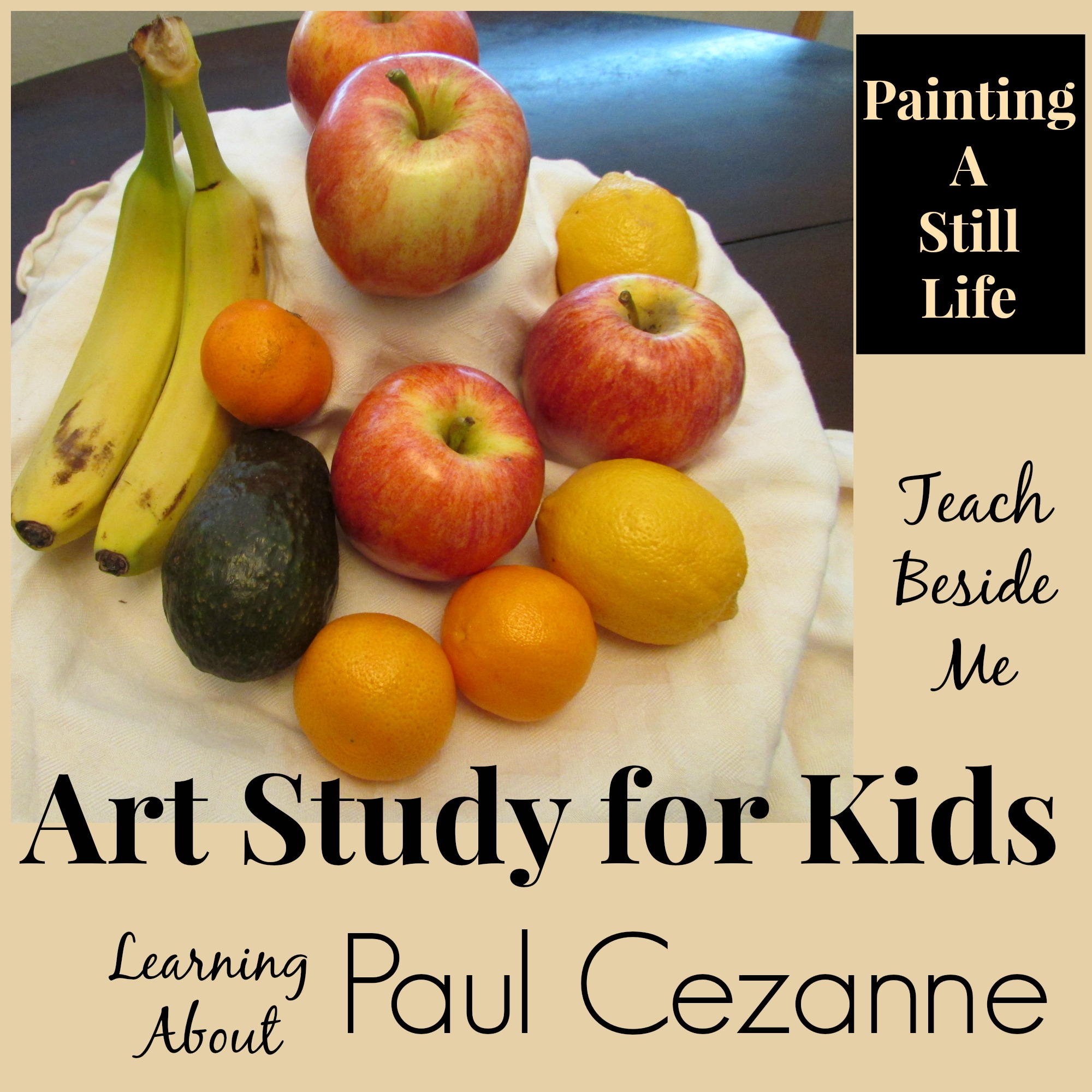
I set up a still life using a cake platter draped in a tablecloth, piled with apples, oranges, bananas, and a few vases.
-
Each child chose their preferred medium: watercolor crayons, oil pastels, colored pencils, or paint.
-
We discussed how Cézanne often painted the same setup over and over to study form, light, and perspective.
-
I encouraged my kids to look at the shadows, color variations, and reflections on the fruit before sketching.
-
My 3-year-old preferred eating the apples to painting them—Cézanne would probably understand!
Tip: If you haven’t used watercolor crayons before, they’re a fun way to blend drawing and painting.
Online Resource: Cezanne’s Astonishing Apples
We also explored a fantastic interactive tool called Cezanne’s Astonishing Apples from the Metropolitan Museum of Art. It lets kids digitally arrange fruit and paint in Cézanne’s style—perfect for an indoor extension activity.

Picture Books and Resources for a Paul Cézanne Unit
Here are a few of our favorite Cézanne-inspired reads and resources:
-
Cézanne and the Apple Boy by Laurence Anholt
A story of Cézanne told from the perspective of his son. -
Paul Cézanne (Getting to Know the World’s Greatest Artists) by Mike Venezia
A kid-friendly biography series we love using for every artist study. -
Cézanne: 16 Art Stickers
Great for interactive notebooks or visual arts journals. -
Color Your Own Still Life Paintings (Dover Art Coloring Book) by Marty Noble
A relaxing companion activity that also teaches observation skills.
For More Artist Study Resources see my posts on:
Monet
Jackson Pollock
Picasso
Paul Klee
Studying Paul Cézanne was a refreshing way to dive into still life art and practice seeing the beauty in simple objects. His belief that art is a study of nature and structure helped shape the future of modern art—and it’s a great reminder to look closely at the everyday things around us.
Have you studied Cézanne or other famous artists in your homeschool? I’d love to hear about your projects and favorite resources!