Cursive Letter Matching Puzzles
This post may contain affiliate links.

Learning cursive doesn’t have to mean filling pages with handwriting practice! These cursive letter matching puzzles give kids a fun, hands-on way to recognize cursive letters and match them with their printed counterparts.
I’ve always loved teaching cursive in our homeschool. While cursive instruction varies from school to school, it’s something I’ve wanted my kids to learn. Being able to read cursive handwriting is a useful skill, and I love finding creative ways to make the learning process enjoyable.
These printable cursive alphabet puzzles are perfect for kids who are just beginning to learn cursive letters. They can practice recognizing uppercase and lowercase cursive letters through a simple matching game, even before they’re ready to write them independently.

Get the Cursive Letter Matching Puzzles here!
Printable Cursive Letter Matching Puzzles
This printable set includes a matching puzzle for every letter of the alphabet, from A to Z.
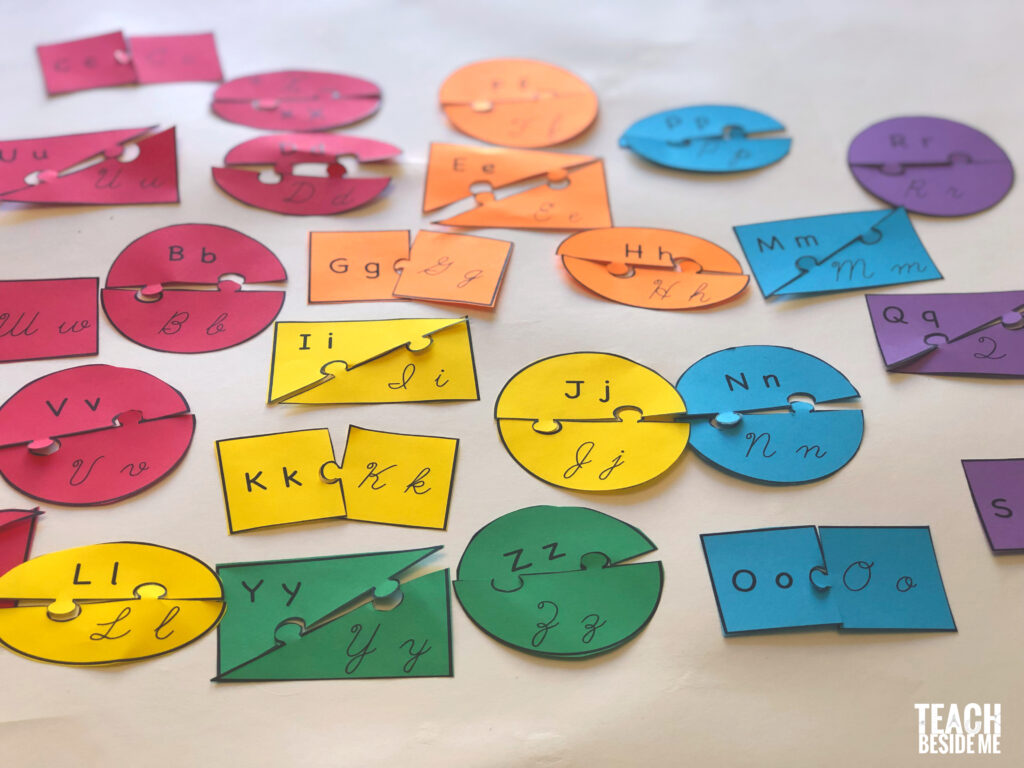
Each puzzle has two matching pieces:
- One piece displays the uppercase and lowercase printed letters.
- The matching piece displays the uppercase and lowercase cursive letters.
Kids match the cursive letters to their corresponding print letters to complete each puzzle.
The printable includes four puzzles per page, along with two extra blank puzzles you can customize.
I designed the puzzles using four different shapes. The shapes provide an extra visual clue for beginners and make the matching activity a little more interesting.
It’s a simple way to help kids become familiar with the cursive alphabet while playing!
How to Prepare the Cursive Alphabet Puzzles
These puzzles are easy to prepare and can be used again and again.
- Print the puzzle pages. You can use regular paper or cardstock for extra durability.
- Cut out the puzzle pieces. Separate each puzzle into its two matching halves.
- Mix up the pieces. Start with a few letters at a time for beginners, or use the entire alphabet for more of a challenge.
- Match the letters. Have kids find the printed and cursive versions of each letter.
- Check the matches. Encourage kids to say the letter names and identify the uppercase and lowercase forms.
You can also laminate the puzzles if you plan to use them in a classroom or homeschool center.

A Tip for Making the Puzzles More Challenging
When I first made these, I printed the puzzles on different colors of paper.
My son quickly informed me that this made them WAY too easy! 😉
He was right. The colors made it possible to match some of the pieces without really studying the letters.
If you’re introducing cursive for the first time, colored paper can provide helpful clues. But once kids become more confident, try printing all the puzzles on the same color paper to encourage closer attention to the letter shapes.

Fun Ways to Use Cursive Letter Matching Puzzles
There are lots of ways to adapt this printable to different ages and skill levels.
Start with Just a Few Letters
Introduce four or five letters at a time instead of putting out the entire alphabet.
Choose letters your child is already learning to write, or start with familiar letters from their name.
As they become more confident, add new puzzles to the activity.
Set Up a Cursive Matching Center
Place the puzzle pieces in a small container or tray for an independent literacy center.
Kids can work through the matching activity at their own pace, making it a simple option for morning work, homeschool lessons, or classroom centers.
Play a Cursive Letter Hunt
Spread out the printed letter pieces and give your child a cursive letter to find.
Or reverse the challenge! Show a printed letter and ask them to locate its cursive match.
This gives kids extra practice recognizing the shapes of cursive letters.
Practice Uppercase and Lowercase Letters
Each puzzle includes both uppercase and lowercase forms, so children can compare how the same letter looks in print and cursive.
Some cursive letters look very similar to their printed versions, while others look quite different.
Ask your child which letters are easiest to recognize and which ones are the trickiest.
Create Your Own Puzzles
The set also includes two blank puzzle templates.
Use them to make additional matching activities, review particularly challenging letters, or create your own variations of the game.
You could even make puzzles matching cursive words with their printed versions as kids become more comfortable reading cursive.
Why Practice Cursive Letter Recognition Before Writing?
When we think about teaching cursive, we often jump straight to handwriting worksheets.
But reading cursive and writing cursive are two different skills.
Before children can confidently form cursive letters, it helps for them to recognize what those letters look like.
These matching puzzles give beginners a chance to study the letter shapes without also having to concentrate on pencil grip, letter formation, spacing, and connecting strokes.
They’re especially helpful for kids who are still developing their handwriting skills or who benefit from hands-on learning activities.
Once children can recognize the cursive alphabet, they can begin practicing how to form the letters themselves.
Why Teach Kids Cursive Handwriting?
There has been plenty of discussion over the years about whether schools should continue teaching cursive. Personally, I think it’s a valuable skill, and I enjoy including it in our homeschool. Here are a few reasons I think cursive is worth learning.
1. Reading Historical Documents and Family Letters
Many historical records, handwritten letters, journals, and family documents are written in cursive.
Being able to read cursive helps children explore these materials for themselves, whether they’re studying history or looking through letters from grandparents.
2. Developing Handwriting Skills
Learning cursive provides another opportunity to practice controlled hand movements, letter formation, and coordination. It also gives children experience with a different style of handwriting.
3. Writing Fluently
As children become comfortable with cursive, the connected strokes may help some of them develop a smooth, comfortable writing style. The goal isn’t necessarily to write faster than everyone else, but to develop a handwriting style they can use confidently.
4. Learning to Sign Their Names
I love that cursive gives kids an opportunity to develop their own handwritten signatures. It’s a practical skill and something many children enjoy learning as they get older.
5. Appreciating Handwriting as a Skill
Even in a world full of keyboards and digital devices, there’s something meaningful about being able to read and write by hand.
Cursive is another way for kids to express themselves and connect with written language.
Download the Cursive Letter Matching Puzzles
Ready to make cursive practice more fun?
My printable Cursive Letter Matching Puzzles include all 26 letters of the alphabet, with uppercase and lowercase print-to-cursive matching pieces.
With four puzzle shapes and two blank templates, they’re an easy way to add hands-on cursive practice to your homeschool or classroom.
Purchase the Cursive Letter Matching Puzzles in my shop!
Want to Download the Cursive Letter Puzzles?
You can find these over in my shop!


More Fun Ways to Teach Cursive and Handwriting
Once your kids are familiar with the cursive alphabet, help them practice forming the letters with my Cursive Alphabet Practice Worksheets.
These are a great next step after the matching puzzles because children can move from recognizing cursive letters to writing them.
You might also enjoy my 40 Fun Ways to Make Handwriting Practice Engaging for Kids. It’s full of creative ideas for making handwriting practice more enjoyable.
Learning cursive doesn’t have to be tedious. Sometimes a simple set of matching puzzles is just what kids need to build confidence and have a little fun along the way!