Homemade Gummies Made With Fruit Juice
This post may contain affiliate links.
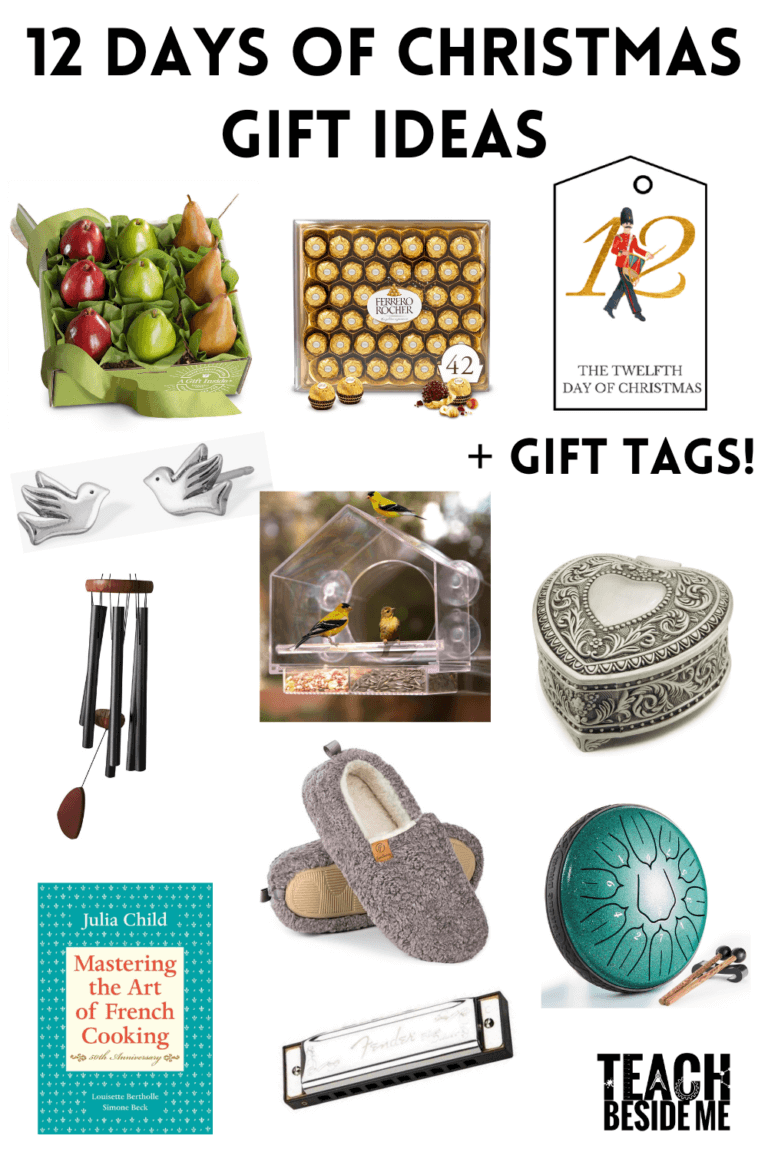
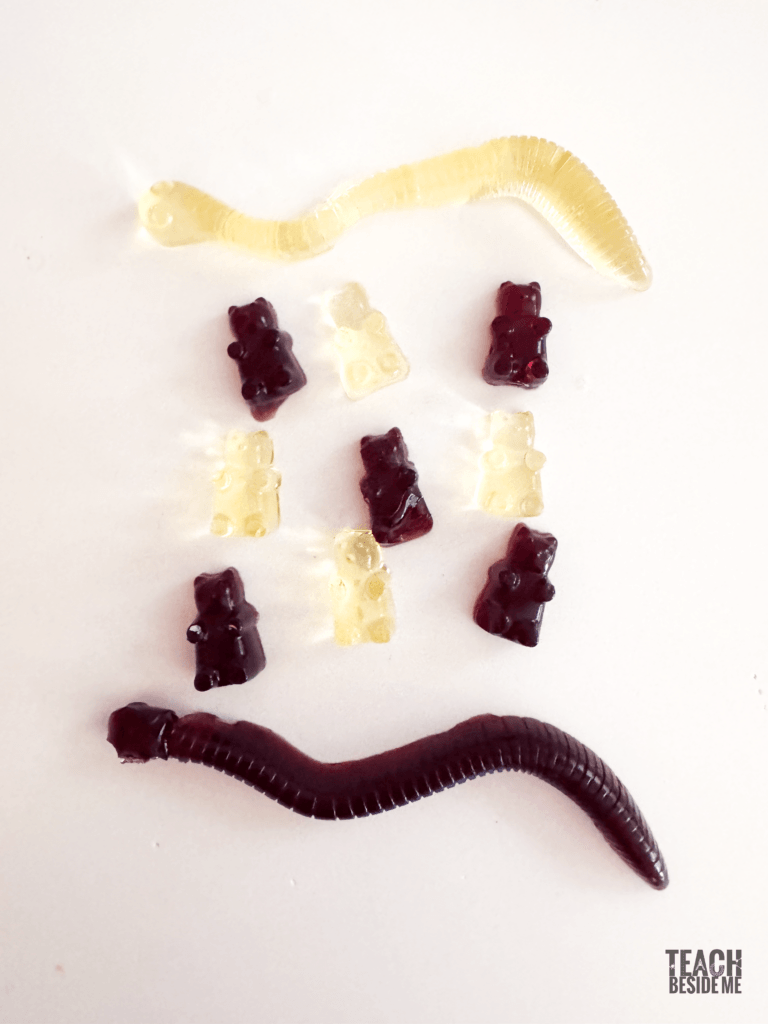
Learn how to make homemade gummies using fruit juice! This easy kitchen science activity teaches kids about gelatin, proteins, and food chemistry while making delicious homemade gummy candies.
Homemade Gummies: A Fun Kitchen Science Activity
Have you ever wondered what gives gummy bears their chewy texture?
The answer is gelatin!
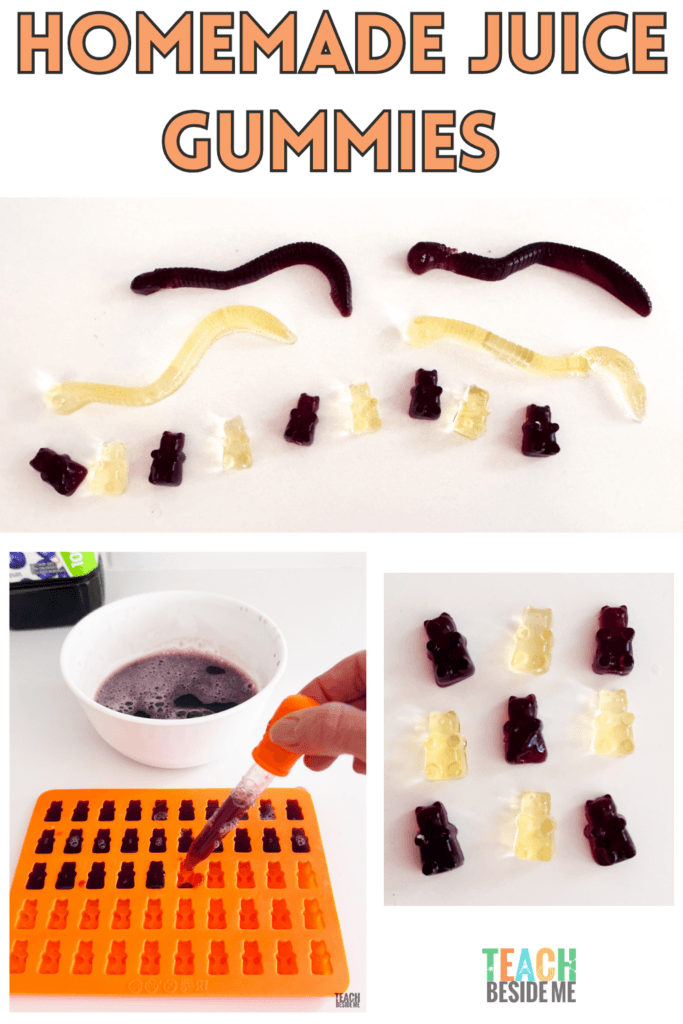
Homemade gummies are one of our favorite kitchen science activities because they’re incredibly easy to make and kids absolutely love them! With just a few simple ingredients, you can create colorful gummy bears or gummy worms while learning about food science at the same time.
I’ll show you how to make a healthy gummies recipe made with 100% fruit juice and unflavored gelatin.
This recipe is simple, delicious, and a wonderful way to introduce kids to chemistry in the kitchen.
Why Make Homemade Gummies?
Making homemade gummy candies is more than just a fun treat. Kids practice:
- measuring ingredients
- following directions
- safely heating liquids
- making observations
- learning how ingredients change when heated and cooled
It’s a perfect activity for homeschool science, STEM lessons, cooking classes, or a rainy afternoon.
The Science Behind Homemade Gummies
The secret ingredient in homemade gummies is gelatin.
Gelatin is a natural protein made from collagen. When mixed into warm liquid, the protein strands spread apart and dissolve. As the mixture cools, those strands reconnect, trapping water inside to create the chewy texture we love.
Instead of freezing into a hard solid like ice, gelatin forms a gel, which is soft, flexible, and bouncy.
Kids are actually watching chemistry happen!
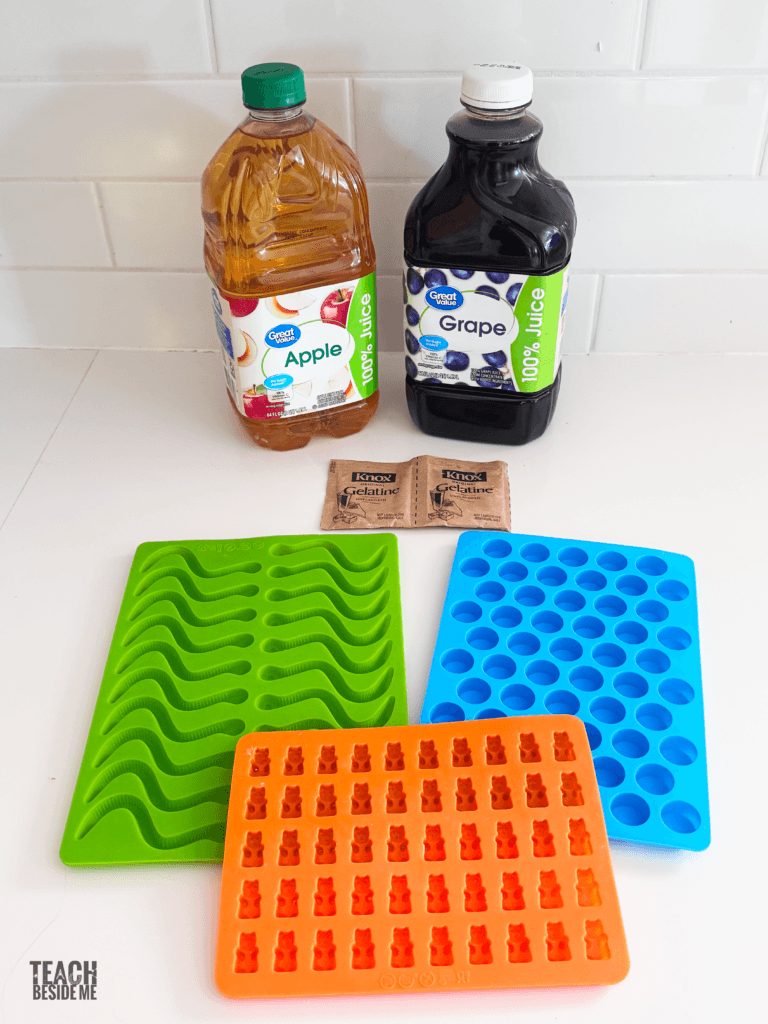
Supplies
- Juices- 100% juice- apple, grape, orange, cherry
- Unflavored gelatin(opens in new tab)
- honey or maple syrup (optional to sweeten more)
- Small saucepan or microwave
- Measuring cups
- Measuring spoons
- Silicone gummy molds(opens in new tab) or small ice cube trays (gummy bears, gummy worms, hearts, dinosaurs—anything works!)
- Dropper or squeeze bottle (optional, but helpful)
- Refrigerator
Homemade Fruit Juice Gummies
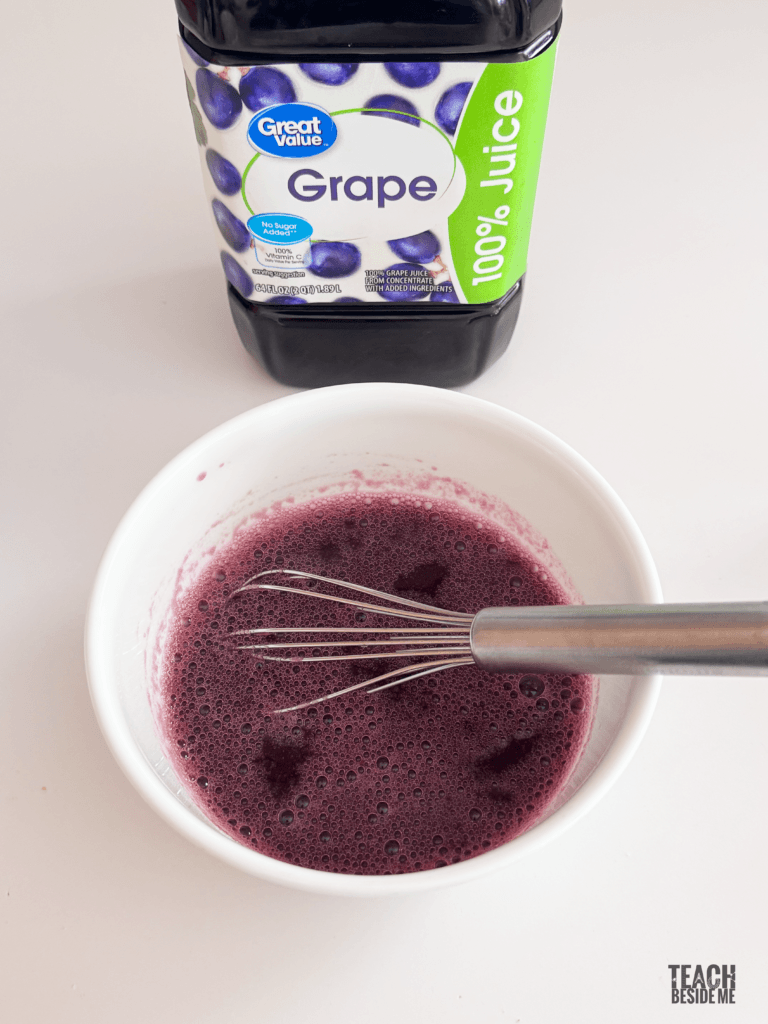
If you’d like a version made without flavored gelatin, artificial flavors or dyes, or loads of sugar, this recipe uses 100% fruit juice.
Ingredients
- 1 cup 100% fruit juice (apple, grape, orange, or your favorite)
- 3 tablespoons unflavored gelatin
- 1–2 teaspoons honey or maple syrup (optional, depending on the sweetness of the juice)
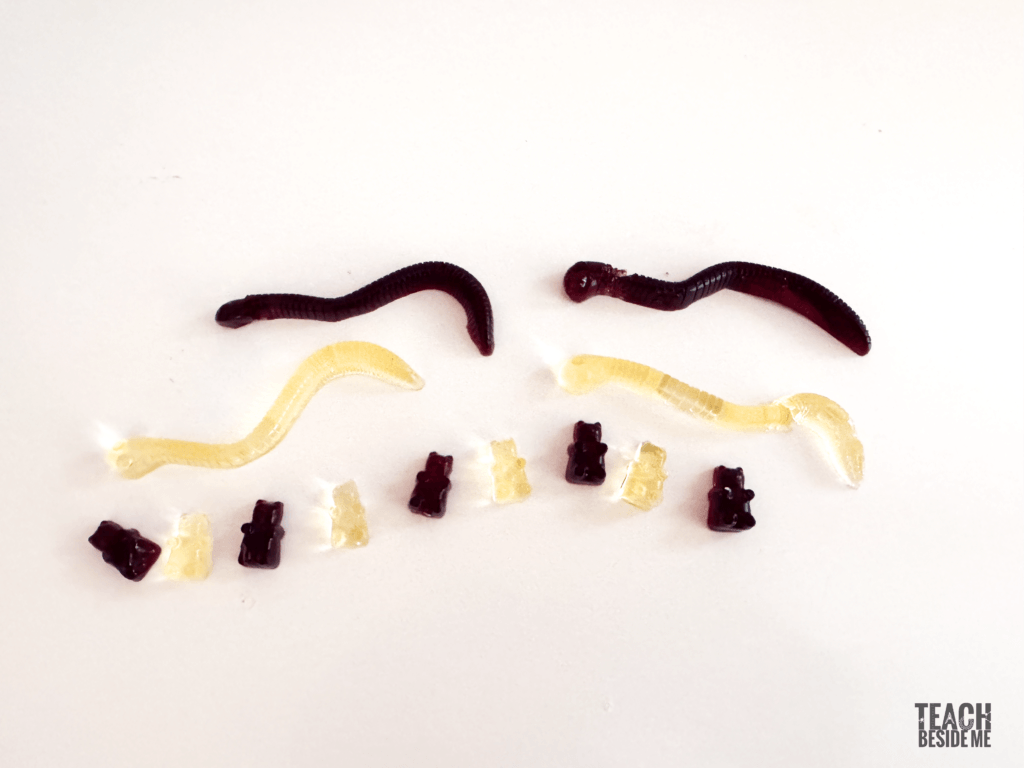
Directions
- Pour the juice into a saucepan (or microwavable dish).
- Sprinkle the gelatin evenly over the juice and allow it to sit for about 5 minutes. This step is called blooming the gelatin and helps it dissolve smoothly.
- Warm the mixture over medium-low heat while stirring until the gelatin has completely dissolved. Do not boil.
- Stir in honey or maple syrup if desired.
- Pour into molds. Using droppers is much easier and less messy! I also recommend putting the silicone trays onto metal trays for stability in moving them to the fridge.
- Refrigerate until firm.
These gummies have a softer fruit flavor and are easy to customize with your favorite juices.
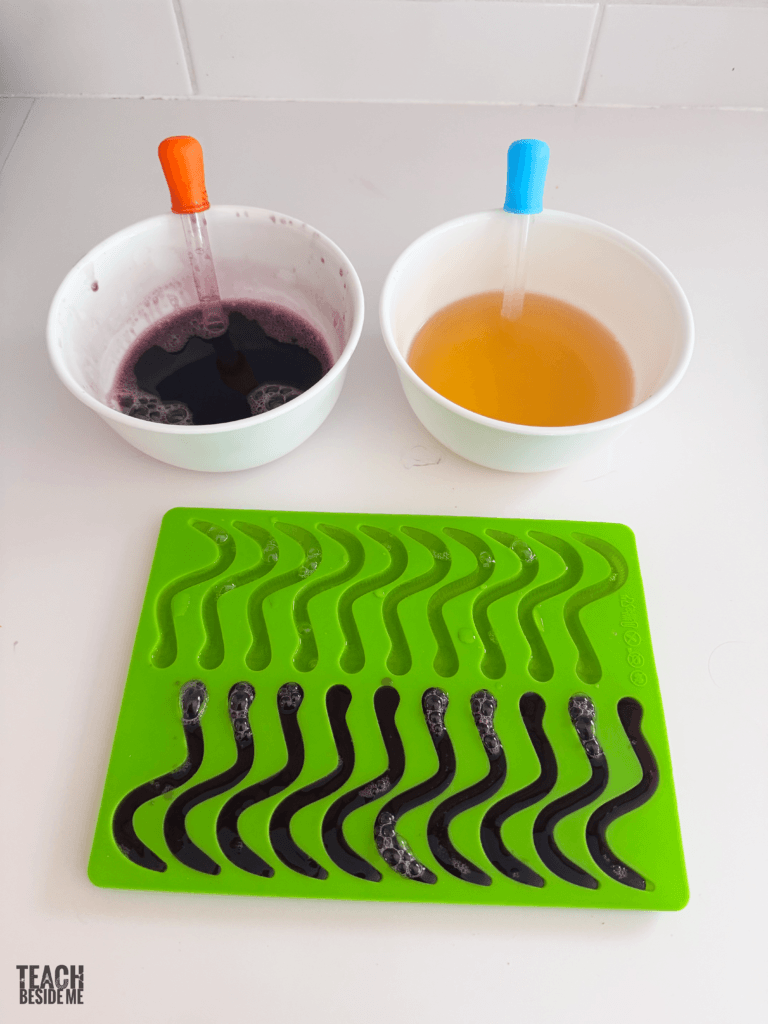
Best Fruit Juices for Healthy Homemade Gummies
Experiment with different flavors!
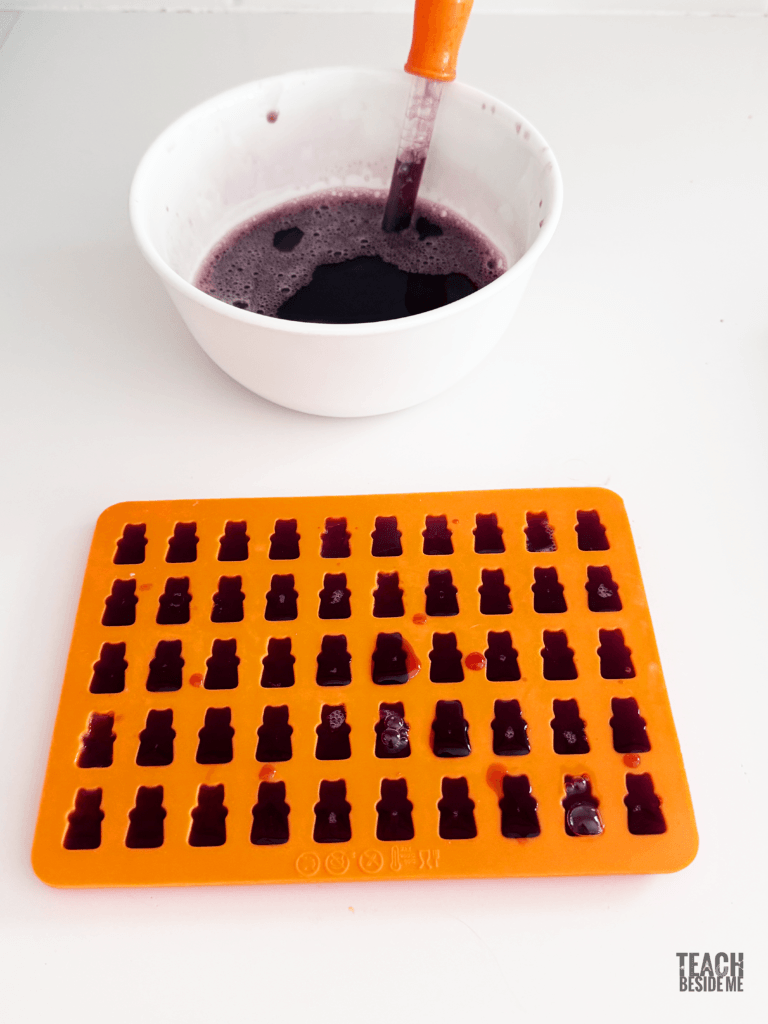
Some favorites include:
- Apple juice
- White grape juice
- Grape juice
- Cherry juice
- Pomegranate juice
- Orange juice
- Cranberry juice
- Pineapple juice*
- Mango nectar
*Fresh pineapple contains enzymes that can keep gelatin from setting properly. Canned pineapple juice has been heated, which deactivates those enzymes and usually works much better. See my experiment on fruit enzymes for more info.
Gummy Science Lab
Turn your recipe into an experiment!
Experiment #1: Which Gummies Taste Better?
Compare:
- Apple juice gummies
- Grape juice gummies
- Cherry juice gummies
- Orange juice gummies
Have everyone vote for their favorite.
Experiment #2: Which Gummies Are the Chewiest?
Try different amounts of gelatin.
2 Tbsp, 3 Tbsp, 4 Tbsp
Which recipe is most like store-bought gummy bears?
Experiment #3: Which Juice Works Best?
Observe:
- color
- flavor
- firmness
- transparency
- favorite texture
Design Your Own Gummies
Encourage kids to think like food scientists and let them design their own recipe.
- Which fruit juice will make the brightest color?
- Which mold is your favorite—gummy bears or gummy worms?
- Can you layer two flavors?
- What happens if you mix apple juice and grape juice?
- Can you create a rainbow batch?
Read the Label
Next time you’re shopping, compare your homemade gummies with a package of gummy bears.
Ask:
- Which has more ingredients?
- Which contains artificial colors?
- Which has more sugar?
- Which ingredients can you recognize?
- How much protein comes from the gelatin?
This is a great opportunity to discuss making thoughtful food choices without labeling foods as “good” or “bad.”
Why Didn’t My Gummies Set?
My gummies are too soft.
Try adding a little more gelatin next time.
My gummies are rubbery.
Reduce the amount of gelatin slightly.
I have bubbles.
Pour slowly into the molds or gently skim bubbles off the surface before chilling.
Can I freeze gummies?
Yes, but refrigeration gives the best chewy texture.
Frequently Asked Questions
Can I make homemade gummies without Jell-O?
Yes! The fruit juice version uses unflavored gelatin and 100% fruit juice instead.
Are homemade gummies healthier?
That depends on the ingredients you choose. Using 100% fruit juice lets you avoid artificial colors and flavors, while the Jell-O version is a fun treat that’s easy for kids to make.
Why do I need unflavored gelatin?
The unflavored gelatin provides the structure that helps the gummies firm up.
How long do homemade gummies last?
Store them in an airtight container in the refrigerator for up to one week.
What Kids Learn
This activity naturally teaches:
- Chemistry
- States of matter
- Proteins
- Measuring
- Following directions
- Observation skills
- Scientific experimentation
- Kitchen safety
More Kitchen Science Activities
If your kids enjoyed making homemade gummies, they might also love:
- Magic Green Cookies: Color-Changing Science Recipe
- Ice Cream in a Bag
- Zucchini Gummy Recipe Kids Love
- Rock Candy Crystals
- Bread in a Bag
- Grow a Potato in a Jar
- Fruit Enzyme Gelatin Science Experiment: Biochemistry for Kids
- Homemade Butter in a Jar
Teacher Tips
This activity works well for:
- Homeschool science
- Food science units
- Kitchen chemistry lessons
- Summer STEM camps
- Family science nights
- Cooking clubs
- 4-H projects