Morse Code Alphabet Chart for Kids (Free Printable + Fun Activities)
This post may contain affiliate links.
Have you ever wanted to send a secret message that only your friend could understand? Learning Morse Code is a fun and fascinating way for kids to explore patterns, communication, and history — all while decoding secret messages!
This free Morse Code alphabet chart printable makes it easy to introduce kids to this classic communication code through hands-on activities, simple experiments, and creative learning fun.

What Is Morse Code?
Morse Code is one of the earliest forms of long-distance communication — a system that turns letters and numbers into short and long signals called dots (•) and dashes (–).
When you send a message in Morse Code, each dot (called a dit) and each dash (called a dah) represents a specific rhythm or sound. Messages can be transmitted in many ways — by sound, flashing light, radio signals, or even tapping on a table.
The code was invented in the 1830s by Samuel Morse and Alfred Vail as a way to send words quickly over telegraph wires. The telegraph operators learned to “hear” messages as a series of short and long tones, recognizing the rhythm for each letter almost like music.Learning Morse Code characters connects kids to real-world history while strengthening their logic, pattern recognition, and problem-solving skills.
Morse Code and Veterans Day
During wartime — especially World War II — Morse Code was a vital way for soldiers and sailors to send messages safely across long distances. It helped keep troops connected and protected important information.
As we celebrate Veterans Day, learning about Morse Code is a wonderful way to remember the creativity, bravery, and teamwork of those who served. It reminds us how innovation and communication helped bring people home safely.
How to Read Morse Code
Each letter, number, and punctuation mark has its own unique pattern of dits and dahs. For example:
| Character | Morse Code |
|---|---|
| A | • – |
| B | – • • • |
| C | – • – • |
| Period (.) | • – • – • – |
| Question mark (?) | • • – – • • |
When reading or listening to Morse Code, the pause between signals is just as important as the dots and dashes themselves:
-
A short pause separates letters.
-
A longer pause separates words.
That’s what makes Morse Code both musical and mathematical — it’s all about timing and rhythm!
Free Morse Code Alphabet Chart Printable
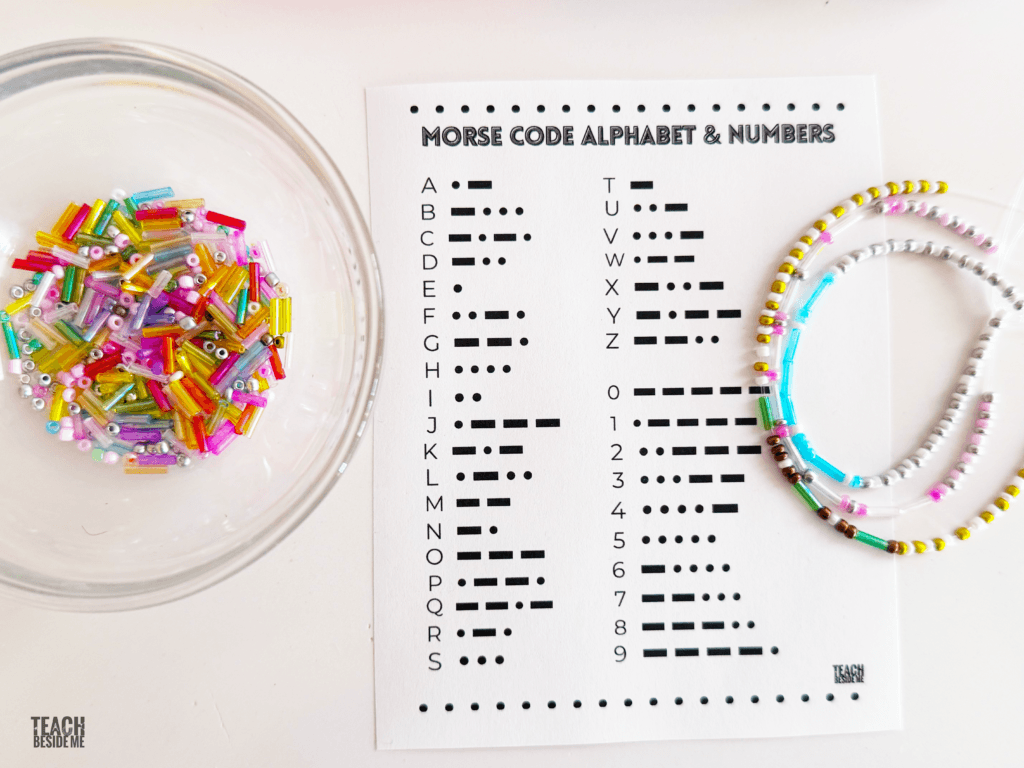
This printable chart shows every letter of the alphabet with its matching dots and dashes — perfect for reference, copywork, and secret message games.
Download your Morse Code Alphabet Chart Now!
Print a copy for your classroom, homeschool, or STEM center so kids can keep it handy while practicing their new coding skills.
Make Learning Morse Code Even More Fun!
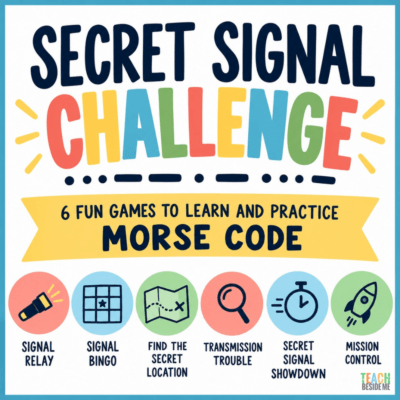
Ready to put your Morse Code skills to the test? My Secret Signal Challenge includes six printable games where kids can decode secret messages, solve mysteries, compete in code-breaking challenges, and explore STEM concepts!
Perfect for homeschool, classrooms, and family game nights.
Explore the 6 Morse Code Games!
How to Use the Morse Code Alphabet Chart
Here are some fun and hands-on ways to use the chart with kids:
1. Write Secret Messages
Have kids write notes using only dots and dashes, then trade and decode each other’s messages using the chart.
2. Tap or Clap
Use sound to send your message!
- Tap once for a dot (short)
- Tap twice quickly or hold for a dash (long)
This is a great way to practice listening skills and rhythm, too.
3. Flashlight Signaling
Head outside at night and send signals with flashlights:
- Quick flash = dot
- Longer flash = dash
Try sending short words, your name, or even the famous SOS (• • • – – – • • •) message in flashing light!
4. Craft a DIY Telegraph
Use paper, string, or a buzzer to create a simple working “telegraph” device.
Kids can practice sending coded messages through vibrations or sound — a perfect STEM + history tie-in project!
5. Make Morse Code Bracelets
Use string and beads to make your own Morse Code secret message bracelets.
Morse Code Translators
Today, there are many Morse Code translators online that can instantly turn typed text into dots and dashes, or play the tones as audio. Kids love experimenting with these — they can type their name or a secret word, click “Translate,” and see (or hear!) how it would sound in Morse.
However, using the printable chart helps build real understanding — kids can practice decoding messages manually and develop a sense for the timing and pattern of each letter.
Why Teach Morse Code?
Teaching Morse Code connects kids to history, technology, and problem-solving in one engaging activity.
It teaches:
- Pattern recognition and sequencing (STEM skills)
- Communication and decoding abilities
- Global understanding, since it’s used across countries and languages
- Focus and patience, as kids learn to “listen” for dits, dahs, and pauses
Learning Morse Code also sparks curiosity about how information is transmitted — from the first telegraph lines to the internet and beyond. It’s a reminder that all modern digital communication started with one brilliant idea: turning messages into code.
Did You Know? Morse Code Is International!
When the telegraph became popular, countries across Europe and North America started using Morse Code for fast communication. But different versions existed at first, so in 1851, international leaders met to create a single version called International Morse Code.
This global standard meant that a message sent from England could be decoded perfectly in France, Germany, or the United States. Those same international standards are still used today — in aviation, amateur radio, and maritime communication.
By the 1850s, the International Telegraph Union standardized the system so that ships, pilots, and radio operators everywhere could communicate clearly.
That same dot-and-dash code is still used today in aviation, maritime communication, amateur radio, and even space missions! Yes, astronauts have used Morse Code from space!
Learning Extensions
Keep the fun going with these related activities and resources:
- Read: Secret Coders by Gene Luen Yang or Samuel Morse and the Telegraph by David Seidman
- Play: Host a “Spy Training Day” lesson with invisible ink, decoding missions, and scavenger hunts.
This printable is great for:
- STEM or STEAM units
- Homeschool enrichment
- Scout badge activities
- Classroom early finisher bins
- Rainy-day learning fun
More Ways to Practice Morse Code
Once kids have learned the basics, it’s time to put their skills into action!
I created Secret Signal Challenge: 6 Printable Morse Code Games for Kids to make practicing Morse Code feel like an adventure.
From secret message relays and Morse Code Bingo to logic puzzles and creative STEM challenges, these activities are a fun way to take learning beyond the alphabet chart.
See the Printable Morse Code Games
Quick FAQ
Q: Is Morse Code still used today?
A: Yes! While it’s no longer common for everyday use, it’s still used by amateur radio operators, pilots, and ships at sea for backup communication.
Q: What are dits and dahs?
A: “Dits” are short signals (dots), and “dahs” are long ones (dashes). Together they form every letter of the Morse Code alphabet.
Q: Can Morse Code include punctuation?
A: Absolutely! Each punctuation mark has its own symbol pattern — for example, a period is • – • – • –.
Q: How long should the pause be?
A: A short pause separates letters, and a longer pause separates words. That spacing is what keeps messages clear and readable.
Q: Is Morse Code universal?
A: Yes — it follows international standards so people around the world can understand the same dots and dashes.
See Related Posts:
Try our Printable Decoder Wheels
Printable Braille Alphabet and Numbers Chart
Pigpen Cipher Chart (Free Printable Secret Code Alphabet for Kids)
NATO Phonetic Alphabet Chart (Free Printable)
Printable Greek Alphabet Chart: Uppercase & Lowercase Letters
Write Your Name in Egyptian Hieroglyphics
ASL Alphabet Printable Chart and Flashcards
Glowing Invisible Ink Secret Messages (Harry Potter Science)
In Flanders Fields: Symbol of the Poppy for Memorial Day