Pumpkin Life Cycle Activities + Printable
This post may contain affiliate links.

Fall is the perfect time to learn how pumpkins grow! From one little seed to a sprawling vine covered with flowers and finally a full-grown pumpkin, the pumpkin life cycle is fascinating for kids to watch.
My kids have always been fascinated by different kinds of life cycles, and I love adding hands-on activities to help them understand how living things grow and change.
For this pumpkin life cycle lesson, I created a set of printable pumpkin life cycle activities, and we also made an edible pumpkin life cycle snack. Pair these with a trip to the pumpkin patch or a few great pumpkin books for a simple fall science unit!

What Is the Life Cycle of a Pumpkin?
A pumpkin is a flowering plant. Its life begins with a seed, and under the right growing conditions that seed can eventually develop into a mature plant that produces pumpkins—and more seeds to begin the cycle again.
The basic stages of a pumpkin life cycle are:
1. Pumpkin Seed
The life cycle begins with a pumpkin seed. Seeds contain a tiny developing plant, or embryo, along with stored food that helps it begin growing.
2. Sprout or Seedling
With water, warmth, and the right conditions, the seed germinates. A root begins growing downward while a shoot grows upward toward the light.
The first leaves appear, followed by the plant’s true leaves.
3. Pumpkin Vine
The young pumpkin plant continues growing and develops long vines with large green leaves.
Pumpkin vines can spread surprisingly far! Tendrils help the plant anchor itself as it grows.
4. Pumpkin Flowers
Next, the pumpkin plant produces yellow flowers.
Pumpkin plants produce both male and female flowers. Pollen must be transferred from a male flower to a female flower for a pumpkin fruit to begin developing. Bees and other pollinators often do this important work.
5. Green Pumpkin
After successful pollination, the ovary at the base of the female flower begins to grow into a tiny pumpkin.
Young pumpkins are often green and gradually grow larger as the plant supplies them with water and nutrients.
6. Mature Pumpkin
As the pumpkin matures, many familiar varieties change from green to orange, although pumpkins can also mature in shades of white, yellow, green, blue-gray, and other colors depending on the variety.
Inside the mature pumpkin are seeds that can eventually grow into new pumpkin plants, allowing the pumpkin life cycle to begin again.
Pumpkin Life Cycle Printable
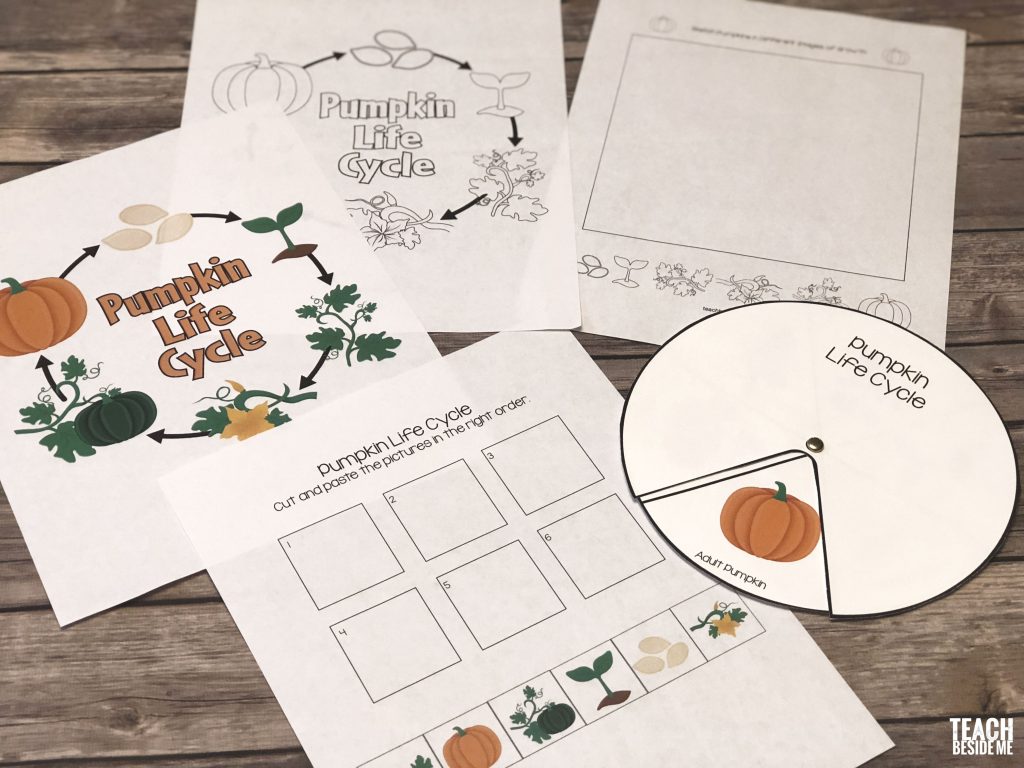
I created this Pumpkin Life Cycle Activities Set to help kids see and sequence the different stages of pumpkin growth.
The printable comes in both color and black-and-white and includes:
- Complete pumpkin life cycle
- Pumpkin seeds
- Young pumpkin plant
- Pumpkin vine and flowers
- Developing green pumpkin
- Mature pumpkin
- Cut-and-paste pumpkin life cycle
- Draw-your-own life cycle activity
- Pumpkin life cycle spinner
Kids can use the activities to identify, sequence, and review the different stages.
The Pumpkin Life Cycle Printable can by found in my shop here:

Make an Edible Pumpkin Life Cycle
One of my favorite ways to reinforce something we’re learning is with food!
We made an edible frog life cycle years ago, and my kids still remembered it long afterward. So naturally, we had to make an edible pumpkin life cycle, too.
I wanted ours to be a simple, healthy snack that could work at home or in a classroom.

Edible Pumpkin Life Cycle Ingredients
You’ll need:
- Pumpkin seeds
- 2 pieces of celery, preferably with leaves
- 1 green grape
- 1 orange
- 1 pretzel
Each food represents a different stage or part of the growing pumpkin plant.
How to Make It
Arrange the foods in a circle on a plate to show the life cycle.
Start with the pumpkin seeds.
Use celery to represent the growing green plant and vine. Add a green grape to represent the small developing pumpkin.
Finally, use an orange to represent the mature pumpkin and a piece of pretzel for its stem.
As kids build their edible model, have them name each stage and explain what happens next.
Then eat your science lesson!
Extend the Pumpkin Life Cycle Lesson
There are lots of easy ways to take this lesson beyond the printable.
Visit a pumpkin patch. Look closely at the vines, leaves, stems, flowers, and pumpkins. If you visit early enough in the season, you may be able to find pumpkins at several different stages of growth.
Cut open a pumpkin. Examine the skin, flesh, pulp, and seeds. Count the seeds or compare seeds from pumpkins of different sizes.
Save and plant the seeds. Clean and dry a few seeds for another growing experiment. If you’re studying pumpkins in fall, save them for spring planting.
Study pollination. Talk about why bees are so important to pumpkin plants and what has to happen before a flower can develop into a pumpkin.
Observe decomposition. Instead of throwing your pumpkin away after fall, put it outdoors in an appropriate spot and observe what happens as it decomposes. This is a great way to connect the pumpkin life cycle with decomposers and nutrient cycling.
Pumpkin Books We Love:
Today’s post is part of the Monthly Nature Book Club. We can’t have a book club post without some awesome book recommendations, right? Here are a couple of our favorite pumpkin/squash themed books.

The Pumpkin Runner by Marsha Diane Arnold
Too Many Pumpkins by Linda White
From Seed to Pumpkin by Wendy Pfeffer
Pumpkin Jack by Will Hubbell
The Pumpkin Book by Gail Gibbons
How Many Seeds in a Pumpkin by Margaret McNamara
More Pumpkin Activities for Kids
Trick or Treat Alternative: Halloween Pumpkin Hunt
Flannel Board Pumpkin Face Match
Pumpkin Fractions
Pumpkin Math: How Many Segments?
Autumn Science: Comparing Squash with Mrs. McNosh
Pumpkin Slime Science: A Fall Sensory Experiment for Kids
Also check out my Spider Life Cycle post!
More Fall Learning in the Autumn Learning Bundle
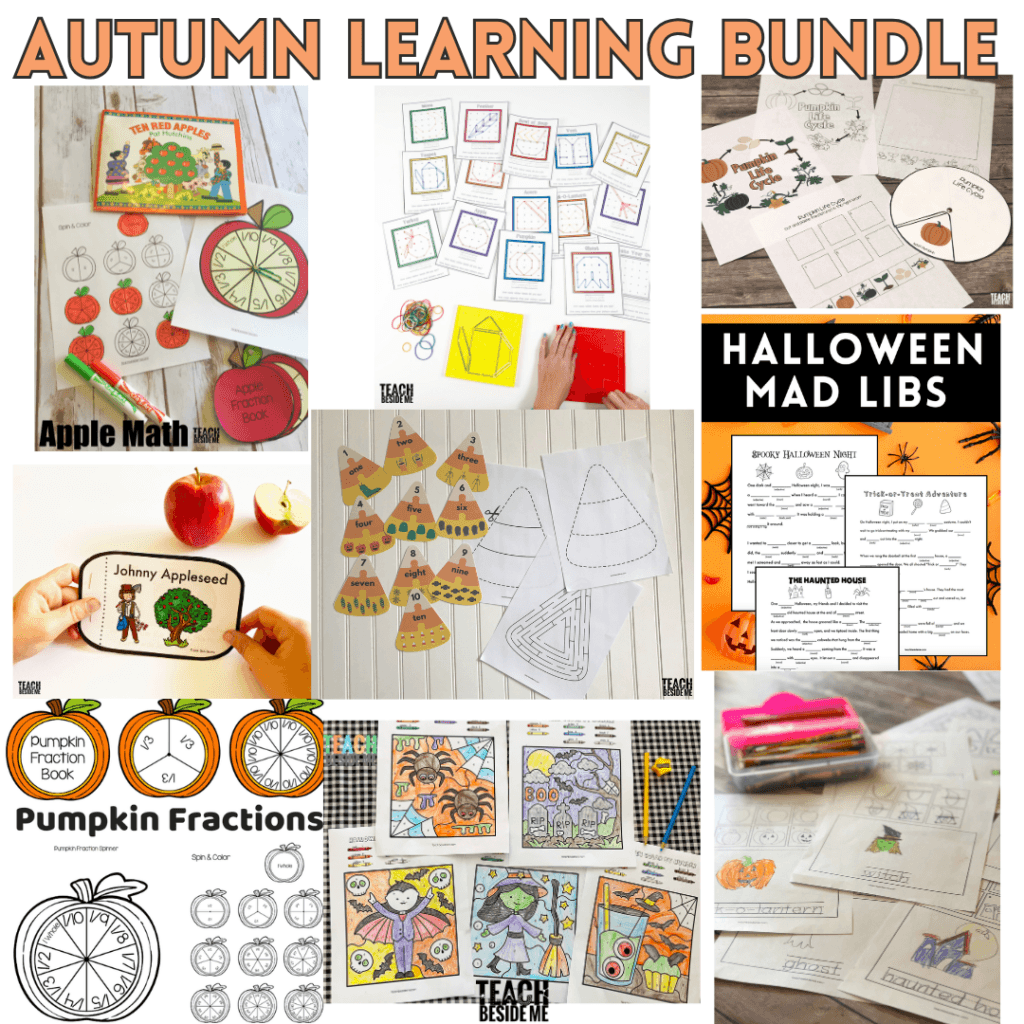
Planning more fall learning? My Autumn Learning Bundle brings together a collection of seasonal math, literacy, science, and hands-on learning resources in one discounted bundle- including this pumpkin life cycle!
It’s an easy way to keep the autumn learning going with ready-to-use activities for home or the classroom.