Best STEM Books for Kids: Science, Math, Engineering & Coding
This post may contain affiliate links.
Looking for the best STEM books for kids? There are so many wonderful books that introduce children to science, technology, engineering, and math in creative, engaging ways!
Some of our favorite STEM books tell the stories of famous scientists and inventors. Others are filled with experiments, building challenges, art projects, and activities that encourage kids to explore new ideas.
As a former teacher and homeschool mom, I’ve always loved using books alongside hands-on learning activities. A good book can introduce a fascinating concept, spark questions, and inspire kids to try something new.
I’ve collected some of our favorite STEM and STEAM books for elementary and middle school students, including books we’ve enjoyed reading together and resources we’ve used for hands-on projects.
I’ve also included two books I wrote to help kids explore science and math through art!

What Are STEM Books for Kids?
STEM stands for Science, Technology, Engineering, and Mathematics. STEM books introduce children to these subjects through stories, illustrations, experiments, activities, and real-world examples.
You may also hear the term STEAM, which adds Art to the traditional STEM subjects.
I especially love STEAM because it encourages children to see connections between subjects. Math can inspire beautiful artwork. Science can explain how colors mix or why a paper airplane flies. Engineering can become a creative building challenge.
The best STEM books don’t just give children information. They encourage curiosity, observation, creative thinking, and problem-solving.
Hands-On STEM and STEAM Activity Books
These are some of my favorite books for children who love to make, build, experiment, and create.
1. Math Art & Drawing Games for Kids by Karyn Tripp
I have to start with a book that is especially close to my heart because I wrote it!
Math Art & Drawing Games for Kids combines two subjects I love: math and art.
The book includes more than 40 creative art projects that help children explore mathematical concepts in a hands-on way.
Kids can create tessellations, explore symmetry, make geometric artwork, experiment with patterns, and discover how math appears in art and design.
Some of the activities include pixel art, mandala drawings, Fibonacci-inspired artwork, and even edible math projects.
I wanted to help children see that math is so much more than numbers on a worksheet. It can be creative, beautiful, and fun!
Best for: Ages 8 and up, especially children who enjoy art and hands-on math.

2. Science Art & Drawing Games for Kids by Karyn Tripp
My second book, Science Art & Drawing Games for Kids, explores the fascinating connections between art and science.
It includes more than 35 hands-on art activities that teach science concepts through creative projects.
Children can experiment with color and light, explore electricity and magnetism, create nature-inspired art, and investigate chemical reactions.
Projects include creating light-up cards, experimenting with magnets, making plantable seed paper, and growing crystal flowers.
I love helping kids discover that science isn’t limited to a laboratory. It’s happening all around us, including in the art materials we use and the things we create!
Best for: Ages 8 and up, especially creative kids who enjoy science experiments and art projects.
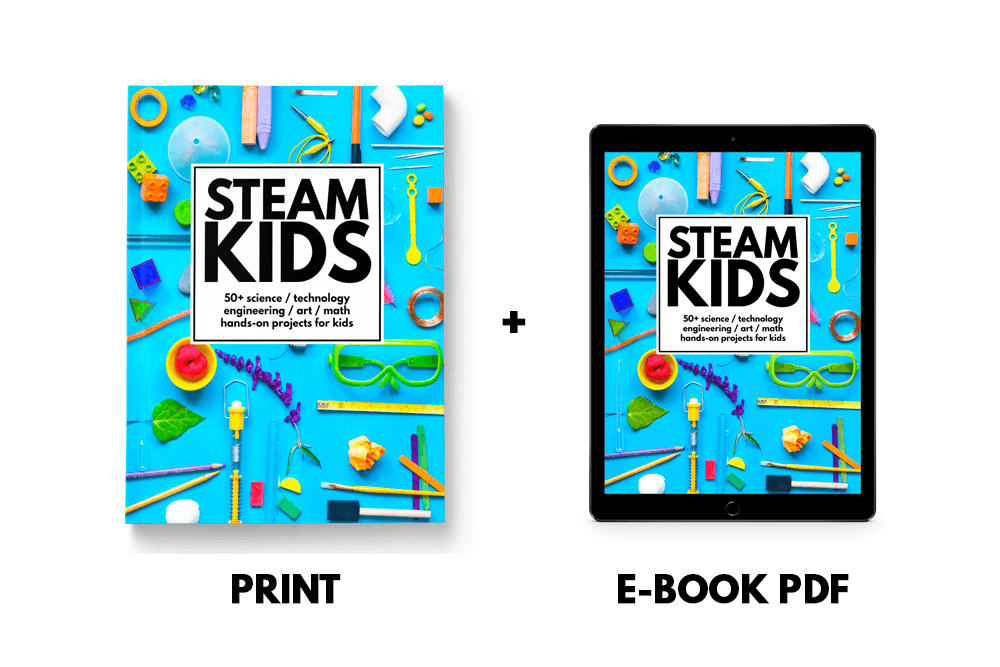
3. STEAM Kids: 50+ Hands-On Projects for Kids
This is another book I had the opportunity to co-author, along with a wonderful group of educators and creative bloggers.
STEAM Kids brings together hands-on projects that explore science, technology, engineering, art, and math.
It’s a great resource when you want an engaging activity to go along with a lesson or you’re looking for inspiration for a STEM learning day.
I especially love having a collection of projects available when my kids are ready to build, experiment, or create something new.
Best for: Families, homeschoolers, and teachers looking for hands-on STEAM project ideas.
4. Janice VanCleave’s Science Books
Janice VanCleave has written an extensive collection of books filled with science experiments and demonstrations for children.
We have used her books on chemistry, physics, and engineering, and they’ve been wonderful resources for hands-on learning.
Her books also cover topics such as biology, astronomy, and earth science.
These are particularly useful when you’re studying a specific science topic and want experiments to help children understand it.
Best for: Elementary and middle school science activities, with adult guidance appropriate to each experiment.
5. Bridges: Amazing Structures to Design, Build & Test by Carol A. Johmann
If you have a child who loves building things, this is a wonderful engineering book to explore.
Bridges introduces different types of bridges and encourages children to investigate how structures work through hands-on design and building activities.
We’ve tried some of the projects and really enjoyed them.
I love that bridge-building challenges naturally encourage children to test their designs, make changes, and try again.
Best for: Kids interested in engineering, construction, and building challenges.
STEM Books About Famous Scientists and Discoveries
I love introducing children to the people behind scientific discoveries. These books help kids see that science and mathematics have fascinating histories filled with questions, experiments, and new ideas.
6. Archimedes and the Door of Science by Jeanne Bendick
This is one of our longtime favorites!
Jeanne Bendick does a wonderful job introducing children to the ancient Greek mathematician and scientist Archimedes.
Through stories, illustrations, and explanations, children discover how Archimedes explored mathematical and scientific ideas.
My kids enjoyed this book so much that they wanted to read more from the same author.
Best for: Elementary and middle school students interested in the history of science and mathematics.
7. Along Came Galileo by Jeanne Bendick
Another favorite from Jeanne Bendick! This book introduces children to Galileo and his work in astronomy, physics, and mathematics. It’s a wonderful way to explore how careful observations and questioning accepted ideas can lead to new discoveries.
I especially enjoy pairing books like this with astronomy lessons or simple experiments.
Best for: Kids learning about astronomy, scientific history, and famous scientists.
8. Galen and the Gateway to Medicine by Jeanne Bendick
This book explores the life and work of Galen, an influential physician in the history of medicine. Like the other Jeanne Bendick books, it combines historical storytelling with illustrations and scientific ideas. It’s an interesting companion to a study of human anatomy or the history of medicine.
Because Galen lived in the ancient world, it’s also a good opportunity to discuss how scientific understanding changes as new evidence becomes available.
Best for: Older elementary and middle school students interested in anatomy and medical history.
9. The Storybook of Science by Jean-Henri Fabre
The Storybook of Science is a charming older book that introduces children to the natural world through stories and conversations.
We enjoyed reading it together as a family. It’s especially appealing if you enjoy a more literary approach to science education. Because it was written long ago, I recommend pairing it with modern science references where needed.
Best for: Family read-alouds and nature-loving children.
Math and Geometry Books for Kids
Math books can be so much more than workbooks! These favorites encourage kids to explore patterns, geometry, and mathematical thinking through creative activities.
10. This Is Not a Maths Book by Anna Weltman
This is such a fun book for children who love creative projects! It combines mathematical ideas with art and drawing activities, helping kids explore geometry, patterns, and design. I especially love books that help children see mathematical concepts in unexpected places.
This is a great choice for kids who enjoy art but might not immediately think of themselves as math lovers.
Best for: Creative elementary and middle school students.
11. Origami & Geometry by John Montroll
Origami is a wonderful way to explore mathematical concepts through hands-on learning. This book combines paper folding with geometric shapes and ideas.
Some of the projects can be challenging, so I would recommend it for older children or students who already enjoy origami. It’s a great example of how art and mathematics naturally overlap.
Best for: Older elementary students, middle schoolers, and origami enthusiasts.
Engineering, Technology, and Coding Books
These books help children explore how things work, from machines and technology to computer programming.
12. The Way Things Work by David Macaulay
This is one of those books children can spend hours looking through. David Macaulay uses detailed illustrations and explanations to help readers understand how machines and technologies work.
I love the way the illustrations make complicated ideas easier to visualize. It’s a wonderful book for curious kids who are always asking how things work!
Best for: Elementary through middle school readers who enjoy machines, inventions, and engineering.
13. The Way We Work by David Macaulay
Although this book focuses on the human body rather than machines, it’s another favorite in our home.
The detailed illustrations explain how different parts of the body function and work together.
It’s a wonderful resource for visual learners and makes a great addition to a human anatomy unit.
Best for: Older elementary and middle school students interested in biology and anatomy.
14. Help Your Kids with Computer Coding by DK
This book helped us introduce computer coding at home. We used it with my son, and it gave him a foundation for exploring programming further. I like that it explains coding concepts visually and provides guidance for getting started.
Keep in mind that coding tools and software change over time, so some specific instructions in older editions may need updating.
Best for: Beginners exploring computer programming, especially with a parent or teacher.
How to Choose STEM Books for Different Ages
The best STEM book depends on your child’s interests, reading level, and experience with the subject.
For younger elementary children: Look for books with engaging illustrations, simple explanations, and projects that can be completed with adult help.
For older elementary children: Try hands-on experiment books, illustrated science histories, math art activities, and beginner engineering challenges.
For middle school students: Explore more detailed science books, coding resources, challenging geometry projects, and books about scientific discoveries.
You don’t need to limit children to books that match their exact grade level. A fascinating picture-filled book can appeal to older kids, and younger children may enjoy listening to a more advanced book read aloud.
How to Use STEM Books for Hands-On Learning
I think books are most powerful when children can take the ideas they read about and do something with them.
Here are a few ways we like to extend STEM reading:
- Read and build: After reading about bridges or machines, challenge children to design their own models.
- Read and experiment: Pair a science book with a simple demonstration or investigation.
- Read and create: Use math art or science art projects to explore concepts through drawing and making.
- Read and discuss: Ask children what surprised them, what questions they still have, and what they would like to investigate.
- Read and research: Encourage older students to explore a scientist, invention, or topic in greater depth.
You don’t need expensive equipment or complicated lessons to make STEM learning meaningful.
Sometimes a great book, a few simple supplies, and an interesting question are enough to get started.
More STEM Activities for Kids
Looking for hands-on projects to go along with these books?
Explore my collection of Elementary STEM Projects for science, engineering, and math activities you can try at home or in the classroom.
You can also explore these related resources:
- Computer Coding for Kids
- Science Art & Drawing Games for Kids
- STEAM Kids: 50+ Hands-On Projects
- Fairy Tale STEM Activities Bundle for Kids
Encourage Curiosity Through STEM Books
One of my biggest goals as a parent and educator has always been to help children become curious, creative problem-solvers.
I want kids to feel comfortable asking questions, trying new things, and learning from their mistakes.
That’s what I love about STEM education. It gives children opportunities to investigate problems, develop ideas, and discover new possibilities.
Whether you’re reading about a famous scientist, experimenting with a new art technique, or building a bridge from simple materials, I hope these STEM books inspire lots of wonderful learning experiences in your home or classroom!