Water Filtration Experiment for Kids
This post may contain affiliate links.
Looking for a meaningful and hands-on science activity for kids? This water filtration experiment is a simple STEM project that teaches children about water pollution, clean water, and environmental science using everyday materials.
Kids will love building their own DIY water filter while learning how filtration systems work in the real world. This activity is perfect for Earth Day, summer science camp, homeschool science lessons, or environmental STEM units.
(See 200+ STEM Projects for Kids)
Why Teach Kids About Water Filtration?
Clean water is one of our planet’s most valuable resources. This experiment helps kids understand:
- how water can become polluted
- how filtration systems work
- why clean drinking water matters
- the importance of protecting our environment
We live in a desert state where water conservation is extremely important. Our water comes from mountain snow runoff that collects in reservoirs. During drought years, water shortages become a serious concern.
This experiment opened up great conversations with my kids about:
- water pollution
- conservation
- drought
- clean drinking water
- access to safe water around the world
Many people globally do not have reliable access to clean water, and contaminated drinking water can cause serious illness. This activity helps kids explore these real-world issues in a hands-on and memorable way.
Books About Water and the Environment for Kids
These books pair perfectly with this activity:
- The Magic School Bus at the Waterworks by Joanna Cole
- One Well: The Story of Water on Earth by Rochelle Strauss
- A Drop Around the World by Barbara McKinney
Water Filtration Experiment Supplies
You will need:
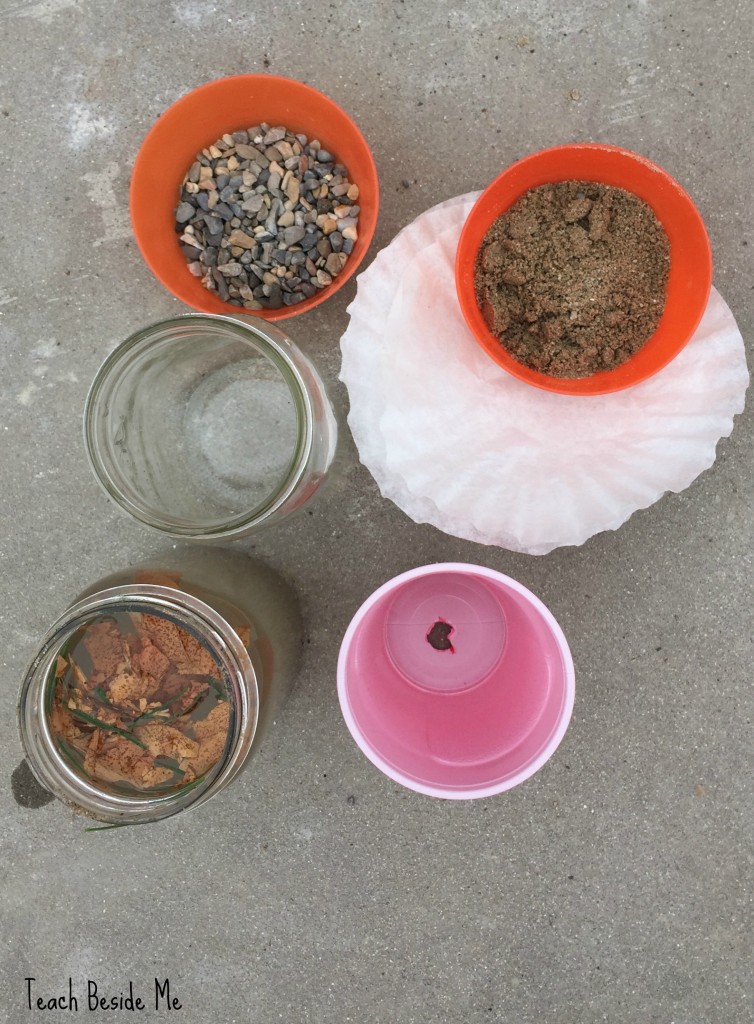
- 2 glass jars
- Sand
- Gravel or small rocks
- 3–4 coffee filters
- Dirty water
- Plastic cup with a hole cut in the bottom
Optional:
- Activated charcoal
- Cotton balls
- Water testing kit
How to Make a DIY Water Filter
Step 1: Collect Dirty Water
Start by collecting dirty water from outdoors. We gathered ours from a nearby pond, but you could also make muddy water at home.
Step 2: Build the Filter
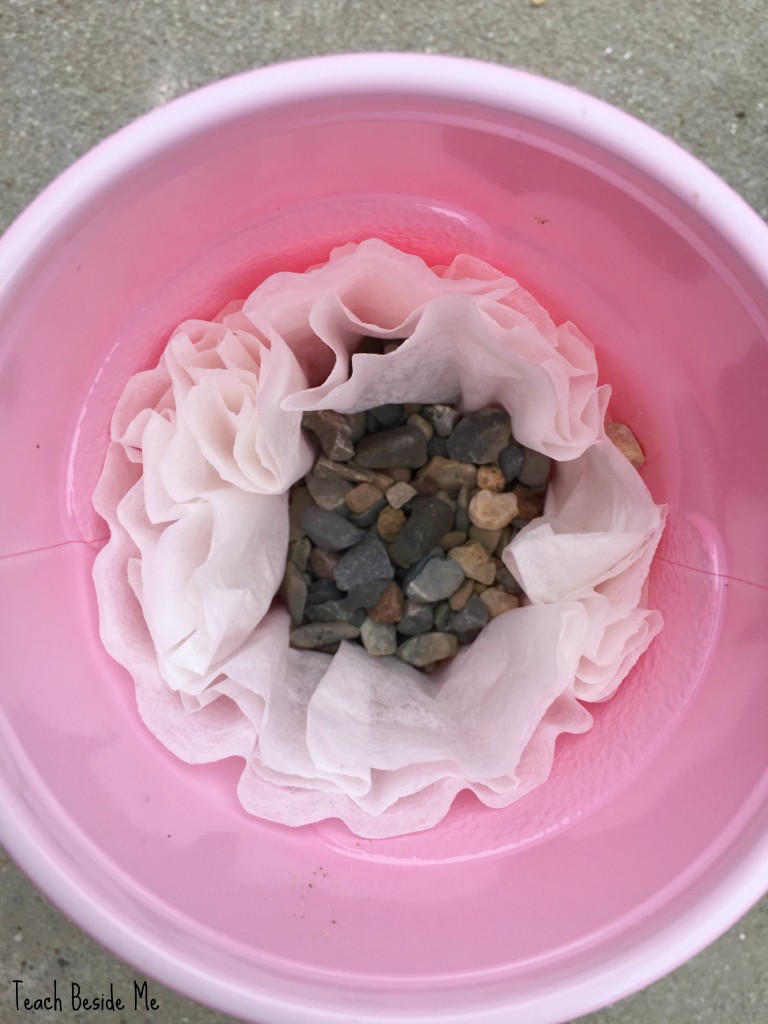
Place several coffee filters in the bottom of the plastic cup.
Add:
- A layer of sand
- A layer of gravel or small rocks
You can also experiment with additional filtering materials like cotton balls or activated charcoal.
Step 3: Filter the Water
Place the cup over an empty glass jar.
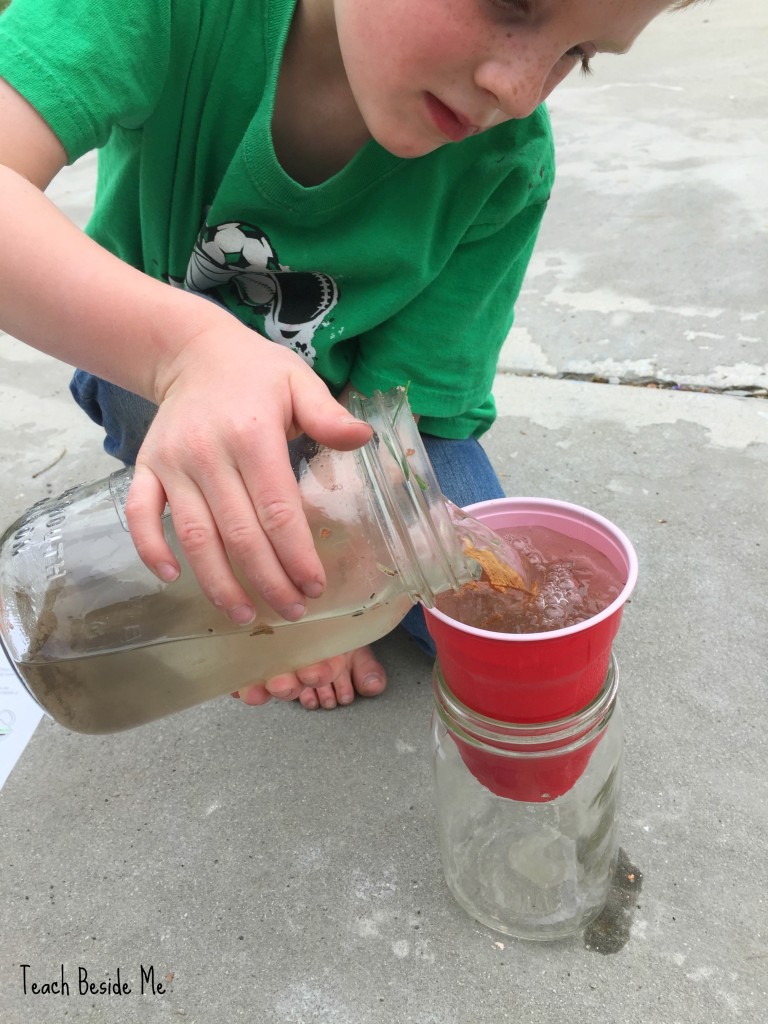
Slowly pour the dirty water into the filter and watch as it moves through the different layers.
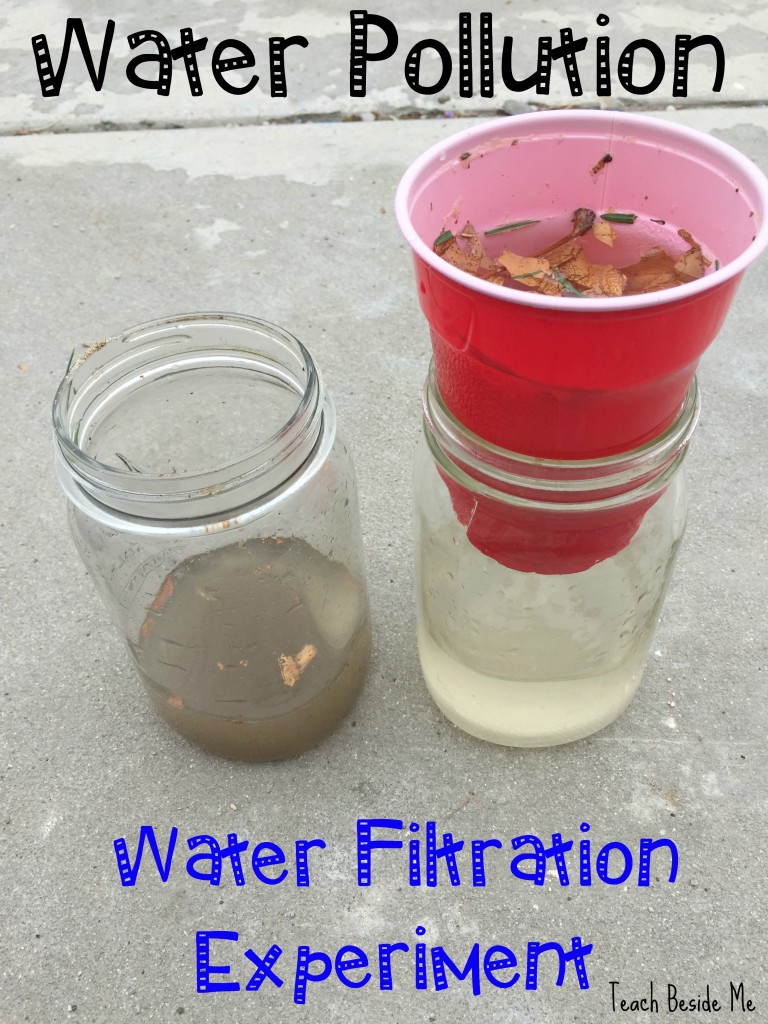
The gravel, sand, and filters help trap dirt and particles, making the water appear much cleaner!
Is the Water Safe to Drink?
Even though the water looks cleaner after filtration, it is still not considered safe to drink. Harmful bacteria, chemicals, and microscopic contaminants may still remain in the water.
This creates a great opportunity to discuss:
- water treatment plants
- boiling water
- purification systems
- survival water filters
- global access to clean water
Kids are often surprised to learn how much work goes into making water safe for drinking!

The Science Behind Water Filtration
This activity demonstrates how filtration systems remove particles and impurities from water.
Different materials trap different sizes of particles:
- Gravel removes larger debris
- Sand traps smaller particles
- Coffee filters catch fine sediment
Real water treatment systems use multiple stages of filtration and purification to help make water safe for human use.
This experiment also introduces important STEM concepts including:
- environmental science
- engineering design
- problem solving
- observation and experimentation
STEM Extension Ideas
Turn this activity into a full STEM investigation by experimenting with different filter materials and testing which works best.
Try:
- running the water through the filter multiple times
- adding activated charcoal
- testing muddy water vs. oily water
- filtering water with food coloring
- comparing different filter layer orders
Ask kids:
- Which material filtered best?
- Which particles were hardest to remove?
- What would improve your filter design?
- How do real water treatment systems work?
Grab the Free STEM Lab Sheet
Want to turn this into a complete STEM lesson?
Download my free printable STEM Lab Sheet to help kids:
- make predictions
- record observations
- sketch designs
- test variables
- think like scientists
It’s a simple way to add more critical thinking and scientific method practice to your hands-on science activities.
Part of the Backyard Summer Science Camp
This activity is also included in my Backyard Summer Science Camp — a collection of hands-on STEM projects, outdoor science activities, and printable learning pages designed to make summer learning fun and easy.
Perfect for:
- homeschool families
- summer enrichment
- camps
- classrooms
- bored kids on hot afternoons
If your kids love hands-on science, be sure to check it out!
More Earth Day and Environmental STEM Activities
You may also enjoy:






Cool! My kids would love this idea. (We live in a drought prone area too). Thanks for the book recommendations too, I’ll check them out.
wow thank you for this awsome project
CUTE!! 🙂
Do you have any suggestions on substitutes for pond water, sand, and gravel?