Weighing with Pennies: A Hands-On Math Activity for Kids
This post may contain affiliate links.
Looking for a simple and fun way to teach young children about weight, measurement, and estimation? Try this engaging penny weighing activity using a balance scale and your child’s favorite toys!
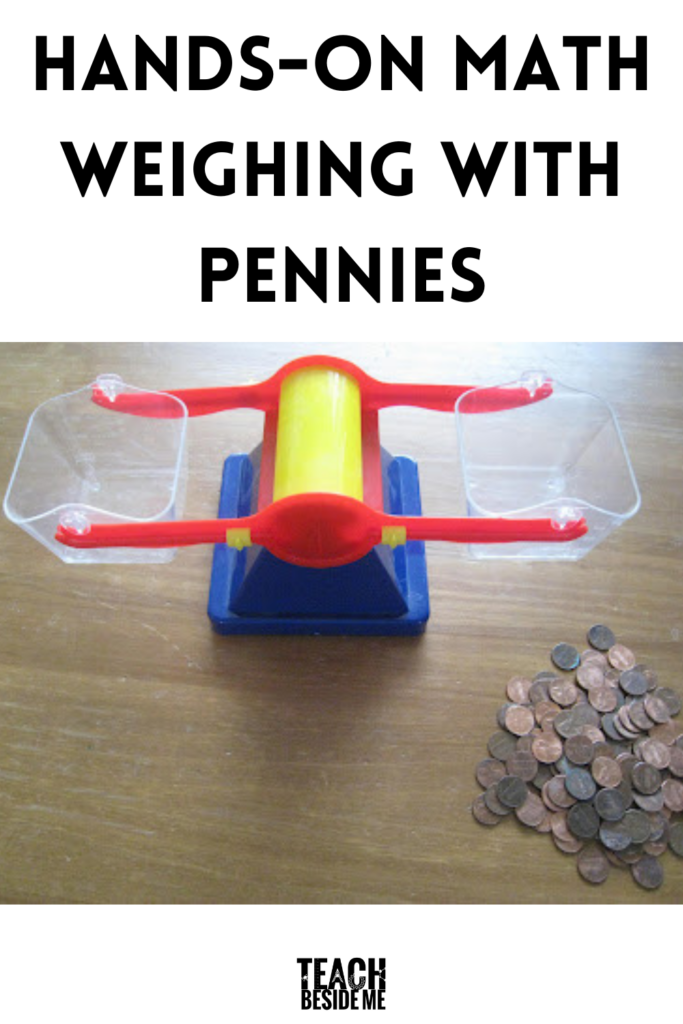
This weighing with pennies hands-on activity is perfect for preschool, kindergarten, and early elementary students who are just beginning to explore non-standard units of measurement.

Why Use Pennies for Weighing?
Using pennies as a non-standard unit of measurement is a great way to introduce kids to the concept of weight. It’s tactile, interactive, and helps children understand how objects compare in heaviness—without needing to read numbers on a scale.
Plus, pennies are fun to stack and count, so your little learners will be building math skills as they go!
What You’ll Need
-
A balance scale (bucket-style balances work great)
-
A pile of pennies (or any small consistent item like LEGO bricks, mini erasers, or counting bears)
-
A variety of small toys or classroom objects
-
A recording sheet or graph paper (optional)

How to Set Up the Weighing with Pennies Activity
1. Gather a Selection of Toys
Choose lightweight toys of various sizes—small cars, blocks, stuffed animals, action figures, etc.
2. Introduce the Concept
Explain to your child that they’ll be finding out how many pennies each toy weighs by placing them in one side of the balance and adding pennies to the other side until it’s balanced.
3. Make Predictions
Before weighing, ask your child to guess how many pennies each item will weigh. This helps develop estimation and critical thinking skills.
4. Start Weighing
Place the toy in one bucket of the scale and begin adding pennies to the other side until the scale is balanced. Count the pennies and record the result.
5. Graph the Results
Create a simple bar graph showing how many pennies each toy weighed. This turns your activity into a great opportunity to talk about data collection and interpretation.

Learning Concepts Covered
-
Non-standard measurement
-
Estimation and prediction
-
Comparison and ordering by weight
-
Counting and number sense
-
Data recording and graphing
This activity aligns with early math standards and is a great foundation before introducing rulers, scales, or standard units like grams and ounces.
Fun Extension Ideas
Penny Estimation Jar
Fill a jar with a mystery number of pennies and let kids guess the total, then count together.
Heavier or Lighter Sorting
Sort toys into two groups: heavier than 30 pennies and lighter than 30 pennies.
Use Graph Paper
Have older children use actual graph paper to create a bar chart or pictograph of the results.
Measurement Challenges
“Can you find something that weighs exactly 25 pennies?” Challenge your child to experiment and see!
Weighing with pennies is a fantastic way to combine math, science, and play. It encourages curiosity, hands-on learning, and problem-solving—all without needing any fancy supplies. Plus, it’s a great screen-free activity that works well for homeschool or classroom settings.
So go grab a pile of pennies and start weighing! You might be surprised which toy turns out to be the heaviest—just like George was for us!
Try More Hands-On Math Activities!
60 Elementary Hands-On Math Teaching Ideas





This is great! Hmm . . . I need to find a scale . . .
What fun! Thanks for linking this idea up at Favorite Resources 🙂
Really nicely child friendly and easy for others to replicate, thanks so much! Carolyn
This is so cool! Where did you find your scale? I pinned this post! Thanks for sharing it on Teach Me Tuesday!
Thanks for linking up with Thinky Linky Thursday. I am now a new follower!
Lori @ Cachey Mama’s Classroom
What a fun idea! I found your link off of Artsy Mama, and noticed you’re a fellow Utahn. Whoot!
~Natalie
Holla! We’re your newest followers! 🙂
Great idea … now I just have to find a scale. Every time I come close to purchasing one I back off since they tend to be so expensive. Thanks for linking up this week to my Enchanted Thursdays Blog Hop!
We have this scale, and my 5 year old loves it. We will have to try this the next time he wants to play with it.
This is great! We need a scale! I love how you used pennies as your standard of measurement.
I love your scale!!!
Pennies are a great way to introduce kids to weights and measures!
Thanks so much for sharing this post with Learning Laboratory at Mama Smiles =)
What a neat idea! We really need to get a scale! Thanks for sharing with Brag Time Thursday!
We have that same scale!! What a fun activity! Thanks for linking up to TGIF! Have a great week & I’ll see you Friday =-)
Beth
awesome idea! i bet your kids did not even realize they were learning 🙂