Easter Egg Volcanoes Science Experiment for Kids
This post may contain affiliate links.
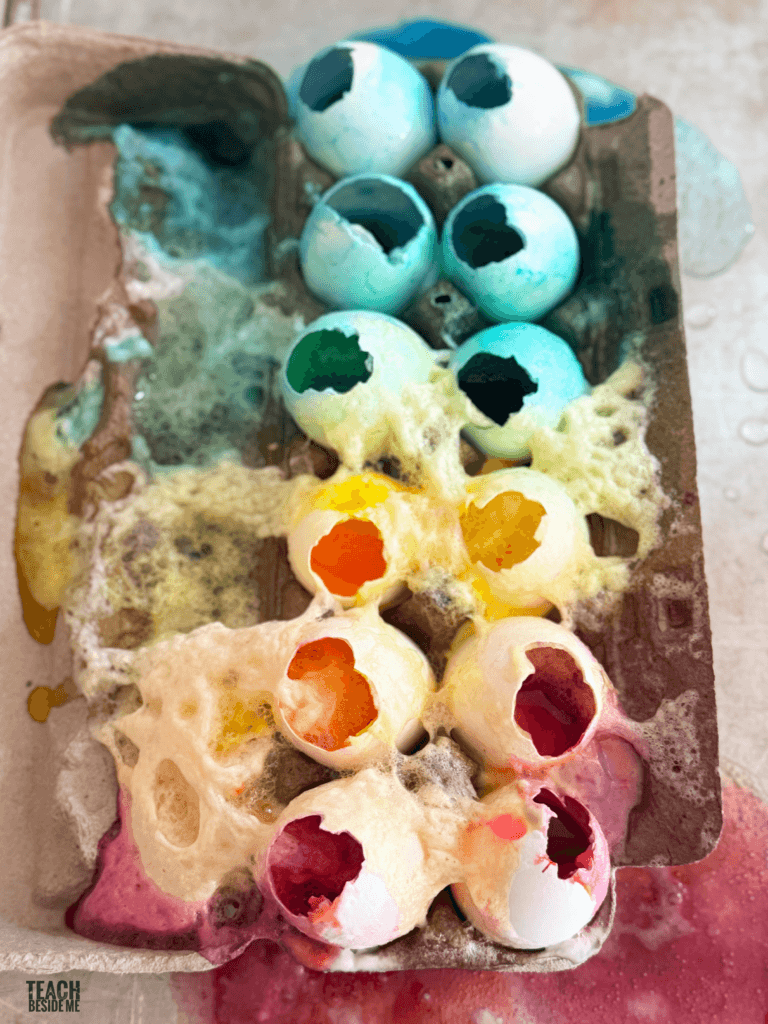
If you’re looking for a fun and simple Easter science activity, these Easter Egg Volcanoes are such a hit! This experiment combines the classic baking soda and vinegar reaction with colorful eggshells to create mini erupting volcanoes.
It’s hands-on, a little messy (in the best way), and a great way to explore chemical reactions in a way kids can see and enjoy.
What Are Easter Egg Volcanoes?
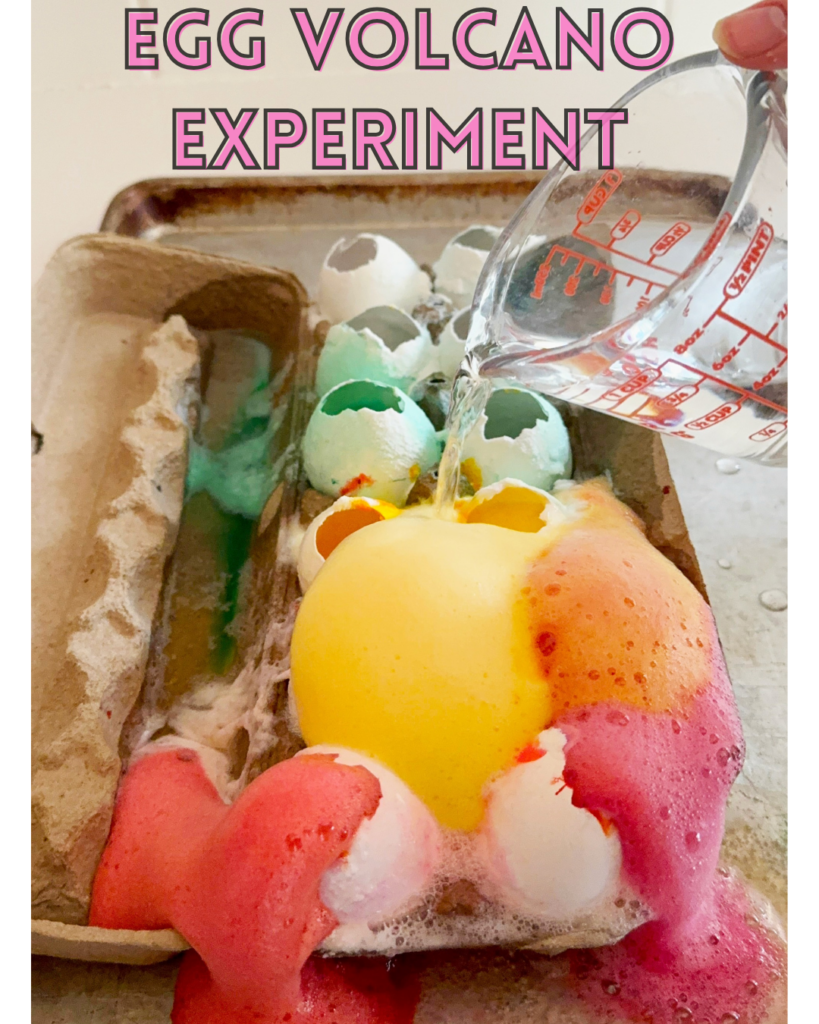
Easter Egg Volcanoes are made by using real eggshells as tiny “volcano craters.” When you add baking soda and vinegar, the eggs erupt with colorful, fizzy foam!
Each egg becomes its own mini science experiment—and when you line up several together, it looks like a whole field of erupting volcanoes.
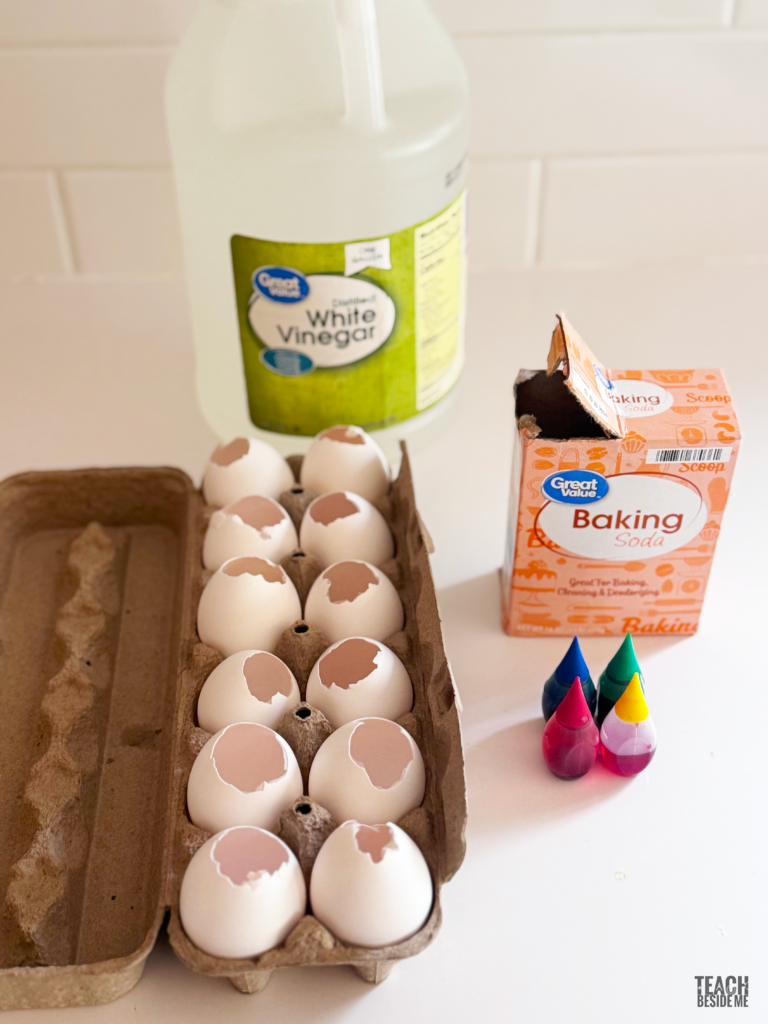
Supplies You’ll Need
- Eggs (empty shells)
- Baking soda
- Vinegar
- Food coloring
- Spoon
- Dropper, pipette, or small cup
- Tray or rimmed baking sheet
How to Prepare the Eggshells
To get that classic volcano shape, you’ll want to empty your eggs first.
- Gently tap the top of the egg to create a small hole, pull out extra pieces.
- Pour out the contents into a bowl
- Rinse out the eggs.
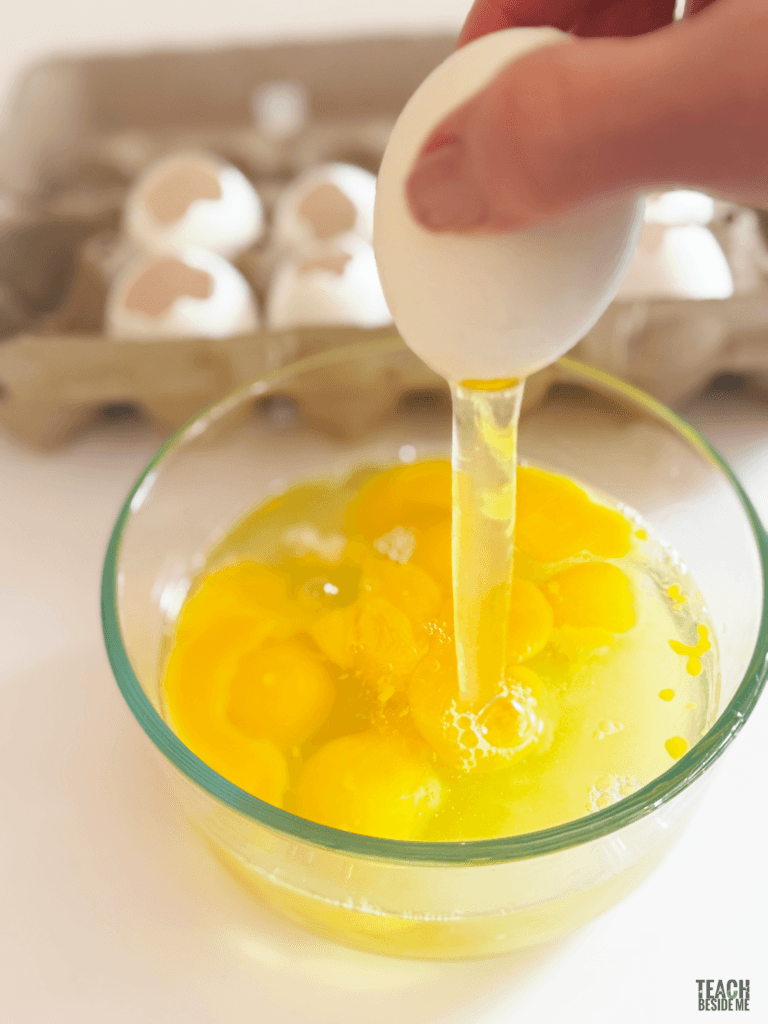
This keeps most of the shell intact and gives a perfect “crater” shape. Keep the eggs to make breakfast tomorrow!
Optionally you could crack eggs in half and use the bottom halves This works great too and is slightly easier.
Watch it in action!
How to Make Easter Egg Volcanoes
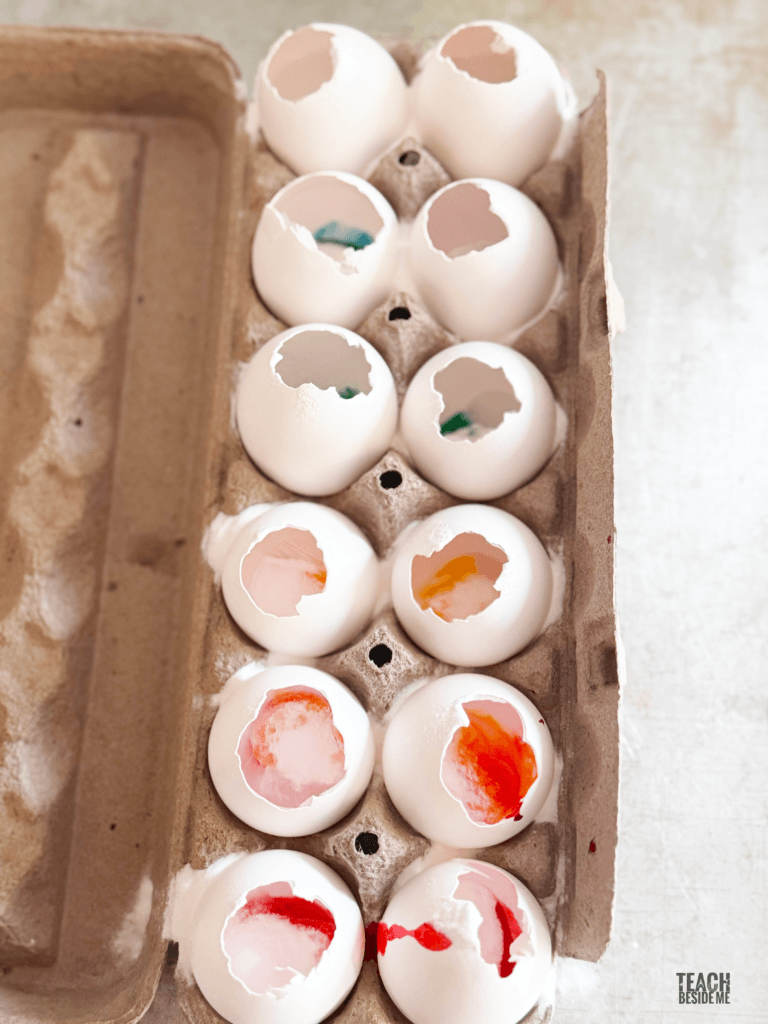
- Place your eggshells back into the carton and put it onto a tray to catch overflow.
- Add baking soda. Give each eggshell about a spoonful.

- Add color. Drop a few drops of food coloring directly onto the baking soda.
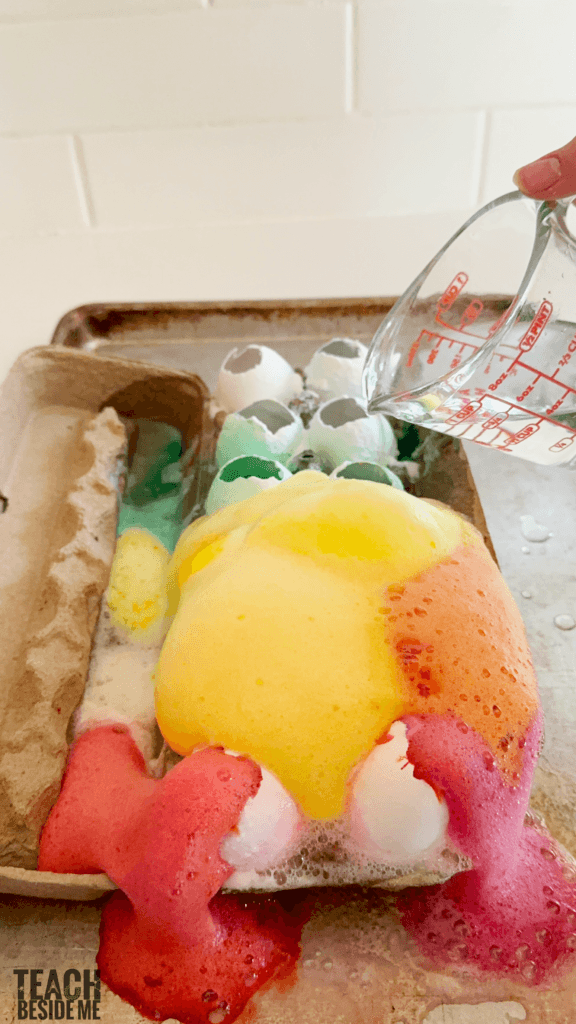
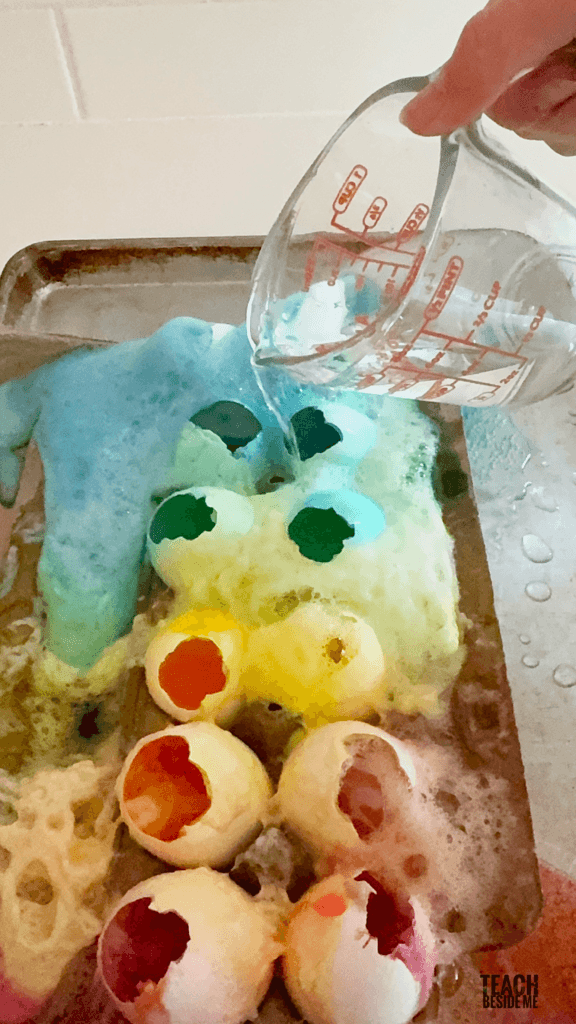
You can use one color or mix a few for a fun effect. - Pour in vinegar. Slowly add vinegar using a dropper or small cup.
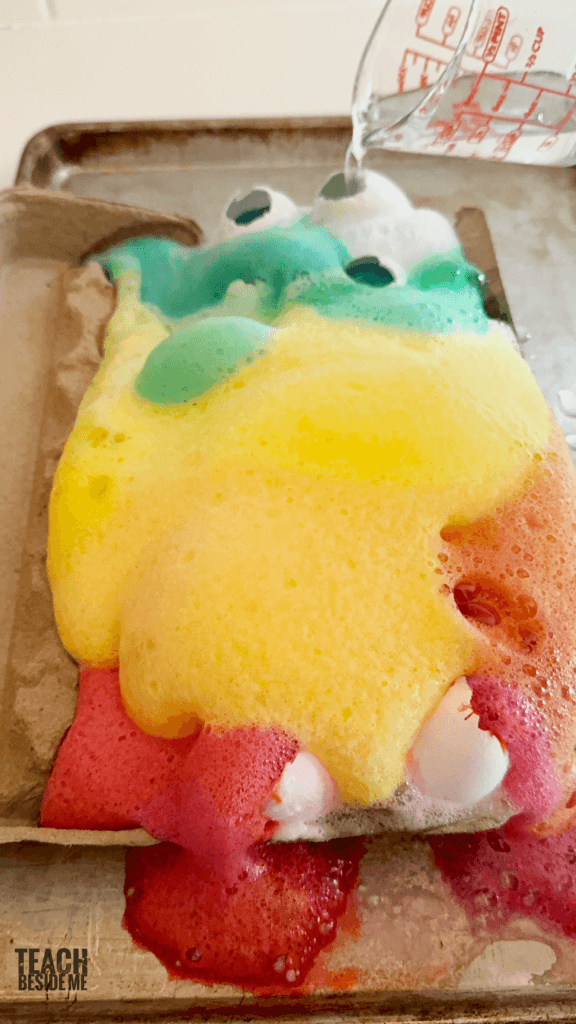
- Watch the eruption! The eggs will fizz, bubble, and overflow with colorful foam.
- Do it all over again!
What’s the Science Behind It?
This activity is a classic acid-base reaction:
- Baking soda is a base
- Vinegar is an acid
When they combine, they create carbon dioxide gas (CO₂).
This gas forms bubbles, which push the liquid up and out of the eggshell—just like a volcano eruption!
Tips for Success
- Don’t overfill with baking soda—too much can dull the color
- Use droppers or pipettes for more control (and better visuals)
- Try multiple colors in one egg for a marbled effect
- Do this on a tray or outside for easy cleanup
Learning Extension Ideas
- Have kids draw what they observe before and after the eruption
- Measure how long each volcano erupts
- Compare different “recipes” and record results
- Connect to real volcanoes and how pressure builds before an eruption
Why We Love This Activity
This is one of those activities that’s:
- Simple to set up
- Engaging for a wide range of ages
- Easy to repeat with different variations
And the colorful eggs make it feel just right for spring and Easter.
https://youtube.com/shorts/tDJYb5_Lqu8?feature=share
Try More Volcano Experiments:
- Apple Volcano Experiment into Baked Apples- Autumn Science
- How to Make a Lemon Volcano Science Experiment
- How to Make an Awesome Volcano Science Project
More Fun Easter Ideas:
- Printable Easter Family Feud Game
- Easter Science: Borax Crystal Eggs
- How to Make Easter Egg Pom-Pom Poppers
- Paper Spinning Easter Egg Craft