
The Ultimate Guide to Hundred Chart Math Activities for Kids
This post may contain affiliate links.
If you need hundred chart math ideas, you have come to the right place!
Hundred charts are a powerful and versatile tool for teaching number concepts. Whether you’re working with preschoolers learning to count or early elementary students diving into addition, multiplication, or number patterns, a hundred chart offers endless interactive learning opportunities.

In this guide, you’ll find over 30 fun and educational hundred chart math activities designed to build foundational math skills in a visual and engaging way. You’ll also discover printable resources, educational benefits, creative game ideas, and how to use manipulatives like math cubes to deepen understanding.
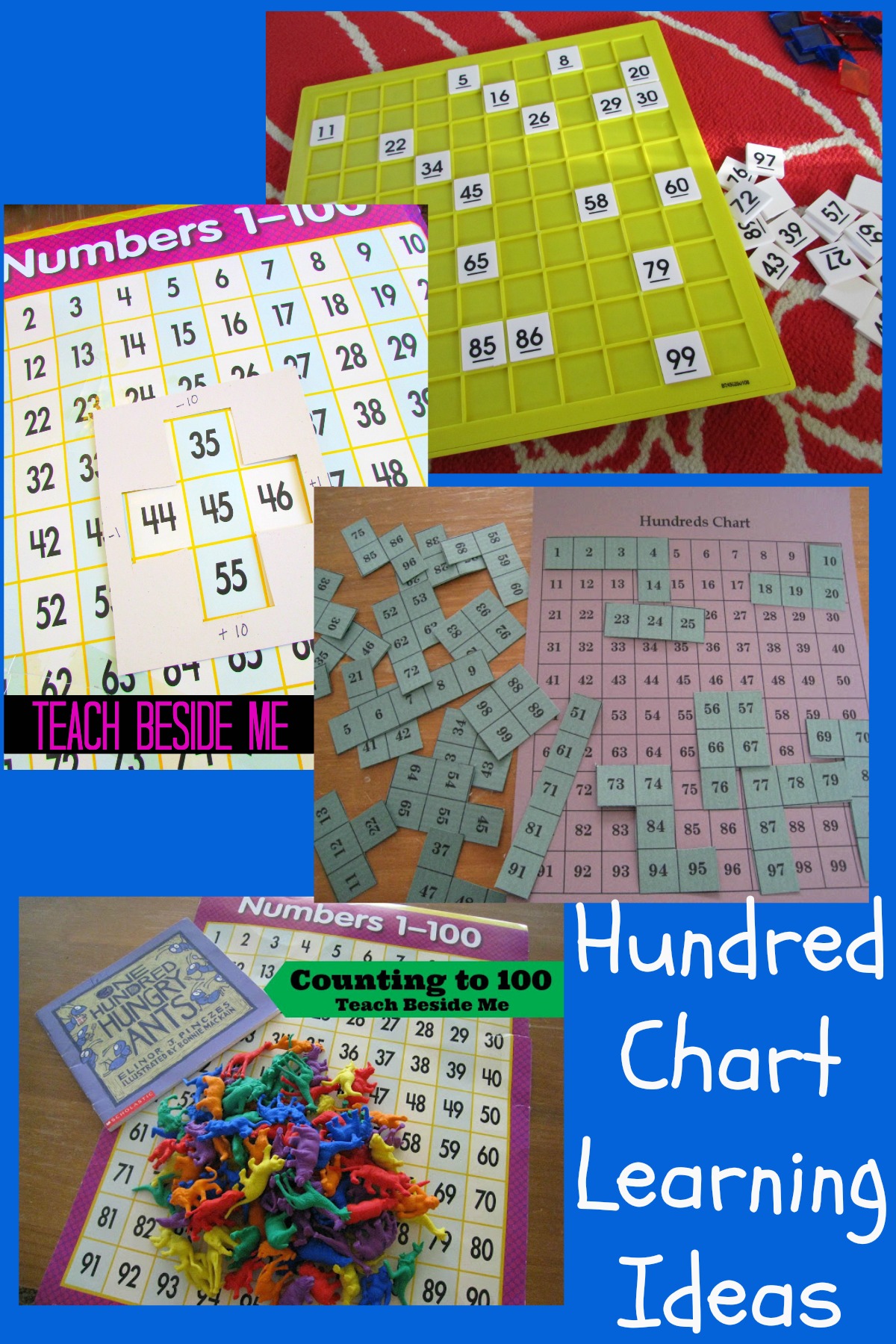
What is a Hundred Chart?
A hundred chart is a grid of numbers from 1 to 100 arranged in 10 rows and 10 columns. It’s commonly used in classrooms and homeschools to teach:
-
Number recognition
-
Counting to 100
-
Skip counting (by 2s, 5s, 10s)
-
Place value
-
Addition & subtraction
-
Multiplication & division
-
Patterns and sequencing
You can use a traditional hundred chart or try blank charts, interactive apps, or life-sized versions!
Why Use a Hundred Chart for Math?
Using hundred charts for math instruction offers many educational benefits:
-
Builds number sense and numerical fluency
-
Helps children recognize number patterns visually
-
Strengthens understanding of place value
-
Encourages mental math strategies
-
Supports differentiated instruction for various learning styles
Hands-On Hundred Chart Math Activities
1. Counting to 100
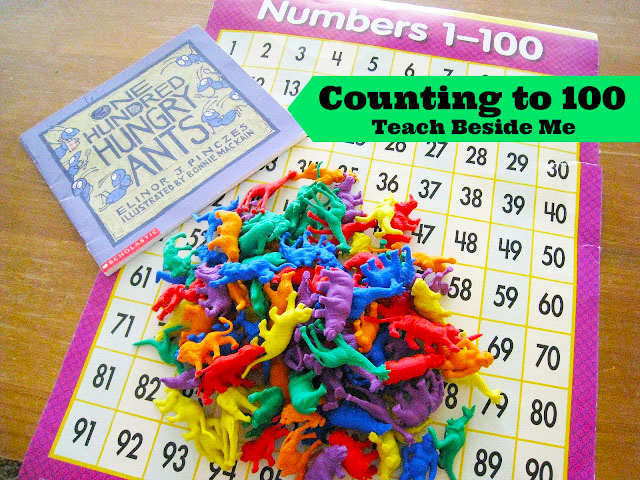
Use a filled-in chart to help children count aloud. Add songs or actions for even more engagement. Laminate your chart and use counters or dry-erase markers. See My Counting to 100 post. Use small toys, food (cheerios, m&m’s, etc), or a dot marker to count on a hundred chart.
2. Blank Chart Fill-In
Challenge kids to fill in a blank hundred chart. Use clues or have them count by 1s, 2s, 5s, or 10s. Grab my Printable Fill In the Blank Hundred Charts.

3. Skip Counting
Color-code the numbers on a hundred chart to show skip-counting patterns. Count by:
-
2s for even numbers
-
5s to learn half-way points
-
10s for decades and place value
Check out my Skip Counting to 100 Song Video :
4. Number Flowers
Pick any number (e.g., 27) and write the numbers that appear above, below, and beside it on the chart. The result is a flower-like shape and helps reinforce number relationships.
5. Multiplication Discovery
Use math cubes to form equal groups (e.g., 5 x 4 = 20). Place cubes on a hundred chart to visualize multiplication facts.
6. Race to 100 Dice Game
Roll dice and move a marker that many spaces. First to reach 100 wins! Great for number fluency and addition. Print My Race to 100 Game Here!
7. What Number Am I?
Give clues: “I’m greater than 30, but less than 40. My ones digit is 2.” Children use the chart to guess the secret number.
8. Bingo with the Hundred Chart
Call out random numbers and have kids mark them on a laminated chart until they get five in a row.
9. Number Patterns
Color or highlight multiples of any number to discover diagonal and repeating patterns. Hundred boards are wonderful for this!
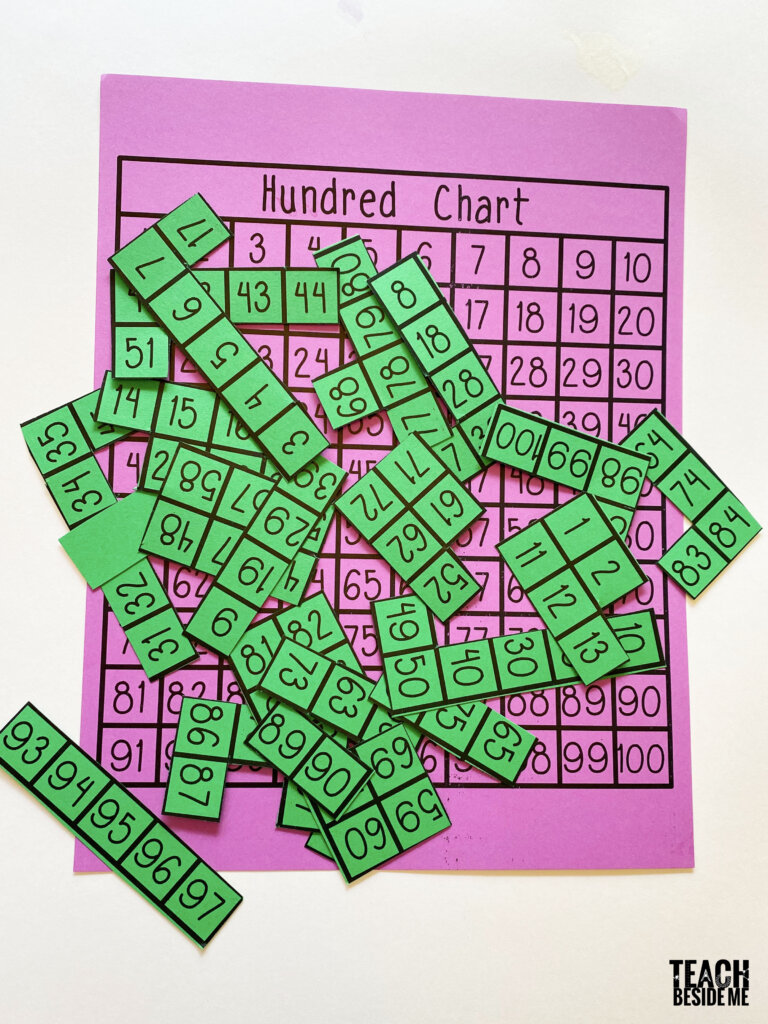
10. Hundred Chart Puzzle
Cut up a laminated hundred chart into pieces and use it as a puzzle. Let kids rebuild the chart by using number clues. Grab my Printable Hundred Chart Puzzle Here!
Fun Hundred Chart Games
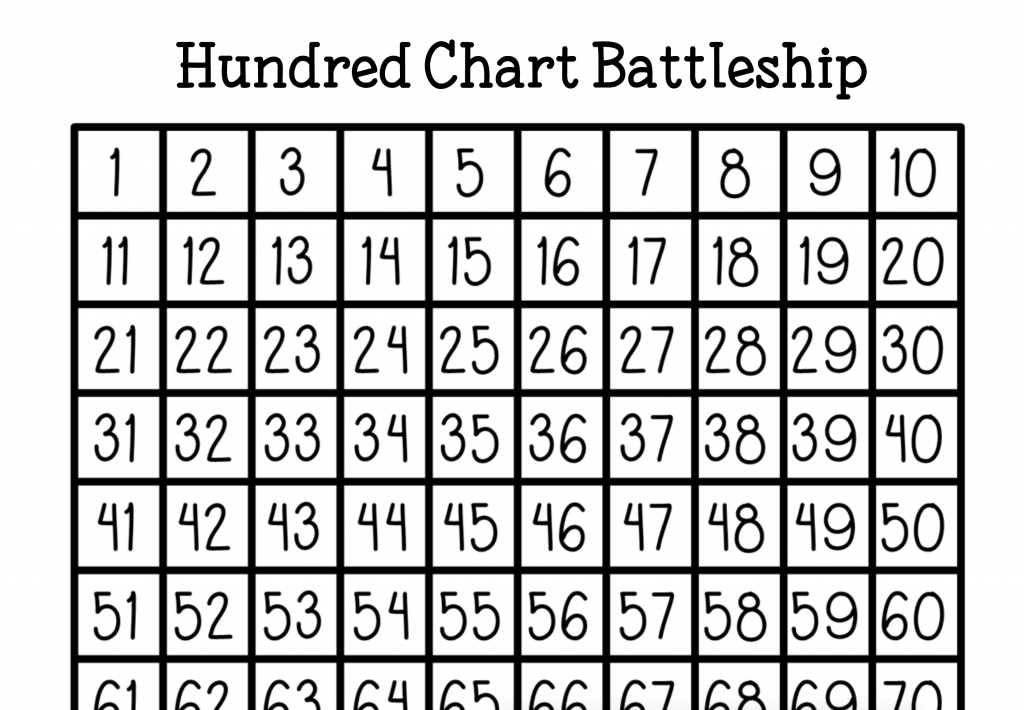
Hundred Chart Battleship
Use printed charts, candy hearts or counters, and dividers. Players hide their “ships” and guess coordinates. This fun twist builds number recognition and strategy! Find my Hundred Chart Battleship Game Here.
How Many to 100?
Pick any number (like 37) and have kids figure out how many more to reach 100. Practice subtraction and complements to 100.
Plus/Minus Ten Game
Pick a number and find the number 10 more or 10 less. Use a “T-square” cutout to help kids see vertical changes on the chart.
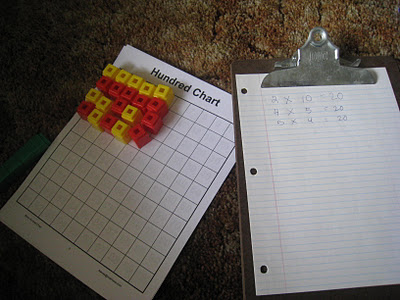
Math Cubes & Hundred Chart Combos
Use Unifix or snap cubes with the hundred chart to explore:
-
Rows and columns (e.g., 10 cubes in a row = 10)
-
Multiplication (e.g., 4 rows of 5 = 20)
-
Grouping and arrays
-
Sorting and classifying (e.g., even vs. odd stacks)
Higher-Level Thinking Activities
-
Rounding Practice: Find a number and round it to the nearest 10.
-
Interactive Online Charts: Use sites like ABCya or Soft Schools to manipulate digital hundred charts.
-
Dry Erase Poster Board: Make your own with lamination or poster plastic.
Life-Size Hundred Charts
Bring the hundred chart to life:
-
Draw it outside with sidewalk chalk
-
Create a giant version on a shower curtain or table cloth
- Print this paper one with one number per page.
-
Use it to play movement games, like “Jump to the Next Ten”
Creative Ideas to Extend Learning
-
Hidden Objects Game: Number 100 small items (like stickers or Hershey kisses), hide them, and have children place them on a giant chart as they’re found.
-
Interactive Apps: Try apps like Montessori Hundred Board or Eggy Numbers to 100.
-
Math Challenges: Use color-by-number printables based on multiples or prime numbers.
- Count Money: Use coins on a hundred chart to learn money and counting at the same time!
Hundred charts are more than a worksheet—they’re a powerful visual and kinesthetic tool for building number sense, encouraging exploration, and making math fun. Whether you’re teaching in a classroom or at home, these ideas can bring a fresh twist to your math lessons. I hope you have found some ideas that will help you in your teaching!





Great roundup of hundreds chart activities, Karyn!! Sharing.
Here’s a post sharing how to teach skip counting with a hundreds chart:
http://www.playdoughtoplato.com/2013/09/26/hundreds-chart-part-2-counting-by-10s/
What an amazing round-up of ideas! I love them. Thank you also for participating in the 100th day of school blog hop. Here’s an old post of mine that integrates spelling and the 100 board–>
http://thisreadingmama.com/2012/02/01/free-printable-hundred-board-spelling/
I think this is a great roundup of 100th day activities for the 100 chart! Love every idea!
Thanks for all the great ideas – I especially love the cut outs so you can see the number before, after, 10 above, and 10 below! Thanks for joining us with the hop!
This is a fantastic collection of ideas!
Thank you for stopping by the Thoughtful Spot Weekly Blog Hop this week. We hope to see you drop by our neck of the woods next week!