LEGO Earthquake Simulation: A STEM Earthquake Experiment for Kids
This post may contain affiliate links.
Want to teach your kids about earthquakes in a memorable, hands-on way? Build a LEGO city and shake things up with this simple earthquake simulation! This exciting STEM activity introduces kids to engineering, city planning, and geology all at once.
What Kids Learn from This:
-
What causes earthquakes and how they impact buildings
-
Basic principles of structural engineering and design
-
Observation, hypothesis testing, and analysis
-
Cause and effect through interactive science
The Science Behind The LEGO Earthquake Simulation:
Earthquakes happen when tectonic plates beneath the Earth’s crust shift and release energy. This energy travels as seismic waves, shaking the ground—and anything built on it. In this experiment, we simulate seismic activity by mimicking those vibrations and testing how different LEGO structures hold up.
We live along one of the largest fault lines, so earthquakes are a very real threat to our area. We had one a few years back and it’s definitely scary! I thought learning about earthquakes with my kids would be a good thing, too.
How to Create a LEGO Earthquake Simulation
Supplies:
-
LEGO bricks and baseplates
-
A smooth, movable surface (like a tray or board)
-
Marbles, ping pong balls, or small wooden balls
-
Optional: ruler, notebook for observations
Instructions:
Build Your LEGO City:
- Set up a LEGO baseplate on a large tray or board.
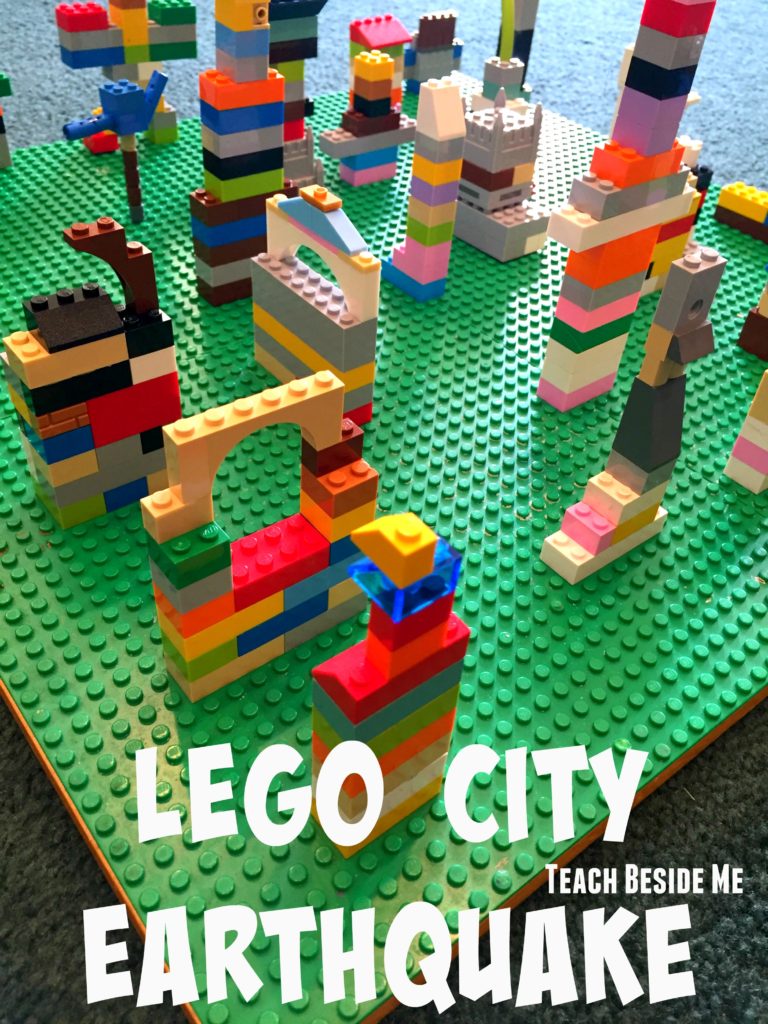
- Have your kids build a variety of structures: tall towers, wide buildings, skinny ones, and short, sturdy ones.
- Encourage creativity and diversity in structure design.
Create the Earthquake Simulation:
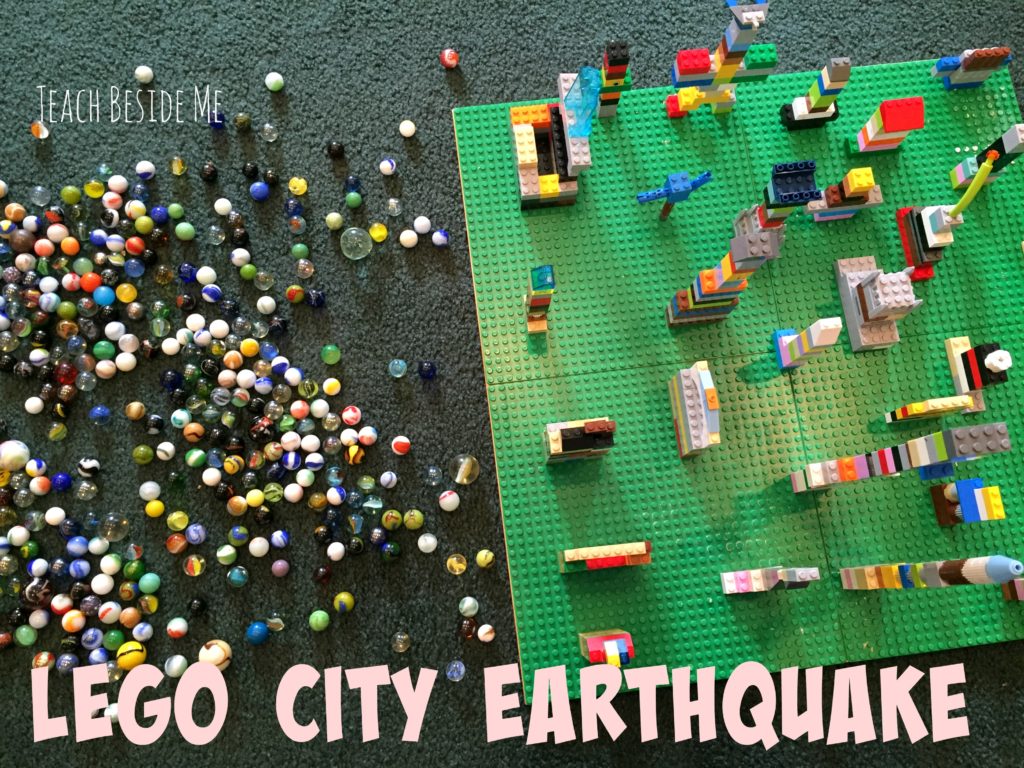
- Place marbles underneath the tray and roll them back and forth to simulate seismic activity.
- Observe which buildings topple, crack, or stay standing.
Test & Rebuild:
Ask questions like:
- Did taller or shorter buildings fare better?
- What helped certain buildings stay up?
- How can we improve the design?
- Rebuild and test again!
Variations and Extensions
Test Variables:
-
Add a “foundation” made of different materials (cardboard, foam, LEGO bricks).
-
Use tape to simulate retrofitting or structural support.
-
Introduce weights inside buildings to test balance.
City Planning Challenge:
-
Have your kids design a full LEGO city with roads, homes, businesses, and emergency response buildings.
-
After the earthquake, discuss how city design can prevent major damage or help recovery.
STEM Notebook:
-
Let kids record their earthquake simulation results:
-
Building name
-
Height and width
-
Outcome after quake
-
Ideas for improvement
-
Real-World Connection
Many cities worldwide experience regular seismic activity and must build earthquake-resistant structures. Civil engineers use models and simulations to test designs—just like your kids are doing with LEGO! You can even discuss building codes, emergency preparedness, and famous earthquakes in history like the 1906 San Francisco quake.
Want to See The LEGO Earthquake Simulation in Action?
Check out our video of the LEGO City Earthquake simulation and watch as our buildings face the shakes!
Books & Resources to Extend the Learning:
-
Earthquakes by Seymour Simon
-
Earthquake in the Early Morning by Mary Pope Osborne (Magic Tree House)
-
Shake, Rattle, and Roll: The Science of Earthquakes by Melvin and Gilda Berger
-
Explore USGS Earthquake Hazards [usgs.gov]
STEM Skills Developed:
-
Engineering and design thinking
-
Scientific method
-
Problem-solving
-
Cause and effect analysis
-
Collaborative play and creativity
More LEGO Learning:
LEGO Balloon Powered Car~ If I Built a Car
Fun and Easy LEGO Math Activities (With Candy or Regular Bricks!)
LEGO Tessellation Puzzle – Explore Math, Art & Engineering Through Play


I love using Lego for learning activities. This one looks like so much fun!
Pinned.