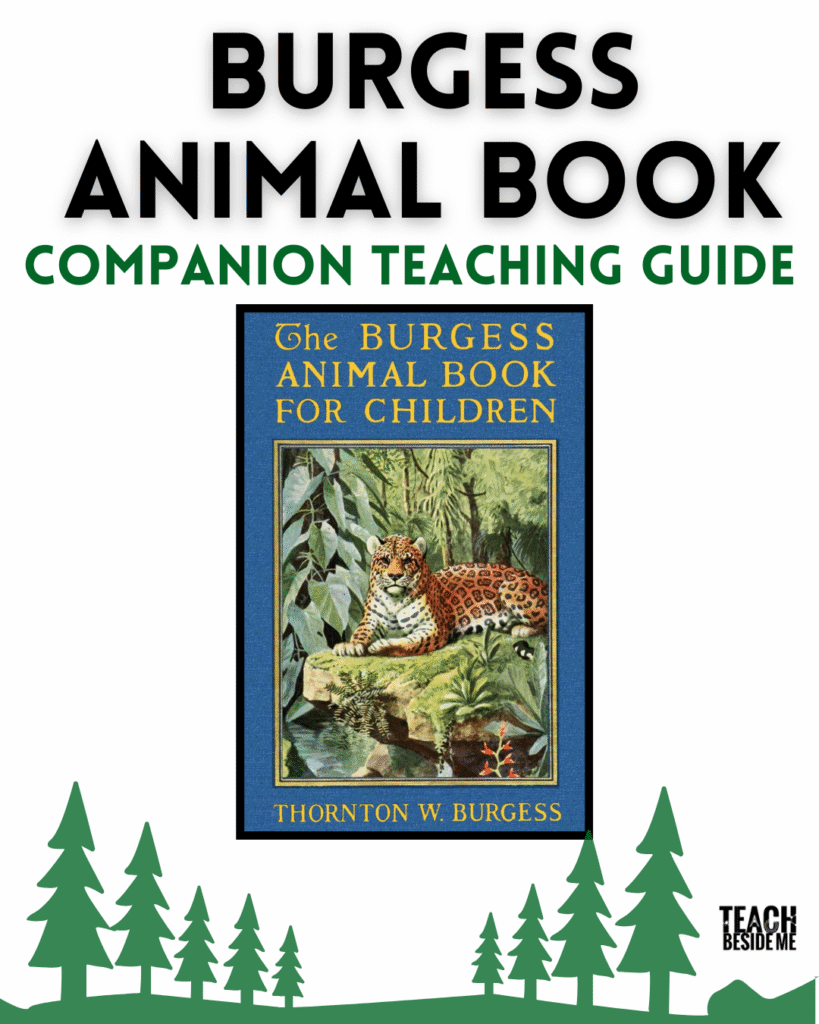
The Burgess Animal Book Companion Guide (Homeschool Animal Study Resources)
This post may contain affiliate links.
Have you read The Burgess Animal Book for Children by Thornton Burgess? It has been a favorite in our home for years.
This charming nature story follows Peter Rabbit as he learns about mammals and their relatives from Old Mother Nature. Each chapter introduces a new animal, teaching classification, habitats, and fascinating facts through storytelling.
My son loved this book so much that we wanted a way to explore the animals more deeply. Inspired by other Burgess companions, I created this learning guide to provide helpful resources, coloring pages, and audio links for each chapter.
This companion guide was originally created several years ago and has now been fully updated with improved resources, working links, and easier navigation.
This Burgess Animal Book guide supports homeschool families using Ambleside Online, Charlotte Mason methods, or nature-based learning. It can be used as a full mammal unit study or as a companion to daily reading.
This guide makes the book perfect for:
- Homeschool nature study
- Charlotte Mason education
- Animal science units
- Independent learning
- Family read-aloud time

Where to Read or Listen to The Burgess Animal Book for Children
You can access this classic book in several free and affordable ways:
• Free audiobook: LibriVox.org
• Free ebook: Project Gutenberg
• Online reading version: Baldwin Project
• Check your local library
• Purchase a printed copy for your homeschool library
Having a physical copy makes it easier for children to follow along and revisit their favorite animals.
What Kids Learn from The Burgess Animal Book
This book teaches children about:
• Mammal classification
• Animal habitats
• Wildlife behavior
• Nature observation
• Scientific vocabulary
It introduces taxonomy in a gentle and engaging way that builds a strong foundation for biology.
How to Use This Burgess Animal Book Companion Guide
Thornton Burgess’s The Burgess Animal Book for Children is a wonderful introduction to mammals, classification, and nature study through storytelling. This companion guide is designed to help you turn the book into a complete science and nature unit for your homeschool or classroom.
Each chapter section below includes:
• Audio recordings so children can listen along
• Links to real photographs and factual information about each animal
• Printable coloring pages for younger learners
• References from the Handbook of Nature Study for deeper exploration
• Additional educational resources to expand learning
You can use this guide in several ways:
Read-along study:
Listen to one chapter per day or week, then explore the animals listed using the resources provided.
Nature study unit:
Choose one animal from each chapter and spend time learning about its habitat, diet, and classification.
Notebooking or journaling:
Have students draw the animal, write facts they learned, or record new vocabulary words.
Independent learning:
Older students can listen to the audio and explore the links independently as a self-guided science unit.
This flexible guide works well for ages 5–12, but can easily be adapted for older students with more detailed research and classification activities.
Burgess Animal Book Learning Resources
To help you in your lessons, here is a beginner guide: All About Mammals. Here is a Mammal Matching Worksheet. (These links are from Exploring Nature — a great site with many free resources.)
For a detailed taxonomic key and updated classifications, see this helpful reference from Ambleside Online.
Wonder-Weirded Wildlife also has a great set of chapter study resources to go along with the book.
Animal Pictures and Coloring Pages
If you want to make a free coloring book of all the animals, Little School House in the Suburbs has compiled a fantastic resource to go along with this book.
For a book of coloring pages designed for nature study, you may also like the Peterson Field Guide Color-In Book: Mammals. The National Audubon Society First Field Guide: Mammals is another great companion for detailed pictures and information.
You may also like this older collection of links: Afterthoughts blog.
Handbook of Nature Study Bonus
Many chapters below include page references from Handbook of Nature Study by Anna Botsford Comstock. It’s a huge (900+ page) treasure for nature study families. You can also find it as a free public-domain download: Archive.org edition.
Each Chapter below has links to the following:
- Librivox audio of the chapter
- Exploring Nature and eNature sites with more information about the animals covered in the chapter
- Life-like coloring pages for each of the animals covered in the chapter
- Pages from the Handbook of Nature Study -The Handbook Of Nature Study , by Anna Botsford Comstock, an amazing book to help in nature studies. I have found it available as a free download. It is a huge book- over 900 pages, but it has so much amazing information in it. You might end up purchasing a hard copy like I did.
Chapter-by-Chapter Links and Resources
Each chapter includes links to audio, animal info, and coloring pages (as available).
Chapter 1: Jenny Wren Gives Peter Rabbit an Idea
Story focus: Peter arranges to go to school with Old Mother Nature.
- Audio: LibriVox (search the chapter)
- Cottontail rabbits: Exploring Nature • eNature
- Marsh rabbit: eNature
- Snowshoe hare: Exploring Nature • eNature
- Handbook of Nature Study: p. 215–219 (rabbits/hares)
- Coloring page: (see chapter 2)
Chapter 2: Peter and Jumper Go to School
Animals covered: The Cottontail Rabbit, Northern Hare, and Marsh Rabbit.
- Audio: Chapter 2 Audio
- Coloring pages: Hare coloring page • Cottontail coloring page (PDF)
Chapter 3: More of Peter’s Long-Legged Cousins
Animals covered: Swamp Hare, Arctic Hare, Prairie Hare, Antelope Jack, and Jack Rabbit.
- Audio: Chapter 3 Audio
- Arctic hare: Exploring Nature
- Swamp hare: eNature
- Antelope jack: eNature
- White-tailed jack rabbit (prairie hare): Exploring Nature • eNature
- Black-tailed jack rabbit: Exploring Nature • eNature
Chapter 4: Chatterer and Happy Jack Join
Animals covered: The Squirrel family and the order of Rodents.
- Audio: Listen on LibriVox (Chapter 4)
- Learn more about squirrels: Exploring Nature • eNature
- Rodents overview: Exploring Nature Rodent Guide
Chapter 5: The Squirrels of the Trees
Animals covered: Red, Gray, Fox, Kaibab, and Abert Squirrels.
- Audio: Listen on LibriVox (Chapter 5)
- Red squirrel: Exploring Nature • eNature
- Gray squirrel: Exploring Nature • eNature
- Fox squirrel: eNature
- Handbook of Nature Study: p. 233–238, 646, 680
- Coloring pages: Red Squirrel • Fox Squirrel • Gray Squirrel
Chapter 6: Striped Chipmunk and His Cousins
Animals covered: Chipmunk, Spermophiles (ground squirrels), and Flying Squirrel.
- Audio: Listen on LibriVox (Chapter 6)
- Chipmunk: Exploring Nature • eNature
- Flying squirrel: Exploring Nature • eNature
- Handbook of Nature Study: p. 235, 239–241
- Coloring pages: Chipmunk • Flying Squirrel
Chapter 7: Johnny Chuck Joins the Class
Animals covered: The Woodchuck (Groundhog).
- Audio: Listen on LibriVox (Chapter 7)
- Woodchuck (Groundhog): Exploring Nature • eNature
- Handbook of Nature Study: p. 228–232
- Coloring page: Woodchuck / Groundhog Coloring Page
Chapter 8: Whistler and Yap Yap
Animals covered: The Hoary Marmot and Prairie Dog.
- Audio: Listen on LibriVox (Chapter 8)
- Marmot: Exploring Nature • eNature
- Prairie dog: Exploring Nature • eNature
- Coloring pages: Marmot Coloring Page • Prairie Dog Coloring Page
Chapter 9: Two Queer Little Haymakers
Animals covered: The Pika (Cony) and Mountain Beaver.
- Audio: Listen on LibriVox (Chapter 9)
- Pika: Exploring Nature • eNature
- Mountain beaver: eNature
- Coloring page: Pika Coloring Page
Chapter 10: Prickly Porky and Grubby Gopher
Animals covered: Porcupine and Pocket Gopher.
- Audio: Listen on LibriVox (Chapter 10)
- Porcupine: Exploring Nature • eNature
- Pocket gopher: Exploring Nature • eNature
- Coloring pages: Porcupine Coloring Page • Gopher Coloring Page
Chapter 11: A Fellow with a Thousand Spears
Animals covered: More about the Porcupine.
- Audio: Listen on LibriVox (Chapter 11)
- Porcupine: Exploring Nature • eNature
- Coloring page: Porcupine Coloring Page
Chapter 12: A Lumberman and Engineer
Animals covered: Beaver.
- Audio: Listen on LibriVox (Chapter 12)
- Beaver: Exploring Nature • eNature
- Handbook of Nature Study: p. 219–223
- Coloring pages: Beaver Coloring Page
Chapter 13: A Worker and a Robber
Animals covered: Muskrat and Brown (Norway) Rat.
- Audio: Listen on LibriVox (Chapter 13)
- Muskrat: Exploring Nature • eNature
- Brown rat: Exploring Nature • eNature
- Handbook of Nature Study: p. 219–223
- Coloring pages: Muskrat Coloring Page • Rat Coloring Page
Chapter 14: A Trader and a Handsome Fellow
Animals covered: Cotton Rat, Wood Rat (Pack Rat), and Kangaroo Rat.
- Audio: Listen on LibriVox (Chapter 14)
- Cotton rat: eNature
- Wood rat (Pack rat): eNature
- Kangaroo rat: Exploring Nature • eNature
- Coloring page: Rat Coloring Page
Chapter 15: Two Unlike Little Cousins
Animals covered: Deer Mouse and Meadow Mouse (Vole).
- Audio: Listen on LibriVox (Chapter 15)
- Deer mouse: Exploring Nature • eNature
- Handbook of Nature Study: p. 224–228
- Coloring pages: Mouse Coloring Page
Chapter 16: Danny’s Northern Cousins and Nimbleheels
Animals covered: Banded and Brown Lemmings, and the Jumping Mouse.
- Audio: Listen on LibriVox (Chapter 16)
- Lemmings: Exploring Nature • eNature
- Jumping mouse: eNature
- Coloring page: Lemming Coloring Page
Chapter 17: Three Little Redcoats and Some Others
Animals covered: Pine Mouse, Red-backed Mouse, Rufous Tree Mouse, Rock Mouse, and Beach Mouse.
- Audio: Listen on LibriVox (Chapter 17)
- Beach mouse: eNature
- Coloring page: Mouse Coloring Page
Chapter 18: Mice with Pockets, and Others
Animals covered: Silky and Spiny Pocket Mice, Grasshopper Mouse, Harvest Mouse, and House Mouse.
- Audio: Listen on LibriVox (Chapter 18)
- Pocket mouse: eNature
- Grasshopper mouse: eNature
- Harvest mouse: eNature
- House mouse: eNature
- Handbook of Nature Study: p. 224–228
Chapter 19: Teeny Weeny and His Cousin
Animals covered: Long-tailed Shrew, Short-tailed Shrew, and Water Shrew.
- Audio: Listen on LibriVox (Chapter 19)
- Shrews: Exploring Nature • eNature
- Coloring page: Shrew Coloring Page
Chapter 20: Four Busy Little Miners
Animals covered: Common Mole, Hairy-tailed Mole, Oregon Mole, and Star-nosed Mole.
- Audio: Listen on LibriVox (Chapter 20)
- Moles: eNature
- Coloring pages: Mole Coloring Page • Star-Nosed Mole Coloring Page
Chapter 21: Flitter the Bat and His Family
Animals covered: Red Bat, Little Brown Bat, Big Brown Bat, Silver-haired Bat, Hoary Bat, and Big-eared Bat.
- Audio: Listen on LibriVox (Chapter 21)
- Bats: Exploring Nature • eNature
- Handbook of Nature Study: p. 221–224
- Coloring page: Bat Coloring Page
Chapter 22: An Independent Family
Animals covered: Striped Skunk, Hog-nosed Skunk, and Spotted Skunk.
- Audio: Listen on LibriVox (Chapter 22)
- Skunks: Exploring Nature • eNature
- Handbook of Nature Study: p. 245–247
- Coloring pages: Skunk Coloring Page
Chapter 23: Digger and His Cousin Glutton
Animals covered: Badger and Wolverine.
- Audio: Listen on LibriVox (Chapter 23)
- Badger: Exploring Nature • eNature
- Wolverine: eNature
- Coloring pages: Badger Coloring Page • Wolverine Coloring Page
Chapter 24: Shadow and His Family
Animals covered: Weasels and Black-footed Ferret.
- Audio: Listen on LibriVox (Chapter 24)
- Weasels: Exploring Nature • eNature
- Ferret: eNature
- Coloring pages: Weasel Coloring Page • Ferret Coloring Page
Chapter 25: Two Famous Swimmers
Animals covered: Mink and River Otter.
- Audio: Listen on LibriVox (Chapter 25)
- Mink: Exploring Nature • eNature
- River otter: Exploring Nature • eNature
- Coloring pages: Otter Coloring Page • Mink Coloring Page
Chapter 26: Spite the Marten and Pekan the Fisher
Animals covered: Pine Marten and Fisher.
- Audio: Listen on LibriVox (Chapter 26)
- Pine marten: Exploring Nature • eNature
- Fisher: eNature
- Coloring pages: Marten Coloring Page • Fisher Coloring Page
Chapter 27: Reddy Fox Joins the School
Animals covered: Red Fox, Gray Fox, Kit Fox, Desert Fox, Arctic Fox, and Blue Fox.
- Audio: Listen on LibriVox (Chapter 27)
- Red fox: Exploring Nature • eNature
- Gray fox: eNature
- Arctic fox: Exploring Nature
- Handbook of Nature Study: p. 251–253
- Coloring pages: Red Fox • Arctic Fox
Chapter 28: Old Man Coyote and Howler the Wolf
Animals covered: Coyote and Gray Wolf.
- Audio: Listen on LibriVox (Chapter 28)
- Coyote: Exploring Nature • eNature
- Gray wolf: Exploring Nature • eNature
- Handbook of Nature Study: p. 250–251
- Coloring pages: Wolf Coloring Page • Coyote Coloring Page
Chapter 29: Yowler and His Cousin Tufty
Animals covered: Bobcat and Canada Lynx.
- Audio: Listen on LibriVox (Chapter 29)
- Bobcat: Exploring Nature • eNature
- Lynx: eNature
- Coloring pages: Bobcat Coloring Page • Lynx Coloring Page
Chapter 30: Some Big and Little Cat Cousins
Animals covered: Cougar (Mountain Lion), Jaguar, Ocelot, and Jaguarundi.
- Audio: Listen on LibriVox (Chapter 30)
- Cougar (Mountain lion): Exploring Nature
- Jaguar: Exploring Nature
- Coloring pages: Cougar • Jaguar • Ocelot
Chapter 31: Bobby Coon Arrives
Animals covered: Raccoon and Ringtail (Civet Cat).
- Audio: Listen on LibriVox (Chapter 31)
- Raccoon: Exploring Nature • eNature
- Handbook of Nature Study: p. 247–252
- Coloring page: Raccoon Coloring Page
Chapter 32: Buster Bear Nearly Breaks Up School
Animals covered: American Black Bear.
- Audio: Listen on LibriVox (Chapter 32)
- Black bear: Exploring Nature
- Coloring page: Black Bear Coloring Page
Chapter 33: Buster Bear’s Big Cousins
Animals covered: Grizzly Bear, Brown Bear, and Polar Bear.
- Audio: Listen on LibriVox (Chapter 33)
- Grizzly bear: Exploring Nature
- Polar bear: Exploring Nature
- Coloring pages: Grizzly Bear • Polar Bear
Chapter 34: Unc’ Billy and Old Mrs. Possum
Animals covered: Virginia Opossum (North America’s only marsupial).
- Audio: Listen on LibriVox (Chapter 34)
- Opossum: Exploring Nature • eNature
- Coloring page: Opossum Coloring Page
Chapter 35: Lightfoot, Blacktail, and Forkhorn
Animals covered: White-tailed Deer, Black-tailed Deer, and Mule Deer.
- Audio: Listen on LibriVox (Chapter 35)
- White-tailed deer: Exploring Nature
- Handbook of Nature Study: p. 290–291
- Coloring page: Deer Coloring Page
Chapter 36: Bugler, Flathorns and Wanderhoof
Animals covered: Elk (Wapiti), Moose, and Caribou (Reindeer).
- Audio: Listen on LibriVox (Chapter 36)
- Elk: Exploring Nature
- Moose: Exploring Nature
- Handbook of Nature Study: p. 290–291
- Coloring pages: Elk • Moose
Chapter 37: Thunderfoot, Fleetfoot and Longcoat
Animals covered: American Bison (Buffalo), Pronghorn Antelope, and Musk Ox.
- Audio: Listen on LibriVox (Chapter 37)
- Bison: Exploring Nature
- Handbook of Nature Study: p. 281
- Coloring pages: Bison • Antelope • Musk Ox
Chapter 38: Two Wonderful Mountain Climbers
Animals covered: Bighorn Sheep and Mountain Goat.
- Audio: Listen on LibriVox (Chapter 38)
- Bighorn sheep: Exploring Nature
- Mountain goat: Exploring Nature
- Handbook of Nature Study: p. 268
- Coloring pages: Bighorn Sheep • Mountain Goat
Chapter 39: Piggy and Hardshell
Animals covered: Peccary (Wild Pig) and Armadillo.
- Audio: Listen on LibriVox (Chapter 39)
- Armadillo: Exploring Nature
- Handbook of Nature Study: p. 287
- Coloring pages: Armadillo Coloring Page
Chapter 40: The Mammals of the Sea
Animals covered: Sea Otter, Walrus, Seals, Sea Lions, and Manatee.
- Audio: Listen on LibriVox (Chapter 40)
- Sea otter: Exploring Nature
- Manatee: Exploring Nature
- Coloring pages: Sea Otter • Walrus • Seal • Manatee
A Timeless Nature Study Resource
The Burgess Animal Book for Children remains one of the best introductions to mammals for young learners. With its engaging storytelling and rich animal information, it continues to inspire curiosity and a love for nature. Use this learning guide to bring the animals to life through listening, coloring, and deeper exploration.
You may also enjoy these related animal learning activities:
- Edible Animal Cell Model (Made from a Cantaloupe!)
- Mapping Animal Migrations: Hands-On Geography and Science Activity for Kids
- Animals that Hibernate in Winter
- The Animal Guessing Game
- How to Draw Animals for Kids: Draw & Write Pages
- The Food Chain Game -Printable Science Activity