Oxidation Experiment for Kids: Does It Rust?
This post may contain affiliate links.

Have you ever wondered why some metal objects rust while others stay shiny and clean? This rust oxidation experiment for kids is an easy hands-on science activity that helps children explore chemistry, observation skills, and real-world materials science.
We tested common household metal objects to answer one big question: What rusts… and what doesn’t?
Even better, we compared fresh water and salt water to see which caused rust faster.
This is a simple STEM activity kids love because they get to make predictions, observe changes over time, and discover surprising results.

What Is Rust?
Rust is a reddish-brown substance called iron oxide.
It forms when iron reacts with oxygen in the presence of water. This chemical reaction is called oxidation.
For rust to happen, three things usually need to be present:
- iron or steel
- oxygen
- moisture (water)
That’s why tools left outside, bikes in the rain, or wet nails often begin to rust over time.
Does Salt Water Make Rust Faster?
Yes—salt water often speeds up rusting.
Salt helps water conduct electricity and accelerates the chemical reactions that lead to corrosion. This is why cars near the ocean or roads treated with winter salt may rust faster.
That makes this a great variable to test in your experiment.
Rust Oxidation Experiment: Does It Rust?
Supplies Needed
Gather a variety of metal objects from around the house:
- nails
- screws
- paper clips
- staples
- bobby pins
- brads
- washers
- bolts
- coins (for comparison)
- small metal hardware pieces
You’ll also need:
- paper cups or clear cups
- water
- salt
- labels
- notebook or printable recording sheet

How to Do the Experiment
Step 1: Make Predictions
Before starting, ask:
- Which item will rust first?
- Which item may not rust at all?
- Will salt water make a difference?
Write predictions down.
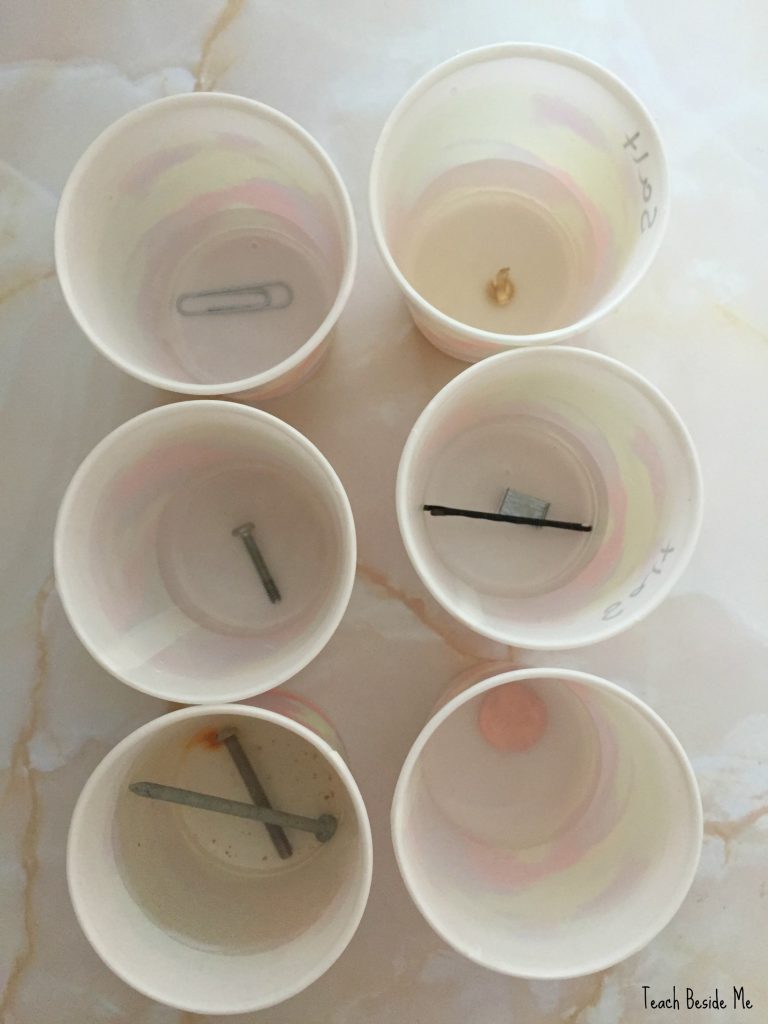
Step 2: Set Up Two Groups
Prepare:
- Cup 1 = fresh water
- Cup 2 = salt water (mix salt into water)
For a more scientific test, place matching objects into both cups.
Example:
- one nail in fresh water
- one nail in salt water
Step 3: Observe Daily
Watch for changes over several days.
Look for:
- reddish-brown rust
- dark spots
- cloudiness in water
- bubbles
- peeling coatings
- no change
Step 4: Record Results
Measure which objects rusted first, most, or least.

What We Observed
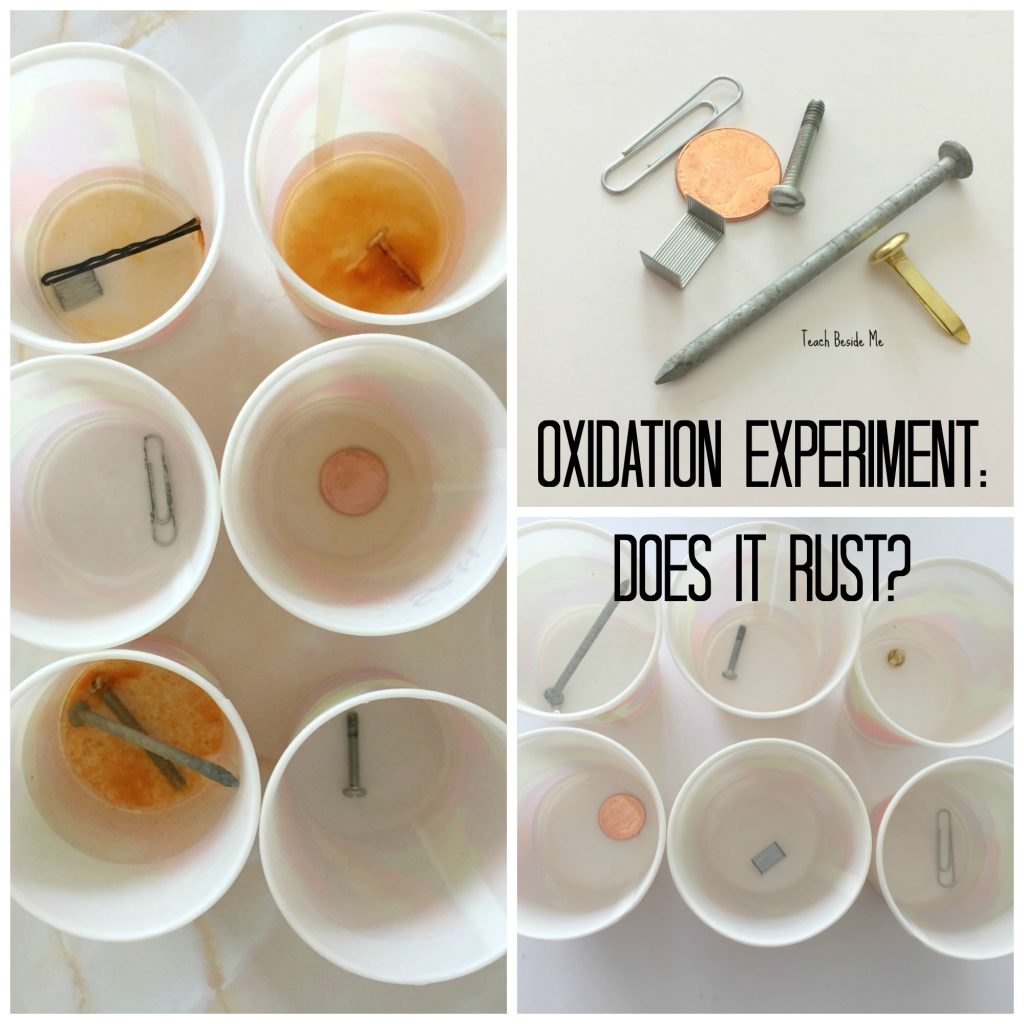
Some objects rusted quickly, especially plain steel pieces.
Others resisted rust because they had protective coatings.
Examples:
Galvanized Metal
Some paper clips, staples, or nails may be coated with zinc. This helps protect the iron underneath.
Painted Metal
A bobby pin with paint coating may resist rust except where the coating is scratched or missing.
That’s a great real-world example of how coatings protect metal.
Why Some Metals Do Not Rust
Not all metals rust.
Rust specifically refers to iron oxide, so metals without iron (like aluminum, copper, brass, or some stainless steel alloys) may corrode differently or not rust at all.
This is a great extension question for older students.
STEM Skills This Activity Builds
This experiment encourages:
- observation
- prediction
- comparing variables
- recording data
- critical thinking
- understanding chemical change
- real-world engineering connections
Ways to Extend the Experiment
Graph Results
Create a chart of fastest to slowest rusting objects.
Try More Variables
Test:
- vinegar
- soda
- warm water
- outdoor humidity
Engineering Tie-In
Discuss why outdoor metal structures are painted or coated.
Real-Life Rust Prevention
People prevent rust by:
- painting metal
- keeping tools dry
- using stainless steel
- galvanizing metal with zinc
- storing items indoors
- oiling machinery parts
Why Kids Love This Experiment
It changes slowly over time, which makes kids excited to check progress each day. It also uses real household objects, so children immediately connect science to everyday life.
You may also be interested in another oxidizing experiment that we did with apples browning a while back.

This is part of the A-Z Guide to Understanding STEM hosted by Little Bins for Little Hands.