
Shadow Drawing: Make a Human Sundial
This post may contain affiliate links.
Discover how to turn your child into a working sundial with this easy outdoor science activity! Shadow drawing is a fun, hands-on way to explore Earth’s rotation, light, and timekeeping — perfect for summer learning or a solstice celebration.
What Is a Human Sundial?
I have always been fascinated by sundials. A sundial is a tool that tells time using shadows. By tracing your child’s shadow at different times during the day, they can see firsthand how the Earth moves and how the position of the sun changes in the sky.
This simple experiment turns your child into the gnomon (the part of a sundial that casts a shadow) and lets them observe and track time just like ancient civilizations did!

Shadow Drawing Activity: Step-by-Step
You’ll need:
-
A flat sunny spot
-
A willing volunteer
-
Optional: clock, timer, notebook
Instructions:
-
Head outside in the morning when the sun is low.
-
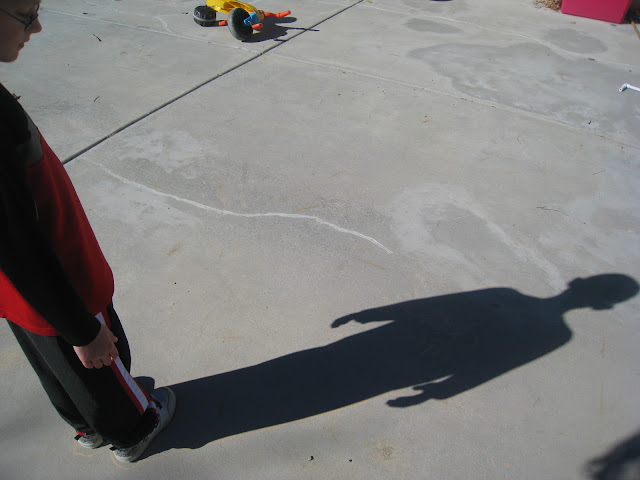
Have your child stand in one spot — trace around their feet.
-
Trace their entire shadow with sidewalk chalk. Write the time next to the shadow.
-
Return every hour (or every 30 minutes) and repeat the process.
-
By the end of the day, you’ll have a clock-like arc of shadows showing how the sun has moved!
Tip: Set a timer as a reminder to go out each hour for the next tracing.
The Science Behind It
Why does the shadow move?
The Earth is constantly rotating on its axis. As it turns, the angle of sunlight changes — causing your shadow to shift position and length throughout the day.
Why is your shadow longer in the morning and evening?
When the sun is low in the sky, your body blocks light at a more horizontal angle, creating a longer shadow. At noon, when the sun is highest, shadows are shortest.

What Kids Learn:
-
Earth’s rotation and day/night cycles
-
How light and shadows work
-
Ancient methods of timekeeping
-
Scientific observation and data recording
-
Visual-spatial awareness
A Little History of the Sundial
Before mechanical clocks, ancient civilizations used sundials to tell time. From Egypt to Greece and China, sundials were essential tools for understanding the passage of time. Your human sundial lets kids experience this historical technology firsthand!

Variations to Try
-
Use a paper or cardboard cutout on a stick and track its shadow, or try it with a favorite toy.
-
Record shadow lengths and angles at each hour
-
Try the activity on a different day and compare results
-
Repeat during the winter solstice and observe how shadows differ
How about some more sun related learning activities:
Shadow drawing is more than just a fun outdoor activity — it’s a powerful way to help kids see science in action. By becoming a human sundial, children can connect big concepts like Earth’s rotation and the passage of time to something tangible and exciting. Whether you try this on the summer solstice or any sunny day, it’s a simple way to blend science, nature, and curiosity. Don’t forget to take pictures of your shadow timeline — and tag us if you share it! We’d love to see how your shadows grow.




What a great idea! 🙂
Loved how you use their own shadow to explain the idea!
Very cool way to teach this…I’m your newest follower. :o)
Vicky
Traditions, Laughter and Happily Ever After
Great idea! I tried to pin it but there no pictures coming up ;(
I like the idea of a sun dial using yourself. We measured the shadow lengthening and shortening, but a sun dial would be another good idea.
Great idea! This is something we can definitely do over here in the desert, tracking the Sunshine all day! We will definitely try it soon, thanks!
Awesome idea … so simple and fun yet very educational! I featured your post at the Living Montessori Now Facebook page: http://www.facebook.com/LivingMontessoriNow
Thanks for linking up to Thinky Linky Thursday!
Lori @ Cachey Mama’s Classroom
Love this. Glad I found your site. I’m following along now. 🙂 Jodi @ http://www.meaningfulmama.com
Stopping by from Fun Stuff Fridays! http://queenofsavings.com
great!!!!!!