
Yellowstone Learning: Old Faithful Geyser Experiment for Kids
This post may contain affiliate links.
Our family vacation to Yellowstone National Park was truly unforgettable—from wild animal sightings to the mesmerizing paint pots, hot springs, and, of course, geysers. To keep the excitement going even after returning home, we created a fun and easy Old Faithful Geyser experiment that helps kids understand how geysers work using simple materials.

This activity also ties into my Geography Projects from A to Z series, inspired by the book Geography from A to Z by Jack Knowlton. For the letter G, we explored Geysers—and what better way to do that than by recreating one?

Learning About Yellowstone with Kids
If you’re planning a trip (or just want to teach about Yellowstone from home), here are a few great resources:
- Junior Ranger Program: Available at park visitor centers, these free booklets teach kids about the park’s natural features. When completed, kids earn an official patch!
- Yellowstone Curriculum Units: Visit the Yellowstone Education Portal for free printables and activities by grade level.
Exploring Yellowstone with kids is like stepping into another world—bubbling mud, erupting steam vents, and brightly colored mineral pools that look like alien landscapes. Our kids loved every minute of it!

What we loved about visiting Yellowstone were all of the amazing natural things to see that were so stunningly beautiful. It was incredible to me that all of these things happen naturally and are indescribable! At times I almost felt like I was not on our planet because the sights were so foreign! It is a wonderful place to visit with kids. We saw lots of wild animals along our drive and loved all of the paint pots, hot springs and geysers that just pop up along the way.

About Old Faithful: Nature’s Timekeeper
Old Faithful is one of Yellowstone’s most famous features—and one of the most predictable geysers in the world. It erupts approximately every 90 minutes, shooting water as high as 180 feet into the air! The eruption typically lasts between 1.5 to 5 minutes.
Located in the Upper Geyser Basin, Old Faithful was first named in 1870 by the Washburn-Langford-Doane Expedition. Its reliable eruptions made it a symbol of Yellowstone’s geothermal wonders and helped spark interest in preserving the area as the first national park in the world.
Geysers like Old Faithful form in areas where underground water is heated by volcanic activity. When the water becomes superheated, pressure builds until it’s violently released through surface vents—creating an incredible burst of steam and boiling water.
Similarities Between Geysers and Volcanoes
Check out my post on How to Make a Volcano Science Project, too!
-
Both are powered by heat from beneath the Earth’s surface.
They occur in areas of geothermal activity, often near tectonic plate boundaries or hotspots.
-
Both involve underground chambers.
Volcanoes have magma chambers, while geysers have underground reservoirs of water heated by magma.
-
They release pressure in bursts.
Volcanoes erupt with lava, gas, and ash.
Geysers erupt with steam and hot water.
-
They often exist in the same regions.
For example, Yellowstone National Park has both geysers and volcanic features because it’s a supervolcano hotspot.
Differences Between Geysers and Volcanoes
| Feature | Geysers | Volcanoes |
|---|---|---|
| What they erupt | Hot water and steam | Lava, ash, rock, and gas |
| Cause of eruption | Pressure from boiling water trapped underground | Pressure from rising magma |
| Eruption frequency | Often regular (some erupt hourly or daily) | Irregular, sometimes decades or centuries apart |
| Safety | Usually safe to observe from a distance | Can be extremely dangerous and destructive |
| Formation | Needs water, heat, and narrow plumbing system | Formed by magma rising through Earth’s crust |
Old Faithful Geyser Experiment
This simple science activity mimics how pressure builds and releases in a geyser.
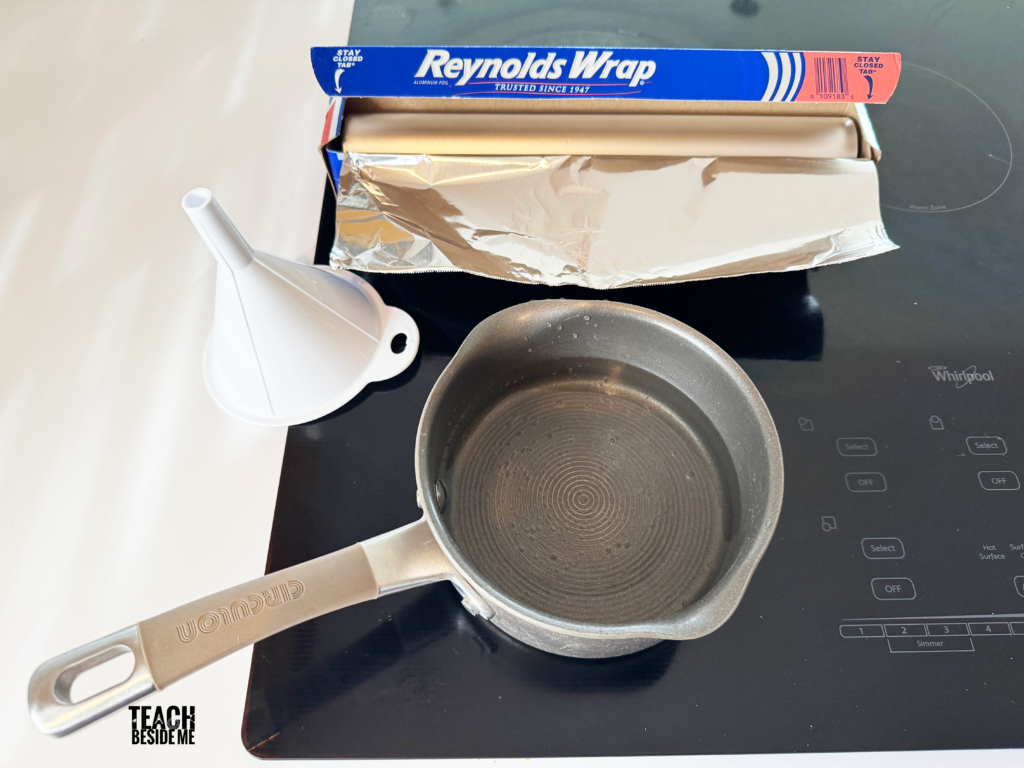
Supplies:
- Medium or large pot
- Water
- Metal or plastic funnel
- Aluminum foil
Instructions:
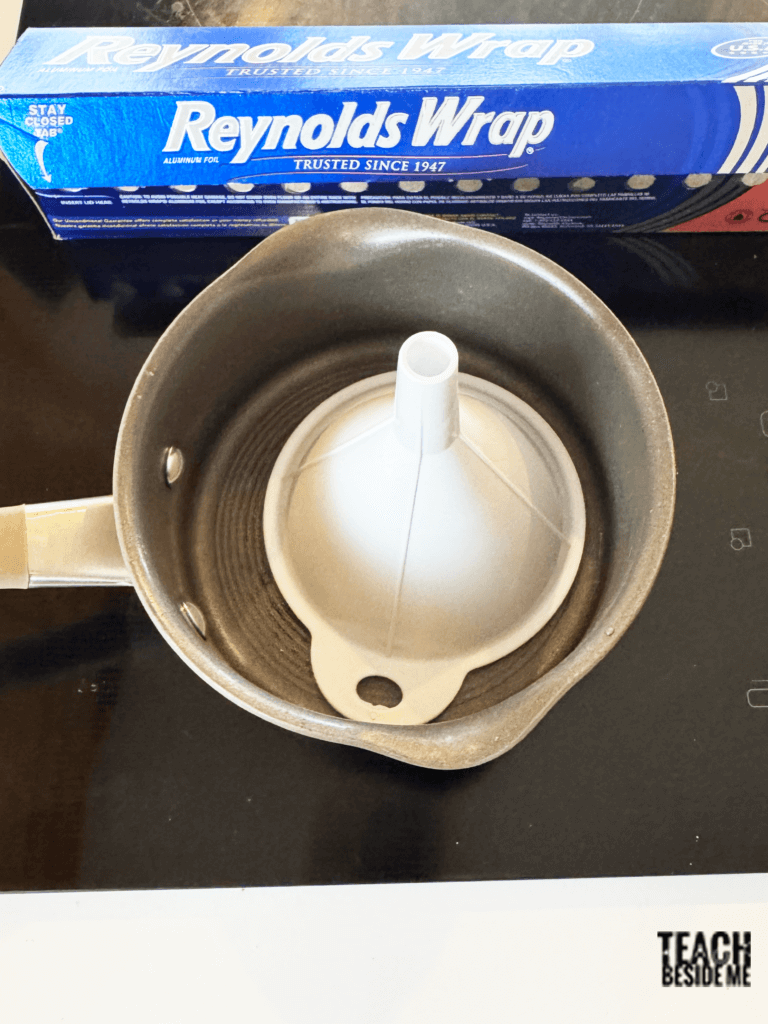
- Fill the pot with water and place the funnel inside upside down, so the spout sticks up out of the water.

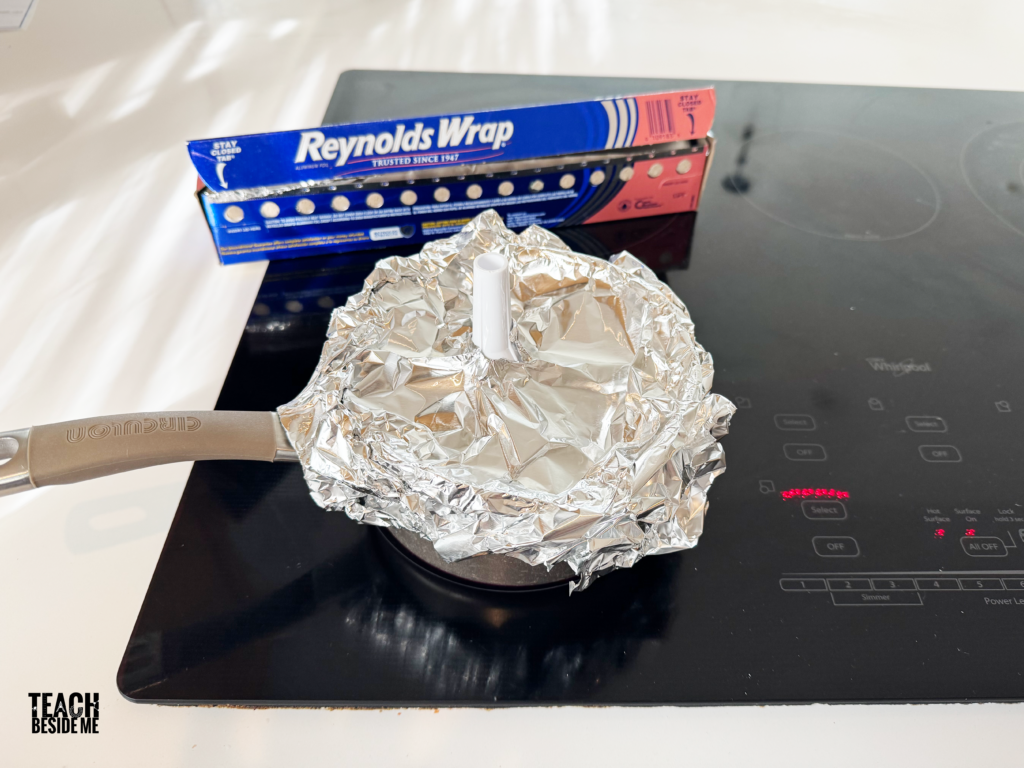
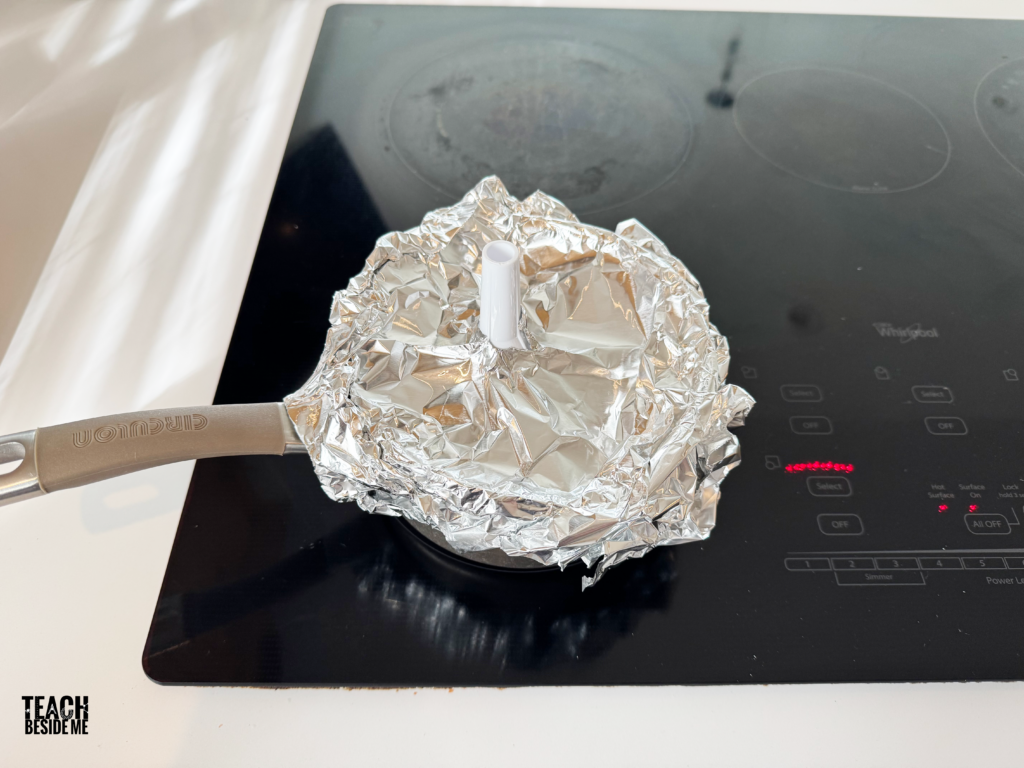
- Cover the pot with aluminum foil, pressing it down around the funnel. Leave a small hole so the funnel’s spout is exposed.
- Turn on the heat to high and wait until the water begins to boil.
- As steam builds under the foil, it will force hot water up through the funnel—creating a geyser-like eruption!
Safety Tip: Always supervise this experiment closely. Use caution around steam and boiling water.
Watch The Geyser in Action!
What’s Happening?
Just like in Yellowstone, water underground is heated by magma. When enough pressure builds from the steam, the water shoots up through cracks in the Earth—erupting like a geyser! This experiment is a safe and simple model of that amazing natural process.

Experiment Variations to Try
Want to take it further? Here are a few fun ways to extend the experiment:
- Try different funnel sizes to see how that affects the eruption.
- Use a clear lid (like glass or see-through silicone) to observe steam buildup.
- Add food coloring to the water to make the eruption more visible.
- Use a thermometer to measure temperature before and after boiling.
- Time the eruptions and compare them to Old Faithful’s 90-minute cycle.
These variations add a layer of scientific thinking and problem-solving to your activity!

Recommended Books to Tie In
Pair the experiment with a great read for even deeper learning:
- Geysers: What They Are and How They Work by T. Scott Bryan
- Yellowstone: A Journey Through America’s Wild Heart by David Quammen (for older readers)
- National Parks of the USA by Kate Siber (includes Yellowstone and others)
- Who Pooped in the Park? Yellowstone National Park by Gary D. Robson (fun and educational for younger kids!)
- The Magic School Bus Blows Its Top by Joanna Cole (great for introducing volcanic and geothermal concepts)
Bonus: Advice from a Geyser
While exploring the gift shops in Yellowstone, I found a bookmark titled “Advice from a Geyser.” The wisdom was too good not to share:
Advice from a Geyser:
Rise to the Occasion.
Stay Active.
Find Your Inner Strength.
Vent When You Need To.
Enjoy the Quiet Moments.
Be Faithful.
Let Off a Little Steam.
It’s a great reminder for kids and grown-ups!

See more Geography Projects from A to Z:

Geography Nesting Cans
A is for Atoll & Archipelago
B is for Beach & Bay
C is for Continent
D is for Delta
E is for Edible Earth’s Core
F is for Forest Diorama