D is for Delta – Hands-On Geography Project for Kids
This post may contain affiliate links.
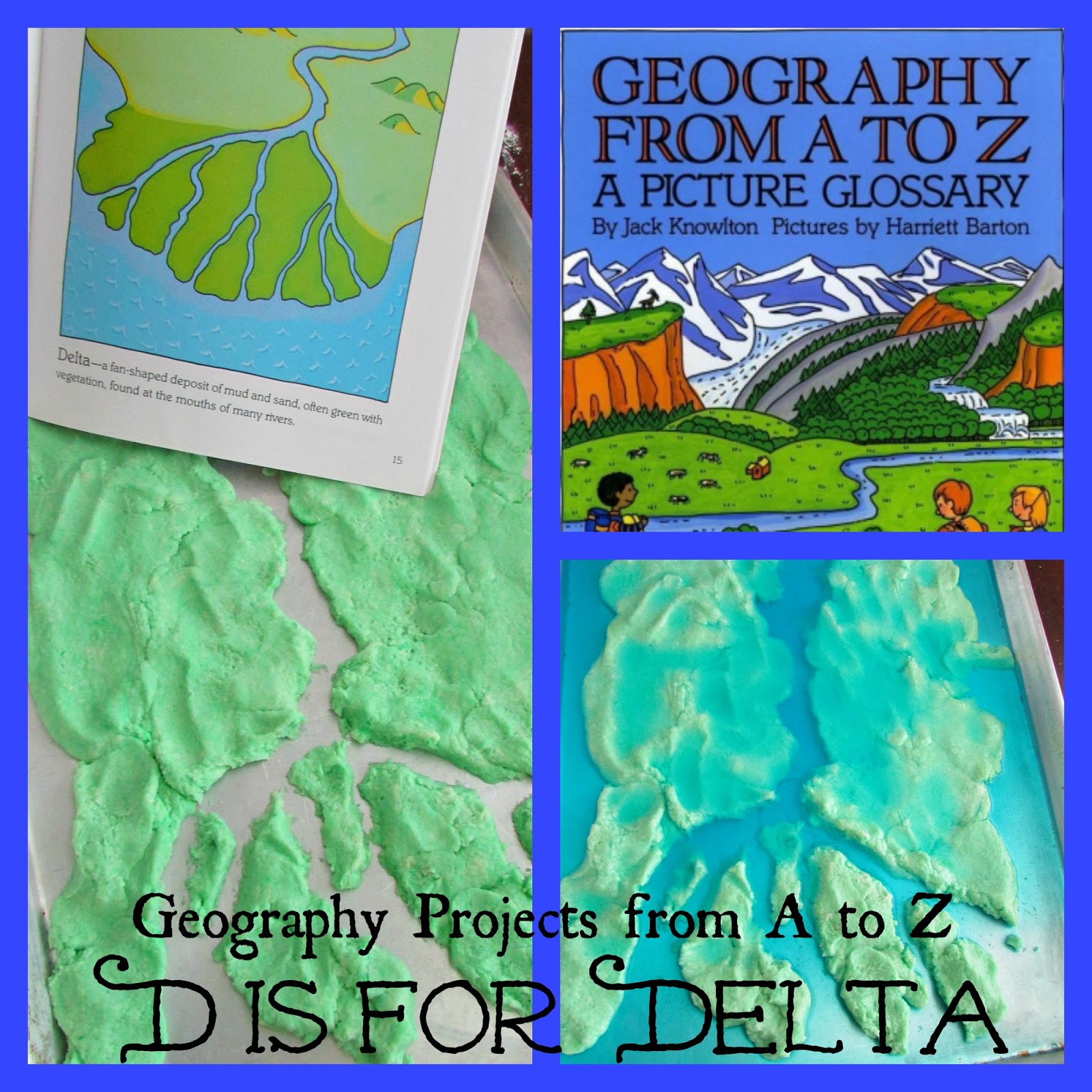
We’re back with another fun and messy installment in our Geography A to Z series! For the letter D, we explored one of the most fascinating landforms in geography: the delta. This hands-on salt dough delta model is a memorable way to learn how deltas form, what they look like, and why they matter.
We’re using the book Geography from A to Z by Jack Knowlton as our guide through the alphabet. Each letter introduces a new landform or geographic concept, and we bring it to life through a creative, tactile project.

What Is a Delta?
A delta is a landform created when a river carries sediment and deposits it where it flows into an ocean, sea, or lake. Over time, this sediment builds up to form a fan-shaped or branching area of land. Deltas are incredibly fertile and are often important for farming, wildlife habitats, and human settlements.
Famous examples of deltas:
-
The Nile Delta in Egypt
-
The Mississippi River Delta in the United States
-
The Ganges-Brahmaputra Delta in India and Bangladesh (the world’s largest)
Deltas usually form in flat, low-lying areas where the river slows down, and the sediment has a chance to settle out. They’re a perfect example of how water shapes the land.
Hands-On Delta Model Using Salt Dough
Supplies Needed:
-
Salt dough (recipe below)
-
Cookie sheet or tray
-
Blue food coloring (optional)
-
Water in a measuring cup or pitcher
-
Optional: small pebbles, grass, craft trees or animals for realism
Salt Dough Recipe:
-
2 cups flour
-
1 cup salt
-
1 cup water
-
Food coloring (optional)
Mix all the ingredients together until you have a smooth dough. You can color part of it blue to represent water if you like. We didn’t bake ours—we just dove into the project while the dough was soft and pliable.
How to Make a Delta Model
-
Form the River & Land:
Use your dough to create a landscape with a river flowing from one end of the tray to the other. Widen the river where it meets the “ocean” at the opposite end. -
Build the Delta:
At the river’s mouth, use small pieces of dough to create branching channels, like the arms of a fan. This represents the sediment deposits that form over time. -
Add Water:
Carefully pour a small amount of water into the river and ocean areas. The water will flow through your river and may erode some of your land, giving a real-time visual of how rivers move and form deltas. -
Optional Enhancements:
Add grass, trees, or animals to show how fertile and biodiverse deltas can be. You can even research and recreate a real-world delta like the Mississippi River.
Note: This is messy (but so fun)! We placed a towel under our tray and had a few rags handy for quick cleanup.
Learning Outcomes
This project teaches children:
-
What a delta is and how it forms
-
How rivers carry and deposit sediment
-
The importance of erosion and deposition in shaping the Earth
-
The real-world relevance of deltas in ecosystems and human civilizations
-
Fine motor skills and creative thinking
Vocabulary Words to Explore
-
Delta
-
Sediment
-
Deposition
-
Tributary
-
River mouth
-
Alluvial
-
Wetland
You could even make flashcards or include these words in a notebooking activity to go along with the model.
More Delta Activity Ideas
-
Watch a time-lapse video of a delta forming.
-
Look at satellite images of famous deltas on Google Earth.
-
Research wildlife found in different deltas around the world.
-
Create a before and after drawing of a river becoming a delta.
This D is for Delta project is a perfect blend of earth science, geography, and hands-on fun. It’s simple, memorable, and gives kids a visual and tactile way to truly understand what a delta is and why it matters. Bonus: you get to embrace the mess and make learning stick!
Want to keep going? Check out the rest of our Geography A-Z series for more creative, educational projects.




What a great idea! We made a 3d salt dough map of Africa last year. The kids loved using the salt dough! What do you do with your salt dough creations afterwards? I have ours sitting on a board that keeps getting moved around because I don’t know what to do with it.
I am using this book this year with my 2nd grader and love your project ideas to go along with this book!! Thank you for linking up this week to the Thoughtful Spot Weekly Blog Hop 🙂
ooh we have that book but haven’t used it much. What a brilliant project idea! Thank you for sharing 🙂
Lucinda
We made salt dough today to make pyramids! I love the idea of making a delta with it. That would go along with our Ancient Egypt study too! Super fun!
This looks like so much fun! My daughter loves salt dough! I found your blog on the ultimate homeschool link-up.
http://www.joyfocusedlearning.blogspot.com
I love all your creative ideas! I’m a public school teacher, but I love comparing notes with all types of teachers.
I’m hosting a teaching linky party, Better Together. I’d love for you to join us! The link-up begins today and extends through next Saturday. http://mprintblog.blogspot.com/search/label/Better%20Together
Wait, so did you actually pour water on the salt dough map? Just making sure I understand. I’m thinking I might use something like this for our Egypt study.
We love geography at our house! This book will definitely be on our wishlist. Thanks for sharing at Mom’s Library! Pinned!
Yes, we just poured the water right over the top 🙂 I didn’t let it harden either, so after they re-made it a few times it was a big mess. But it was fun!