
Elephant Toothpaste Experiment for Kids
This post may contain affiliate links.
This fantastic foamy fountain science experiment, also called Elephant Toothpaste, is SO much fun! We first tried this experiment years ago and decided it was time to revisit it with my younger kids.
Elephant toothpaste is one of those science experiments that makes kids feel like real scientists. The dramatic foam eruption grabs their attention immediately while teaching important chemistry concepts.
What makes this version extra exciting is that we decided to compare regular 3% hydrogen peroxide with a 6% hydrogen peroxide solution side by side to see how changing one ingredient affected the reaction.
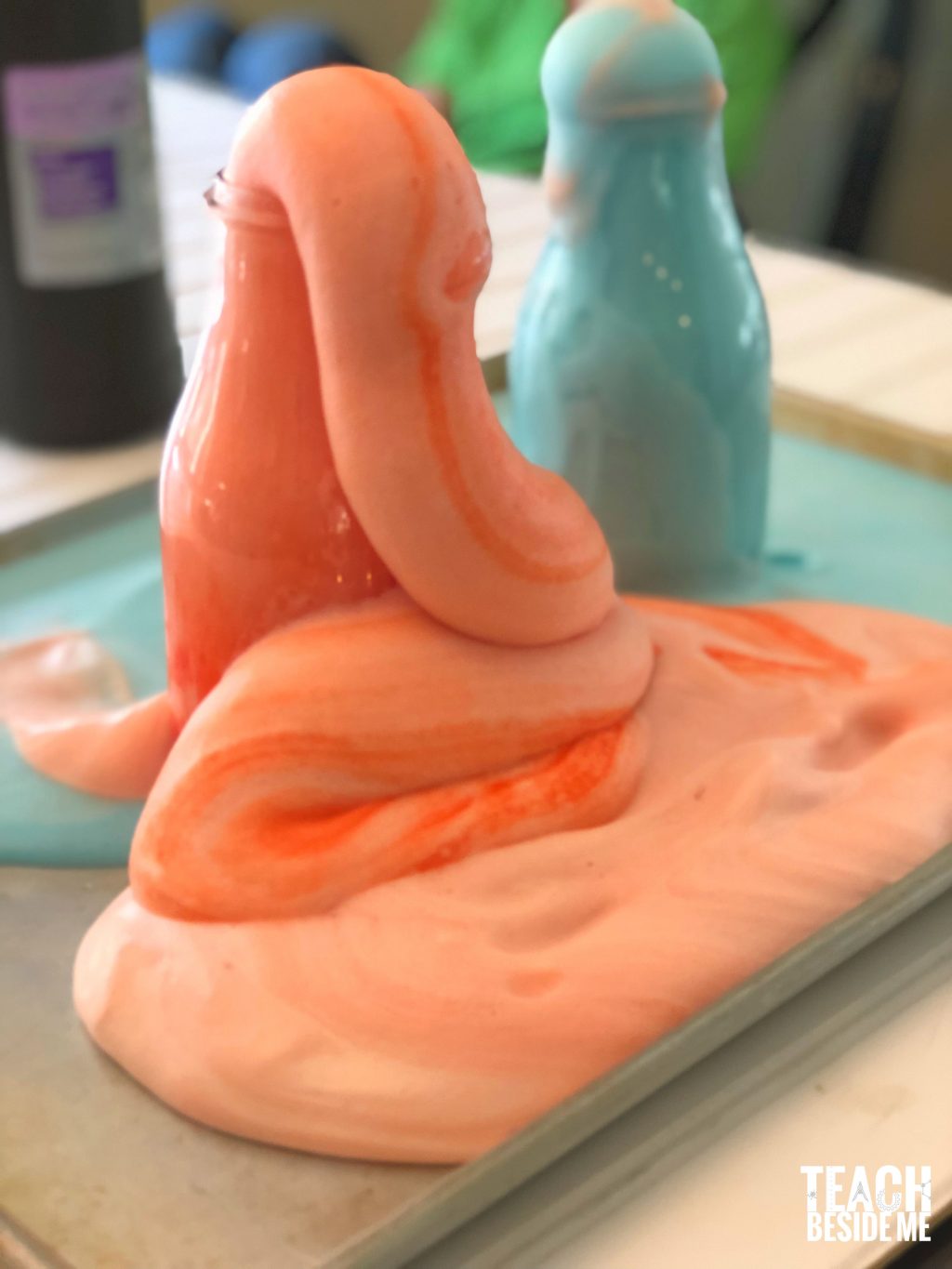
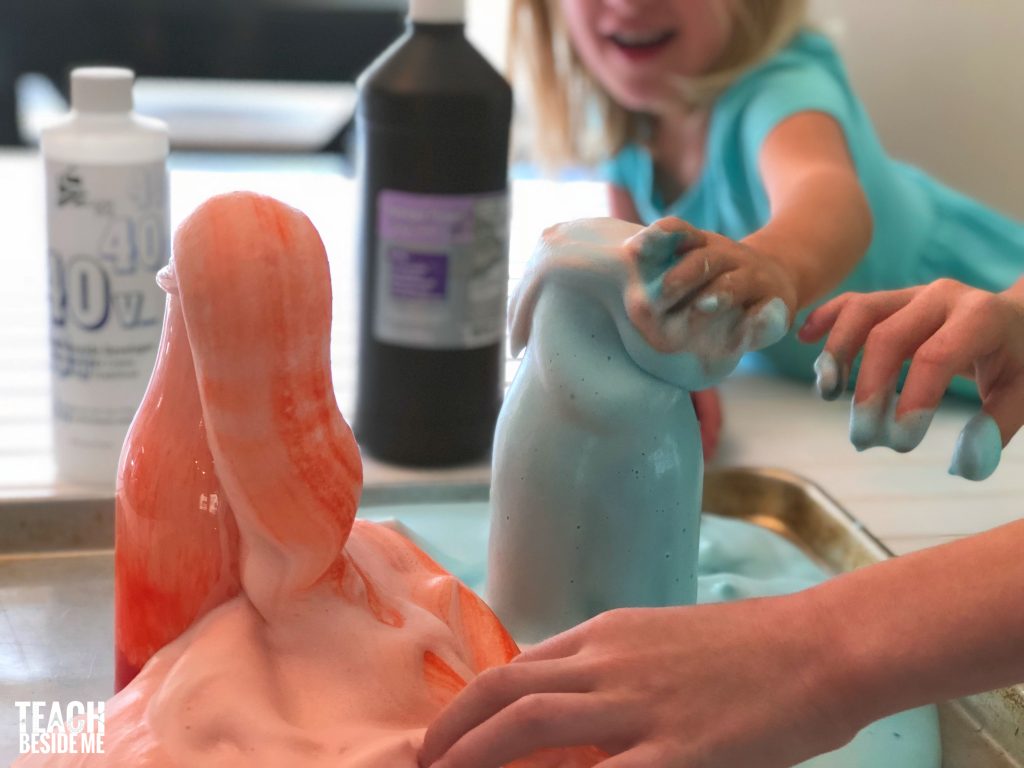
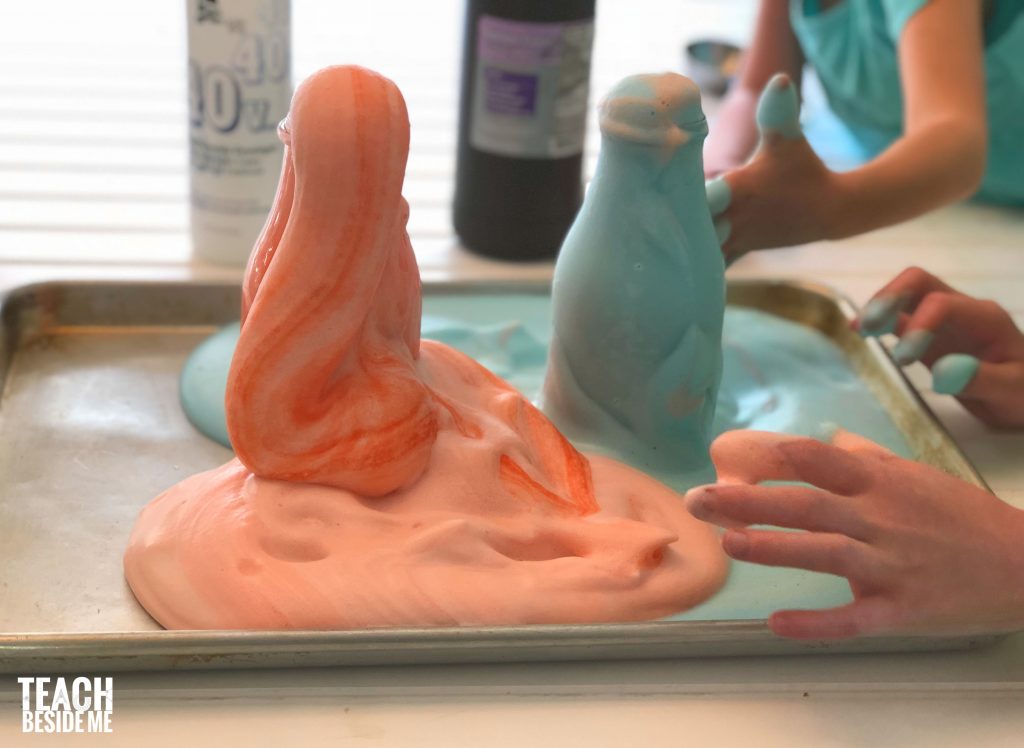
The results were amazing! In our experiment, the red foam was made with the stronger 6% solution, while the blue foam used regular 3% hydrogen peroxide.
This simple change transformed a fun science activity into a true experiment where kids could make predictions, observe carefully, and compare results.
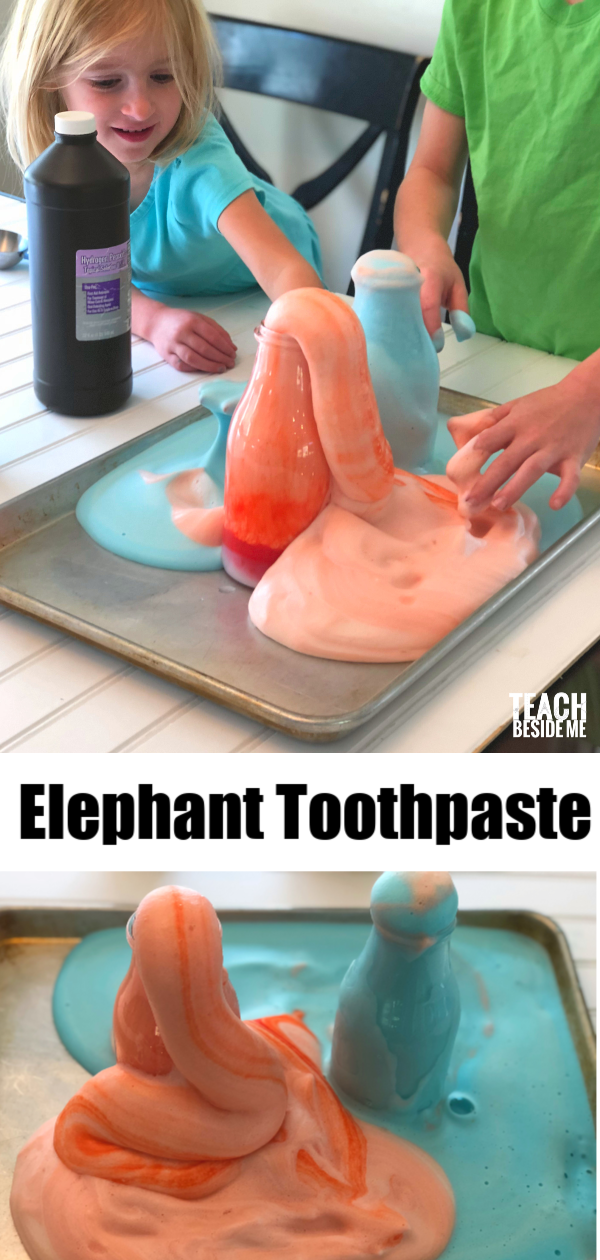
Watch the Video of us Making Elephant Toothpaste
You have got to try this elephant toothpaste experiment with your kids. It’s amazing to see the dramatic chemical reactions you can create using a few simple ingredients!
Ingredients for Elephant Toothpaste Experiment:
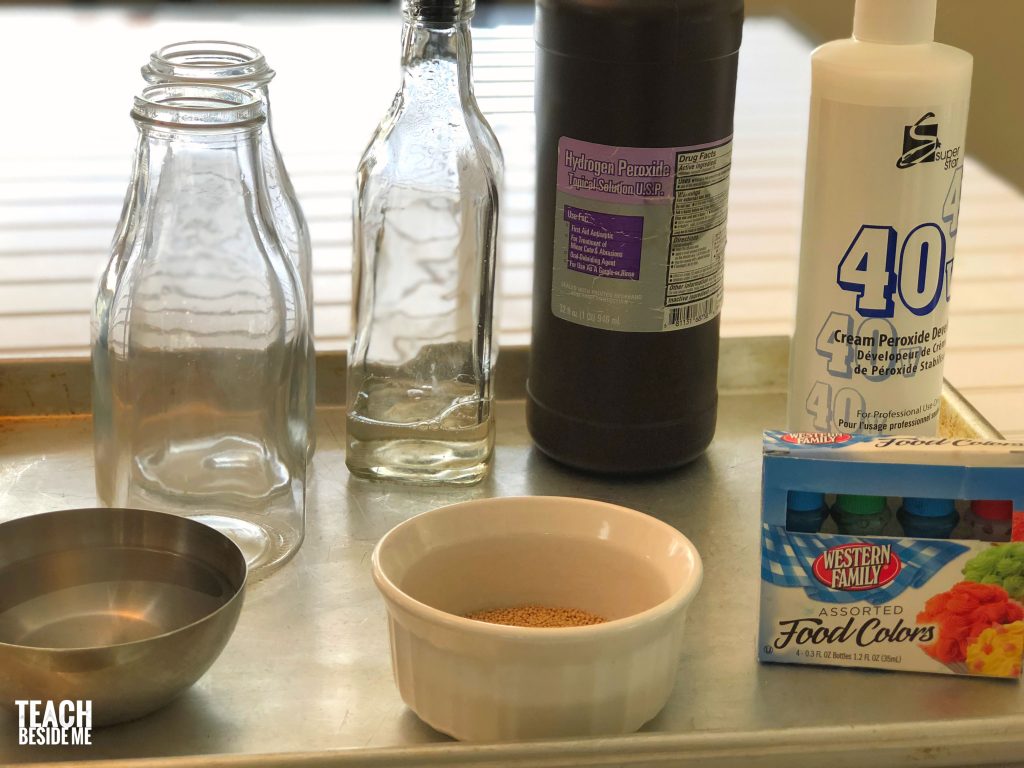
- A clean empty plastic bottle- we used glass milk bottles
- 1/2 cup 6% solution hydrogen peroxide liquid (also called 20-volume hydrogen peroxide)
- 1/2 cup 3% hydrogen peroxide (optional, for comparison)
- 1 Tablespoon (one packet) of dry yeast
- 3 Tablespoons of warm water
- 1 Tbsp liquid dish soap
- Liquid food coloring
- Small cups for mixing
- Funnel (optional, but helpful)
- Tray or plastic tub to contain the mess
- Safety goggles (recommended)
How to Make Elephant Toothpaste
Safety First
Adult supervision is recommended for this experiment.
The 3% and 6% hydrogen peroxide solutions are generally safe when used properly, but stronger peroxide concentrations should only be handled by adults. Avoid contact with eyes, wear safety goggles if possible, and wash hands after completing the activity.
Step 1: Prepare Your Workspace
This experiment creates a LOT of foam! Place your bottles on a tray, in a sink, or inside a large plastic tub to catch the overflowing bubbles.
Step 2: Add the Hydrogen Peroxide
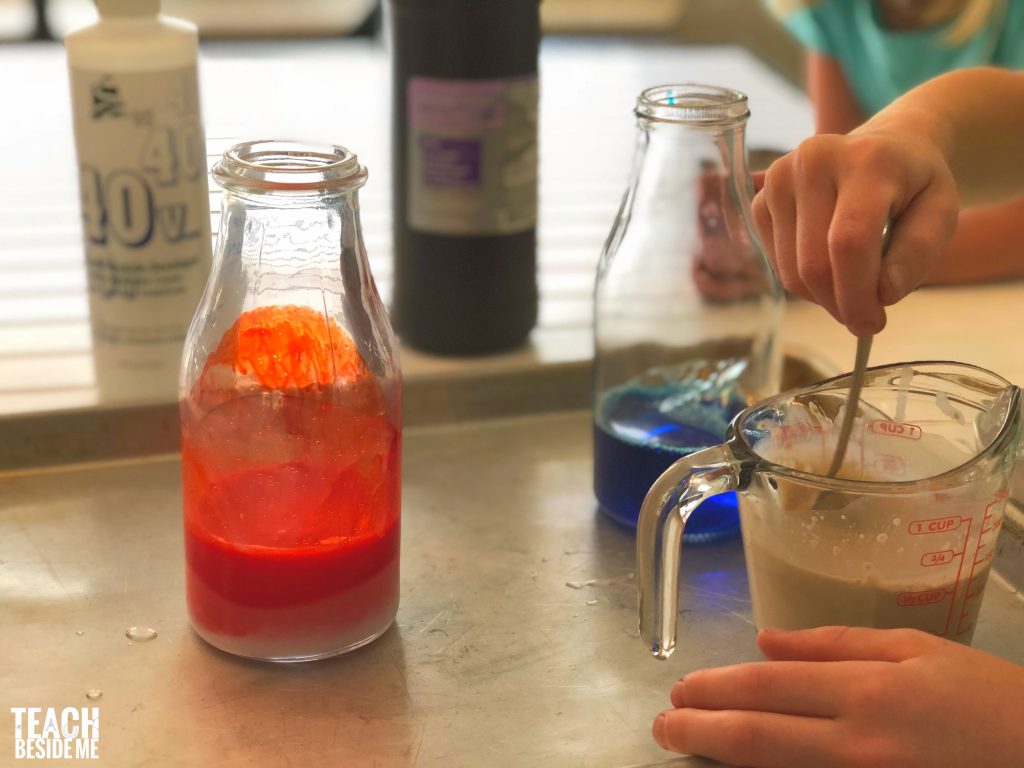
Pour 1/2 cup of hydrogen peroxide into each bottle.
If you’re doing the comparison experiment, use 3% peroxide in one bottle and 6% peroxide in the other.
Add about 10 drops of food coloring to each bottle.
Step 3: Add Dish Soap
Mix 1 tablespoon liquid dish soap into each bottle.
Gently swirl to combine.
The soap helps trap the oxygen gas created during the reaction, producing all of that wonderful foam.
Step 4: Prepare the Yeast Mixture
In a small cup, combine:
- 1 tablespoon dry yeast
- 3 tablespoons warm water
Stir for about 30 seconds until the yeast is dissolved.
Step 5: Start the Reaction!
Using a funnel if desired, pour the yeast mixture into the bottle.
Stand back and watch the foamy eruption begin!
For an even bigger reaction, try scaling up the ingredients and using a 2-liter plastic soda bottle outdoors.
Comparing 3% vs. 6% Hydrogen Peroxide
Before beginning the experiment, ask your kids:
- Which bottle do you think will create more foam?
- Will the reaction happen faster in one bottle?
- What differences do you predict you’ll observe?
In our experiment, the 6% hydrogen peroxide created a much more dramatic reaction, producing more foam at a faster rate than the regular 3% solution.
This comparison is a wonderful way to introduce the idea of changing variables in an experiment.
How Does the Elephant Toothpaste Experiment Work?
Hydrogen peroxide (H₂O₂) is made up of hydrogen atoms and oxygen atoms.
Normally, hydrogen peroxide breaks down very slowly into:
- Water (H₂O)
- Oxygen gas (O₂)
However, yeast contains a special enzyme called catalase.
Catalase acts as a catalyst, meaning it speeds up the breakdown of hydrogen peroxide without being used up in the reaction.
As the oxygen gas is released rapidly, the dish soap traps it, creating thousands of tiny bubbles and producing the giant stream of foam we call elephant toothpaste.
This reaction is so popular that variations of elephant toothpaste are often demonstrated in classrooms, science museums, and research labs because it provides a memorable example of catalysts and chemical reactions.
Why Does the Bottle Get Warm?
Did you notice the bottle becoming warm?
This experiment creates an exothermic reaction, which means it releases heat energy.
The heat is another clue that a chemical reaction is taking place!
STEM Questions to Explore
After completing the experiment, ask your children:
- What differences did you notice between the two bottles?
- Why do you think one reaction happened more quickly?
- What role did the yeast play?
- Why was the foam able to hold its shape?
- What would happen if you changed another variable?
These questions help transform a fun demonstration into a meaningful learning experience.
What Kids Learn Through This Experiment
This activity introduces important scientific concepts, including:
- Chemical reactions
- Catalysts and enzymes
- Gas production
- Exothermic reactions
- Observation skills
- Comparing variables
- Making predictions
Why Is It Called Elephant Toothpaste?
The overflowing foam looks a bit like toothpaste being squeezed from a giant tube—one big enough for an elephant!
Just remember:
It may look like toothpaste, but it is definitely NOT edible.
Elephant toothpaste is one of those science experiments kids never forget. It’s dramatic, messy, and full of learning opportunities. Whether you’re doing it at home, in a classroom, or at science camp, it’s a fantastic way to introduce chemistry concepts through hands-on exploration.
If you’re looking for even more exciting science activities, you’ll find plenty of ideas in my book, Science Art & Drawing Games for Kids!
Looking for More Hands-On Science Fun?
If your kids loved this experiment, be sure to check out some of our other favorite science activities:




How fun my kids would love this!
I’ve never seen this done with hydrogen peroxide. how fun!
I’ve only seen it done with hydrogen peroxide. What have you seen it done with. Please type back as soon as you can.
This is so much fun! It looks like your kids loved it–we did Elephant Toothpaste earlier this year and had a blast with it! Thanks for sharing it at Teach Me Tuesday!
Hi again, Karyn! This was one of the most clicked on links last week! Congratulations! I’m featuring it to day at Preschool Powol Packets!
This looks like a fun experiment for my young girl;s science club! have you tried variables other than the strenght of the peroxide?
Is your 6% peroxide a cream? If so does that work as well as the liquid.