Skeletal System Diagram + Free Labeled Skeleton Printable
This post may contain affiliate links.
Learning the bones of the human body is a fascinating way to explore anatomy! This human skeleton anatomy diagrammakes it easy to learn and practice the major bones and bone groups of the skeletal system.
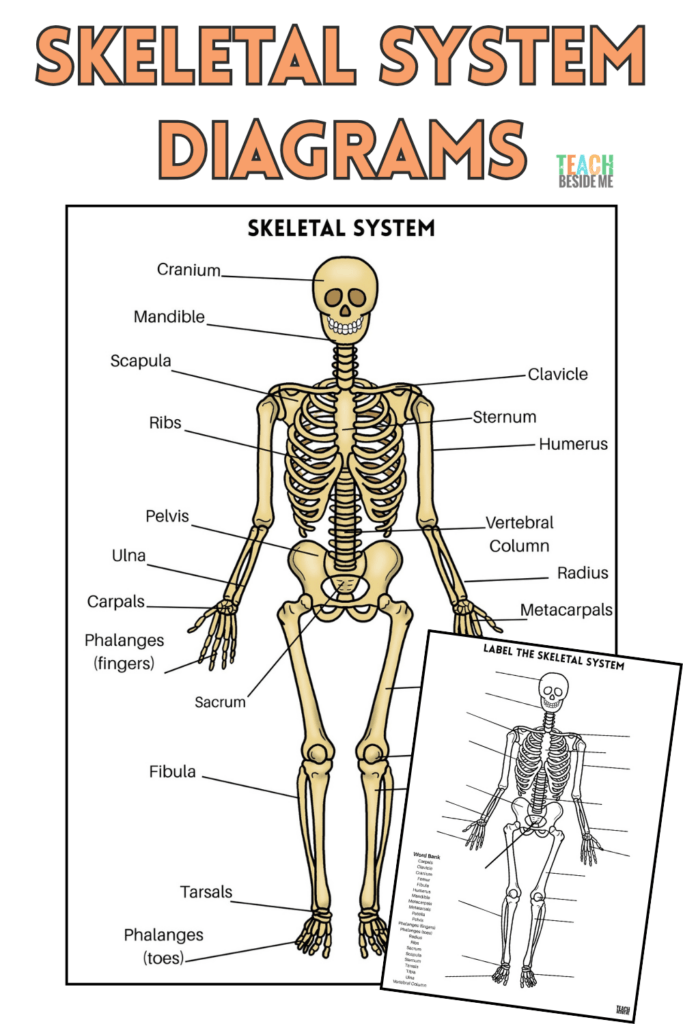
I’ve created a free 6-page human skeleton printable with a labeled reference chart, a labeling worksheet with a word bank, and a blank skeleton diagram. Each page comes in both color and black-and-white, so you can choose the version that works best for your students.
Use these printable skeleton diagrams during a human body unit, anatomy study, science lesson, or even as a fun educational activity around Halloween.
Human Skeleton Anatomy
The skeletal system forms the framework of the human body. Its bones and joints give the body shape and support, protect important organs, and work together with muscles to help us move. Skeletal system anatomy includes the bones of the skull and vertebral column as well as the bones of the upper limbs, lower limbs, hands, feet, and pelvis.
An adult human skeleton typically contains 206 bones. Babies are born with more bones, but some of these fuse together as they grow.
Bones also come in many different shapes and sizes. The femur in the upper leg, for example, is the longest bone in the human body, while the hands and feet contain many smaller bones that work together to allow a wide range of movement.
Learning the names and locations of the major bones is a great introduction to human anatomy and the skeletal system.
Major Bones of the Human Skeleton
This printable focuses on 22 major bones, structures, and bone groups that students can identify on a human skeleton:
- Cranium
- Mandible
- Clavicle
- Scapula
- Sternum
- Ribs
- Vertebral Column
- Pelvis
- Sacrum
- Humerus
- Radius
- Ulna
- Carpals
- Metacarpals
- Phalanges (fingers)
- Femur
- Patella
- Tibia
- Fibula
- Tarsals
- Metatarsals
- Phalanges (toes)
Students don’t need to learn all 206 individual bones to begin understanding skeleton anatomy. Learning these major bones and bone groups gives them a useful foundation for further study of the human body.
Free Human Skeleton Anatomy Printable
The free Skeletal System Printable includes six pages with three different ways to learn and practice skeleton anatomy. Each activity is included in both color and black-and-white. Download it now!
Labeled Human Skeleton Diagram
Begin with the labeled skeletal system anatomy chart.
Students can use this page as a reference while learning the locations and names of the major bones. It can be added to a science notebook, displayed during a human body unit, or kept nearby while completing the labeling activities.
The diagram includes more detailed anatomy vocabulary such as the carpals and metacarpals in the hands, tarsals and metatarsals in the feet, and the radius and ulna of the forearm.
This makes the chart useful for several levels of anatomy study rather than limiting it to very young learners.
Label the Skeletal System With a Word Bank
Once students are familiar with the labeled diagram, have them try the skeletal system labeling worksheet.
This version includes the same skeleton with blank labeling lines and a word bank containing all 22 terms.
Students can study the labeled reference chart first, set it aside, and then use the word bank to identify each bone or bone group.
This provides a little extra support while students are still learning the anatomical vocabulary.
Blank Human Skeleton Diagram
Ready to make it harder?
The blank human skeleton diagram removes both the labels and word bank. Students identify and label the bones independently from memory.
This page works well for review, independent practice, or as an informal way to see which bones students know and which ones they still need to practice.
Color and Black-and-White Skeleton Printables
All three skeletal system pages are included in both color and black-and-white, giving you six printable pages altogether.
Use the color skeleton diagrams for a visual reference or science notebook, or print the black-and-white versions when you want to conserve ink or let students add their own color.
Students could even create a color-coding system for different areas of the skeleton as they study.
Ways to Use the Skeletal System Printable
There are lots of simple ways to use these diagrams beyond simply filling in the labels.
Have students study the labeled skeleton for a few minutes, cover it, and see how many structures they can name. As they identify each bone, have them find its approximate location on their own body.
You can also ask students to compare neighboring bones. Where are the radius and ulna? Which bones are found between the femur and the foot? How are the carpals, metacarpals, and phalanges arranged in the hand?
For younger students, focus on a smaller group of easily identified bones such as the cranium, ribs, pelvis, humerus, femur, patella, tibia, and fibula. Older students can work toward identifying all 22 terms independently.
You could also pair these printable diagrams with anatomy books, X-rays, a model skeleton, or other hands-on human body activities.
And, of course, Halloween is a perfect time to sneak a little anatomy into all those skeletons!
Learn More About Skeletons and Anatomy
Try some of our other fun activities!
- Milk Jug Skeleton: Halloween Anatomy
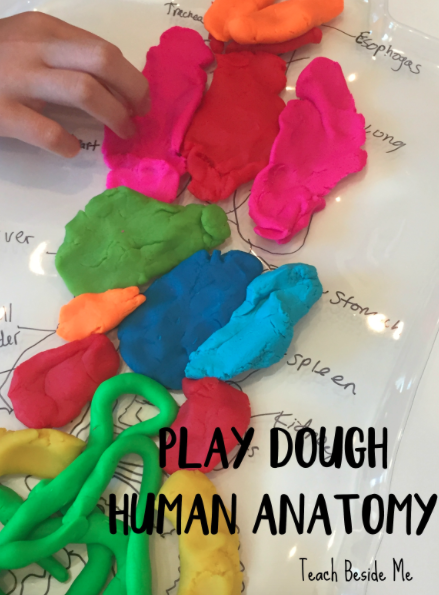
- Play Dough Human Anatomy
- Pretend Play Anatomy Lab: A Hands-On Halloween Science Activity
- Animal Skeleton Matching Cards
- Playing Doctor: DIY Doctor Play Set for Kids (With Printable X-Rays)

FREE SKELETAL SYSTEM PRINTABLE
Learn the major bones and bone groups of the human skeleton with this free 6-page anatomy printable.
You’ll get:
- Labeled human skeleton anatomy chart
- Skeletal system labeling worksheet with word bank
- Blank human skeleton diagram
- Color versions of all three pages
- Black-and-white versions of all three pages