
Halloween Paper Circuits: Light-Up STEM Activity for Kids
This post may contain affiliate links.
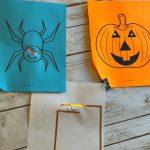
Want to make your Halloween decorations glow? These Halloween paper circuits are such a fun way to combine science, technology, and a little Halloween creativity!
With a few simple electronics supplies, kids can create glowing jack-o’-lanterns, ghosts, and spiders using LED lights, copper tape, and paper.
This hands-on Halloween STEM activity introduces children to simple electrical circuits while they make a fun light-up craft. We made these with my kids, and even my 7-year-old was able to follow along and create a working circuit with some help!
It’s a great project for homeschool science, classroom STEM lessons, or a Halloween afternoon activity.

What Are Paper Circuits?
A paper circuit is a simple electrical circuit built on paper instead of using traditional wires. Rather than connecting components with wires, you use conductive copper tape to create a path for electricity to travel.
A battery provides the electrical energy, and small LED lights illuminate when the circuit is connected correctly.
For our Halloween paper circuits, we used LEDs to create glowing eyes on a pumpkin, ghost, and spider! It’s a fun way for kids to see how electrical circuits work while creating something they can show off.
How to Make the Halloween Paper Circuits:
Supplies for Halloween Paper Circuits
You’ll need:
- Lithium 3V Coin Cell Batteries
- 3 or 5 mm LED Lights
- 1/4″ Conductive Copper Tape – a conductive adhesive
- Binder Clips
- Halloween Templates- Download below
- Scissors
- Crayons or colored pencils, optional
- Clear tape, optional
Important battery safety: Coin cell batteries can cause severe internal injuries if swallowed. This project requires direct adult supervision. Keep loose batteries away from young children, never leave batteries unattended, and remove and securely store or dispose of them immediately after the activity. If a battery may have been swallowed, seek emergency medical help immediately.
Choose LED lights that work with your battery, and supervise children while assembling the electrical connections.
Download the Free Halloween Paper Circuit Templates
I’ve created three Halloween designs you can use for this activity:
- Jack-o’-lantern
- Spider
- Ghost
You can print the designs on colored paper or let kids color their pictures before adding the lights. You can also draw your own Halloween designs if you want to create something different!

How to Make Halloween Paper Circuits
Follow these steps to create your own light-up Halloween pictures.
Step 1: Prepare Your Halloween Picture
Print your Halloween template and color it if desired.
Decide where you want your LED lights to shine. We placed ours in the eyes of the Halloween characters. Carefully poke small holes where the lights will go.
This makes it easier to see the placement from the back of the paper when you begin building your circuit.

Step 2: Fold the Corner for the Battery
Fold back the bottom corner of the paper.
This fold will become the battery connection, allowing you to press the battery against the copper tape and complete the circuit.
Step 3: Create the First Copper Tape Path
Turn your paper over so you’re working on the back.
Starting near the folded corner, apply a strip of copper tape across the paper toward the LED locations.
Angle the tape upward and then across beneath the eyes.
This will become one side of your electrical circuit.
Keep the tape as smooth and continuous as possible. Sharp folds and breaks can interrupt the electrical connection.
If you need to overlap pieces, press them together firmly and test that the connection works. Some copper tapes have adhesive that isn’t conductive, so overlapping the tape may not always create a reliable electrical connection.
Step 4: Add the Second Copper Tape Path
Create a second copper tape path above the first.
The two paths should run close enough together that the legs of your LED lights can reach them.
Make sure the two copper tape paths do not touch each other.
If they touch, they can create a short circuit instead of directing electricity through the LED lights.
Bring the second strip back toward the folded corner, leaving a space between the two strips where the battery will connect.
Step 5: Add the LED Lights
LED stands for light-emitting diode.
Each LED has two legs:
- Long leg: Positive (+)
- Short leg: Negative (−)
Place the LEDs through the holes in your picture so the lights show on the front.
On the back of the paper, gently bend the legs so they touch the copper tape.
Both LEDs should be oriented the same way, with their long legs connected to the positive copper tape path and their short legs connected to the negative path.
We bent the long legs toward the bottom strip and the short legs toward the top strip.
Add a small piece of copper tape over each leg to help hold it securely against the circuit.
Step 6: Connect the Battery
Now it’s time to make your Halloween picture glow!
Place the coin cell battery at the folded corner so its positive (+) side connects to the positive copper tape path and its negative (−) side connects to the negative path.
Fold the paper over the battery and use a binder clip to hold the connection in place.
If everything is connected correctly, your LED eyes should light up!
Disconnect and remove the battery when you’re finished.

What If Your Paper Circuit Doesn’t Work?
If the eyes don’t light up right away, don’t worry! Troubleshooting is part of the STEM learning experience.
Try checking these things:
Are the LEDs facing the right direction? The longer leg must connect to the positive side of the circuit.
Are the copper tape paths touching? The positive and negative paths should stay separate except through the intended electrical components.
Are the LED legs touching the tape securely? Loose connections can cause flickering or prevent the lights from working.
Is there a break in the copper tape? Check corners, folds, and overlapping pieces.
Is the battery connected correctly? Make sure its positive and negative sides match the LED connections.
If the circuit still doesn’t work, try testing one LED at a time.
And remember, figuring out why something doesn’t work is an important part of engineering!

The Science Behind Halloween Paper Circuits
This project is more than just a Halloween craft. It’s also a simple introduction to electricity.
Here are a few concepts kids can learn while building their circuits.
Open and Closed Circuits
A closed circuit has a complete path that allows electrical current to flow.
When the battery, copper tape, and LED are connected correctly, the circuit is closed and the light turns on.
An open circuit has a gap that interrupts the flow of electricity.
If you remove the battery or disconnect one of the LED legs, the light goes out.
Conductors
A conductor is a material that allows electrical current to flow.
Copper is a good conductor, which is why copper tape works for this project.
The paper itself is not a good conductor, so it provides a surface for arranging the electrical connections without conducting the current between them.
LED Lights
LED stands for light-emitting diode.
An LED produces light when electrical current flows through it in the correct direction.
Unlike a regular incandescent bulb, an LED has a positive and negative side that must be connected correctly.
This is why the direction of the LED legs matters when building your paper circuit.
Parallel Circuits
When both glowing eyes are connected across the same positive and negative copper tape paths, they form a simple parallel arrangement.
Each LED has its own path between the two conductive strips.
This is a great opportunity to introduce the idea that electrical components can be connected in different ways.
More Electricity and Paper Circuit STEM Activities
If your kids enjoy making these Halloween paper circuits, they’ll love exploring electricity with some of our other projects!
My Building Electric Circuits STEM Challenge Cards include a paper circuit challenge along with seven other hands-on electricity activities.
Kids can explore simple circuits, conductors, and series and parallel circuits while developing their engineering and problem-solving skills.
You might also enjoy:
- Menorah Paper Circuits
- Origami Firefly Paper Circuits
- Easy Play Dough Circuits
- Is It Conductive or Not? STEM Experiment
- Firefly Sewn Circuits
More Fun Halloween STEM Activities
Looking for more Halloween learning ideas?
Try these activities next:
- Twirligig Pumpkin Paper Spinner Toy
- Halloween Color by Number Printable Worksheets
- Pumpkin Life Cycle Activities
Halloween is a great time to combine creativity with science. These glowing paper circuits are a fun way to introduce electricity while making something kids will be excited to show everyone!
Have fun creating your own light-up Halloween designs!





Love the Halloween circuit STEM project but can’t find the templates, Help….