DIY Rainbow Water Xylophone: Easy Sound Science Experiment
This post may contain affiliate links.
Making a homemade musical instrument is a fun way to explore the science of sound with kids! This DIY water xylophone is simple to set up and a great hands-on STEM activity. Plus, adding rainbow colors makes it extra exciting!
This activity helps kids understand pitch, vibration, and sound waves while encouraging creativity and music exploration. Let’s get started!
Learn more about Sound Waves Here: 5 Sound Wave Experiments for Kids
Supplies Needed
You only need a few simple materials to create your own water xylophone:
-
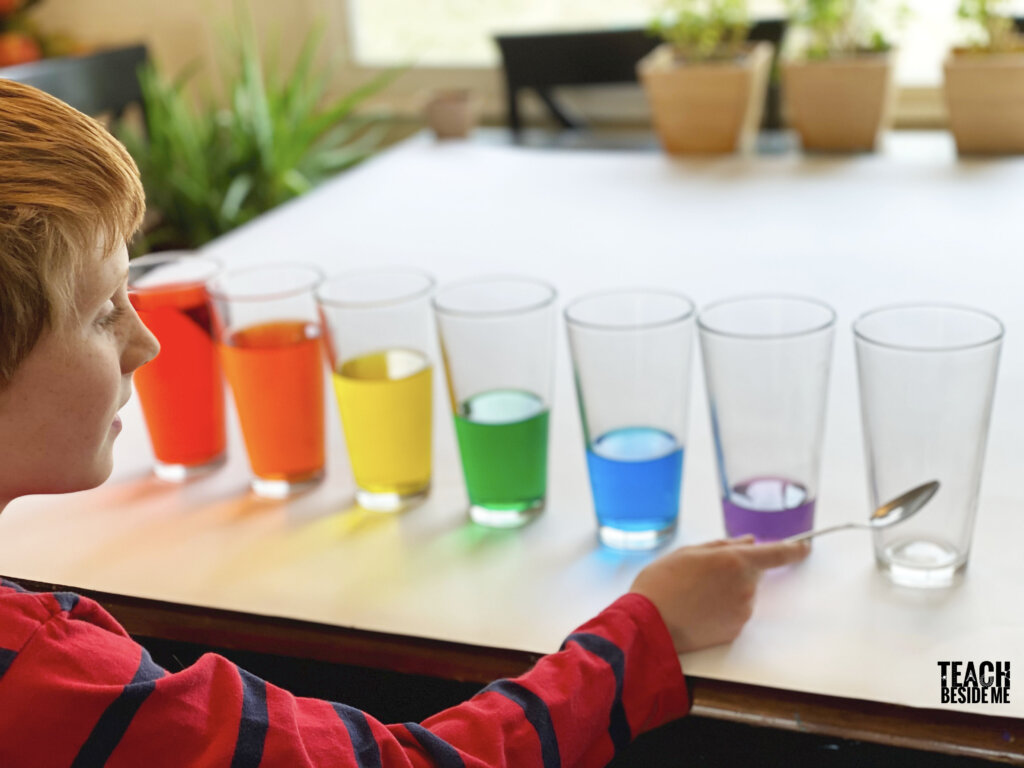
6-7 clear glasses or glass jars
-
Water
-
Food coloring (optional, but fun!)
-
Spoon or wooden sticks such as chopsticks (for playing)
How to Make a Water Xylophone
Step 1: Fill the Glasses with Water
-
Line up the glasses in a row.
-
Fill each one with different amounts of water, from nearly empty to full.
-
The more water in the glass, the lower the pitch; the less water, the higher the pitch.
-

Step 2: Add Color (Optional)
-
Add a few drops of food coloring to each glass.
-
Arrange them in rainbow order (ROY G. BIV – Red, Orange, Yellow, Green, Blue, Indigo, Violet) for a visually stunning effect!
Step 3: Tune Your Water Xylophone
-
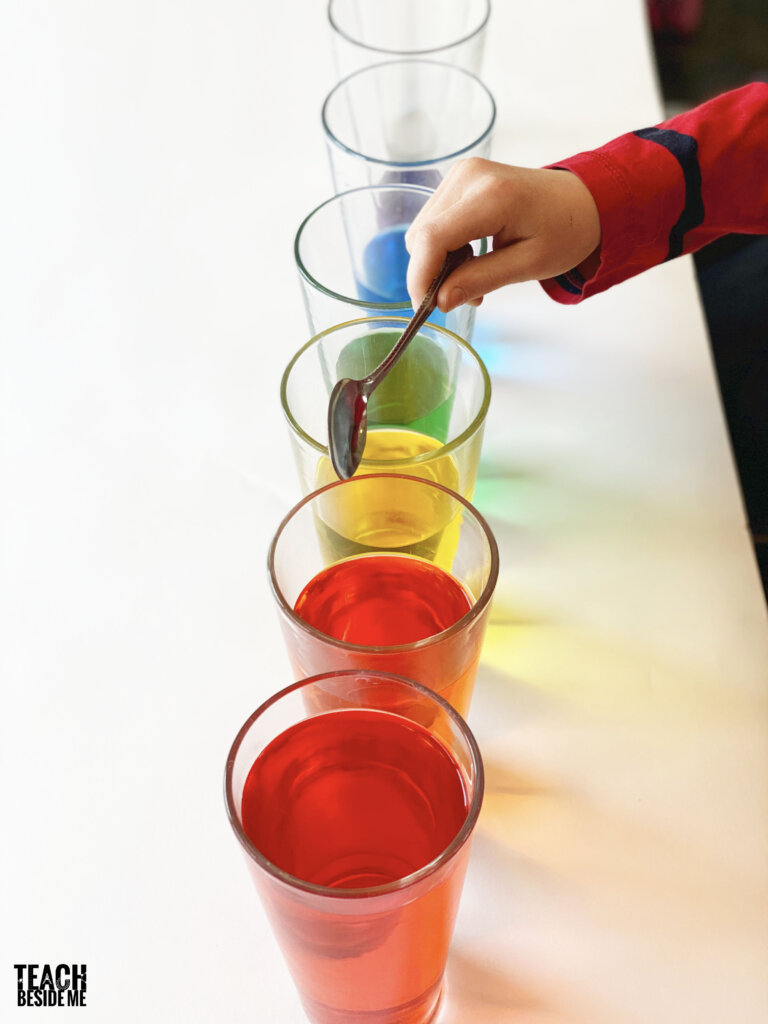
Tap the glasses gently with a spoon or wooden stick.
-
Adjust the water levels if needed to create a variety of notes.
-
Try matching the notes to a piano or another instrument!
Step 4: Play a Song!
-
Use a spoon or wooden stick as your mallet.
-
Try playing simple songs like Hot Cross Buns or Mary Had a Little Lamb.
-
Experiment with creating your own melodies!
How the Water Xylophone Works
This experiment teaches kids about sound waves and vibration:
-
When you tap a glass, the vibration travels through the water.
-
The more water, the slower the vibrations, creating a lower pitch.
-
The less water, the faster the vibrations, creating a higher pitch.
-
This is similar to real instruments—thicker guitar strings produce lower sounds, and thinner strings produce higher sounds.
This simple experiment is a great introduction to physics and music theory for kids!
Fun Color Science Connection
Since we’re making a rainbow water xylophone, why not add some fun color science?
-
ROY G. BIV (Red, Orange, Yellow, Green, Blue, Indigo, Violet) is a fun way to remember rainbow order.
-
Why do we see color? Colors come from white light splitting apart. Objects absorb certain colors and reflect the one we see. For example, green leaves absorb all colors except green, which reflects back to our eyes!

More Fun Variations
Want to take this activity to the next level?
-
Try different materials: Use metal, plastic, or ceramic cups to see how the sound changes.
- Try different liquids to see if it makes new sounds.
-
Make it a game: Have kids guess the pitch before tapping the glass.
-
Use different mallets: Try a wooden spoon vs. a metal spoon and compare the sounds.
-
Turn it into a full song challenge: Can you play “Twinkle, Twinkle, Little Star”?
Making a DIY rainbow water xylophone is a perfect way to combine music, science, and art into one exciting activity. Kids will love experimenting with sound and color while learning important STEM concepts.
Have you tried making a water xylophone? Let us know in the comments what songs you played!
More Rainbow Ideas:
Roll a Rainbow Preschool Math Game
Color Scavenger Hunt with Printable
Rainbow Science: Sugar Density Experiment
More Music and Sound Ideas:
Bead Drums- Homemade Musical Instrument
25 Pieces of Classical Music for Kids
Free Beginner Ukulele Chord Chart Printable