Five Senses Activities for Kids + Easy Reader Books
This post may contain affiliate links.
Teaching kids about the five senses is a wonderful introduction to the human body—and it’s one of those science topics that is especially fun to learn through hands-on activities.
Kids don’t have to imagine what sight, sound, smell, taste, and touch are like. They can experiment with their own senses!
In this collection of five senses activities for kids, you’ll find simple science experiments, sensory activities, games, and learning ideas for each of the five senses.
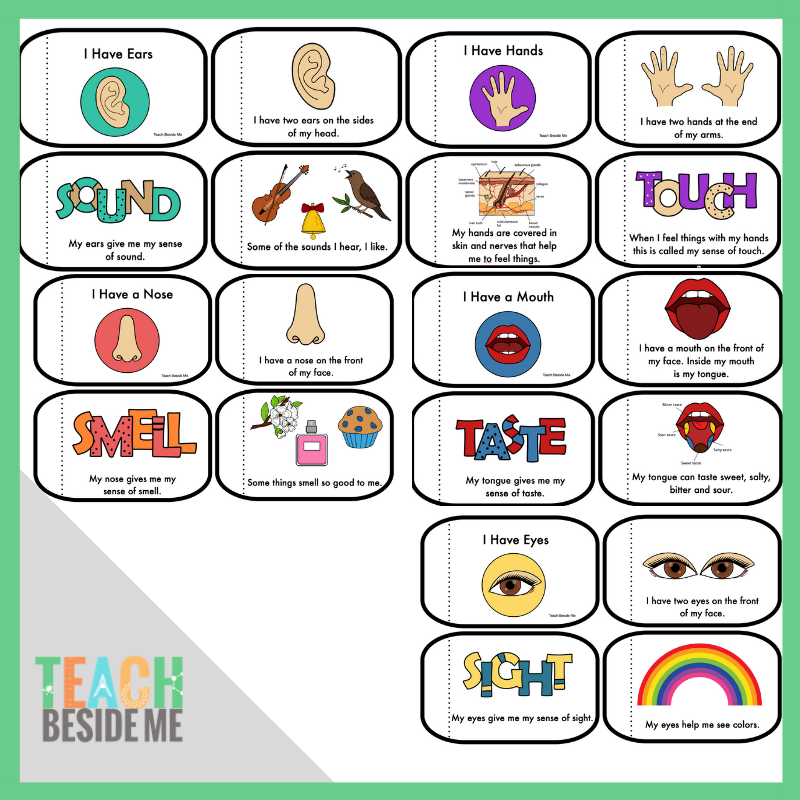
I’ve also created a set of Five Senses Easy Reader Books that introduces young children to each sense and explains some of the basic anatomy involved.

What Are the Five Senses?
The five senses we commonly teach young children are:
- Sight — eyes
- Hearing — ears
- Smell — nose
- Taste — tongue and mouth
- Touch — skin
Our sensory systems detect information from the world around us and send signals to the brain, where that information is processed.
For young children, start simply by helping them notice what they can see, hear, smell, taste, and feel.
Then you can begin exploring the science behind how each sensory system works.

Activities for the Sense of Sight
Our eyes detect light reflected from the things around us. Light enters the eye through the cornea and pupil and is focused by the lens onto the retina at the back of the eye.
The retina contains light-sensitive cells that convert that information into signals that travel through the optic nerve to the brain.
Try some of these activities to explore light, color, vision, and observation:

Color Mixing with Light: Experiment with colored light and discover what happens when different colors overlap.

Optical Illusion Drawings: Optical illusions are a fun way to explore how our eyes and brain work together to interpret what we see. You’ll find some fun ones in my Math Art and Drawing Games for Kids book.

Color Scavenger Hunt: Head outside or explore your home and see how many different colors you can find.

I-Spy Pages: Practice visual observation and discrimination while searching for hidden objects.

Rainbow Experiments for Kids: Explore color and light with some hands-on rainbow science.
Easy Sight Experiment
Place several small objects on a tray and let kids study them for 30 seconds. Cover the tray and remove one object without letting them see.
Can they figure out what’s missing?
It’s a simple way to combine the sense of sight with observation and memory.
Activities for the Sense of Hearing
Sound begins with vibrations.
Sound waves travel into the ear and cause the eardrum to vibrate. Tiny bones in the middle ear pass those vibrations along to the inner ear, where they are converted into signals that travel to the brain.
Explore sound and hearing with these activities:
Magic Ear Trick: Try a simple activity that demonstrates how the shape of the outer ear helps collect sound.

Bird Seed and Pine Cone Sensory Bottle: Shake and listen to the different sounds created by the materials inside.

Make a Homemade Rain Stick: Experiment with materials to create different sounds.
Make a Slide Whistle: Explore sound and pitch with a homemade instrument.
Buzzing Bug Noisemaker Toy: Create a simple toy while learning about sound and vibration.
Play a Sound Guessing Game
Collect several objects that make recognizable sounds.
Have kids close their eyes while you shake, tap, crumple, pour, or move one of the objects.
Can they identify it using only their sense of hearing?
Activities for the Sense of Smell
Our sense of smell begins when odor molecules in the air enter the nose and interact with specialized sensory receptors. Signals travel to the brain, allowing us to recognize and distinguish different smells.
Try these activities to explore the sense of smell:
Guess the Spice Activity: Smell different spices and see how many you can identify.

Blind Smell Test: Place familiar scented items in containers or put small amounts of scented liquids on cotton balls.
Without looking, can kids identify each smell?
Try vanilla, lemon, cinnamon, peppermint, orange, or other familiar scents you have on hand.

Make Homemade Bath Bombs: Experiment with scent while making Coconut-Lemon Bath Bombs.
You can also ask kids to describe each scent instead of simply naming it.
Is it sweet, strong, spicy, fresh, fruity, or earthy?
Activities for the Sense of Taste
Taste receptors in our mouth help us detect different tastes. Smell also plays an important role in how we experience flavor, which makes taste and smell especially interesting senses to explore together.
The five basic tastes are:
- Sweet
- Sour
- Salty
- Bitter
- Umami
Try some of these taste activities:
Five Tastes Taste Test
Choose foods representing several of the basic tastes and let kids sample them.
Can they identify whether each food is sweet, salty, sour, bitter, or umami?
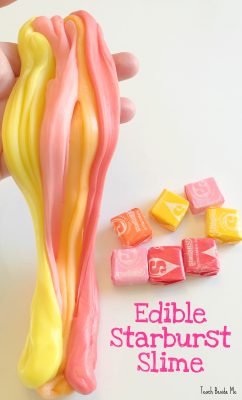
Make some Edible Slimes! How to Make Edible Slime
Blind Taste Test
Have kids close their eyes or wear a blindfold and try small samples of familiar foods.
Can they identify the food without seeing it?
Be sure to consider food allergies and dietary needs when doing tasting activities with a group.

The Seeds We Eat: Taste different edible seeds while learning about plant science.
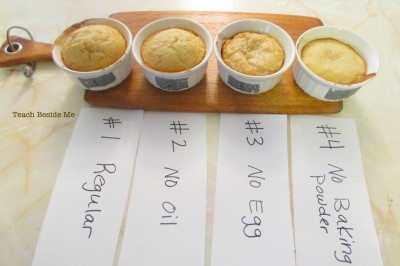
Kitchen Chemistry: Cake Experiment
Experiment with ingredients and discover how changing a recipe affects the finished result.
Apple Taste Test
Try several varieties of apples. Compare their sweetness, tartness, texture, color, and flavor, then choose a favorite.
Foods Around the World
Try unfamiliar foods or flavors and talk about what you notice.
Activities for the Sense of Touch
Touch receptors throughout our skin help us detect different kinds of sensory information, including pressure, texture and temperature.
Hands-on sensory play is an easy way for young children to explore their sense of touch.
Try:
Oobleck
Is it a solid or a liquid? Explore its unusual texture with your hands.

Cloud Dough
Squish, mold, crumble, and shape this soft sensory material.
Make some homemade slime or floam.

Try this tapioca pearl sensory play.

Mystery Touch Bag
Put several familiar objects inside a bag where kids can’t see them. Have children reach inside and feel one object without pulling it out. Can they identify it using only their sense of touch?
Encourage them to describe what they feel:
- Is it hard or soft?
- Smooth or rough?
- Round or flat?
- Flexible or stiff?
This is an easy way to build descriptive vocabulary along with sensory awareness.
Five Senses Easy Reader Books
After exploring the senses through hands-on activities, kids can learn more with my printable Five Senses Easy Reader Books.
The set includes five separate books—one for each of the five senses.
Each book has 8 pages and explains the sense in simple language for young readers.
The books also include illustrations of some of the anatomy involved, allowing you to introduce a little more science while keeping the material accessible for young children.
Use the books alongside your hands-on activities or add them to a five senses science unit, human body study, homeschool lesson, or early elementary classroom.
GET THE FIVE SENSES EASY READER BOOKS

More Easy Reader Books for Kids
If your kids enjoy these, try some of my other science and nature easy readers: